Starring: Annette Bening, Jodie Foster, Rhys Ifans
Grade: C-
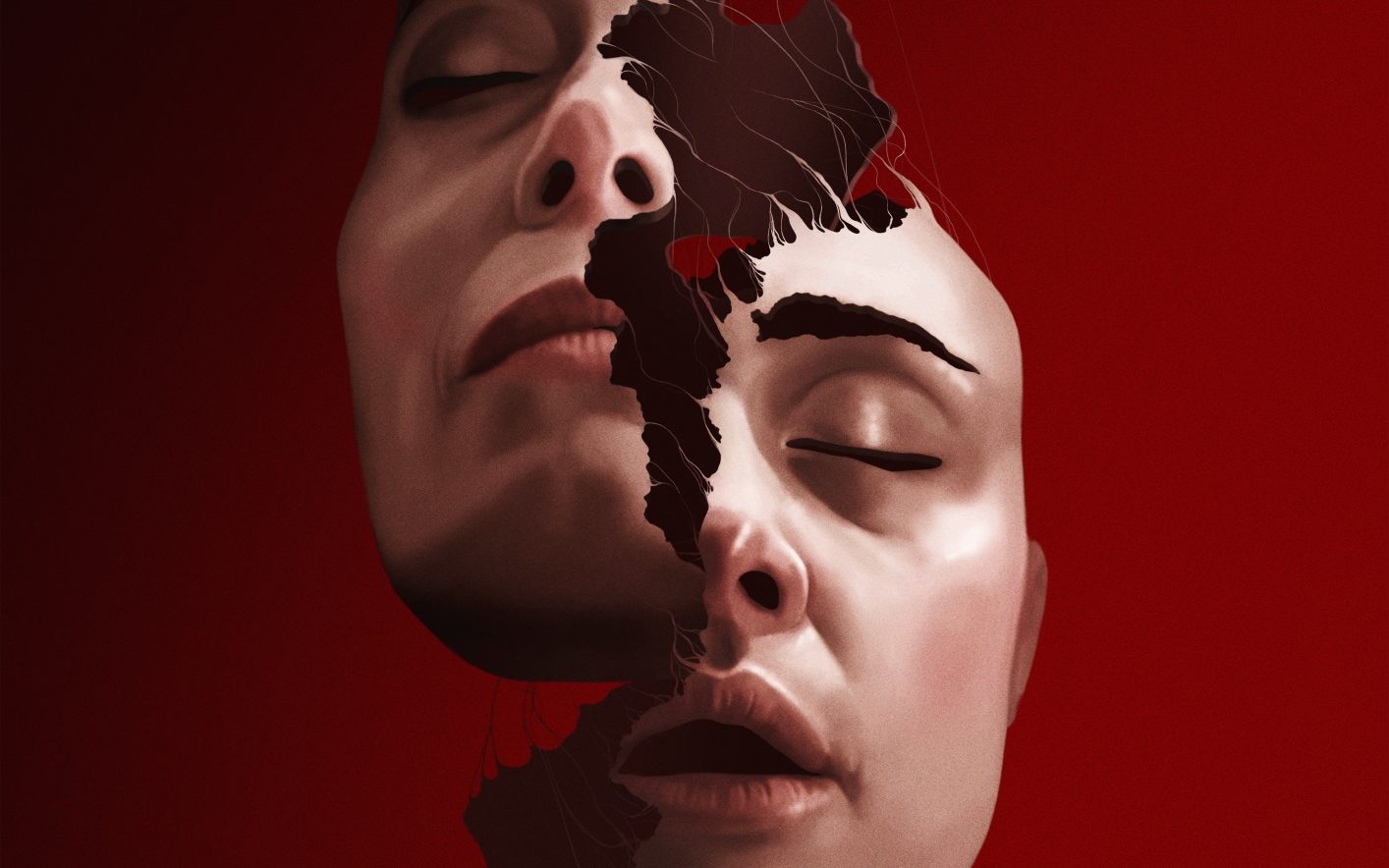
The phrase “Oscar Bait” gets thrown around a lot around this time of year, sometimes as a derogative and sometimes as a backhanded compliment. There’s no specific formula for what constitutes good or bad Oscar bait, but it essentially boils down to whether the film itself is good or not. Biopics of real, famous people overcoming adversity are like catnip to the Academy, so why not play into their hands and make a by-the-numbers drama that overlooks many of that character’s major struggles?
Starring: Paul Giamatti, Da’Vine Joy Randolph, Dominic Sessa
Grade: B+
Comedy equals tragedy plus time. It’s a well-worn adage in the world of comedy, and comedic writing, the notion that the best comedy comes from a place of pain, not joy. It’s an adage that Alexander Payne has honed throughout his career as a writer and director, and it applies to his latest film The Holdovers.
Starring: Emily Blunt, Chris Evans, Andy Garcia, Catherine O’Hara, Brian d’Arcy James, Jay Duplass
Grade: D+
The Placebo effect: when a concentrated, harmless pill produces the same intended effects as the real thing because of the psychological belief that it is the real thing. You can’t get sick from a placebo, and you can’t take too much of them but it won’t make you any better (here’s my disclaimer that I am not a licensed physician – I just play one on TV). Why mention placebos in a review of Pain Hustlers, the new film directed by David Yates, beyond the film’s medical subject matter? Because, much like a placebo, the Netflix film functions as a concentrated, harmless piece of content that produces the same intended effects as a real film with something – anything – interesting to say.
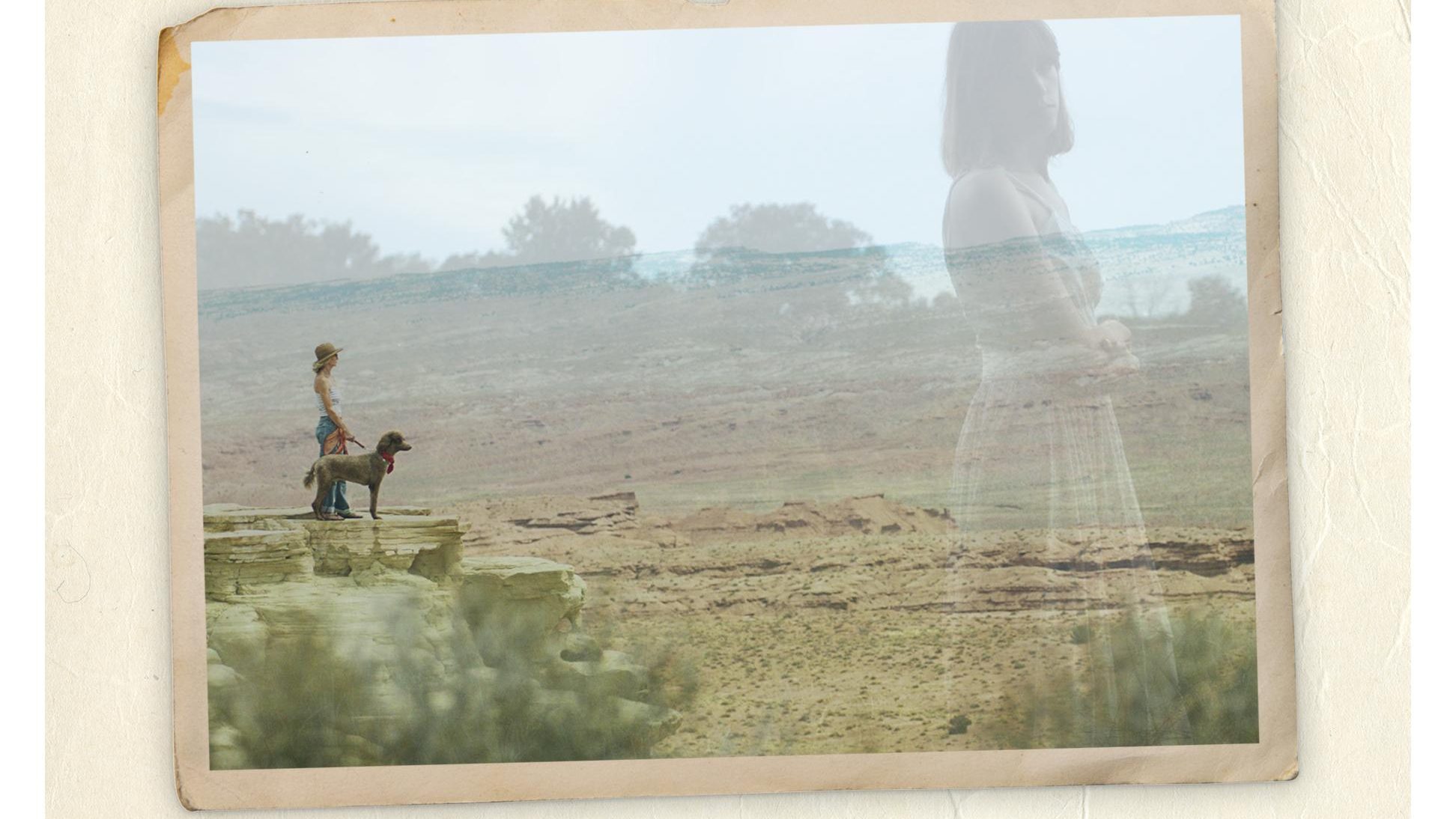
You could probably count the number of meaningful conversations had throughout the entirety of Bloom, on one hand, and that’s not a criticism. Writer and director Mark Totte structures the film as a kind of Malick-esque journey that places heavy emphasis on its visuals and the overall vibes in any given scene. Bloom tells the story of Kate (Kate Braun), a middle-aged grandmother in Milan, Indiana, and her inescapable desire to be free. On a whim, and without a word of warning to her husband, she sets out in her car with her dog Storm and heads west. When she talks to her son Brent, she lies by saying she’s stopped at his place in St. Louis (he’s out of town), and keeps on driving for a destination unknown. Along the way, we see flashbacks to her early, carefree days, touring the country in a van with her musician boyfriend/husband. Totte manages to effectively showcase the feelings at play in the present and past, but the film could have used a little extra narrative push to explain Kate’s sudden emotional turmoil. Still, Bloom doesn’t go for easy sentimentality in the way some micro-indies often do, and it’s all the better for it. In the few dialogue heavy scenes, the words come out naturally, without underlining the themes at play. This is a confident debut, featuring a solid performance from Braun, which will be well worth the price of admission.
You can never really go home again. That’s the enduring sentiment in Hellcat, the film from first-time writer-director Jack Lugar that explores one man’s long-simmering regrets, and how it’s manifested in those around him. Edward Paul Fry stars as Ricky Heller aka “Hellcat”, a musician who left his small town behind to make it big. When he returns back home, he has to come to grips with the life he left behind, and those he left in his wake. Why he forsook his hometown is best left unspoiled, but it touches on a man’s unspoken grief for lost love. The production quality won’t win any Oscars, but worse movies get made for more money every year, and it comes from a place of genuine emotion, which is what counts most at the end of the day.
When non-Hoosiers think of Indiana, they likely consider first the more notable aspects: the Indianapolis 500, our professional sports teams, and our often problematic politics. But what Liminal: Indiana in the Anthropocene explores are the more under-sung features. Entirely shot with drone footage and without any dialogue or talking points, it’s a documentary that forces you to consider newer perspectives on not just Indiana but our relationship with the land in general. The film is divided into various sections by the featured subject matter – one focuses on oil refineries, one focuses on transportation, one on farming, et cetera, and composer Nate Utesch’s score changes with each vignette. It’s a deceptively simple but effective concept for a documentary, and it shows outsiders and Hoosiers alike an idea of Indiana’s modern landscape.
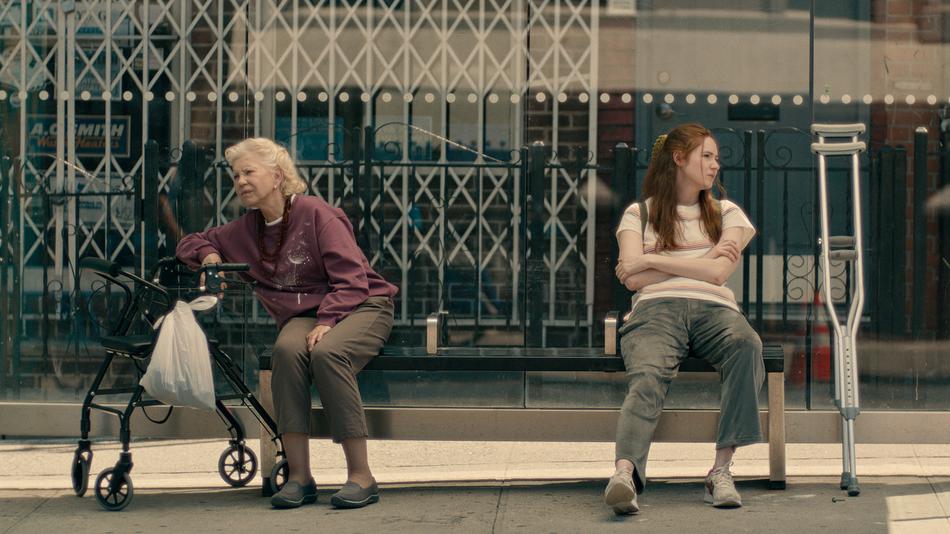
If you want a little star power in your Heartland experience, look no further than Late Bloomers, which stars the one and only Karen Gillan. She stars as Louise, an aimless 28-year old who breaks her hip after an ill-advised drunken trip to an ex’s house. In the hospital, she makes a connection with Antonina (Malgorzata Zajaczkowska), an elderly Polish woman who speaks no English. Their relationship stars off rocky but due to Louise’s perseverance, they strike up an unlikely bond. Gillan navigates Louise’s shifting tones throughout, from youthful naiveté to righteous indignation, and handling the comedic and dramatic beats. First-time director Lisa Steen, working from a script by Amy Greenfield, doesn’t tread new ground narratively speaking, but there’s a warmth to be felt within the film that carries it through. Music plays a big part in Louise and Antonina’s experiences, and the scenes where the characters simply let the music take over rank among the better of the film. I often found myself smiling during these moments, regardless of how predictable the film around it is.
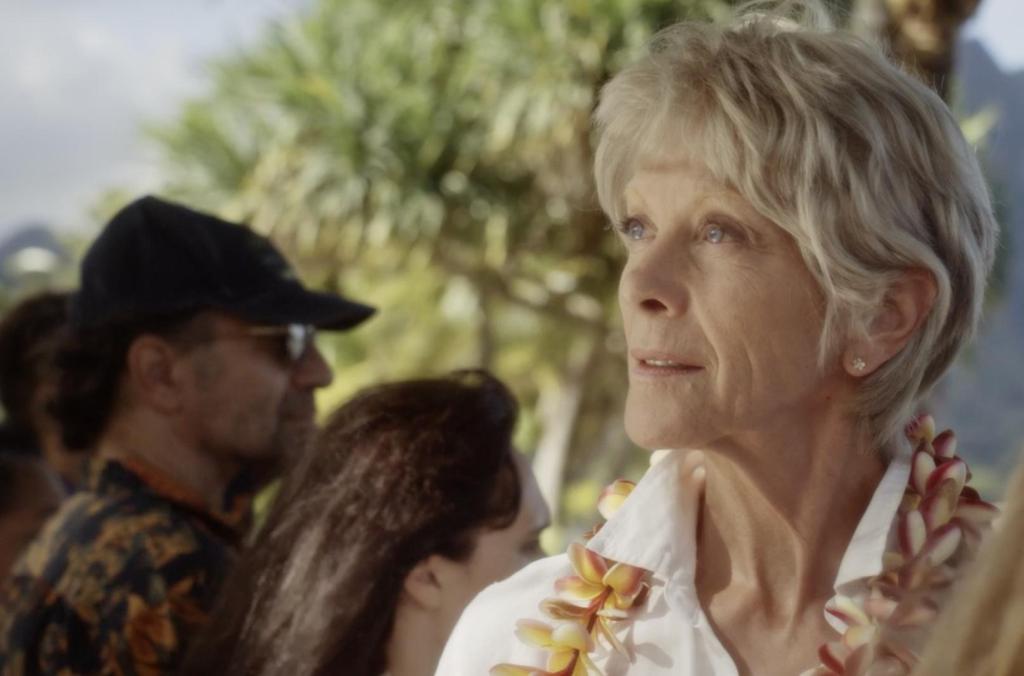
7000 Miles feels similar to Late Bloomers, in that it’s another story of generational understanding, but the former is less successful in execution than the latter. The film follows a young pilot named Jo (Alixzandra Dove) as she returns to her native Hawaii after the death of her grandfather. When her grandmother Meli (Wendie Malick), who essentially raised her, begins having memory issues, Jo begins to discover parts of Meli’s hidden past. Jo also begins reconnecting with a childhood crush who makes her realize she should fight harder to make her dreams a reality. It’s a film that shares a bit with Sweet Home Alabama but also includes a goofily sincere line like “She was the greatest hero of all time!” when referencing Amelia Earhart. Characters are broadly written without ever really investigating them below the surface, and the plot moves in predictable directions from the get-go. Malick and Dove perform amicably together and separately, but there’s a more introspective film to be made about regrets and grief than what’s on display in 7000 Miles. I’ve seen worse films from major film festivals, and that’s about the nicest thing I can muster to say.
Don’t go into New Life expecting a straight-up horror film. Rather, it plays more like an outbreak thriller for most of its runtime. Sure, there are some solid horror moments to be found, but first-time writer and director John Rosman prioritizes the story over the scares. The film follows a game of cat and mouse as Jessica (Hayley Erin) goes on the run through northern America, while Elsa (Sonya Walger), a government fixer, is tasked with bringing her in. What causes the chase is best left unsaid, but Rosman doesn’t overstuff the narrative with unnecessary details. And he throws in some neat visual tricks to liven up the spy chatter when Elsa is on the road. New Life doesn’t necessarily break the mold in the genre, but it shows that Rosman is a voice to look out for.
Below is my conversation with Brooke Berman, writer and director of Ramona at Midlife, ahead of its world premiere at the Heartland International Film Festival. We talk about female friendships, avoiding tropes of the genre, and the evolution of the film from Brooke’s mind to the screen. Our conversation has been edited and condensed for clarity.
Ben Sears: Before you made the film, you had written a number of plays. What was it about this story that you felt would be suitable for a movie?
Brooke Berman: That’s a great question. I had started writing movies earlier when I moved to LA in 2008. I went out there, and I had sold a play to a movie star, and I was getting these writer-for-hire jobs and really learning the form of screenwriting. I’ve always been in love with movie making, but what I realized as a screenwriter in LA is that the part of the process that really lights me up is watching the story move from the page to the actor’s bodies. As a playwright, the writer is involved in that process – we sit in the theater next to the director, and we’re included in all the decision making and all the conversations, and we get to watch the magic happen. And as a screenwriter, that isn’t true. When a screenwriter finishes a draft and they turn it in to their agent, or the studio, or whoever paid for the movie, the screenwriter’s work is then done. And the director takes over and makes the story happen, and I realized that I needed to be in on that. So I made a short while I was living in LA, to see if I had the chops to direct. When we had moved back to New York, I adapted one of my plays, Out of the Water, to film, thinking I was gonna make that for half a million dollars with my friends. I was in development with that movie, and the budget grew to just over a million, and I was in development for six years when the pandemic hit.
So at that point, I had already transferred my imagination from what can happen on the stage to what can happen on camera, and I was training myself to be the person that can direct that, and I had realized I had to do a different story. This story had been living in me for a while – I wrote it for Yvonne Woods, who plays Ramona. She was my classmate at Juilliard, and we were both living in LA at the same time. We had a bunch of conversations about life and love and success, and what it all means. So that character is someone I had been almost nourishing in the dark while I wrote this other story. I sat down and took a writing workshop as a student, and started on day one, and the character showed up. It was different than the story I had planned to write about her, but I wrote the first draft during those first few months between March and August of 2020. And then I just knew I had to make it. Because I had been in development with this other film, doing all the sort of conventional indie things, like attaching an executive producer and a star, and raising tons of money, I was like ‘well, we’re not going to do it that way. Let’s just do it small and simple with what we’ve got.’
BS: How was the story different from what you had planned out?
BB: In Los Angeles, the way that divorce laws work, if you’re a writer and you get divorced, your spouse is entitled to – I’m going to get this wrong, but I used to know it – it has to do with what your spouse is entitled to in compensation for royalties for the work you made during the marriage. It’s meant to protect the wife of the guy who wrote the big movie that made jillions of dollars, but I had a good friend of mine get divorced while I was there, and I was fascinated to learn that little quirk of California divorce law. So that went into the DNA of Ramona, and the first two scenes that came to my mind – one of which is in the movie, and one of which is not – is the scene with the three friends where she says “is this an intervention?” That scene came first. I knew that Ramona had this incredibly successful cohort that she used to be in charge of, and was now hiding from. In my original idea of the story, she was going to ask her friends for help and they didn’t know what to do with her. Also was the idea that she had stopped writing when she got divorced, and would do it out of spite because she was waiting for the time when her ex would no longer be entitled to royalties. Neither of those things really made it into the story; instead what happened when I started writing was that this Ramona was not divorced yet, she was yearning to get back together with her ex who she was still in love with, but she was really stubborn. But those were really the pieces that came first.
BS: You mentioned that you had written this specifically for Yvonne. What was it about her that made her the ideal fit for this part?
BB: Oh, I’m so inspired by Yvonne. Her and Rob Beitzel, who’s the actor that plays Mansbach, were in my final project at Juilliard. I’ve done so many plays with them both, and I always hear their voices in my head. I just love working with them so much, I work with the same actors again and again and again. Yvonne’s real-life husband Brian, who plays the hot dad on the playground, everybody says ‘why isn’t she with him? They have so much chemistry!’ And I say well, they’re married in real life, so actually she really is with him. Everyone in the cast is a friend, so it was really easy to hear those voices in my head. I love actors, and I also really particularly love the way that Yvonne – I know that a lot of the issues in the movie are very close to her heart and mine. So we had a lot of conversations during the development of the film about life and love and marriage and success and Patti Smith. My actors put so much of themselves into the movie, and into the roles.
BS: It feels like there aren’t many movies these days about women in their 30s or 40s, or that period of life, unless it’s something like 80 for Brady. How do you feel about the state of movies for that particular audience these days?
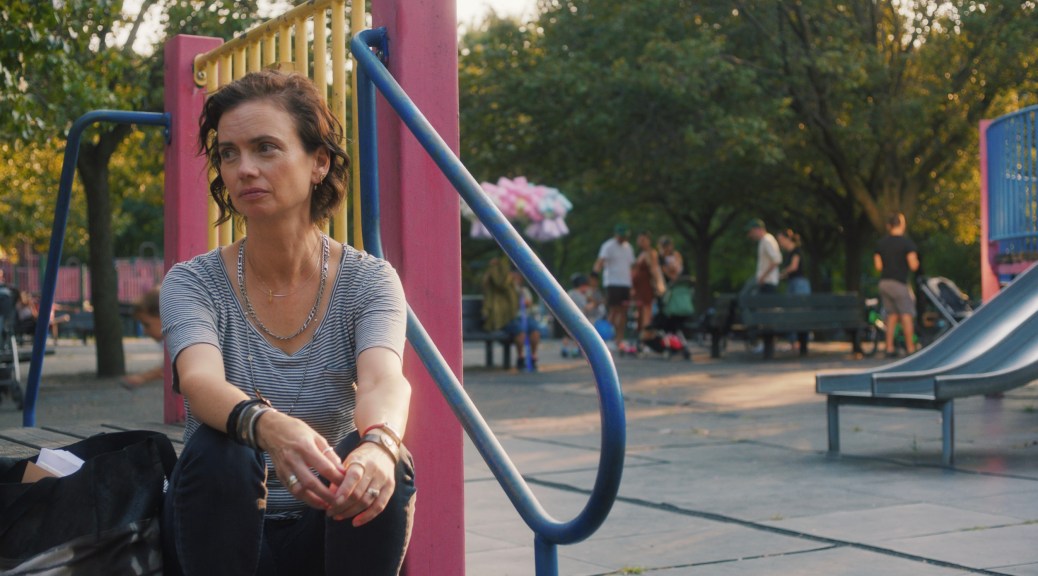
BB: I think we have these really pre-determined ideas about what happens at every decade of a person’s life. And I think that’s true across the genders, but it’s particularly true about women. We’re in a culture where young women start “anti-aging practices” at 28. When I lived in LA, I was shocked to learn they’re Botox-ing in their 20s preemptively, so there’s a terror around getting older, and I think it’s particularly tied to a fear of being obsolete, and a fear of no longer being beautiful, and a fear of no longer having power in the culture. Subsequently, you have a whole bunch of actresses who are terrified for anyone to find out how old they are. So we have no idea how old anybody actually is because you have movies about 40 year old’s being played by 60 year old’s, and the movies about 60 year old’s are being played by 80 year old’s, and everybody just wants to work, which is great – everybody should work. In my own life, I had a baby at 41, and I had two new mom friends was my age, and the other was 26, and we were going through the same thing. I spent my 40s sitting on the playground, like Ramona does, with the moms on the playground benches, just looking for common ground. It totally existed, but it blew my mind how every movie about women in their 40s were about empty-nest syndrome or 80 for Brady, or the movie where the rich ladies go to Sonoma and drink wine. None of that was my life! My life was, I had a job and I had a toddler, and I was at the playground and public school pickup. But I don’t look my age, whatever that means. My husband and I are both writers, we’re both self-employed. There weren’t movies that spoke to me. But I love Nicole Holofcener’s films, I think she really does a good job of addressing middle age for both genders. But most of our friends had our kids later, so I know a lot of people like me, but I don’t see us in the media.
BS: The movies that are in this genre, there’s a number of tropes and plot beats that you almost expect going into it. Ramona at Midlife mostly avoids those – were you cognizant of that when you were going into it, or were you just trying to make something honest without worrying about those plot beats?
BB: Number one, I was definitely trying to make something honest. But number two, which plot beats specifically?
BS: Usually the husband and wife are estranged, and there are whacky shenanigans that they’re involved, and whether they will or will not end up back together by the end of the film.
BB: It’s interesting, that part of the movie, I wish I had more time. We shot the movie in very few days, and I just didn’t have a lot of time with them. But I love that storyline so much because when I realized, when making it, the will-they-won’t-they isn’t really the biggest part of the story. It’s really about her reconciling with who she used to be and who she’s gonna be next. I think it’s so easy in midlife and in a committed relationship, to blame the other person for all of the choices you’ve made or all the things you have or have not become, and both of those spouses have to let the other one off the hook. And he really does it, so then we have to see her do it too. With a bigger budget and a big Hollywood studio behind it, it would’ve turned into a revenge comedy, where the point of the movie was to make that filmmaker eat his words and pay. And that was the least interesting part, for me, because I don’t think he’s the problem. For Ramona, the problem is the way she feels about herself, and if middle-aged women feel invisible, then my god, we have to see ourselves. And that’s what I wanted to explore. I wanted to explore her genuinely seeing herself and being ok with who she is. And that was my goal in the movie, so yes, I wanted to make something honest.
BS: The ending is purposefully ambiguous. Do you have any thoughts about what happens to Ramona after the movie ends?
BB: It’s so funny, my twelve year old son says, mom I don’t think there‘s a sequel. He said ‘I really like it, and I think there’s more to the story, but I don’t think there’s a sequel.’ You know, Ramona is able to make room for herself, so she does not go back to work at the animal shelter, she finds a job that uses her skills as a writer. She does reconcile with her spouse – he’s not going to move back in tomorrow, but they’re gonna patch up their marriage and be together. She does publish – Imani says to her in their scene, that she could write an essay exposing the whole thing. So she does do that, she says ‘in my next essay, where I thoroughly unpack showing up in some guy’s movie.’ She does write that essay, and she does start to put herself – I hate this phrase – but she puts herself out there as a writer, and she’s willing to take life on life’s terms.
BS: That’s all that you can ask for.
BB: I mean, right, what else is there?
BS: Whacky shenanigans abroad?
BB: [laughs] That’s right, she could marry Mr. Big in Paris. And who doesn’t want that? That was a really good episode! But you know what was really important to me, and I didn’t actually realize it until I wrote this movie, is I’m obsessed with female friendship. The more I worked on the movie, during production, and the edit, I could see how much the movie, for me, is about reconciling with old friends. I think the fact that Ramona goes back and says to those friends, sorry if I was a dick. That was really important.
BS: That’s another trope that this movie mostly avoids. Their whole friendship dynamic in other films would be much more heightened, especially the younger mom character.
BB: I love that character. I’ve never actually seen backstabbing in the way that Hollywood tells me to look out for. I’ve seen women who genuinely want the best for each other and struggle with their own shortcomings in the process. But I’ve never had a friend who was like, I really want you to fail.
Starring: Koji Yakusho, Tokio Emoto, Aoi Yamada, Arisa Nakano
Grade: B+
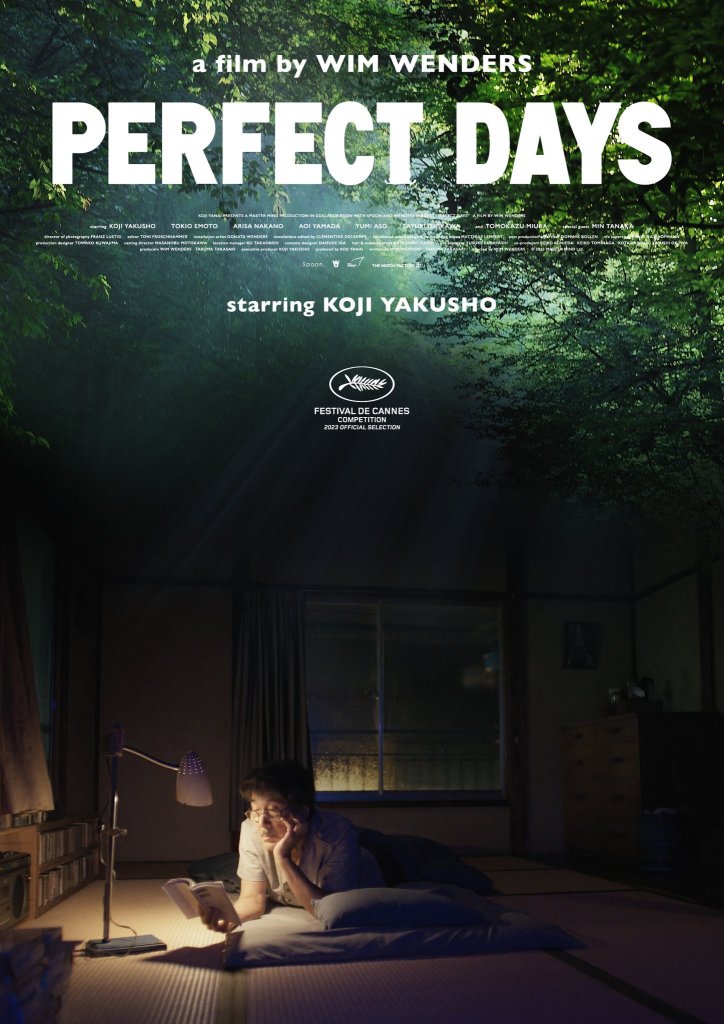
Hirayama can’t help but look up. When he steps out of his apartment, when he’s on his lunch break in the park, and at any other random moment throughout the day when something catches his fancy, he’s noticeably looking up. But why is he so compelled to look up? After all, he literally cleans toilets all day. The answer lies at the heart of Wim Wenders’s newest film Perfect Days, set in Japan despite the director’s German heritage.
Hear me out: The Taste of Things is a film that deserves to be seen in a crowded theater. Not because it’s a hysterical comedy like Bottoms – though it certainly has plenty of witty comedic moments – and not because it’s a film about finding community like Marcel the Shell With Shoes On. Actually, it is a communal experience in the way it elicits the rawest emotions from those that are drawn into its spell.
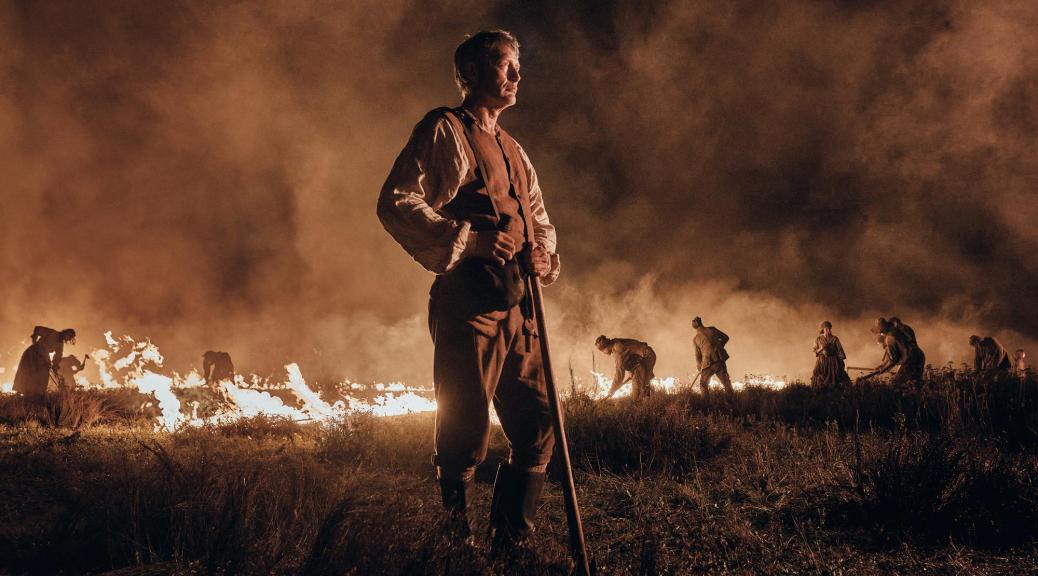
I was reminded early on in The Promised Land of There Will Be Blood, a similar film not only in sensibilities but in themes – a film that, in this reviewer’s opinion, ranks as one of the greatest ever made. Both films take place in the distant past. Both films concern rugged, dauntless men who seek to tame the wild country. Both films feature exquisite technical elements and impeccable acting across the board. But The Promised Land manages to differentiate itself to become its own statement before long.
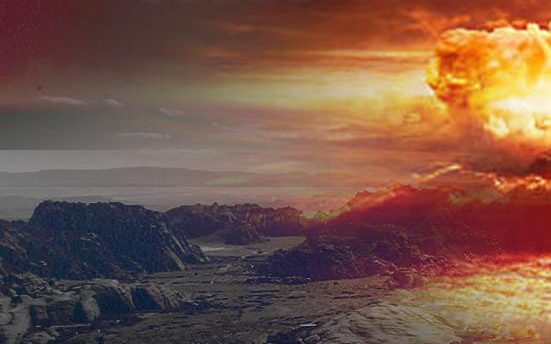
Shortly after the release of Oppenheimerthis summer, there was a minor stir online about the real-life dangers faced by many Native Americans in the wake of the Trinity test at Los Alamos. Adding to that discussion is the righteously angry documentary Downwind, which focuses on the countless lives that were negatively affected by the US government’s testing of nuclear weapons from 1951 to 1992 in Nevada and Utah. Directors Mark Shapiro and Douglas Brian Miller mine genuine heartbreak and pathos through their interviews with Native American leaders, everyday people that were affected first- and second-hand through radiation sickness and also, uh, Lewis Black. What follows is a mostly comprehensive accounting of the history of the tests, and how their existence was not swept under the rug, but was downplayed in their long-term dangers. The film doesn’t necessarily need any dissenting opinions but it’s what keeps Downwind from being great. Perhaps, at the least, the filmmakers could have included the perspective of someone that worked on the projects, regardless of how supportive they are.
Inspirational sports documentaries are a dime a dozen, but there’s something endearing about the uphill battle on display in 26.2 to Life. Running a marathon is the hardest thing I’ve ever done, physically and mentally, and I did so without the restrictions of the subjects in director Christine Yoo’s debut feature. Nevertheless, the inmates at San Quentin state prison started a running club, with help from outside coaches, volunteering their time regularly to help the men succeed. Throughout the film, we get to know the men at the center of the club, most incarcerated for murder or similarly serious offenses. But they’re determined to improve their lives, and the running club gives them an outlet for success, including one inmate who aims to qualify for the Boston Marathon (trust me, it’s not easy, even for a marathon veteran). The film generally stays the course when it comes to the genre, but Yoo’s access to her subjects is no less impressive. There’s no shortage of emotionally rich stories to be found within the walls of a prison, and 26.2 to Life provides enough life-affirming narratives to make for an engrossing documentary.
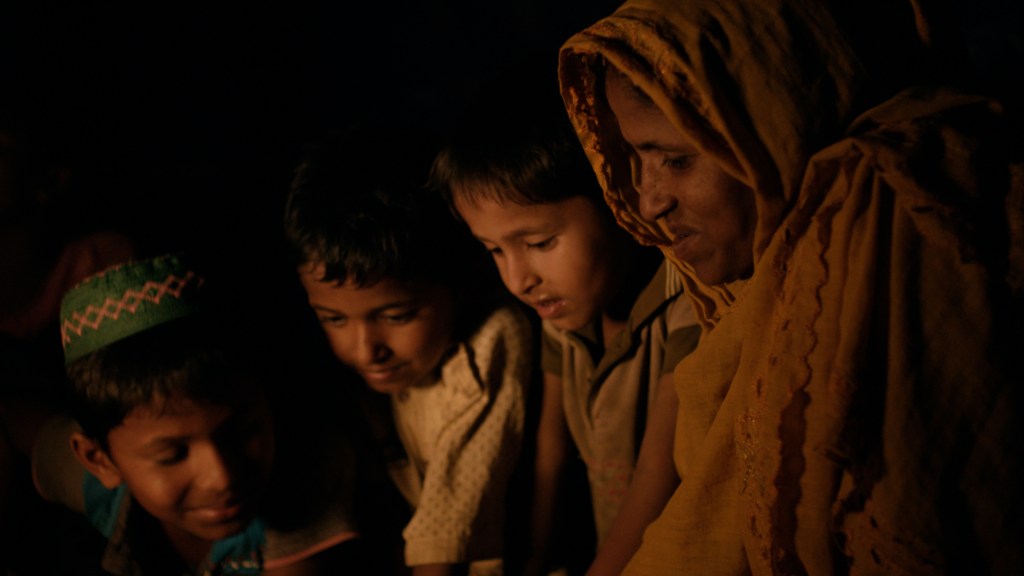
With documentaries, less is more. As in, the less information the filmmakers feed to the audience, the more we’ll be able to infer. Case in point: the devastatingly beautiful From This Small Place, a film with sparse dialogue but an abundance of heart. The film follows a family of Rohingya refugees as they settle in their new lives in a Bangladeshi camp. Director Taimi Arvidson smartly juxtaposes the kids’ carefree days spent playing and exploring with the adults’ worries about the basic necessities of life, all without narration, letting the images speak for themselves. It’s a documentary that manages to be poignant and fulfilling, without being overly sentimental. And at only 77 minutes, it says what it needs to say without wearing out its welcome.











 The Movie State