HIFF 2023: Interview with Cast and Crew of To Fall in Love

To Fall in Love

Below is my conversation with the cast and crew of To Fall in Love, which includes director Michael Foster, writer Jennifer Lane, and actors Eric Cassalini and Beth Gallagher, ahead of its world premiere at the Heartland International Film Festival. We talk about adapting the original play into a film, the challenges of filming extensive dialogue, and Beth & Eric’s ability to channel their characters’ grief. Our conversation has been edited and condensed for clarity.

Ben Sears: You all have some familiarity with each other from working on different projects together. Did that familiarity and chemistry help out with any part of the process?

Beth Gallagher: It certainly helped with trust, like artistic trust. Michael, had we worked together before?

Michael Foster: Yes, we worked on the trailer, we worked on the first iteration, and that was pretty much it.

BG: Jenny and Eric and I had worked worked on the play together, Eric and I had worked on other plays together. Michael and I had worked on the trailer for the play, and a first iteration of the film together, so there wasn’t any – for me – any feeling of ‘oh, is this person going to get my work?’ It just kind of happened nicely, and I don’t have anything to compare it to, but it felt great.

Eric Cassalini: Yea, I would make the similar statement that the issue of whether we were going to accomplish our goals or not was nothing that ever got in the way of production.

BS: It’s always easier to work with people you know than someone you’re just meeting for the first time.

MF: From my point of view, working with the people in this room, was definitely not an issue, especially with Beth and Eric. A lot of the takes, I could just let them go, knowing that they had done the play and the previous movie, and they knew their lines and their characters. But I haven’t even thought about this until now, but I had never worked with the crew before. We only shot for 5 days, but it took me a couple of days to learn how to communicate with them. I’m kind of having some PTSD right now [laughs] because the first day was not easy. There was definitely some communication issues happening, like wrong lenses being rented, the wrong camera was rented; there were some things going on. Then I found out the crew was really loyal to the DP [], and so they weren’t really going to take my direction without going through her, so there were some weird things going on that first day, but I think by the second or third day we got things figured out.

BG: Well as a producer, I would have loved to help, but as an actor, I’m so glad that Michael had the capacity to keep that from us.

MF: Beth needed to focus on the acting, which is where I needed her. But it was not ideal for her to be producing while acting.

BG: Well I think you did a great job of allowing us to separate those two because you can’t be speaking up about the wrong lens during the take.

MF: [Laughs] You guys don’t even know about half the behind the scenes stories.

BS: You had mentioned the play a little bit. Jenny, at what point did you decide to adapt your play into a film?

Jennifer Lane: That’s a great question, I think it was Michael’s idea, at least initially. He heard a reading and then was like ‘this could be a movie.’

MF: It was actually the second reading, the first reading really, really moved me. But there was something about the second reading when Jenny had revised it a little bit – and I think it had to do with Eric and Beth being more into character. I don’t know what happened, but all I know is that by halfway through the second reading, I had visuals in my head and I was thinking of Before Sunrise, and that trilogy, and I think after the reading I was moved, and said ‘this should be a movie,’ and then we all got excited.

JL: That’s exactly what happened, and at that point, do you guys remember how far into development we were?

EC: I don’t think we were that far at all. We only did five rehearsals before the first performance, which is insane. It was well before we actually mounted it the first time, which was at the 2017 San Diego Fringe Festival. Michael had already expressed his interest, and we were like, ‘yea, let’s figure out how to get this thing done.’ It all kind of bubbled up together once we started working on a production. Jenny brought it to me a year before.

JL: That’s another interesting tidbit, I had written the part of Wyatt for Eric. We had been working on a different play a year before, and as I was working on this play, it was his voice in my head as I was creating it. He was the first person I showed it to.

EC: Yea, and then we had built it into the Fringe for the following season, and then it just started gathering. Michael was the only filmmaker that I was psyched to be working with at the time. There was only one other person I had worked with before him, and they weren’t really making films at that point anyway. His interest made it such an obvious thing.

BS: It sounds like most of you have a mostly theatre-based background. Was it difficult at all to make that transition to film?

BG: For me, it was not difficult because the way we did the play at Fringe was in small rooms, and then we did it site-specific twice. That is so close to on-camera acting. What was different, and is always different about film, is filming out of sequence. But Michael allowed us to go back as far as we wanted, sometimes, I want to say, about 10 minutes, and ramp up into the scene that he was actually trying to capture. That made a world of difference. I think that’s why the performances are decent because he didn’t just make us go. All of that made it not difficult for me.

EC: I agree, it really, as far as the aesthetic, it didn’t feel very different. In part because we had done it as a site-specific play a couple times, so the reality of it was very much baked into our process of learning it as actors. Yes, it was in a different location, but it was still a house. We didn’t have to imagine being in a different space. All of that leant itself to being able to transition our experience into a different location. There are moments on stage, even in a close setting, when I personally feel like I need to project more in the moment. So the process of switching over to a film leant itself to the intimacy of the story.

BG: It’s like doing a site-specific show, but the audience is holding a boom mic.

EC: Or like one of those satellite dishes, from the football field.

BS: Michael, the technique that Beth had mentioned of performing a scene before what you’re actually filming – how did you get to that process?

MF: I don’t think I came up with that, I think Beth and Eric did. One of our earliest takes, one of them said ‘can we start earlier?’ And I was like, sure, we’re not shooting on film, so the only thing we’re dealing with is time. We had plenty of time on each day, but it was never a problem. Since we were doing long takes, it just made sense to me that since we’re doing these long takes, that they’d be able to ramp into it. My personal feeling is that the actors are the ones on camera, and they’re the ones that people are watching, so I was more than happy to go with whatever process they wanted to go with.

BS: This is a film that’s almost exclusively dialogue. Were there any specific challenges to filming so much dialogue and still making it dynamic?

MF: The biggest challenge was the technical part of it. Once we worked with Eric and Beth, blocking the scene how we wanted, that was the easy part. The hard part was figuring out where the camera and the crew were gonna be. Because the camera was kind of floating or moving in some scenes, so the hardest part was getting all of that worked out. We didn’t do that many takes per scene, but when we did have to do a second or third take, usually it was for a technical reason, like something going out of focus for too long. And I’m ok with those things, but it was always technical, it was never performance related.

JL: I think I was more sensitive to that in some ways, just because I really wanted it to not feel like we were just filming a play, and I don’t have as much experience in screenwriting as I do in playwriting. So I was like, ok, does it feel too stagnant? Where can we cut back on dialogue just a little, and let it just be a physical reaction or something. I was very sensitive to it, maybe I worried too much about it. But I was very cognizant of the fact that this needed to be different in some meaningful way.

EC: And the rest of us were like, ‘put in a transition! We want more dialogue!’ Because dialogue is so fun, and that actually happens multiple times.

BG: In the pre-production process we did go from one location to five, and that came from a combination of Michael and Jenny saying what’s realistic and dynamic enough. Michael also edited the film, and that’s a huge part of what makes it dynamic.

EC: In fact, there was a process there, with the opening sequence. You did it one way, and made some changes to make it more dynamic.

MF: My original intention was to shoot it wide-screen, almost like looking at it straight on, as if it were on a stage but on the real world. That was kind of the original idea behind it, and I shot the opening scene in a master, but we did a lot of coverage. But in the editing process, I thought I would stick to my original idea, which was to let it play out in one long take. And we screened it for friends, and nobody liked it, so I had to go back and edit it like a movie, with all the different cuts and cutting back and forth to reactions. After I did that, I haven’t had a single person say that it doesn’t work.

BS: There are so many movies that are play adaptations, and it’s a common technique to throw in a flashback or something to expand the world that can’t be done on stage. Was there ever a moment when you considered doing that?

JL: I think that I probably wanted to go overboard on stuff like that, and Michael was the one to reign me in. Like I said, I was just very sensitive to the fact that it was a play, and I didn’t want it to feel sluggish. I was very concerned about that, and fortunately he talked some sense into me. So the only time we use any sort of flashback is to great effect.

MF: I just felt that if you peppered in some flashbacks, the ending would have less impact. It’s like not showing the shark, so when you finally see the shark, it’s more impactful. I felt like the audience had gotten used to seeing everything in real time, and then all of a sudden they’re seeing a different type of imagery, then it would be a little more impactful.

BS: Beth and Eric, was it difficult at all to tap into this very specific type of grief that your characters have experienced?

BG: Yes, difficult to know that it’s authentic to someone that has actually experienced it. But no, not difficult to authentically feel grief or sadness or pain or love. To me, the greatest compliment is when someone sees it and says ‘I lost my child, and you portrayed what I experienced authentically.’ I also will never stop saying ‘oh, that’s how I should have said that line.’ It’s never done right, you never get it exactly perfect.

JL: To their credit, I’ve seen them do this many times, and it feels fresh and authentic every single time I see them do it. Whether it’s the film, or a million different versions of the play. I wrote it, and I’m like ‘oh, this is really exciting to watch!’ Because they’re incredible to watch every single time.

EC: I’m the lucky one in this story, because my grief is sitting in front of my the whole time. So all I have to do is rely on my training as an actor to put all my attention on my partner, and get stuff from her, and try to do stuff to her. Part of the reason it ends up fresh is because we’re both really in a moment together when things are working. We’re just following each other’s lead. It’s not so much about what we say as it is how we say it. For my part, it wasn’t so much about the loss of my son. Nobody can play more than one thing at a time because nobody does that in real life. It’s like, you don’t understand, that’s what happens in reality. So I didn’t have to think so much about Jake, except in the moments when we’re talking about him, and then it’s just a matter of connecting to loss. And then it doesn’t really matter what kind of loss you’ve experienced in your life, as long as you know the level of loss. That’s like a 10, so I just had to go find in my imagination, the places where I could connect to that, and then just talk to her. It is a challenge, but it’s a challenge that I’ve been working on building as a craft for 10 years. I’m lucky to have a partner with Beth; she made it really easy.

To Fall in Love will have its world premiere at the 2023 Heartland International Film Festival on October 7. Buy virtual and in-person tickets here.

HIFF 2023: Interview with Greener Pastures Director Sam Mirpoorian

Greener Pastures

Below is my conversation with Sam Mirpoorian, the director of Greener Pastures, a documentary feature being screened at this year’s Heartland International Film Festival. We talk about Sam’s connection to the subject matter, finding trust in the film’s subjects, and the length of the film’s shoot, among other things. Our conversation has been edited and condensed for clarity.

Ben Sears: What was the process like of finding the subjects of the film?

Sam Mirpoorian: It started in the spring of 2018 after doing discovery and speaking to well over 100 farmers over a 6 or 7 month period. I just identified farmers that had some kind of direct or indirect correlation to suicide, whether they had suicide ideation or a suicide attempt themselves, or a family member had died by suicide. That’s kind of the genesis of the film started, and from there, it kind of just happened very serendipitously where Jeff was featured in an HBO & Vice piece on farmers and mental health in August. I reached out to him on Facebook. It was a shot in the dark, I didn’t think he would get back to me, but he responded 10 minutes later, and I was out filming with him in October. And then I went to a couple farmers’ union events in Indiana, and I pitched the story to some folks there, and they mentioned Chris Peterson. Chris was a former Iowa President of the farmers union, he’s a board member, he’s kind of like the Godfather of agriculture of the Midwest. You see in the film where a lot of Democratic candidates – Barack Obama, the Clinton’s, Jon Edwards, Al Gore – they would always come and seek his endorsement because they’d always want to start off the Iowa caucus in the right direction. So while I was filming with Chris, he didn’t know who Jay was, but he sent me an article to a Modern Farmer magazine article that was about Jay. From there, I reached out to Jay on Facebook, and he responded. Juliette, I had reached out a couple times on a dairy farmers group on Facebook. She had gotten back to me after a friend had died by suicide.

BS: I imagine you’ve got to have a lot of patience, having to weave through so many potential candidates until you finally find the right one.

SM: Well, you see how Becky is like a main character in the film – she didn’t become a thought in my mind until, like, a year and a half into filming. So that’s one of the examples of being patient and following the story, seeing what naturally and organically unfolds. It worked out really well, and this was a perfect situation where the passing of the torch, and this multi-generational look at how a parent can pass down the legacy to their child. I thought she depicted that really well.

BS: So did you have any interest in farming before you started this?

SM: I had no interest in farming, I had no idea, no relatives that were farmers. I’m Iranian-American, so my culture has always been around going to college and getting your degree, and sticking to something practical. Never thought about filmmaking, never thought about farming, never thought about any of these things. And then my mentor, Andrew Cohn, who did Medora and Night School, was helping me with some projects and pushing me in the right direction, and he told me to make a feature, and I can get you funding for it. So he introduced me to the Catapult Film Fund in San Francisco. I received a $20,000 development grant to start developing the project and the story. So Andrew was really instrumental in helping me get in the mindset of a feature because I didn’t really know what to do.

But I heard an NPR story based on CDC statistics that farmers and agriculture workers have the highest rate of suicide among any profession in the US. My buddy Adam, who’s also a cinematographer on the film with me, mentioned the same concept and story from a guy that he was working in a warehouse with. So it all just started as an idea, and then Andrew gave me some inspiration and motivation to turn it into something, and I did the legwork and research.

BS: How long did the research portion of it take?

SM: Well, the concept of development is kind of like the bridge between research and production. Research and development started roughly around March of 2018 and it went all the way until 2019, while still shooting and moving the needle forward.

BS: Did you always plan on shooting for so long?

SM: No, Covid played a really big role. We were looking to wrap shooting in 2020 because of the election, and Becky was the arc. We shot in 2021 and 2022, and it just helped to put a bow tie on the end of the film. But the climactic moment is the election in 2020, and then the wrap-up and the aftermath was in 2021 and 2022. I was 24 at the time when I started it, and I’m 30 now, so I never anticipated or imagined the film being as longitudinal as it was.

BS: Did you ever think about cutting it short, or thinking you had enough already when the pandemic started?

SM: That’s a great question because it was my debut feature, and first time editing something like this. I had no idea how to go about it, so I edited the film and we got rejected at every single festival. We thought we were there, and we absolutely weren’t. We brought in another editor, she worked on it for another 9 months, really left no stone unturned, and that’s when we were able to identify extra things that we needed to go get, like extra sound bites, and things to fill in the gaps and the holes. So it was a really thorough process about understanding story and the timeline and the process of where we are, thinking we were done and we’re absolutely not. That happens a lot with features, and this was no exception.

BS: I imagine that when you’re in the thick of it, you don’t have as clear of a sense of what the narrative of the film is going to look like.

SM: No, you have no idea. I think you go into it with the hopes that it’s going to develop the way you envision it, but almost every single time, it evolves and morphs and shapes into something you wouldn’t even imagine. You have to craft it as best as you can because that’s how you get money and funding. A few weeks ago, I was looking at some of the older decks that I wrote, and the only thing that was the same was Jeff. Chris and Becky weren’t on there, Jay wasn’t on there, Juliette wasn’t on there – it changed entirely. I thought that was really funny, and it makes a lot of sense because that’s just how it works. But obviously the construct and the foundation was there of mental health, globalization, mechanization, and climate change.

BS: Did you set out wanting to make a statement with this, or did just want to tell the stories of these peoples lives, and then the statement kind of makes itself?

SM: One thing that Andrew taught me is that information overload, to a certain extent, can get boring and overwhelming as a viewer. You can make these informational documentaries that have talking heads, or you can do these character studies, and that was the thing I was most attracted to. When you do talking head and informational pieces, you don’t have to build trust. You just pop in, shoot what you get, and you get out. There was a huge sense of pride, and love and respect about the process of getting them to trust you, and letting you into their home. That’s something earned and not given, and I think that’s why I really wanted to tell this film in the most humanistic way as possible. Those bigger, day-to-day issues, they easily presented themselves. It came so naturally, and we didn’t have to worry about it.

BS: Was it hard for your subjects to trust you to the extent that they did?

SM: Some were harder than others. I would say Jay and Juliette were the easiest. They were very trusty, and they gave us access to everything. Chris and Becky got to that point, but it probably took a year or two. Jeff had boundaries – every now and then I’d flirt with him, I’d cross over, and he’d get really upset, but ultimately he’s really happy with the film. The biggest thing with the film, is that you can see everyone’s family except Jeff. He had boundaries, and we respected that, but obviously as a filmmaker, you want to get access to every single nook and cranny of someone’s life. I think it worked out well though. Who’s to say if it would have worked out better or worse if we did or didn’t have more access?

BS: Do you still keep in touch with everyone?

SM: Yea, they’ve all been to at least one festival screening except Juliette because we just haven’t been in Kansas. I talk to them probably a couple times a week on Facebook. They’re all very responsive, and they’re all really happy to see the updates – every time I share something on Facebook, they like it or they love it. They’re really proud of it.

BS: All of the subjects are in the Midwest. Did you seek to stick to the Midwest, or did you want to go nationwide at any point?

SM: That was something we had, not necessarily fears, but concerns about how it would be received. I think, initially, I just tried to do whatever I could possibly do with the largest reach when I didn’t have any money. I said ok, I can drive to this state, then this state and this state, and I know that going to dairy farms in upstate New York or Vermont, or Georgia, it would have been more expensive and less tangible. Adam has family in Chicago, and I would stay with them for an extended period of time and bounce between Wisconsin, Iowa, and Minnesota. It’s like a perfect halfway spot, so logistically it just made the most sense. But we definitely thought about trying to extend the story, but we just found a good patch of people to follow here.

BS: Maybe that’s what the sequel can be.

SM: [laughs] Yea, before the film, I never really thought about how important soil health is, or how important farmers are. Without them, we’re not eating. It’s as simple as that, but it’s very complex as well with policy, and the weather, I just have a strong appreciation for it now.

BS: A lot of people have a kind of preconceived, simplified notion of farmers and who they are and what they want.

SM: People don’t really understand how brilliant they are, too. They’re biologists, they’re engineers, they’re chemists.

BS: It’s more than just planting seeds in the ground.

SM: Right. Equipment breaks down every hour, on the hour. They can’t wait for a John Deere representative to come out on Monday if something breaks down on Friday. They have to figure it out then and there, and I got to see that several times. It just gives you a new appreciation as far as how great they are.

Greener Pastures will screen as part of the 2023 Heartland International Film Festival. Buy virtual and in-person tickets here.
HIFF 2023: Another Body, Long December, and Shudderbugs

Another Body

It’s hard to go anywhere online these days without hearing something concerning artificial intelligence. I remember hearing years ago about the horrendous potential of deepfakes and what it could mean for the world at large, but mostly viewing it as a tool to harm celebrities and world figures. The documentary Another Body tells the story of multiple young, everyday women who were forever affected by deepfakes and AI when they suddenly realized their faces were being used to create fake pornography. But directors Sophie Compton and Reuben Hamlyn use an interesting trick to protect their subjects’ identities: they use pseudonyms and deepfaked faces any time they appear on screen. It’s an obvious way to be able to tell these women’s’ stories while keeping their personal lives and reputations intact, but Compton and Hamlyn never exactly clarify that the filmmakers had the consent of the actors whose faces they were utilizing, making for a kind of ironic undercurrent to their messaging. Nevertheless, the documentary begins to dive into toxic internet culture and the perils of womanhood inherent in today’s world before abruptly ending. One would have liked to see Another Body explore this aspect of deepfakes more, but it remains an enlightening, personal look at an aspect of internet culture that needs more attention.

Buy virtual and in-person tickets here.

Long December

Take the indie attitude and catchy music of John Carney’s films, and the dreamer aesthetic of A Star is Born, and you have Thomas Torrey’s Long December. The film follows musician Gabe Lovell (real-life musician and member of the band Jude Moses Stephen Williams), as he tries to make his way back into the music scene after falling out of it. Torrey, who also wrote the screenplay, doesn’t stick to the melodrama that’s often found in films of this genre. Yes, Gabe has a wife and newborn child, but she’s more supportive than a hindrance on his ambitions. Yet she’s realistic to stress the importance of a steady paycheck to support their family. Williams also wrote the original songs for the film, lending another layer of authenticity to it all. Inspirational musician films can be pre-packaged and shiny, too often resting on their subjects’ music, but Long December ultimately succeeds because of everyone’s investment in making an emotionally honest film first and foremost.

Buy virtual and in-person tickets here.

Shudderbugs

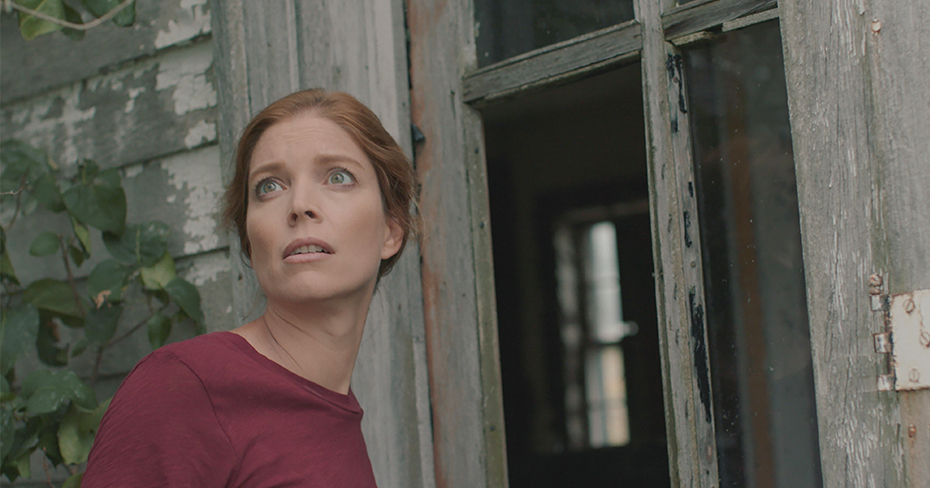
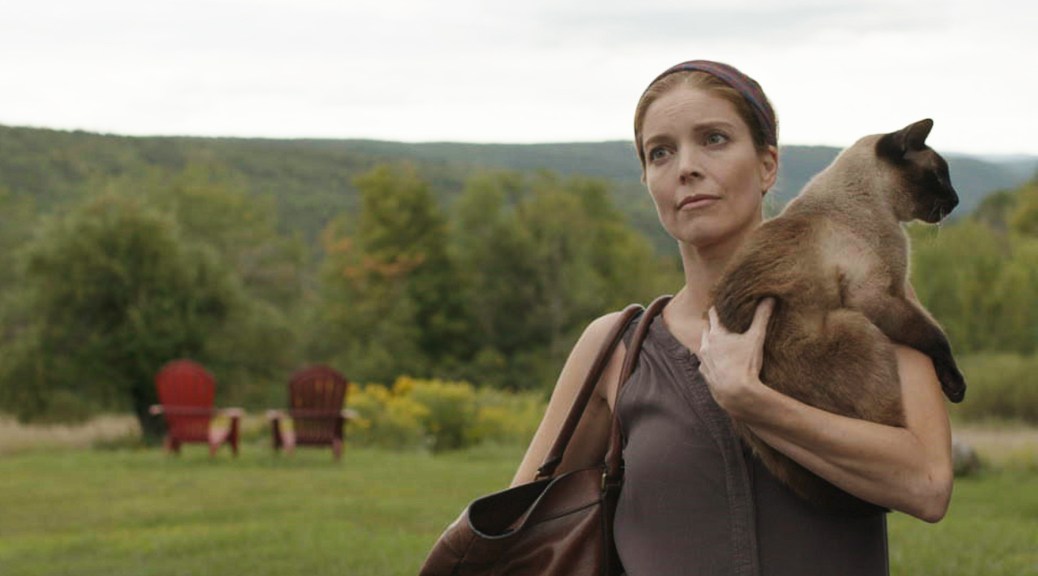
Writer-director-actor Johanna Putnam’s Shudderbugs is an exercise in minimalism, often to its benefit and occasionally to its detriment. Putnam plays Samantha, a young woman visiting her recently deceased mother’s home. Through sparse dialogue and sparse action, the film portrays Samantha’s guilt and existential fears now that her mother has passed, adding a bit of a mystery angle as she attempts to understand the cause of her mother’s death. Putnam’s stylistic flourishes add a level of intrigue that would be missing if they were absent from the film. Consider the occasional appearances of bugs and insects throughout Samantha’s mother’s home, a constant but subtle reminder of the death and decay of a loved one’s memory. The narrative may not be the most propulsive of the festival, but Putnam shows enough promise in front of and behind the camera to show she’s a rising talent worth considering.

Buy virtual and in-person tickets here

Loki Season 2 – TV Review

Loki Season 2

  • Creator: Michael Waldron
  • Starring: Tom Hiddleston, Owen Wilson, Sophia Di Martino, Gugu Mbatha-Raw, Jonathan Majors, Ke Huy Quan, Eugene Cordero
  • Six episode season, four episodes watched for review

Grade: B

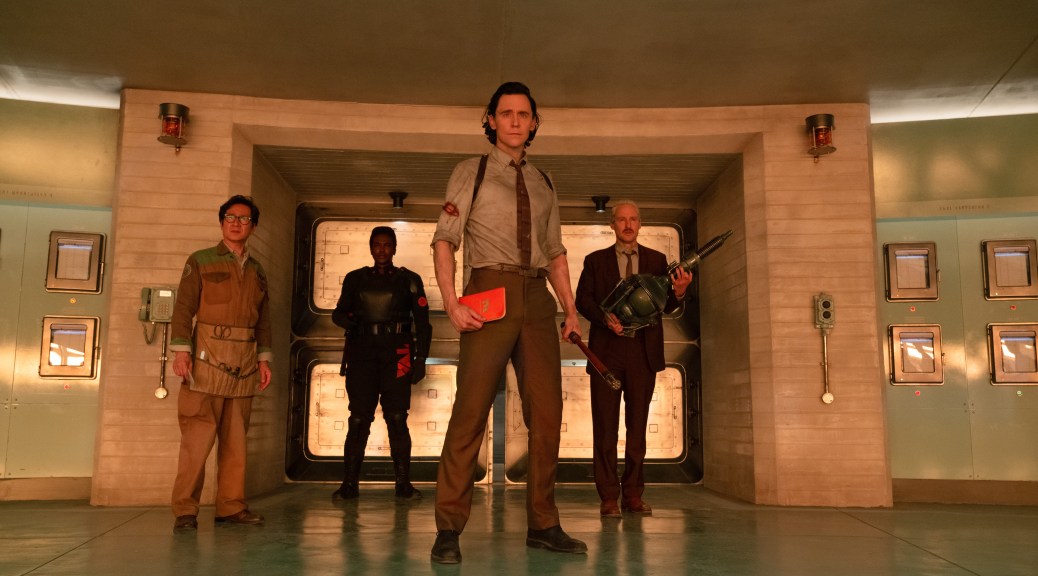
As 2023 continues to drag along, superhero fatigue continues to drag our collective tolerance for the comic book genre with it. With the exception of Guardians of the Galaxy vol. 3 and yours truly’s favorite Harley Quinn cartoon, virtually every superhero-based piece of content, across TV and film, has been an underwhelming mess. Nevertheless, Marvel continues chugging along with its current phase, and with it one of its most highly acclaimed properties for a first-of-its-kind second season. When Loki premiered in 2021, the MCU was still in the early days of its foray into television, still riding high off the near-universal success of WandaVision and still harboring some Endgame-related goodwill in theaters. But the Disney+ series have tapered off, to put it mildly, since then, so Marvel is surely hoping some favorable memories are still carried over for its newest spectacle.

Continue reading Loki Season 2 – TV Review