9. Poor Things (Best Picture, Best Adapted Screenplay, Best Visual Effects, Best Editing, Best Sound, Best Original Song)
Maybe it helps to already been on Yorgos Lanthimos’ wavelength before starting Poor Things, but it’s a film that rewards those lucky ones. Emma Stone’s legendary performance is an actor’s dream, Mark Ruffalo is a hysterically toxic villain, and Tony McNamara’s screenplay balances an impressive amount of silly comedy and empathetic drama. The film may have overstayed its welcome by about 15 minutes for my taste, but there’s no denying that Poor Things is easily one of the most unique films of the year.
8. Maestro (Best Picture, Best Original Screenplay, Best Actor, Best Actress, Best Cinematography, Best Makeup & Hairstyling, Best Sound)
Was Maestro traditional Oscar bait? If you want to be cynical about it, yes. But what Bradley Cooper pulled off is far from what we’ve typically seen in the biopic genre (just look at NYAD or Rustin, Netflix’s other Oscar plays). Cooper and Carey Mulligan were electric together and separately as tortured artists, trapped by their professions and the world they inhabited, whose only outlet is the arts and each other. If Maestro is the new definition of Oscar bait, I’ll take it any day of the week over the material we typically see.
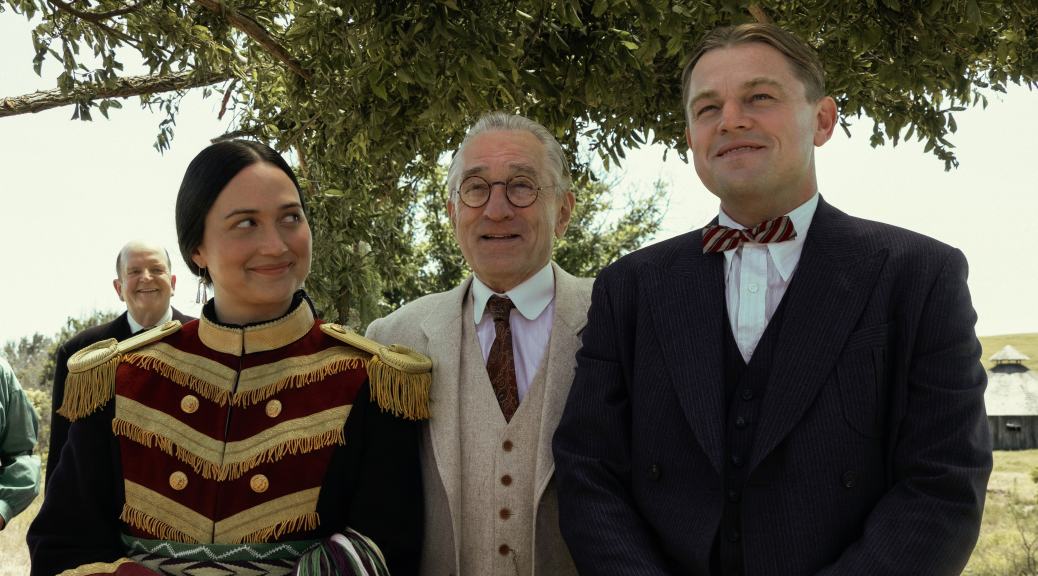
7. Killers of the Flower Moon (Best Picture, Best Director, Best Actress, Best Supporting Actor, Best Cinematography, Best Editing, Best Original Score, Best Costume Design, Best Production Design, Best Original Song)
Martin Scorsese’s latest American epic contained almost everything he’s perfected over the years, while having something entirely new to say. By re-working David Grann’s novel with Eric Rother, Killers of the Flower Moon became more than a simple story about systemic genocide. Leonardo DiCaprio, Rober DeNiro, and Jesse Plemmons are all at the tops of their games, but Lily Gladstone is the bleeding heart of the film, portraying complex emotions while hardly changing the tone of her voice. Is the film as rewatchable as Scorsese’s best? Maybe not, but it remains a vital statement about the inherent lie of the American Dream.
6. Barbie (Best Picture, Best Adapted Screenplay, Best Supporting Actress, Best Supporting Actor, Best Costume Design, Best Production Design, Best Original Song)
Few movies had me cackling with laughter long after I had left the theater than Barbie. Few movies were as elegantly, splendidly designed. Few movies had as much heart and emotion, while having a great deal to say about gender, womanhood, manhood, and systemic inequality. Oh yea, and it’s all based on a series of toys. That Greta Gerwig was able to pull all of this off with aplomb, continuing her perfect directorial track record, is something worth celebrating and treasuring.
5. The Zone of Interest (Best Picture, Best Director, Best Adapted Screenplay, Best International Feature, Best Sound)
I still don’t know where I fall on the films of Jonathan Glazer, but I can’t deny the power of The Zone of Interest. The film is perhaps the best directed film of the year, a singular vision of atmosphere and mood with almost a total absence of characters and story. The Holocaust is far from new territory for movies, but rarely has it been so hauntingly depicted without diving into exploitation. And the film’s ending is a fully unique statement about complicity, and our inability to completely grasp the horrific experiences of others.
4. May December (Best Original Screenplay)
It feels like an exercise in futility to describe everything May December does in such a small space. Director Todd Haynes’ latest, and screenwriter Samy Burch’s first, is a deceptively complex tale of greed, trauma, and fame, all while having some of the best bits of comedy of the year. Natalie Portman and Julianne Moore are electric, but relative newcomer Charles Melton ably holds his own against two Oscar winners. What could have easily been a bizarre tale of Hollywood overstepping its boundaries is a film that burrows into your memory long after it ends.
3. The Boy and the Heron (Best Animated Feature)
Call it personal bias if you must, but Hayao Miyazaki’s perhaps final film The Boy and the Heron was another stunning masterpiece that came from an extremely personal place for Miyazaki. An exciting, introspective adventure that has a lot to say about grief and Miyazaki’s place in the world, the film is as impressive on a technical level as it is on a thematic level. Sure, its first act takes a while to get off the ground, and its storytelling could be interpreted as a little obtuse, but it all worked for me, especially on repeat viewings. Nevertheless, The Boy and the Heron is another stellar film from one of the world’s greatest filmmakers, regardless of the medium.
2. Spider-Man: Across the Spider-Verse (Best Animated Feature)
Spider-Man: Across the Spider-Verse is just pure, unadulterated fun. Its animation is brain-meltingly beautiful, its voice cast is perfectly realized, and it’s a kinetic comic book film. It’s so great that it’s not crazy to suggest that perhaps all comic book films going forward would be better if they were animated. You may decry that the film ends a little abruptly, but it certainly whets your appetite for the next entry, Beyond the Spider-Verse. There’s enough humor, references, and action set pieces that reward an endless number of repeat viewings, all without feeling like lazy fan service. In a great year for animated films, Across the Spider-Verse showed what big-budget animation could truly be.
- Oppenheimer (Best Picture, Best Director, Best Adapted Screenplay, Best Actor, Best Supporting Actress, Best Supporting Actor, Best Cinematography, Best Editing, Best Production Design, Best Costume Design, Best Makeup & Hairstyling, Best Original Score, Best Sound)
How many times in Oscar history has the Best Picture frontrunner been widely considered the best film of its year almost since its premiere? Regardless, Christopher Nolan’s Oppenheimer is simply a masterpiece, an endlessly rewatchable film with noteworthy performances and technical elements. Nolan stepped slightly out of his genre comfort zone to make a bold, smart biopic that leans away from tropes and raises some important questions about America and our role in changing the world, for better and worse. That he was also able to make a zippy popcorn film worthy of experiencing on the big screen is what ultimately elevates Oppenheimer above the rest.
 The Movie State