

Though the overall quality of films has taken a bit of a step back, in comparison to recent years, 2024 has offered its fair share of memorable scenes and sequences in its first half. We’ve seen quiet indies and large-scale blockbusters, and everything in-between, and all have yielded worthy contenders, but these are the best movie scenes of 2024 so far.
Civil War; “What Kind of American?”

Jesse Plemons nearly steals the show in a single scene of Civil War, thanks to an abundance of menace and some rose-colored glasses. When our heroes Lee (Kirsten Dunst), Joel (Wagner Moura), Jesse (Cailee Spaeny), and Sammy (Stephen McKinley Henderson) and their friends are taken captive by Plemons’s crew of militants, they’re interrogated to determine if they’re worthy of being spared by the civil war that’s ravaged the United States. Alex Garland’s latest film raises the stakes one terrifying question at a time, as he boils down the country’s conflict into a smaller scale. Because Civil War is less about the circumstances that define this near future, and more about how hatred and fear can manifest into deadly consequences. And it’s all kicked off by one question that contains a multitude of implications: “What kind of American are you?”
Dune: Part Two; Gladiator Arena on Geidi Prime

Denis Villeneuve’s Dune: Part Two has been the definitive big screen experience of 2024 so far. The film utilizes all the large scale action and spectacle which made Part One so memorable in 2021, and one of the most inventive sequences is the infrared/black and white sequence on Geidi Prime, the home of House Harkonnen. In the scene, we’re introduced to Feyd-Rautha (Austin Butler), a ruthless killing machine who fights in a gladiator duel to the death as a birthday gift. Without too much setup, we’re quickly keyed into Feyd-Rautha’s aura, his place within the family, and his home world. On top of all of this, the scene is Dune: Part Two distilled to its essence: incredible visual effects, action choreography, performances, world-building, and adapting Frank Herbert’s seminal novel in a unique and captivating way.
Evil Does Not Exist; The Town Hall Meeting
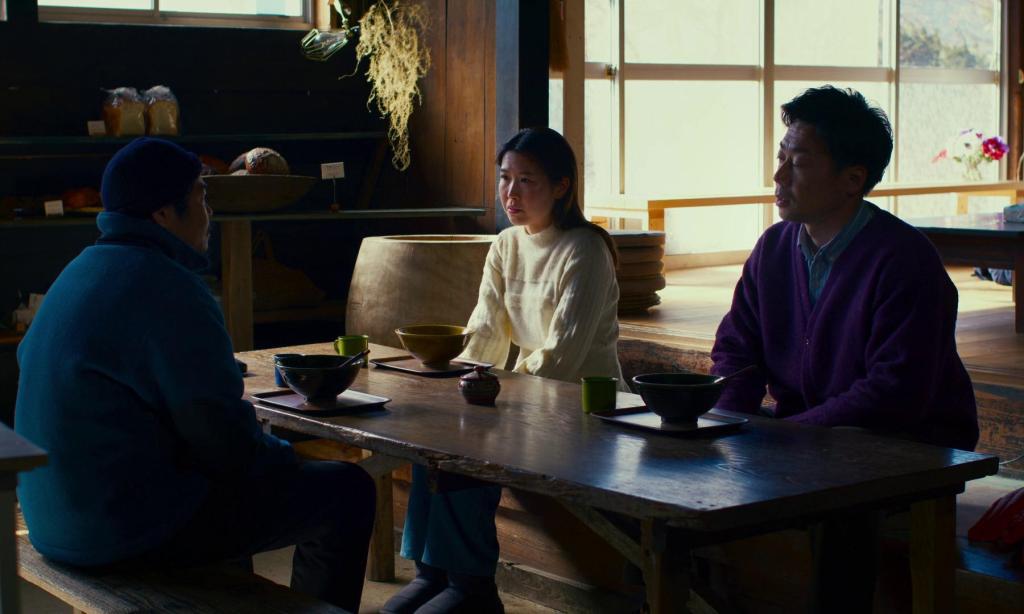
You wouldn’t expect a high-minded, serious film like Evil Does Not Exist to have a laugh-out-loud comedic scene, but it’s what the centerpiece town hall scene becomes in Ryusuke Hamaguchi’s latest film. It’s a scene where the central conflict is laid out: a company offering a “glamping” excursion is planning to construct a new getaway camping ground in the central town outside of Tokyo. But building the ground will affect not only the livelihoods of those within the town but the wildlife and ecosystem which they depend on. Hamaguchi introduces us more deeply to the film’s characters, and their perspectives, while never losing sight of the themes within Evil Does Not Exist. That he can do so, while centering so much of the debate on the placement of a septic tank, makes the film stand out, and further cements Hamaguchi as a singular cinematic voice.
Furiosa: A Mad Max Saga; Assault on the War Rig
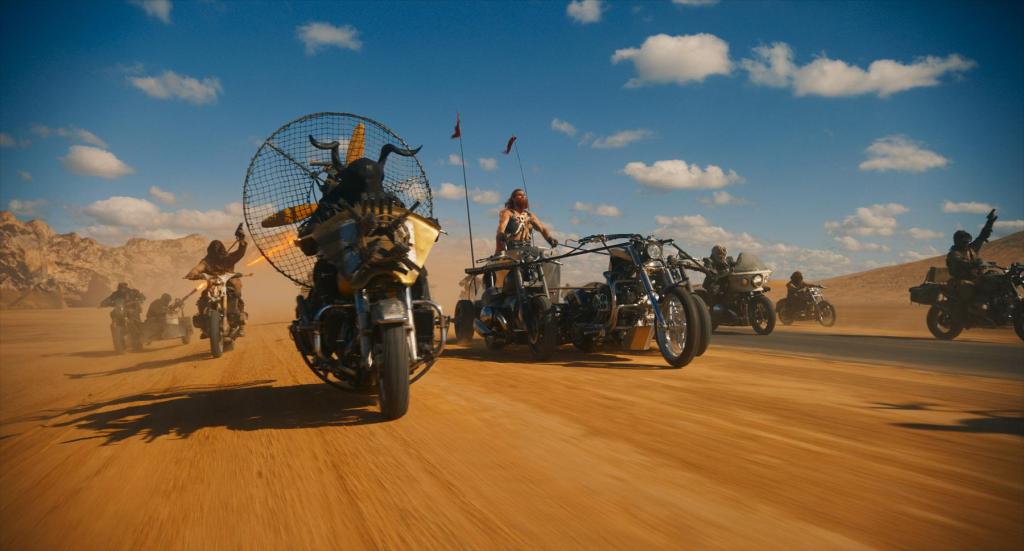
All Mad Max films simply must have breathtaking action set pieces, and the centerpiece scene in Furiosa: A Mad Max Saga comes about halfway through George Miller’s latest epic. As Furiosa (Anya Taylor-Joy) and Praetorian Joe (Tom Burke) drive the Citadel war rig to another wasteland outpost, they’re assaulted by wave after wave of marauders from Dementus’s (Chris Hemsworth) soldiers. Feeling at times like a video game, where each new wave brings a different variety of insane baddie, the assault on the war rig escalates wonderfully from one beat to the next, throwing in some excellent character details as it goes. Furiosa may not contain as much wall-to-wall action as its predecessor, but the scene shows that Miller and his mad stunt collaborators still have plenty of gas left in the tank.
Turtles All the Way Down; Turtles

All that Aza (Isabela Merced) wants to do is ignore her nagging OCD and the all-consuming feelings she has around germs, and simply be a high school teenager. So when her crush Davis (Felix Mallard) whisks her away to Northwestern University to sit in on a lecture from a professor (played by J. Smith-Cameron) who she’s idolized for years, she finally starts to forget her troubles and realize her larger place within the universe. It’s the scene that gives the film its title, and it’s a wonderful encapsulation of John Green’s novel and the whimsy of youth, in spite of all the horrible things within and outside ourselves.
 The Movie State