First, a note: one of these spots would go to Advanced Dungeons & Dragons but, because of a plot point involving blackface, Netflix and Hulu removed the episode in 2020, and I had no other way to view it.
Writers: Elizabeth Sanders, Luke Goebel, and Ottessa Moshfegh
Starring: Jennifer Lawrence, Brian Tyree Henry, Linda Emond, Jayne Houdyshell, Stephen McKinley Henderson
Grade: B-
The recovering soldier genre is one that’s produced plenty of memorable films, and likely just as many – if not more – flops. It’s hard to say exactly where Causeway will ultimately land; much as it strays from the genre’s formula, it doesn’t contain enough drama to make it an instant classic.
Starring: Jennifer Coolidge, Aubrey Plaza, Michael Imperioli, F. Murray Abraham, Haley Lu Richardson, Meghann Fahy, Theo James, Will Sharpe, Beatrice Grannò, Tom Hollander, Simona Tabasco
Grade: B
Warning: Reviews of The White Lotus season 2 will contain spoilers.
Writer: Henry Selick, Clay McLeod Chapman, Jordan Peele
Starring: Lyric Ross, Keegan-Michael Key, Jordan Peele, Angela Bassett, James Hong, Ving Rhames
Grade: B
Henry Selick may not be a household name in the same way that Hayao Miyazaki or Pete Docter or Brad Bird are, but his contributions to animated films can’t be denied. I still remember a room full of shocked faces when the answer to a trivia question announced that Tim Burton did not direct The Nightmare Before Christmas. Whenever Disney gets too cutesy with a few too many animal sidekicks, Selick manages to come back with something of a polar opposite. That he does so by pushing the stop-motion animation medium forward each time just goes to show how different the animation world would be without him.
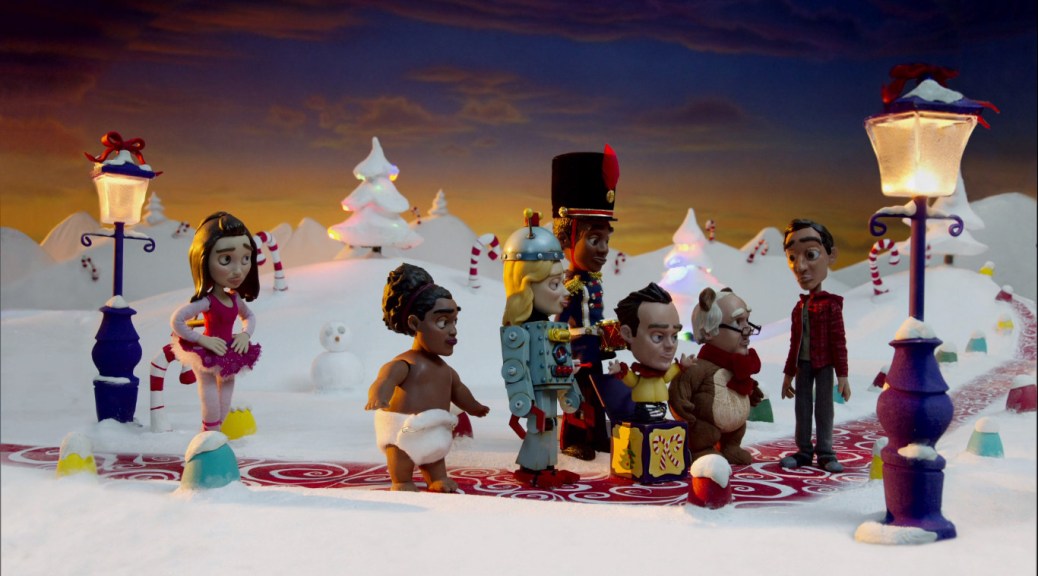
Unlike previous entries in this series, I’m going to kick things off with the second chronological episode this time, Asian Population Studies. Not because I believe it’s superior to Abed’s Uncontrollable Christmas, but more close to the contrary. Whereas Christmas is one of the show’s best episodes ever, Asian Population Studies doesn’t leave much of a lasting impression. It’s a perfectly fine (and funny!) episode that comes at the midpoint of the season; it just so happens to be amongst a sea of knockout episodes that would go on to be much more memorable.
Writer: Edward Berger, Lesley Paterson, and Ian Stokell
Starring: Felix Kammerer, Daniel Brühl, Albrecht Schuch, Moritz Klaus, Aaron Hilmer, Edin Hasanovic
Grade: A-
War is hell. It always has been, and it always will be. Whether you’re a Spartan fighting against the Trojans, or a colonialist seeking your independence from the British, or a German slumming through the trenches in France, one thing remains constant in war: those that fight always lose. You don’t need a multi-million dollar Netflix production to tell you that. You don’t necessarily need to remake Erich Maria Remarque’s novel – a version of which won the Academy Award for Best Picture in 1930 – either. Indeed, it’s the biggest question for director and co-writer Edward Berger: why did All Quiet on the Western Front need to be made?
One of the great things about comics, especially comics about long-standing characters, is seeing how individual talents can bring their own individual voice to territory that’s familiar to all. Publishers like DC and Marvel have so many long-standing characters, but they regularly invite artists to create their own arcs, regardless of how it upends the canon. Lego and Ninjago may not have as much of a cultural footprint as Superman or Iron Man, but they’ve had enough output across TV and movies (lest you forgot, The Lego Ninjago Movie only came out five years ago) to have a solid reputation and established characters.
Starring: Ewan McGregor, Ethan Hawke, Maribel Verdú, Sophie Okonedo
Grade: C-
Remember how it felt the first time you watched The Hangover? It was the type of comedy where anything was possible, where the screenwriter was free to make up whatever kooky shenanigans they could think of simply because the action had unfolded off-screen. Raymond and Ray feels like the dramatic equivalent of that kind of storytelling, a free-for-all experiment where everyone simply talks about someone we never actually meet first-hand. It feels like an acting exercise, and an empty one at that, where its primary cast mostly makes it out unscathed.
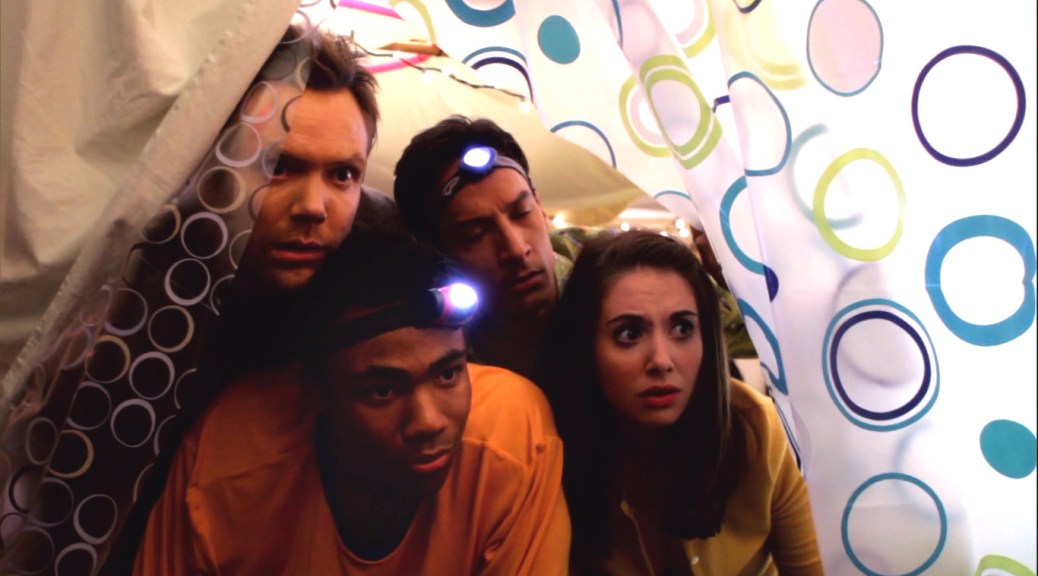
Memory is a funny thing sometimes. In some cases, it can conflate how you remember a certain moment – or, in this case, an episode of television – and sometimes, you can still pinpoint an emotion and flash back to how you reacted to something 12 years ago. Both come into play with how I remembered this week’s installments. In the former, we have Conspiracy Theories and Interior Design, and in the latter, Mixology Certification. Both are excellent episodes of Community, and both stand in the upper echelon of the show at large, for vastly different reasons.
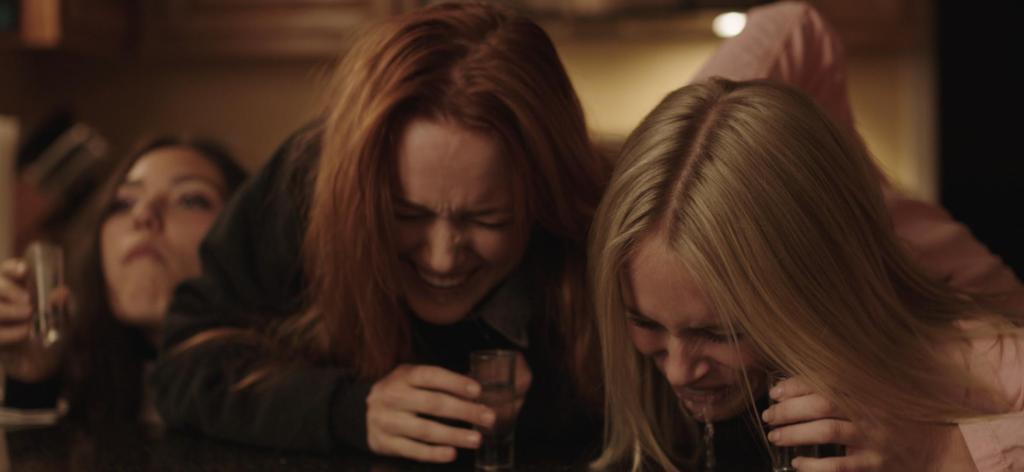
It’s always refreshing to see a film about grief – a subject that’s entirely too popular today – that approaches its subject in a unique and interesting way. Juniper is one of those films. It centers on Mack (Madison Lawlor) as she retreats to her family’s cabin after the recent and unexpected death of her younger sister Natalie. Unbeknownst to her, her childhood friend Alex (Decker Sadowski) – a party girl who lives freely without worry – and Alex’s best friend from college Dylan (Olivia Blue) show up to support her. While Mack appreciates the gesture, she clearly wants to grieve in her own way, in her own time, but Alex doesn’t seem to get the hint. Old conflicts resurface, along with new ones, and the film poses an interesting question: is there a right or a wrong way to grieve? First-time director Katherine Dudas directs the film with an intimacy that’s befitting the subject matter, and the dialogue feels improvisational but impactful. The screenplay is credited to the three above-mentioned actresses and Dudas, which suggests each performer was given the freedom to write their own dialogue, and their confidence in their characters’ inner lives easily comes through in the final product. That Juniper is Dudas’ directorial debut shows an even greater confidence in and familiarity with her collaborators.
Speaking of confidence, it’s a trait that Pinball: The Man Who Saved the Game has in spades, sometimes to great effect, and sometimes not. It’s the true story of Roger Sharpe, an aimless young man trying to find purpose in his life. As you might have guessed, his passion is pinball, which just so happens to be illegal in New York in the 1970s. Mike Faust (West Side Story) portrays Roger as a kind of lovesick puppy; it’s not that Roger is a pinball prodigy per se, he just can’t see himself doing anything else. His paths cross with Ellen (Crystal Reed) and their romance is a nice highlight to an otherwise boilerplate David versus Goliath story. First-time writers and directors Austin and Meredith Bragg clearly have a reverence for Roger’s story, and it comes through in the film’s framing device, where the real-life Roger breaks the fourth wall and essentially narrates his own story. It’s a charming conceit that will likely work for most but came off as forced more often than not to me. Still, it’s a harmless good time and provides some authentic emotional resonance.










 The Movie State