It’s hard to go anywhere online these days without hearing something concerning artificial intelligence. I remember hearing years ago about the horrendous potential of deepfakes and what it could mean for the world at large, but mostly viewing it as a tool to harm celebrities and world figures. The documentary Another Body tells the story of multiple young, everyday women who were forever affected by deepfakes and AI when they suddenly realized their faces were being used to create fake pornography. But directors Sophie Compton and Reuben Hamlyn use an interesting trick to protect their subjects’ identities: they use pseudonyms and deepfaked faces any time they appear on screen. It’s an obvious way to be able to tell these women’s’ stories while keeping their personal lives and reputations intact, but Compton and Hamlyn never exactly clarify that the filmmakers had the consent of the actors whose faces they were utilizing, making for a kind of ironic undercurrent to their messaging. Nevertheless, the documentary begins to dive into toxic internet culture and the perils of womanhood inherent in today’s world before abruptly ending. One would have liked to see Another Body explore this aspect of deepfakes more, but it remains an enlightening, personal look at an aspect of internet culture that needs more attention.
Take the indie attitude and catchy music of John Carney’s films, and the dreamer aesthetic of A Star is Born, and you have Thomas Torrey’s Long December. The film follows musician Gabe Lovell (real-life musician and member of the band Jude Moses Stephen Williams), as he tries to make his way back into the music scene after falling out of it. Torrey, who also wrote the screenplay, doesn’t stick to the melodrama that’s often found in films of this genre. Yes, Gabe has a wife and newborn child, but she’s more supportive than a hindrance on his ambitions. Yet she’s realistic to stress the importance of a steady paycheck to support their family. Williams also wrote the original songs for the film, lending another layer of authenticity to it all. Inspirational musician films can be pre-packaged and shiny, too often resting on their subjects’ music, but Long December ultimately succeeds because of everyone’s investment in making an emotionally honest film first and foremost.
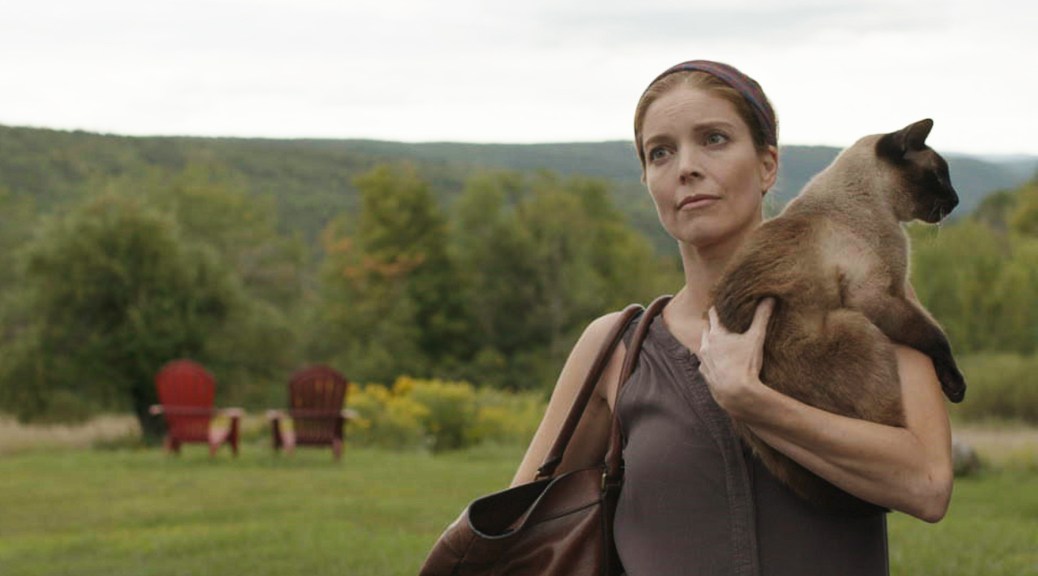
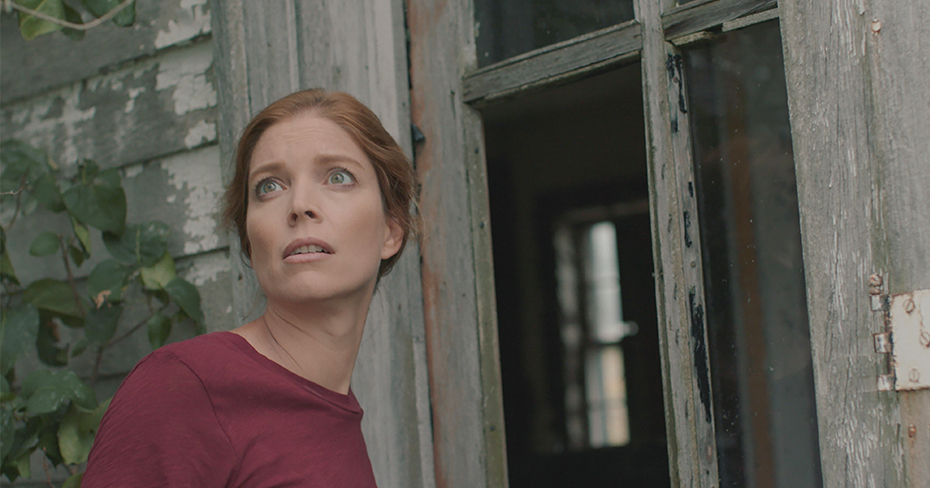
Writer-director-actor Johanna Putnam’s Shudderbugs is an exercise in minimalism, often to its benefit and occasionally to its detriment. Putnam plays Samantha, a young woman visiting her recently deceased mother’s home. Through sparse dialogue and sparse action, the film portrays Samantha’s guilt and existential fears now that her mother has passed, adding a bit of a mystery angle as she attempts to understand the cause of her mother’s death. Putnam’s stylistic flourishes add a level of intrigue that would be missing if they were absent from the film. Consider the occasional appearances of bugs and insects throughout Samantha’s mother’s home, a constant but subtle reminder of the death and decay of a loved one’s memory. The narrative may not be the most propulsive of the festival, but Putnam shows enough promise in front of and behind the camera to show she’s a rising talent worth considering.
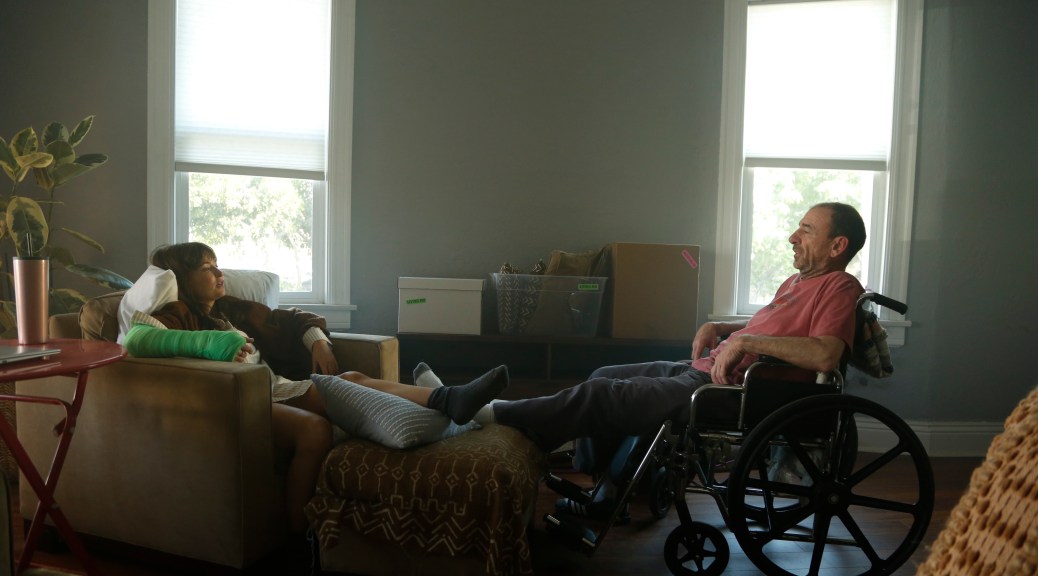
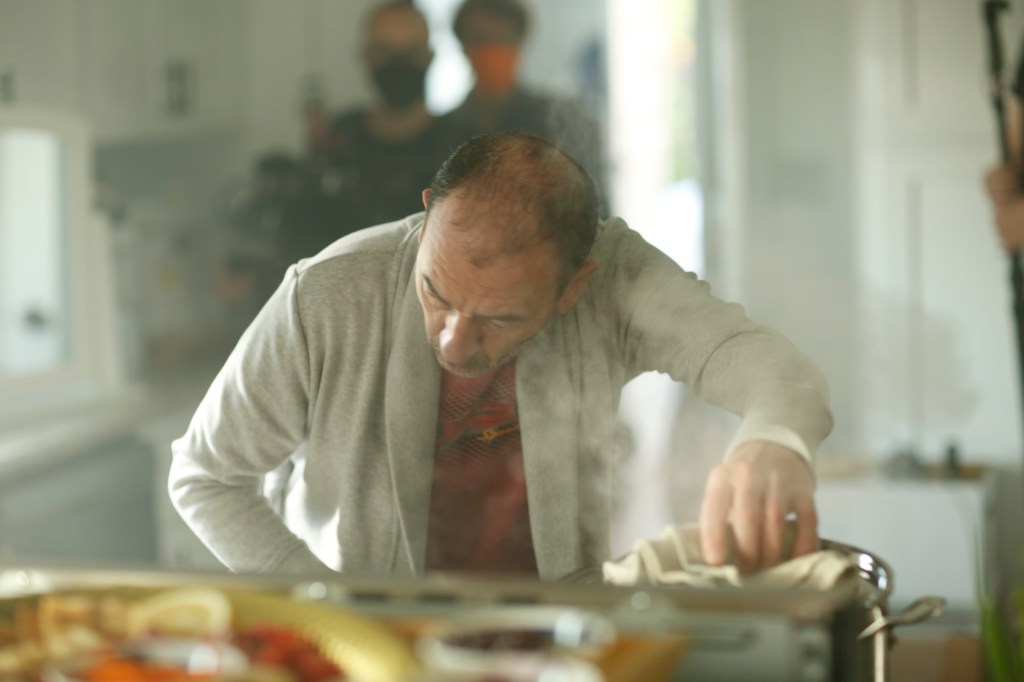
Below is my conversation with Milana Vayntrub, the director and star of Pickled Herring, a comedic short film being screened at Indy Shorts 2023. We talk about personal experiences that led to the creation of the film, comedic influences, and the difficulties of being funny while being physically restricted. Our conversation has been edited and condensed for clarity.
[Note: This interview was conducted before the SAG-AFTRA strike went into effect]
Ben Sears: Tell me a little about the collaborative process with Marina (Shiffrin), after she had written the script. You’ve spoken about how you have a kind of similar relationship with your own father as your character in the film.
Milana Vayntrub: Marina and I conceptualized the movie together years ago, though we were just chatting. We had been friends for a while, we met working on @Midnight, and we bonded over our Soviet dads. She had just gotten hit by a car, and I had just had a baby, which is a lot like getting hit by a car. She had her dad come and help her, and I had mine come and help me, and we were just talking about all the ways we love them, and all the ways they drive us crazy. Which I think is relatable for most parents. Then we were like ‘this is a story, this is too relatable,’ and we came up with the idea for the short and she wrote it all out, and we were able to make it really quickly.
BS: How much of your character in the story came from you and your experiences, and how much came from Marina?
MV: I think we have a lot of common experiences, both our dads are joke-tellers, they’re both hyper resourceful in ways that we’re like ‘how did you do that, and why?’ They have a lot in common, so I’d say there’s a shared story, but in terms of the literal events of the film, I’d say it’s probably 70-30. There are little anecdotes in there that my dad would say, but most of it is her story.
BS: Has your father seen the film yet?
MV: Yes, and he actually helped us get some of the rights. There’s a Russian song in there and he was working with us to help get it all approved. He doesn’t speak English that well, so he doesn’t really care or get it, whereas Marina’s dad, who speaks Russian really well, thinks of it as the best movie in the world, maybe second to The Godfather. He’s shown it to people at all sorts of family functions, so he’s our biggest fan, so I’m sure he sees himself in that.
BS: Were you nervous at all to show it to your dad?
MV: I wasn’t because I’m so straightforward with him. I didn’t really care what his feedback would be. [Laughs] But I was actually nervous to show it to my mom because I knew her feedback would be “when are you going to make a movie about me?”
BS: So is that going to be the sequel then?
MV: [Laughs] Yes! It’ll be Pickled Cod: The Milana Vayntrub Story.
BS: Do you think you could ever expand this material to be feature length? Could you see yourself making a feature film about similar themes?
MV: Yes, I think it could be a movie, but right now I’m focusing on it maybe being a TV show.
BS: Would that be something that you’d likely direct, or star in, or both?
MV: I would be very happy to have either opportunity, but if there’s somebody more qualified to do either of those positions, I’ll allow it.
BS: Which aspect of filmmaking do you find more joy from: acting, directing, or writing? Or is it a totally different experience based on the project?
MV: I enjoy directing the most, but acting is a lot easier, and less time consuming. It’s really nice to show up and act when you can trust the director, and feel like there’s a collaboration. The thing that I was always most enlivened by, as an actor, was when I could go to set and contribute and say ‘what if I said it this way’ or ‘what if we built this scene to have more tension, or more comedy’ and then I realized that’s what a director does all the time, except they’re not normally in front of the camera. So I said, ‘if that’s my favorite part of this, then how do I focus on doing that the most?’ So directing has been a majority of my year, and it’s been so fun. But, as you know as a new parent – and this is a wholly original thought that nobody has ever said before – but being a working parent is hard.
BS: Nope, that wasn’t my experience at all. No changes whatsoever.
MV: [Laughs] Yes, I’m sure for you and your partner, it’s been a breeze, but we don’t live in a particularly feminist industry or world or country. There are a lot of things that are missing in the support of being working people, and I really wanted a heavy hand in raising my kid, so that’s been the biggest push and pull. However, I’m making it work and I’m very grateful to get to direct, and work, this year.
BS: Was there ever a version of the film where you were not planning on acting in it? Did having that firsthand experience, and relating to the material, influence your decision to act as well?
MV: It was a big part of Marina’s decision. Every decision was made in tandem, but when we met, she kind of told me ‘I can’t wait for you to play me in a movie!’ So that’s kind of what this was the manifestation of, but we were also thinking about how many actors do comedy and drama and speak both languages – because I do speak a little bit of Russian in the film – so that narrowed the pool. If I had found somebody – and, to be fair, I didn’t too a very deep dive – and knew somebody that would be best for this, I would love to work with that person, even now.
BS: What are some comedic influences for you? When you’re trying to hone your comedic style, do you prefer dark comedy, or sillier Airplane-esque comedy, or more improv-heavy films?
MV: Step Brothers I think is my favorite comedy of all time. That movie has a little of the slapstick, but a lot of the comedy feels very improv heavy, and the writing is incredible on top of it. I think it’s the funniest movie ever made. I can’t wait until my son is old enough to see it so I can share it with him. Maybe I’ll fast forward through the balls on the drums part though.
I would love to act in a movie like that, and I would love to direct a movie like that. In terms of what I like to make, I love to work with actors who can improvise, and Rene Gube, who plays my husband in Pickled Herring, is that. I met him doing improv, and I was always such a fan of his on stage because he was so grounded and so quick, and his delivery was always so conversational. For years I’ve been thinking about how I can work with him, and that seemed like it was in line with the things that I find most funny. There’s actually a part in the movie where he improvised, and I cracked up, and that is a natural reaction. As a director, working with someone like Dimiter Marinov, who plays my dad, he’s great a taking notes. It was so fun to be able to mold him; Marina and I were writing alts, and throwing them out to him. There was one sequence where I’m on the couch and he’s just a busy-body behind me, which is exactly who Marina and I’s dads are, and we got to give him a different prop and a different line every time. That’s a real gift as a director, to work with somebody who can just roll with it.
BS: You get to do some physical comedy since you’re so immobile for most of the film. Was it a challenge to be funny without being able to move around much?
MV: Well I probably could have done a better job of being immobile, to be honest. We had to cut around some of the times when I forgot. I was recently listening to an interview with Quentin Tarantino where had to play someone with a hurt arm, and he actually had to put pins in his cast to continue to feel the pain. I was already nursing during the movie, and I was already in enough pain that I didn’t feel like I needed to do that, but I respect that and can see why it works. But I love physical comedy; I didn’t even really think of this movie as a fairly physical film, for that very reason, because I am in the wheelchair for a lot of it. I think actually Dimiter has a whole sequence that just feels like a clown bit. He’s incredibly physical and so funny.
BS: Have you started writing your Oscar speech yet, for when you win Best Live Action Short?
MV: I started that when I was 5 years old! I’m been practicing my whole life!
Pickled Herring will screen as part of the Comedy block at Indy Shorts on July 20 at 7:45 in Indianapolis, and virtually through July 23.Buy tickets here.
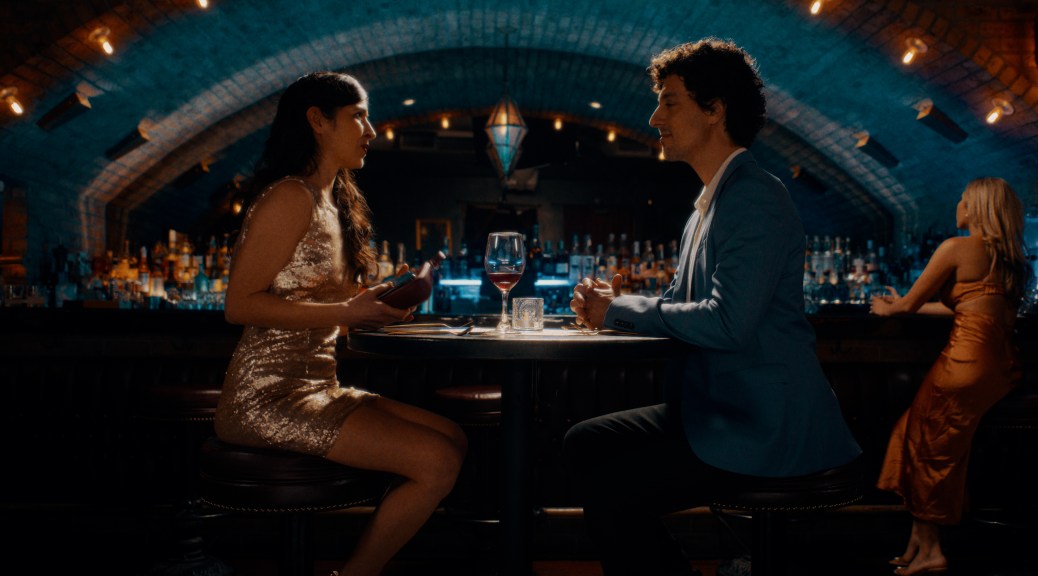
Whether you’ve been in a relationship for 10-plus years or single for the same amount of time, there’s always a place for romance in films. The “Love & Romance” block has enough variety within its genre, from comedy to sci-fi to straight-up drama. First up is Erin Brown Thomas’ [SUBTEXT], a fun and original spin on the horrors of the first date. From the film’s opening seconds, Thomas reveals that she has an eye for style through breakneck editing, and it spins further out of control when the subjects’ inner thoughts are declared out loud. The writing and dialogue may not carry at times, but the film ends strongly, and Thomas deserves credit for relaying a characteristic mood that will stand out.
On the more humorous side, My Eyes Are Up Here, directed by Nathan Morris, tracks the fallout from a one-night stand. The film picks up after a romp between a disabled fashion model and a slacker, and the awkwardness that ensues as they try to purchase the Morning After pill. Jillian Mercado gives a solid performance as Sonya, and has solid chemistry with scene partner Ben Cura. The film deals with a disabled person’s views on sex, and the non-disabled person’s biases, in a frank and honest manner that helps in the end. Not all of the humor lands as intended, but it’s a thoughtful romance that we don’t see often enough.
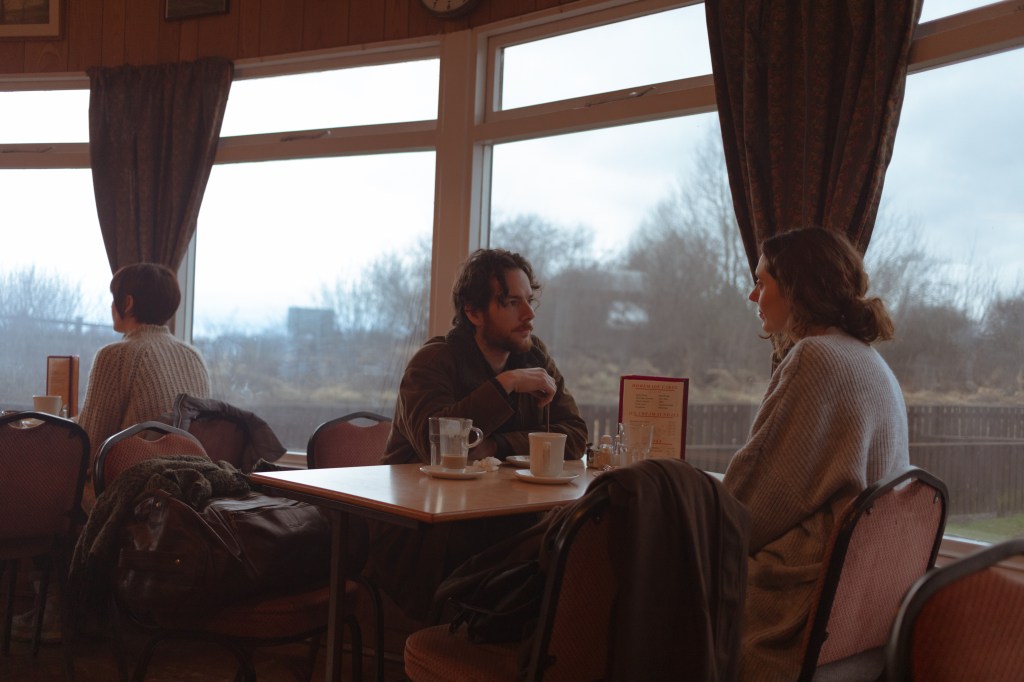
For a more queer perspective, the curiously titled A90 isn’t too dissimilar from this year’s Past Lives (yes, really!) as it touches on themes like fate and lost opportunities. Annette (Marli Sue) develops a crush on a female patron (Sinead MacIness) of the roadside café where she works, but can’t work up the courage to make a move – and it doesn’t help that the patron appears with a significant other one day. Writer and director Olivia J. Middleton injects the film with a palpable sense of longing and chemistry, maximizing its runtime to focus on its principal characters, while keeping the dialogue to a minimum. This is an easy recommendation, and the best of the “Love & Romance” block.
Pragma takes a decidedly sci-fi-adjacent approach, by dealing with the very idea of chemistry and attraction. Featuring turns from Ted Lasso stars Nick Mohammed and Phil Dunster, the film follows a dating experiment that feels like a humorous take on speed dating in a 1984-esque world. Lucy Heath – who also wrote the film – stars as Willow, who goes on a series of dates but is transfixed by her first match with Jack, played by Dunster. Mohammed appears as the dryly observant overseer, who watches and weighs in on all of the dates. At 19 minutes, Pragma takes its time to develop Willow and Jack. The film could have easily taken narrative shortcuts or cheap laughs, but director Ellie Heydon prioritizes the emotional complexity of its characters and the idea of long-term and short-term happiness, and it leads to a more satisfying result.
The Love & Romance block will screen at Indy Film Fest on July 19 at 7:30pm at the Living Room Theaters in Indianapolis, and virtually through July 23.Buy tickets here.
You don’t have to venture all the way to Hollywood to know that quality films can be made anywhere, including in our own backyard. All of the films in the Indiana Spotlight blocks were produced by Indiana-based filmmakers, and it’s that passion for the Hoosier state that shines through in a large number of them. Dreaming of You(th), a wordless story told exclusively through song, takes place in the recognizable steps of the Indianapolis canal at the heart of downtown. Director Mike Woodall uses the universal language of dance to tell the story of a hopeful romance between two middle-aged strangers, and the choreography and camera movement has the energy of a music video.
Crescendo works in a similar way, in that it uses music to tell its story without any dialogue, but directors John Brach, Emily Hunt, and Margaret Murray use creative editing and visuals to sell the emotions. Stories about the creative process are inherently interesting to me, so to see the film tackle an internalized struggle in a unique way was an unexpected highlight of the block. Biran MacNeel’s Weekend in Brazil is all about the aimlessness of that post-high school period when you’re unsure what to make of your life. That protagonist Kiara (a fantastically restrained Aria Harrell) is stuck in her small Indiana town, with little prospects to look forward to beyond her high school friend’s parties, doesn’t help either. Too many independent films go too far by valuing style over substance, but Weekend in Brazil gives its story and characters the emotional honesty they deserve. Another easy standout is Matt Spear’s Love, Grandma, an 8 minute film that tackles the emptiness of those moments immediately after a death. With just a handful of words in the film’s final moments and a surplus of ambient noise, Spear manages to convey the unfathomable grief that a family experiences after a loved one dies. This is one of the best films of the entire festival.
On the documentary side, there’s films that explore Indiana’s past and present. The Diary of Henry J. McBride follows a college student as she researches the titular diary of an Indiana soldier during the Civil War. The film find some interesting avenues of history that would never have otherwise been told. For a more personal touch, check out Rocky Walls’ Gun Control. The film tells the story of local artist Brian Presnell, and his lifelong struggle with gun-related trauma, which began as a child dealing with an abusive stepfather. Presnell’s story is heartbreaking but hopeful, as he finds ways to use a creative outlet for change.
One of the block’s most harrowing but topical offerings is Safe Place, directed by Samuel-Ali Mirpoorian, which recounts the final moments of Jerod Draper’s life. Draper, a southern Indiana man, was arrested and, shortly after arriving in jail, was essentially abused by his jailers by failing to give him appropriate care. Mirpoorian lets the distressing footage from Draper’s cell, and the officers’ depositions, speak for itself but also finds worthwhile interviews from Draper’s friends and family. At 20 minutes, Safe Place could easily be expanded but makes the most of its protracted runtime by focusing on what really matters: a life cut tragically short by a group of people, unable to see what’s happening right in front of them.
The Indiana Spotlight block will screen at Indy Film Fest on July 18 at 7:00pm and 7:15pm at the Living Room Theaters and in Indianapolis, and virtually through July 23.Buy tickets here.
Starring: Joel Edgerton, Sigourney Weaver, Quintessa Swindell
Grade: B+
Stop me if you’ve seen this one before: a hollow shell of a man, sitting alone in a mostly empty room, writing in a journal, accompanied by a voiceover narration. Yes, you’re watching a Paul Schrader film – more specifically, you’re watching Master Gardener, the third film in Schrader’s unofficial “man in a room” trilogy. The first was the excellent First Reformed, starring Ethan Hawks and dealing with a man’s crisis of faith in a doomed world. The second was 2021’s The Card Counter with Oscar Isaac as a gambler hiding from the world and his past. Now, with Master Gardener, Joel Edgerton stars as a man caught between his regretful past and his future.
Starring: Jorma Tommila, Aksel Hennie, Jack Doolan, Mimosa Willamo
Grade: C+
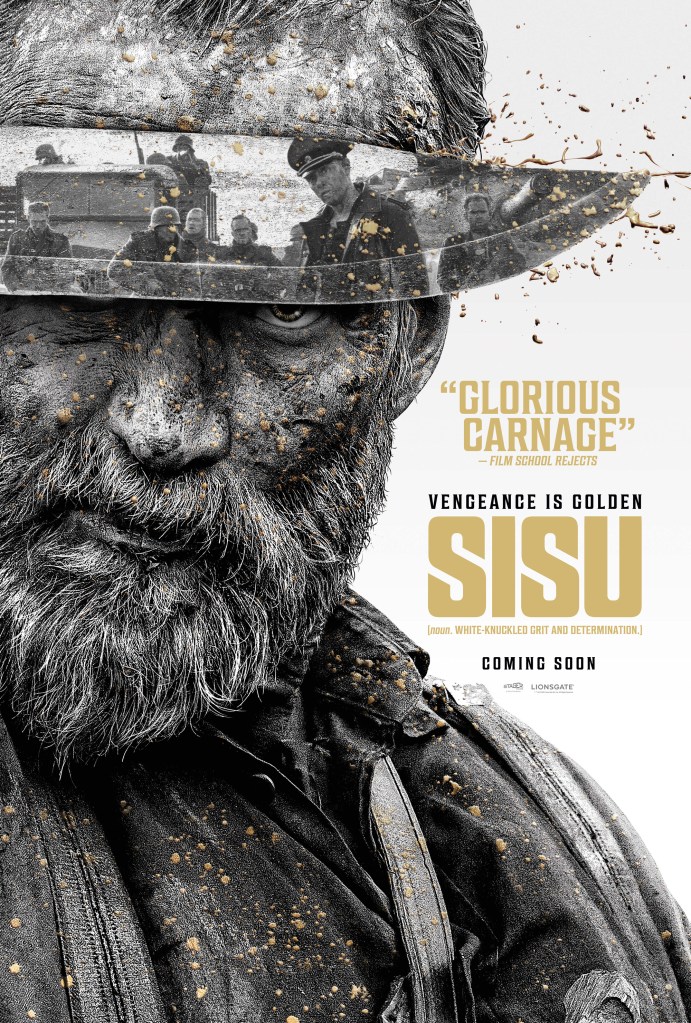
You’ll see a lot of comparisons to John Wick in the reviews and promotional material for Sisu. These days, you see a lot of similar comparisons when virtually any non-superhero action film is released. More often than not, this can be decoded as an action film with impressive physical stunts, but the similarities generally end there. Just as Taken spawned a multitude of imitators in the wake of its success, the same can be said for the John Wick films. But what makes John Wick special isn’t just its commitment to doing the craziest stunts possible at any given moment; it’s the world-building, and the way Chad Stahelski stacks the rules within that universe against John Wick.
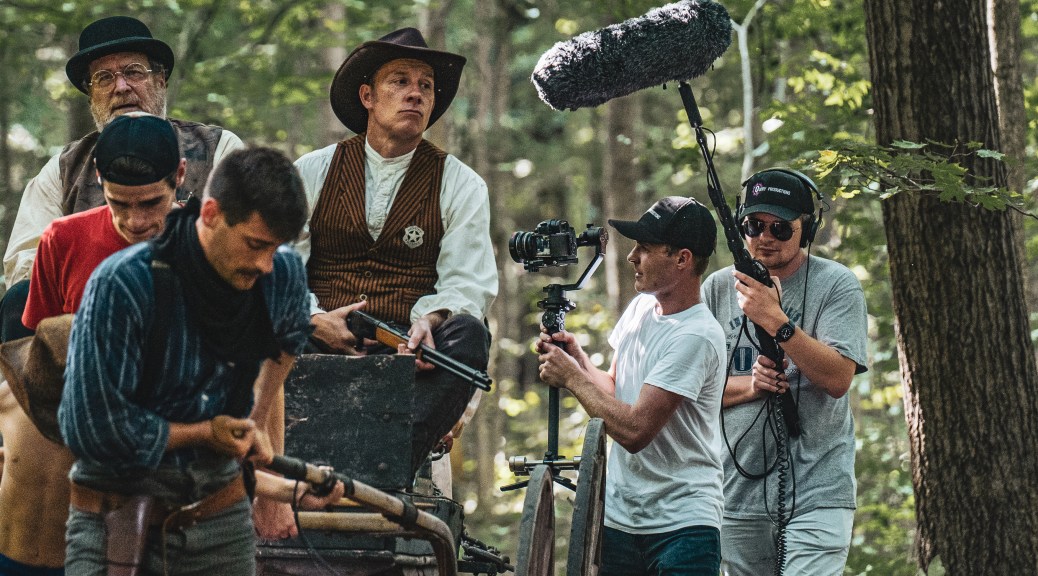
Below is my conversation with Dylan Query, the director and co-writer of Cold Cross, a dramatic Western film being screened at Indy Film Fest. We talk about shooting a period film in Indiana, and the research process involved in making the film. Our conversation has been edited and condensed for clarity.
Ben Sears: Cold Cross started out as a short film, correct?
Dylan Query: That’s right, Cold Cross started out as a short film titled Cold Creek, and we used that short film as a pilot, so to speak. We used the pilot as a proof of concept, a proof of quality, of what a small, local team can produce. And we used that to generate a lot of money, locally, from a very small town where very few people know or care about the film industry. But we were still able to prove to people that it was worth investing in, and we raised $20,000 completely locally. We’re super proud of that and we’re super proud of the support that we’ve had from friends and family and members of the community. But it definitely started out as a short film, but it grew to be so much more.
BS: So was the plan always to make it into a feature eventually?
DQ: No, I don’t think so. I would like to say it was according to plan, but as these things work, it was by complete accident. My film partner, Jacob Steineker, had never been part of any film production before, he’d never acted before, and we had worked on a very small short film that I hired him for, and he became so inspired by that one project that he came back to me a few weeks later and said ‘hey, I have this script for a Western. Would you be interested in making it?’ And by recognizing that the process had inspired him, I wanted to encourage that. So I didn’t grow up a Western fan – it’s not really my interest – but I couldn’t say no. I said ‘yea, let’s do it’, and that’s how Cold Creek was born. And from there we won some awards, including an international award at the Pop Con Film Festival in Indianapolis. And from there we had enough interest in the local community and our fans, and they wanted something more, so that’s how Cold Cross was born.
BS: Was there anything difficult in expanding that short film and making it into feature length?
DQ: Yea, there’s a lot of complications, but my team are amazing problem solvers, and Jacob and I worked closely together to develop the story and expand it. The difficult part of that is doing something that’s within our capability. I think a lot of people will write scripts and they’re not thinking about what resources or locations they’ll have available. And so what was interesting with Cold Cross is that it’s a neo-Western style film, but it’s set in the frontier. We had a lot of friends and family with property, so it was very easy for us to think ‘hey, we can talk to this person and film on this property’, and that cuts down on cost and travel, so little things like that and problem solving, but working within our means. I think that was really key. But that’s not to say there weren’t things that we wanted to do that, to be honest, we didn’t know how we were going to pull it off. But like I said, I have an amazing team, and we were able to think outside the box and create a Western right here in Indiana.
BS: So what is it that you like about the Western genre?
DQ: That’s an interesting question. Like I said, Jacob is the Western buff. I grew up not really liking Westerns at all; in my juvenile ignorance I considered them to be very boring. But when I started working on Cold Creek, there was something about it that I grew to really like. I liked the simplicity, I liked the option of utilizing a lot of natural light to make the film feel more natural, like it’s out in the wilderness. I really liked that aspect of it. I like these classic revenge stories, and Jacob took this kind of cliche, classic revenge Western and we tried to morph it into something more modernized. A lot of things that people have said when they watch Cold Cross, they say it’s a Western, but there are a lot of modern techniques that they didn’t expect. I think that was actually because, with me being the director and cinematographer, since I wasn’t a western fan growing up, that was actually our benefit. We were able to blend old with new and create something fresh.
BS: Speaking of the look of it, the film doesn’t look like a lot of traditional Westerns. When people think of Westerns, they think of big, expansive prairies or deserts. What made you want to utilize the Indiana landscape?
DQ: I tried to limit myself with how I was influencing myself. What I didn’t want to do, when I first started this project, was to start watching a bunch of Westerns because what would happen is I would essentially be influenced by these other films and I would start stealing things unintentionally. So I tried to limit myself a little, but there were certain things that I wanted to explore. One thing that we really enjoyed was the Hatfields versus McCoys, which feels like a Western but it’s set in the same time period as the Wild West. We just really liked that, and it was within our capability to film in the frontier, so to speak, in the Midwest. It was our way of making a Western slightly different from your normal Western.
BS: You make a good point about not wanting to steal other filmmakers’ styles. If I was to make a film, I would want to make it look like a Scorsese film, but then I’d be labeled as a Scorsese imposter. So it’s important to develop your own techniques.
DQ: I agree, when I studied at Ball State University, there’s a small film community there, and I would constantly have people asking me ‘have you seen this’ or ‘you should see this.’ I just try to limit myself because what a lot of people in my craft tend to forget is that films are a distraction. I’d much rather be out there honing my craft, creating my own style for my own projects, instead of watching things that other people have created. Some people might disagree with that, and that’s fine, but I think it’s important to develop your own style, and that’s how you differentiate yourself from the people around you. It’s very easy to copy Tarantino or Scorsese when you’re submerged in all of their content.
BS: What was the most difficult scene to film, either from a practical or emotional standpoint?
DQ: There were two particular scenes that were incredibly difficult to film. The first scene was probably the night chase action scene, in the middle of the film. That particular scene was very difficult for us, not just because of the lighting, but because that was a full, packed day for us. We were filming from dawn to dusk that day, and past that. We started filming around 6am that day, and trying to get as much done as possible, then the night scene came. So we were filming from the break of day until about 2 or 3am. I would say that we were very close to pulling a 24 hour day. By the end of the day though, we were at each other’s throats and we were grouchy, but we finished what we needed to, and that was awesome, but it was very difficult trying to cram that much into one day. I think if I could go back, I would probably have split it up, but on paper I thought it would work, but in reality it didn’t really work the way I wanted it to.
Additionally, I’d say the final scene of the film was very, very difficult. Jacob, with this being his very first feature-length film, and his first writing opportunity, watching him grow throughout this process is something I’m incredibly astounded and proud of. We filmed Cold Cross almost completely chronologically, so what you see is, whenever you see Jacob at the beginning of the film, you’re seeing an early actor. And what’s great about that, is his character is kind of portrayed as being young and ambitious but kind of ignorant about the reality of the world. So as he continues on throughout the film, and as Jacob gains experience as an actor, you’re seeing that level of depth increase in the character itself. What’s amazing is you get this sense of character development with William McCarthy throughout the entire film, and a big proponent of that is that Jacob’s depth as an actor is increasing as the film goes on. And that culminates in the final scene, where Jacob literally gave it his all, and it’s by far the best acting that he’s ever done. It’s in this final scene where things are the most tense and tragic. There was actually one moment during that scene where Jacob had pushed himself so far, and to be honest I think this was a fault of mine as a director, I could have managed him a little better, but there was one moment where he pushed himself so far that right after I said cut, he collapsed. He was clutching his left arm, he couldn’t breathe, and it was a very scary moment, and after that I said ‘OK, we need to be careful.’ It was a slap to the face for me because whenever your talent is in their role, it’s sometimes hard to remember that they’re acting and you might think that they’re just acting their role, but if they’re really into it and getting into this sort of Method acting sort of style, there’s stuff happening internally to them as well, that you have to try to be aware of. That was an eye-opening experience for me, to try to be a lot more observant and aware of my talent and what they’re putting themselves through. But the results speak for themselves; that final scene is just jaw-dropping for us. I hear it from a lot of people, that that was their favorite scene. I owe a lot to Jacob for his efforts and consistent diligence to grow and improve as an actor, it was very profound.
BS: What went into the decision to shoot the film chronologically?
DQ: There were a few exceptions, but we tried for the most part to do it chronologically. We did it that way because we were employing certain tactics like Jacob growing his hair or beard out. We were trying to get this sense of time progressing and I think it was just easier for us to do things chronologically, but it was difficult. We did this thing over the course of two years, so trying to get things to match up scene to scene was sometimes difficult.
BS: What kind of research went into the writing process? There must have been a great deal necessary to get period details right.
DQ: Absolutely, and I think there were a number of things we could have done better, but with our limited budget, we put a lot of effort into props and locations and costumes. We were able to find websites where we could purchase authentic costumes and props. We also turned to friends of ours who are owners of old-style navy revolvers and things like that. All of the gunfire in the film is actually black powder pistols, we’re not using blank cartridges, it’s just black powder without any projectile. So that was really fun and it creates an amazing effect on screen that you just can’t recreate with special effects, or at least not with our budget. As far as the details, I defaulted a lot to Jacob on that. He’s very knowledgeable about what is accurate and what’s not. My expertise was the technicality of production, and Jacob’s expertise was the time-period accurate details, so sometimes we’d be setting up a certain set and I would be setting up a lot of the gear and Jacob would go in and take a look and make adjustments, add certain props, and do what he could to make the set feel more authentic.
We also were in this constant revisionary process with the script. We were editing the script prior to each production day, making very small changes, and I think that was to our benefit. We were consistently improving and updating the script as we went on, and one of the things we would update was adding in little details to make the environment feel more authentic.
Cold Cross will screen at Indy Film Fest on April 23 at 4:00pm at the Kan-Kan Cinema in Indianapolis.Buy tickets here.
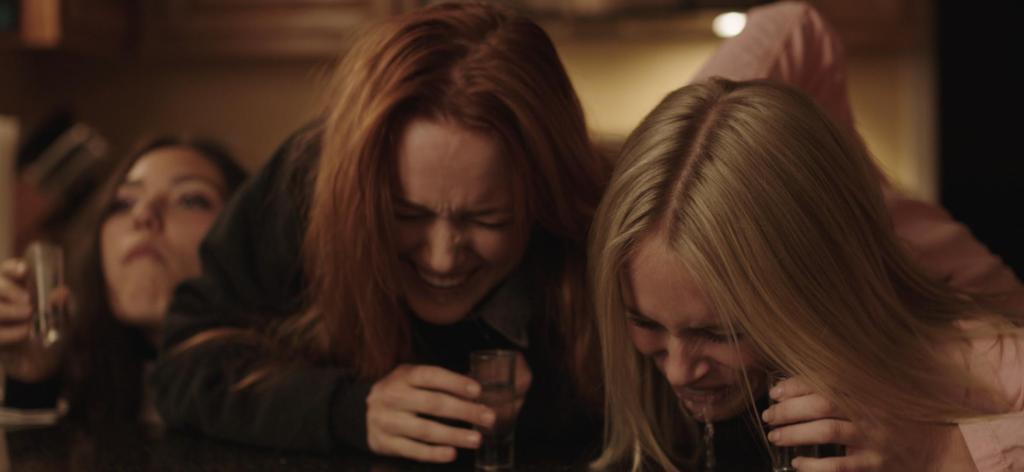
Below is my conversation with Wendy McColm, the director, writer, and actress of Fuzzy Head, a psychological thriller being screened at Indy Film Fest. We talk about the challenges of acting in your own project, and the real-life influences behind the film. Our conversation has been edited and condensed for clarity.
Ben Sears: Did you always plan on acting in the film?
Wendy McColm: When I write a movie, I don’t really think about who’s going to act in it, if it’s going to be me or not. But it’s based loosely on my life and my experience, and I think, in my head, I was doing perhaps my last hoorah as an actor. The film ended up taking so long to make that it ended up being a great thing, not just for me as an actor and creator but just, in the end, the healing process of what the film is based off of. To act in those experiences was very surreal. I think, for my next film, I’ll probably have another main actor just because I love watching people acting on screen, and when I’m on screen I can’t really watch behind the camera as much. I have to do one take, go look at it, and maybe do one more, but I usually spend all my time directing the other actors.
BS: You mentioned that it’s based on your real experiences. Can you talk about that a little more? The film has a very fragmented reality, and becomes very surreal in parts, so what is based on your experiences?
WM: The childhood trauma, relationships with family and my mother and sister, and relationships with people and friends. How you run into people in real life and how you interact with other people, and how you’re able to take in other people, and how you can do that after you’ve grown and healed versus when you’re living in a trauma mind. The main character, Marla, is living in a trauma mind of PTSD; I had PTSD and developed PTSD when I was 24 or 25 from living in an abusive relationship, and I dealt with that without knowing for 3 years, and dealt with it while knowing for 3 more years. It feels just like the movie. When you say surreal, I say very real.
BS: Was making the film therapeutic for you?
WM: Yes. Very therapeutic. I didn’t know how it would be, but that’s the only reason I kept getting this signal from the universe saying “you have to make this”, and I didn’t really want to because it’s a drama and I don’t make dramas. But I’m also not a fan of repeating a style, I think it’s boring. I think it’s good to try all kinds of different things, and it was a challenge, but I think it came out great. Dealing with my own personal trauma though, I don’t know. If it works with someone else’s script, I’d like to put my own vision and knowledge of healing and empathy to that, I’d love to do that. But as far as writing my own drama again, I don’t think I’ll ever do that again. It was definitely a fast track way to find out how to do a drama, and the pain that can be involved in making something so deep.
BS: Which aspect of making the film did you enjoy more? Do you like writing, acting, or directing?
WM: I always enjoy the directing on set the most. That’s why we do it, I think. I like writing because it’s a nice outlet, but I could easily write a poem or a song or something, and go perform, and have instant gratification. Writing a movie for a year and nobody knowing where you are and having no accolades – not that anyone needs accolades – it’s kind of nice to share what you’re doing. But when you’re under a rock, you kind of wish people knew what you’re doing. Writing can be fun, but directing is definitely the most fun because you’re working with a team and you’re experiencing your vision coming to life from the page. The best best part is working with the other actors, and seeing what they bring to your script. That’s so thrilling
BS: You’re working in this movie with a lot of established and newer actors. Did you get any advice from Fred Melamed or Alicia Witt or Richard Riehl or anyone else?
WM: You know, they didn’t really give me any advice. They just trusted me and they know that I’ve made a good amount of films and commercials already. The greatest thing about everyone hired, new or seasoned actors, is they were really down for the experience and the ride. When you read the script, I’m pretty sure it’s obvious to everyone that you’re not in for a normal project. You’re in for the unknown, and I think that’s thrilling to people. Most of them, they were just there to support and to take any turn we wanted to take. And I’m eternally grateful to them for that because they didn’t have to do that. They just brought it 110%, so just them showing up 110% teaches you enough.
BS: Was working with them intimidating at all?
WM: With Richard, he’s so sweet right away, so he made it very comfortable for me. I’ve wanted to work with Fred for over 10 years. That was very intimidating but I also think he was trolling me a little bit because he wrote in his contract that he needs A/C, so I don’t think he was serious, but sometimes he’d walk by and be like “if the A/C goes out, I’m gone.” [laughs] And that was so much pressure! We still reach out on facebook sometimes, but obviously he didn’t want it to be hot, and comically enough, the place that we got had central A/C but it turned off halfway through the day. And I had to send out people to Home Depot to get window A/C units, and they were dripping water on the floor and I was freaking out and we were trying our best. It’s just one scene but it worked out well, and he was so excited afterwards. With Alicia, it was intimidating at first to work with her because I kept wondering how she would interpret this mother character. We started with such a sweet scene and I didn’t want to push her too much out of her choices, but I wanted to see what else she could do. So that was intimidating to be like ‘well, what about this?’ They were pure professionals. They’re willing to take direction and are willing to see what happens. The last thing you want, because I’ve been an actor that didn’t get direction before, and the last thing you want is to look stupid in a movie. It’s nice if you have a little direction.
BS: To go back to your performance, it’s a very vulnerable character and a vulnerable performance. You had to do several nude scenes, and obviously you have your own personal connection to the material. Were you nervous at all to put yourself out there like that?
WM: I think I was ready. Nudity doesn’t bother me, I think in the last 7 years and the healing from PTSD, I started to realize all these societal norms and how it’s important to embrace yourself no matter what. It’s part of what I want to show as a creator and as a person. If I’m in front of the screen, that’s important to me, and there’s no safer way to feel completely seen than on camera because it’s a fourth wall. It took me a while to realize that that’s what drew me to film and theater in the first place. You can be angry and win an Oscar, but if you’re angry in real life, you’re a monster. It’s pretty interesting. I think the only thing that scared me about baring my soul was the societal norm that you’re a monster or mean or bad if you have any feeling other than happy or neutral. So showing that to people who are used to seeing comedy from me was a little scary for me.
BS: I think it’s safe to classify Fuzzy Head as a psychological thriller. Are you generally a fan of those kinds of films?
WM: No, it’s not what I lean to. I had to find a way to give some sort of thing people can connect with. Because I’ve seen movies about trauma and I just don’t feel like it hits, and for me as a creator and as a human, something that can be taken in a little more easier. When you go “full trauma”, I don’t know if that’s digestible for people. And this film isn’t easy on the mind by any means. I’ve had people in the audience say they want to leave in the first 20 minutes, but I took a risk in sculpting the film that way. Because with trauma or victims, most people do leave and I was willing to take that risk for the outcome of the ending. Some people have said they wanted to walk out but it’s the throughline of the psychological thriller that keeps them there for the ending, which is what you want. I want them to grow with the main characters, and growing isn’t easy. I had to find a way to keep them wanting to stay there and grow, just like a real life experience.
Fuzzy Head will screen at Indy Film Fest on April 22 at 10:30am at the Kan-Kan Cinema in Indianapolis.Buy tickets here.
Below is my conversation with Mike Cheslik, the director and writer of Hundreds of Beavers, a silent comedy being screened at Indy Film Fest. We talk about the various influences for the gags in the film and the challenges of shooting in the Wisconsin winter. Our conversation has been edited and condensed for clarity.
Ben Sears: Was Hundreds of Beavers always intended to be silent? Or did you get to a certain point when you were writing it when you thought it would be better silent?
Mike Cheslik: Well, it’s hard to remember the exact origins because it was 4 years ago, and the movie just grew out of bar talk, which slowly turned into coffee meetings, which eventually turned into a real project. Ryland [Brickson Cole Tews] and I, who went to high school together in Wisconsin, had just completed Lake Michigan Monster, and we were in the middle of festivals on that movie. That movie ends with a large, silent, animated sequence that’s kind of in a 1920 or 1930s style of live action, and we were able to do that for very cheap. Ryland directed that movie, but I got a lot of free reign on the storyboarded end sequence of Lake Michigan Monster, so with Hundreds of Beavers, the plan was really to lean into all these kinds of animated non-talking sequences. And the film just kind of grew into a full feature-length, entirely gag-driven comedy from that. So we wrote it in the beginning of 2019 and did all the storyboards that year, and the plan was to make something only we would do, which was this totally gag-driven, storyboard-driven physical comedy that’s got a thousand or fifteen-hundred effects shots, but also showcases Ryland’s ability to stand in the cold.
BS: When you’re writing a silent comedy, is it easier to watch other silent films, or did you find yourself watching more modern comedies?
MC: That stuff’s already in our heads from a lifetime of watching cartoons and silent movies and video games. So we didn’t really have to go back and comb through source material when we were writing – it’s just already been in there for years. We had a two page treatment and drew a whole bunch of storyboards out for that. We’d print them out and bring them out in the woods and we’d just cross out each shot as we’d go.
BS: I got a lot of Looney Tunes vibes while watching the film. Would you say that was an influence on you guys when you were coming up with the gags?
MC: Absolutely. And we didn’t even have to go back and watch those because they’re just so ingrained in everyone’s brains. But I do remember there was a Wile E. Coyote when an Acme rocket fails and comes back a few scenes later as a callback, and I just loved the idea of spinning all of these plates. So most of the writing was just spent trying to make this little web of gags that would come back and pay off in a cuckoo way.
It was really all about taking that self-serious wilderness survival story and spoofing it in the way that the Zucker’s spoofed various genres. It was below zero degrees for, like, 8 straight days at one point! We put so much post-animation on it that it looks kind of fake, but he was really out there. We shot for 12 weeks and I’d say 9 of that was outside in the snow. The physical comedy and the Looney Tunes thing was something that we love and felt nobody else was going to do, and you’ve gotta stand out if you’re making an indie comedy.
BS: You mentioned the abundance of jokes and gags that you had written and storyboarded. Were there any that didn’t make the final cut?
MC: Only two. Otherwise, pretty much every single idea we had is in the movie. And when you watch the movie you’ll really realize that these are guys that didn’t say no to any idea. It’s all in there, pretty much.
BS: Were those two jokes cut out because of practical reasons or time constraints, or was it something out of your control?
MC: We shot both of them. One of them, I was told by everyone that it wasn’t funny, so I removed it. The other one was Ryland trying to keep warm by putting a bunch of sticks in his coat and he basically looks like a giant fat suit full of sticks, and then he falls over and can’t get up, and he’s trying to get back up for a minute. We loved it, but it just slowed down the pace at the beginning. Otherwise, everything is in this movie. There were not any other ideas that we had and discarded. It’s all in there.
BS: I’ve got to ask about the costumes. Where did they come from?
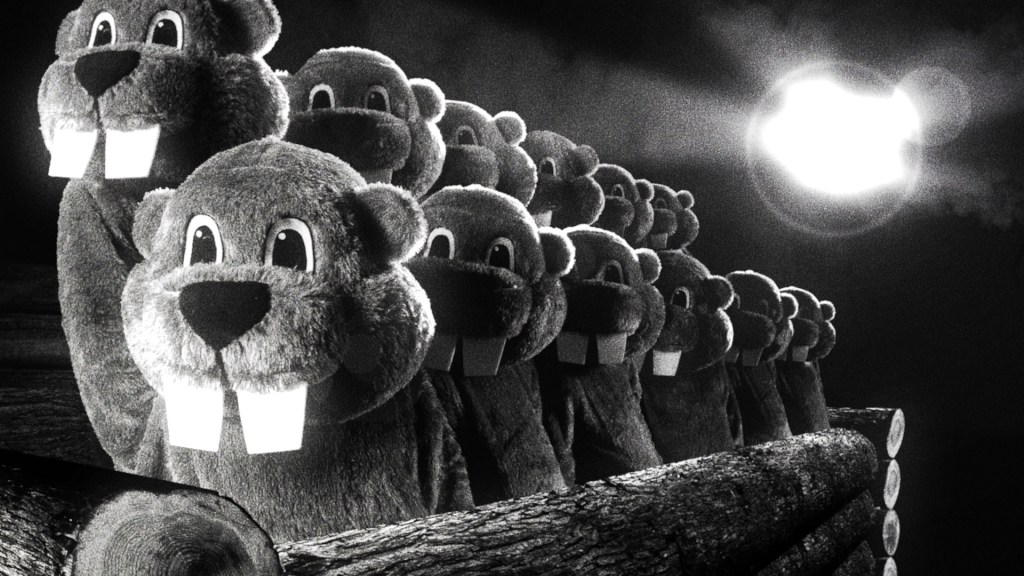
MC: They were manufactured by our friends, the Chinese, who make all our costumes and clothing and props, and even the cameras and lenses! It was sent over by Mascot USA out of Beijing. We had a translator working with us at one point who helped us add an extra tooth for the beaver costume, and the costumes are not in good shape nowadays. They survived two winters with tons of different guys in them, and they’re smelly and moldy and torn apart. But we still take them to film festivals and try to entertain the crowds!
Hundreds of Beavers will screen at Indy Film Fest on April 22 at 4:30pm at the Kan-Kan Cinema in Indianapolis.Buy tickets here.
It’s always refreshing to see a film about grief – a subject that’s entirely too popular today – that approaches its subject in a unique and interesting way. Juniper is one of those films. It centers on Mack (Madison Lawlor) as she retreats to her family’s cabin after the recent and unexpected death of her younger sister Natalie. Unbeknownst to her, her childhood friend Alex (Decker Sadowski) – a party girl who lives freely without worry – and Alex’s best friend from college Dylan (Olivia Blue) show up to support her. While Mack appreciates the gesture, she clearly wants to grieve in her own way, in her own time, but Alex doesn’t seem to get the hint. Old conflicts resurface, along with new ones, and the film poses an interesting question: is there a right or a wrong way to grieve? First-time director Katherine Dudas directs the film with an intimacy that’s befitting the subject matter, and the dialogue feels improvisational but impactful. The screenplay is credited to the three above-mentioned actresses and Dudas, which suggests each performer was given the freedom to write their own dialogue, and their confidence in their characters’ inner lives easily comes through in the final product. That Juniper is Dudas’ directorial debut shows an even greater confidence in and familiarity with her collaborators.
Speaking of confidence, it’s a trait that Pinball: The Man Who Saved the Game has in spades, sometimes to great effect, and sometimes not. It’s the true story of Roger Sharpe, an aimless young man trying to find purpose in his life. As you might have guessed, his passion is pinball, which just so happens to be illegal in New York in the 1970s. Mike Faust (West Side Story) portrays Roger as a kind of lovesick puppy; it’s not that Roger is a pinball prodigy per se, he just can’t see himself doing anything else. His paths cross with Ellen (Crystal Reed) and their romance is a nice highlight to an otherwise boilerplate David versus Goliath story. First-time writers and directors Austin and Meredith Bragg clearly have a reverence for Roger’s story, and it comes through in the film’s framing device, where the real-life Roger breaks the fourth wall and essentially narrates his own story. It’s a charming conceit that will likely work for most but came off as forced more often than not to me. Still, it’s a harmless good time and provides some authentic emotional resonance.








 The Movie State