One of the great things about comics, especially comics about long-standing characters, is seeing how individual talents can bring their own individual voice to territory that’s familiar to all. Publishers like DC and Marvel have so many long-standing characters, but they regularly invite artists to create their own arcs, regardless of how it upends the canon. Lego and Ninjago may not have as much of a cultural footprint as Superman or Iron Man, but they’ve had enough output across TV and movies (lest you forgot, The Lego Ninjago Movie only came out five years ago) to have a solid reputation and established characters.
Starring: Ewan McGregor, Ethan Hawke, Maribel Verdú, Sophie Okonedo
Grade: C-
Remember how it felt the first time you watched The Hangover? It was the type of comedy where anything was possible, where the screenwriter was free to make up whatever kooky shenanigans they could think of simply because the action had unfolded off-screen. Raymond and Ray feels like the dramatic equivalent of that kind of storytelling, a free-for-all experiment where everyone simply talks about someone we never actually meet first-hand. It feels like an acting exercise, and an empty one at that, where its primary cast mostly makes it out unscathed.
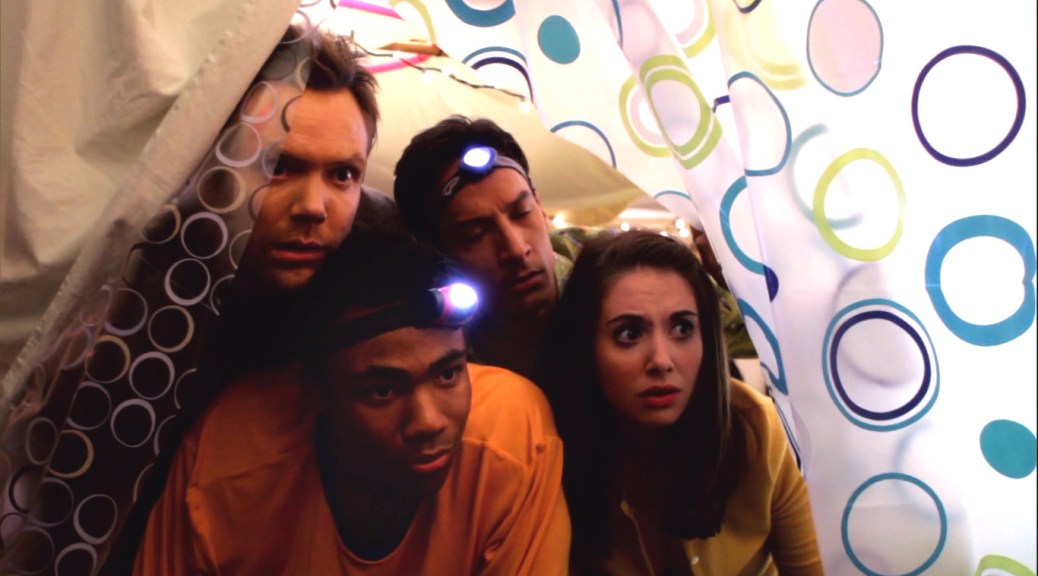
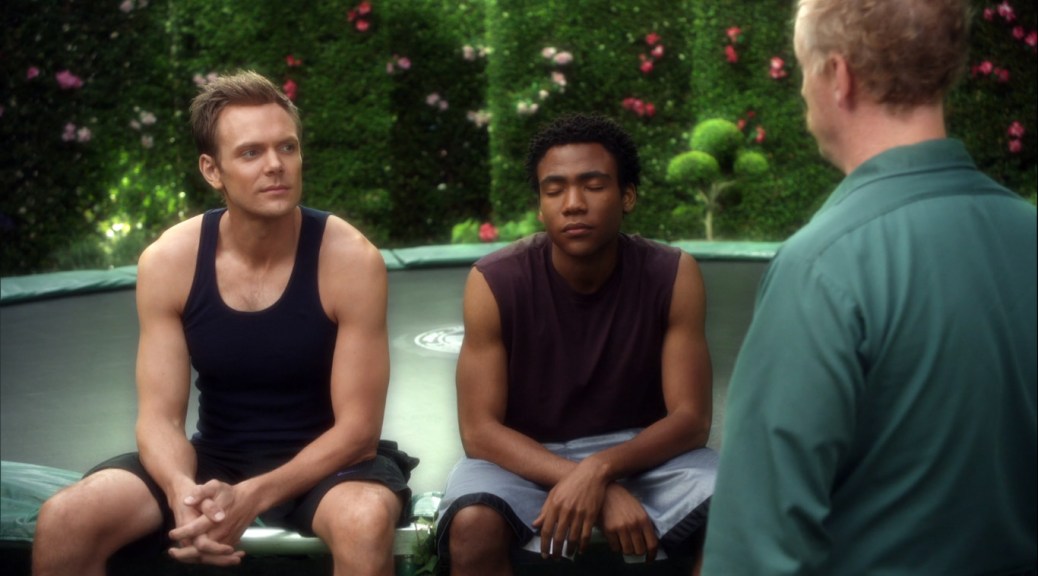
Memory is a funny thing sometimes. In some cases, it can conflate how you remember a certain moment – or, in this case, an episode of television – and sometimes, you can still pinpoint an emotion and flash back to how you reacted to something 12 years ago. Both come into play with how I remembered this week’s installments. In the former, we have Conspiracy Theories and Interior Design, and in the latter, Mixology Certification. Both are excellent episodes of Community, and both stand in the upper echelon of the show at large, for vastly different reasons.
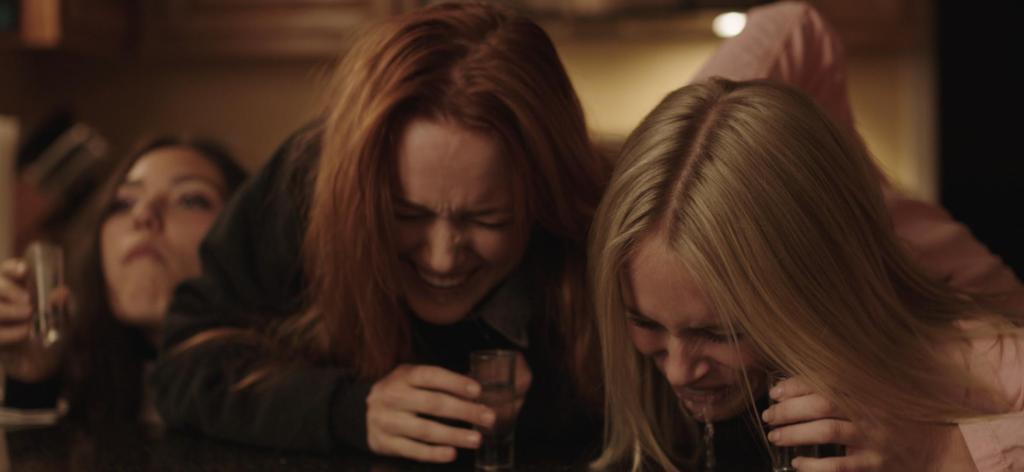
It’s always refreshing to see a film about grief – a subject that’s entirely too popular today – that approaches its subject in a unique and interesting way. Juniper is one of those films. It centers on Mack (Madison Lawlor) as she retreats to her family’s cabin after the recent and unexpected death of her younger sister Natalie. Unbeknownst to her, her childhood friend Alex (Decker Sadowski) – a party girl who lives freely without worry – and Alex’s best friend from college Dylan (Olivia Blue) show up to support her. While Mack appreciates the gesture, she clearly wants to grieve in her own way, in her own time, but Alex doesn’t seem to get the hint. Old conflicts resurface, along with new ones, and the film poses an interesting question: is there a right or a wrong way to grieve? First-time director Katherine Dudas directs the film with an intimacy that’s befitting the subject matter, and the dialogue feels improvisational but impactful. The screenplay is credited to the three above-mentioned actresses and Dudas, which suggests each performer was given the freedom to write their own dialogue, and their confidence in their characters’ inner lives easily comes through in the final product. That Juniper is Dudas’ directorial debut shows an even greater confidence in and familiarity with her collaborators.
Speaking of confidence, it’s a trait that Pinball: The Man Who Saved the Game has in spades, sometimes to great effect, and sometimes not. It’s the true story of Roger Sharpe, an aimless young man trying to find purpose in his life. As you might have guessed, his passion is pinball, which just so happens to be illegal in New York in the 1970s. Mike Faust (West Side Story) portrays Roger as a kind of lovesick puppy; it’s not that Roger is a pinball prodigy per se, he just can’t see himself doing anything else. His paths cross with Ellen (Crystal Reed) and their romance is a nice highlight to an otherwise boilerplate David versus Goliath story. First-time writers and directors Austin and Meredith Bragg clearly have a reverence for Roger’s story, and it comes through in the film’s framing device, where the real-life Roger breaks the fourth wall and essentially narrates his own story. It’s a charming conceit that will likely work for most but came off as forced more often than not to me. Still, it’s a harmless good time and provides some authentic emotional resonance.
Starring: Morfydd Clark, Robert Aramayo, Owain Arthur, Nazanin Boniadi, Ismael Cruz Córdova, Markella Kavenagh, Dylan Smith, Charlie Vickers, Daniel Weyman
Grade: A
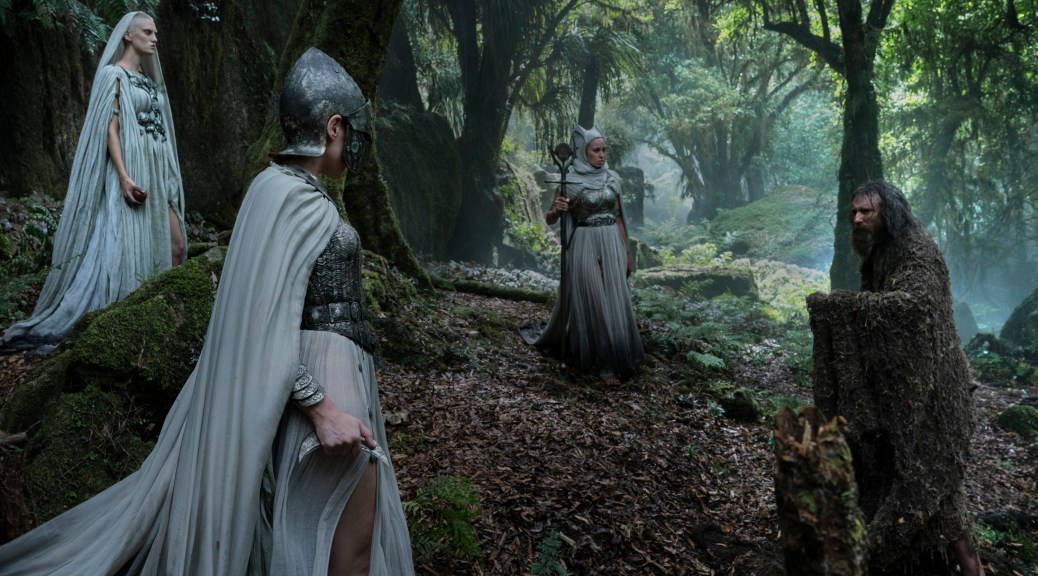
Warning: Reviews of The Lord of the Rings: The Rings of Power season 1 will contain spoilers.
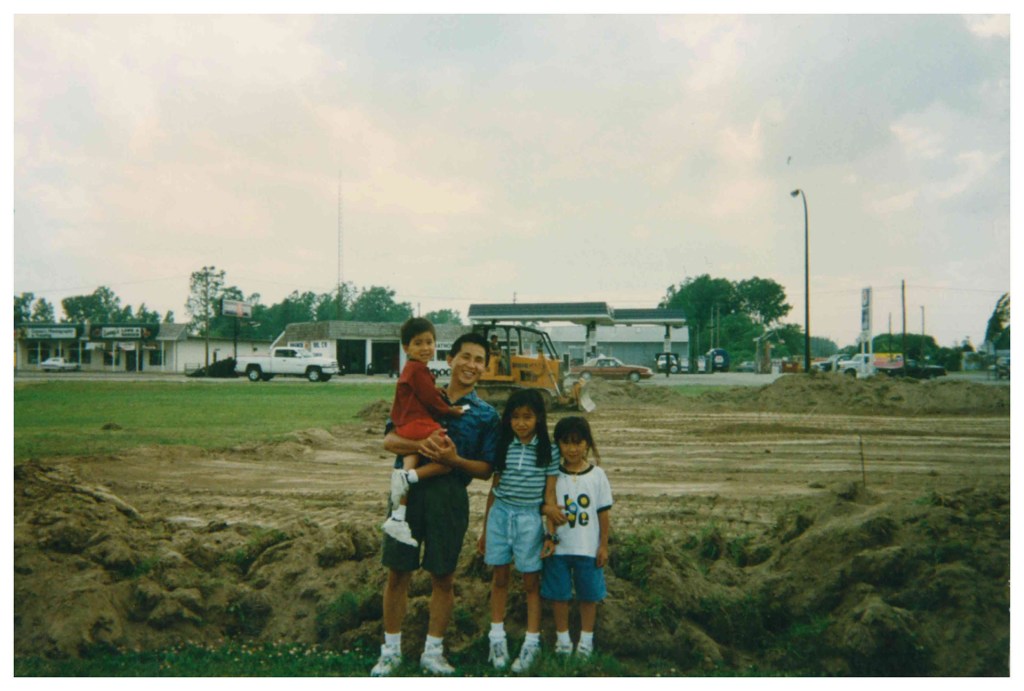
Two and a half years into the COVID-19 pandemic and we’ve already gotten our fair share of fiction and nonfiction films about the early months of 2020. Bad Axe is another of those films, but poignantly told first-hand through the eyes of director David Siev’s family. The film begins as the first lockdowns were ordered, and David’s family’s restaurant – which his sisters help run – is thrown into turmoil and uncertainty. David also digs into his father’s traumatic upbringing in Cambodia’s Killing Fields and how his immigration to the US has shaped how he runs his family, for better and worse. But as if being a restaurant owner during the pandemic is difficult enough, the business sits in the titular Michigan town, in the heart of Trump country, which begins treating the Siev family differently. From the BLM protests to the mask mandates, David’s family, especially sister Rachel, remain outspoken even if it means alienating themselves further and risking their business. The film could use some narrative cohesion, but otherwise it’s hard to find many faults with such an honest portrayal of a subject the director is obviously close to. This is a tight-knit family that you can’t help but root for.
Bad Axe will premiere as a Special Presentation courtesy of IFC Films at the Heartland Film Festival on October 15 at 2:45pm. Buy a ticket here.
Paper City
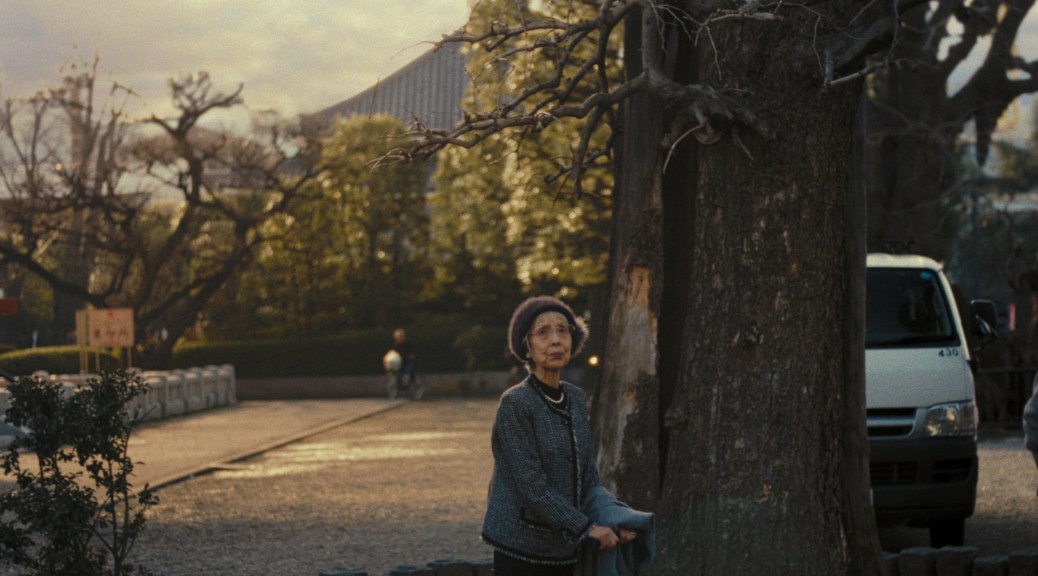
No matter how you look at it, the firebombing of Tokyo on March 10, 1945 was a horrific tragedy. Whether you’re Japanese or American or German or any other nationality, there’s an inherent sadness when so many lives are lost in an instant. But watching Paper City as an American, there’s an extra tinge of regret, because it was a catastrophe that was needlessly executed. The documentary explains in the opening moments that the American military had ceased the targeting of Japanese military locations and had begun randomly targeting civilians. One hundred thousand people were senselessly and horrifically killed, and the documentary seeks to tell the stories of the few living survivors, and their crusade to hold the Japanese government accountable. Director Adrian Francis rightfully keeps the focus on the survivors as they fight to not only erect any kind of monument to the event, but receive reparations from the government for what they perceive as an avoidable tragedy. Paper City could have expanded beyond its 80 minute runtime by exploring the government’s reluctance to acknowledge the survivor’s plight, or the views of a younger generation that didn’t experience the trauma firsthand, but regardless, this is an emotionally impactful documentary.
Sentenced is a documentary that will open your eyes to an aspect of life that most of us take for granted, and for that, it’s an achievement. If you’re able to read this review, you live amongst the majority of Americans that the film speaks to. It’s an eye-opening look at a failure of the American system that we don’t speak often enough of, and it does so with a heart and tenderness that’s sorely needed. Directors Mark Allen Johnson and Connor Martin portray the daily lives of American adults that struggle with literacy in an intimate, often heartbreaking way. How they got to where they are today is often a result of horrific trauma or, in some cases, simple neglect from their parents or educators. At only 69 minutes, the film could do better to deeply explore the American systems that failed them, but its mere existence should be a clarion call for action or, at the very least, empathy.
Women Talking may be the simplest film of the year in terms of its concept, but it undoubtedly one of the most complex of the year, and it’s that conflicting push-pull that makes it one of the best of the year. Its simplicity lies in its setup: it takes place mostly over the course of a day or two, in and around a barn. But where it shows its complexity is in the discussions its characters have, the fascinating way its characters are written, and the conversations it will surely elicit after the credits roll.
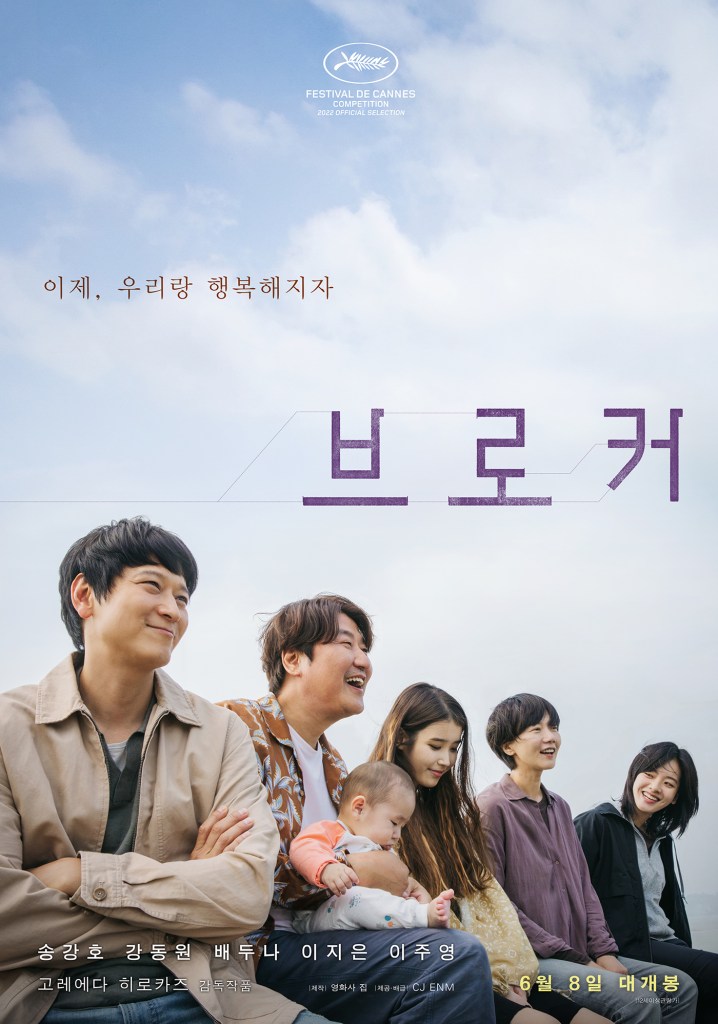
Starring: Song Kang-ho, Gang Dong-won, Lee Ji-eun, Lee Joo-young, Bae Doona, Im Seung-soo
Grade: B+
They say that you never truly know what love feels like until you’ve had a child, so what happens when you have a child that you don’t love? This is the central question to Hirokazu Kore-eda’s Broker, the Japanese auteur’s first film set in Korea, which still manages to feel of a whole with his filmography at large.
Maybe it’s by absolute coincidence, but I’ve enjoyed how each of these entries has given us a little of everything that Community did so well. First, you have the completely original offerings in Aerodynamics of Gender, followed by the goofball earnestness of the conspiracy thriller spoof in Cooperative Calligraphy. Both episodes really bring into focus that season two won’t exactly have an overarching plot to speak of. Sure, the characters grow and change from the premiere to the finale, but Dan Harmon wasn’t really interested in crafting a season-long narrative beyond “the school year.” Watch any episode in any order and, outside of a few callbacks and character details, you’ll probably have the same experience.
Below is my conversation with Ryan Whitaker, the director and writer of Surprised by Oxford, a film that’s making its world premiere at the Heartland International Film Festival. We talk about the challenges with creating chemistry between stars, filming at Oxford University, and adapting a dense source material. Our conversation has been edited and condensed for clarity.
Ben Sears: Tell me how you came to the project? What was it about Carolyn’s story that spoke to you and believed you could turn it into a movie?
Ryan Whitaker: It was almost five years ago when I read the book and first talked to Carolyn about the rights. The book was recommended to me by my mom and my sister, who thought I would like it because it touched on a lot of things that were interests of mine: British culture, the city of Oxford, and the Inklings, writers like CS Lewis and JRR Tolkien. They were right, I just fell in love with her story and thought it was a beautifully written book, and I immediately began thinking about what this story could look like as a movie. It was a bit of a challenge because it was an almost 400 page memoir with a lot of characters, so it was really about chipping away at the marble and finding the movie hiding within. I loved Carolyn’s story, I loved that it was a coming of age story, a romance, and a spiritual journey. It was all of those things at once.
BS: How much involvement did Carolyn have once the movie was greenlit?
RW: Carolyn has been nothing but supportive and collaborative from the beginning. I knew things were going to be smooth sailing when she read the first draft – which I was terrified to share with her because of all the things I had changed, which you have to do when you’re adapting a story like this – and she responded positively to it and has been nothing but supportive ever since. She’s remained involved, not directly, creatively speaking, but I would call her a close collaborator. She and Kent were on set for production, and she has a cameo in the film. It’s been a great working relationship.
BS: Were there any details that she helped with, from the Oxford atmosphere?
RW: The University of Oxford is a very strange place, if you’ve never been there. If you haven’t been there or toured, a lot of people don’t realize that it’s not one college, it’s a bunch of different colleges in the city of Oxford. The layout of the colleges is unique, in that there’s little walled gardens throughout the city. You have the quad, and the porter’s lodge at the front, and almost every college has a chapel and a dining hall. They’re all similar but they all have their own character. Getting those details as accurate as possible was really important to me. Carolyn was there in the early 90’s, and the film is set in the modern day, so it was a combination of talking to her about what it was like then and how much it’s changed since then. That town hasn’t changed much in a couple hundred years, but we also talked to students who are there today, trying to make it as accurate as possible.
BS: Was there a creative reason to set the film in the modern day, or was it a logistical concern?
RW: It was purely practical, just a budget consideration. The question that I asked was, “does this film need to be set in the early 90’s?” Beyond the fact that this is when Carolyn was at Oxford, it would make more sense that it would be set in the modern day, and it would allow our budget to go further. There were very few things in the story that needed to be updated. For example, there’s a text message that Carolyn sees on Kent’s phone, and in real life, that was an email – in the early days of email. Beyond that, there wasn’t really anything in the story that dictated that it had to be set in that time period.
BS: Speaking of shooting on location at Oxford, how difficult was it to get access to those historic locations? Were there many hoops that you had to jump through?
RW: The original plan was to shoot between terms, in the summer, when classes aren’t in session. We didn’t quite have our financing together, so we ended up pushing it into term time, which made it a little more complicated. Honestly, it really came down to some sheer luck, but then also really great people on the ground, working very hard to secure every location we needed. We were very lucky that we got access to all the locations that we did. We were able to shoot almost everywhere that we were able to, so it was logistically difficult, but you’d never know that from seeing the film, all the chaos outside of the frame.
BS: I know I’d be very nervous the entire time that something would be broken or misplaced. There’s a lot of delicate decorations that would make me anxious.
RW: By far, not only the most expensive location, but the most logistically challenging was the Bodleian Libraries, which are some of the oldest libraries in Europe. We shot upstairs in the Duke Humfrey room, which only deans and students have access to. A few films have shot up there, some have shot downstairs in the Divinity school, but the Duke Humfrey room was the library in the first Harry Potter movie. You can’t touch anything. Every single book has an alarm. You can’t take water on that floor. The gag about the ink pens not being allowed in the library came from a conversation with Carolyn. They’re very particular, so we had some locations like that that required a lot of tip-toeing around. You really don’t want to be the guy that destroys an original Shakespeare folio, or something like that.
BS: How did you come to cast Rose as Carolyn?
RW: I had first seen Rose in a film called Finding You, that my producer Ken Carpenter had done in Ireland, and Ken had said ‘what do you think about Rose in that role?’ So I went and watched that film and found her to be really likeable, the camera really loves her, she has a really great presence on screen. We got together and talked about the character, and I got a really great feeling that she could inhabit this role. The character is a bit of a complicated character, and I needed to cast someone that could somehow be unlikeable and likeable at the same time, and someone who could handle the intellectual side of the character in a way that didn’t feel precocious. I just had a feeling that Rose could do it, and it ended up being a great experience working with her, and after she was attached, it was just about how we build the best possible cast around her.
BS: That character has a steeliness to her that makes you understand how she could be so apprehensive of someone else, but there is a kind of openness that Rose really brings to it.
RW: The messy nature of the character is what I always thought was interesting. Casting is so important because if you cast the wrong person in that role, you don’t want someone that’s only unlikeable. Or at least unlikeable and un-relatable. If the character’s going to be unlikeable, they at least have to be relatable, and I think that’s what Rose really brought to the role.
BS: Rose and Ruairi’s chemistry is really great together, which is really crucial in a romantic comedy, or even a romance. Did you do anything to foster that chemistry or did it just come naturally?
RW: There was very little time – I’m trying to remember back, now – but Ruairi was one of the last people we cast in the film, actually. There wasn’t a lot of time, but I think they did spend some time together before we started shooting. Which was important to me, and to them, just to be around each other and develop a rapport. I do think that helped, but it was a restrained schedule.
BS: It’s not something where you can just put two people together and expect sparks to fly, so it worked out in the end.
RW: And even if you do all the work, whether it’s rehearsals or sending them off to spend the day together, it still might not work on screen. It’s always a bit of a gamble and we were very fortunate that the chemistry was there between the two of them.
BS: You mentioned earlier that you’ve always been a fan of classic literature, which forms a backdrop for the film. Were you worried at all that some of the dense, more academic books wouldn’t translate to general audiences? How did you go about making these people seem so smart but making it relatable?
RW: I realized early on that the most important thing was that the audience doesn’t have to know the literary references. The most important thing is that the audience has to believe that they do, and so that was a guiding principle to me. There is some “inside baseball” in this film, and you may not know the ins and outs of it, but the most important thing is believing that the characters do, so I hope we succeeded on that front. There were certainly even more literary references in earlier drafts of the script, which came down to a practical question of, how much can the audience handle? That was certainly something we talked about, but I just felt from the beginning that, if you know all these references, great. That’s wonderful, but it’s not necessary to enjoy the story.
BS: The romantic comedy can easily be formulaic in its plotting. What are some of the difficulties that you came across to keep this from being formulaic?
RW: Actually, I never saw this as a romantic comedy, I saw it more as a coming of age story. Part of what was unique about Carolyn’s book is that it wasn’t just a romance, it was also a coming of age story, it was a spiritual journey. It was all of those things at once, which I think is unique and I wanted to retain in the telling of the story. It’s easier said than done, and that was one of the more difficult aspects of the adaptation, was finding a way for those storylines to feel like they’re happening simultaneously and they’re all connected. So I guess the answer to the question is that the subversion of expectations was almost built in from the beginning just because it was a very unique type of story.
Surprised by Oxford will screen at the Heartland International Film Festival on October 12 at 7pm at the Deboest Lecture Hall at Newfields in Indianapolis.Buy tickets here.











 The Movie State