Tag Archives: indy film fest

Indy Film Fest 2023: Interview with Fuzzy Head Writer/Director/Actress Wendy McColm

Below is my conversation with Wendy McColm, the director, writer, and actress of Fuzzy Head, a psychological thriller being screened at Indy Film Fest. We talk about the challenges of acting in your own project, and the real-life influences behind the film. Our conversation has been edited and condensed for clarity.

Ben Sears: Did you always plan on acting in the film?

Wendy McColm: When I write a movie, I don’t really think about who’s going to act in it, if it’s going to be me or not. But it’s based loosely on my life and my experience, and I think, in my head, I was doing perhaps my last hoorah as an actor. The film ended up taking so long to make that it ended up being a great thing, not just for me as an actor and creator but just, in the end, the healing process of what the film is based off of. To act in those experiences was very surreal. I think, for my next film, I’ll probably have another main actor just because I love watching people acting on screen, and when I’m on screen I can’t really watch behind the camera as much. I have to do one take, go look at it, and maybe do one more, but I usually spend all my time directing the other actors.

BS: You mentioned that it’s based on your real experiences. Can you talk about that a little more? The film has a very fragmented reality, and becomes very surreal in parts, so what is based on your experiences?

WM: The childhood trauma, relationships with family and my mother and sister, and relationships with people and friends. How you run into people in real life and how you interact with other people, and how you’re able to take in other people, and how you can do that after you’ve grown and healed versus when you’re living in a trauma mind. The main character, Marla, is living in a trauma mind of PTSD; I had PTSD and developed PTSD when I was 24 or 25 from living in an abusive relationship, and I dealt with that without knowing for 3 years, and dealt with it while knowing for 3 more years. It feels just like the movie. When you say surreal, I say very real.

BS: Was making the film therapeutic for you?

WM: Yes. Very therapeutic. I didn’t know how it would be, but that’s the only reason I kept getting this signal from the universe saying “you have to make this”, and I didn’t really want to because it’s a drama and I don’t make dramas. But I’m also not a fan of repeating a style, I think it’s boring. I think it’s good to try all kinds of different things, and it was a challenge, but I think it came out great. Dealing with my own personal trauma though, I don’t know. If it works with someone else’s script, I’d like to put my own vision and knowledge of healing and empathy to that, I’d love to do that. But as far as writing my own drama again, I don’t think I’ll ever do that again. It was definitely a fast track way to find out how to do a drama, and the pain that can be involved in making something so deep.

BS: Which  aspect of making the film did you enjoy more? Do you like writing, acting, or directing?

WM: I always enjoy the directing on set the most. That’s why we do it, I think. I like writing because it’s a nice outlet, but I could easily write a poem or a song or something, and go perform, and have instant gratification. Writing a movie for a year and nobody knowing where you are and having no accolades – not that anyone needs accolades – it’s kind of nice to share what you’re doing. But when you’re under a rock, you kind of wish people knew what you’re doing. Writing can be fun, but directing is definitely the most fun because you’re working with a team and you’re experiencing your vision coming to life from the page. The best best part is working with the other actors, and seeing what they bring to your script. That’s so thrilling

BS: You’re working in this movie with a lot of established and newer actors. Did you get any advice from Fred Melamed or Alicia Witt or Richard Riehl or anyone else?

WM:  You know, they didn’t really give me any advice. They just trusted me and they know that I’ve made a good amount of films and commercials already. The greatest thing about everyone hired, new or seasoned actors, is they were really down for the experience and the ride. When you read the script, I’m pretty sure it’s obvious to everyone that you’re not in for a normal project. You’re in for the unknown, and I think that’s thrilling to people. Most of them, they were just there to support and to take any turn we wanted to take. And I’m eternally grateful to them for that because they didn’t have to do that. They just brought it 110%, so just them showing up 110% teaches you enough.

BS: Was working with them intimidating at all?

WM: With Richard, he’s so sweet right away, so he made it very comfortable for me. I’ve wanted to work with Fred for over 10 years. That was very intimidating but I also think he was trolling me a little bit because he wrote in his contract that he needs A/C, so I don’t think he was serious, but sometimes he’d walk by and be like “if the A/C goes out, I’m gone.” [laughs] And that was so much pressure! We still reach out on facebook sometimes, but obviously he didn’t want it to be hot, and comically enough, the place that we got had central A/C but it turned off halfway through the day. And I had to send out people to Home Depot to get window A/C units, and they were dripping water on the floor and I was freaking out and we were trying our best. It’s just one scene but it worked out well, and he was so excited afterwards. With Alicia, it was intimidating at first to work with her because I kept wondering how she would interpret this mother character. We started with such a sweet scene and I didn’t want to push her too much out of her choices, but I wanted to see what else she could do. So that was intimidating to be like ‘well, what about this?’ They were pure professionals. They’re willing to take direction and are willing to see what happens. The last thing you want, because I’ve been an actor that didn’t get direction before, and the last thing you want is to look stupid in a movie. It’s nice if you have a little direction.

BS: To go back to your performance, it’s a very vulnerable character and a vulnerable performance. You had to do several nude scenes, and obviously you have your own personal connection to the material. Were you nervous at all to put yourself out there like that?

WM: I think I was ready. Nudity doesn’t bother me, I think in the last 7 years and the healing from PTSD, I started to realize all these societal norms and how it’s important to embrace yourself no matter what. It’s part of what I want to show as a creator and as a person. If I’m in front of the screen, that’s important to me, and there’s no safer way to feel completely seen than on camera because it’s a fourth wall. It took me a while to realize that that’s what drew me to film and theater in the first place. You can be angry and win an Oscar, but if you’re angry in real life, you’re a monster. It’s pretty interesting. I think the only thing that scared me about baring my soul was the societal norm that you’re a monster or mean or bad if you have any feeling other than happy or neutral. So showing that to people who are used to seeing comedy from me was a little scary for me.

BS: I think it’s safe to classify Fuzzy Head as a psychological thriller. Are you generally a fan of those kinds of films?

WM: No, it’s not what I lean to. I had to find a way to give some sort of thing people can connect with. Because I’ve seen movies about trauma and I just don’t feel like it hits, and for me as a creator and as a human, something that can be taken in a little more easier. When you go “full trauma”, I don’t know if that’s digestible for people. And this film isn’t easy on the mind by any means. I’ve had people in the audience say they want to leave in the first 20 minutes, but I took a risk in sculpting the film that way. Because with trauma or victims, most people do leave and I was willing to take that risk for the outcome of the ending. Some people have said they wanted to walk out but it’s the throughline of the psychological thriller that keeps them there for the ending, which is what you want. I want them to grow with the main characters, and growing isn’t easy. I had to find a way to keep them wanting to stay there and grow, just like a real life experience.

Fuzzy Head will screen at Indy Film Fest on April 22 at 10:30am at the Kan-Kan Cinema in Indianapolis. Buy tickets here.

Indy Film Fest 2023: Interview with Hundreds of Beavers Writer/Director Mike Cheslik

Hundreds of Beavers

Below is my conversation with Mike Cheslik, the director and writer of Hundreds of Beavers, a silent comedy being screened at Indy Film Fest. We talk about the various influences for the gags in the film and the challenges of shooting in the Wisconsin winter. Our conversation has been edited and condensed for clarity.

Ben Sears: Was Hundreds of Beavers always intended to be silent? Or did you get to a certain point when you were writing it when you thought it would be better silent?

Mike Cheslik: Well, it’s hard to remember the exact origins because it was 4 years ago, and the movie just grew out of bar talk, which slowly turned into coffee meetings, which eventually turned into a real project. Ryland [Brickson Cole Tews] and I, who went to high school together in Wisconsin, had just completed Lake Michigan Monster, and we were in the middle of festivals on that movie. That movie ends with a large, silent, animated sequence that’s kind of in a 1920 or 1930s style of live action, and we were able to do that for very cheap.  Ryland directed that movie, but I got a lot of free reign on the storyboarded end sequence of Lake Michigan Monster, so with Hundreds of Beavers, the plan was really to lean into all these kinds of animated non-talking sequences. And the film just kind of grew into a full feature-length, entirely gag-driven comedy from that. So we wrote it in the beginning of 2019 and did all the storyboards that year, and the plan was to make something only we would do, which was this totally gag-driven, storyboard-driven physical comedy that’s got a thousand or fifteen-hundred effects shots, but also showcases Ryland’s ability to stand in the cold.

BS: When you’re writing a silent comedy, is it easier to watch other silent films, or did you find yourself watching more modern comedies?

MC: That stuff’s already in our heads from a lifetime of watching cartoons and silent movies and video games. So we didn’t really have to go back and comb through source material when we were writing – it’s just already been in there for years. We had a two page treatment and drew a whole bunch of storyboards out for that. We’d print them out and bring them out in the woods and we’d just cross out each shot as we’d go.

BS: I got a lot of Looney Tunes vibes while watching the film. Would you say that was an influence on you guys when you were coming up with the gags?

MC: Absolutely. And we didn’t even have to go back and watch those because they’re just so ingrained in everyone’s brains. But I do remember there was a Wile E. Coyote when an Acme rocket fails and comes back a few scenes later as a callback, and I just loved the idea of spinning all of these plates. So most of the writing was just spent trying to make this little web of gags that would come back and pay off in a cuckoo way.

It was really all about taking that self-serious wilderness survival story and spoofing it in the way that the Zucker’s spoofed various genres. It was below zero degrees for, like, 8 straight days at one point! We put so much post-animation on it that it looks kind of fake, but he was really out there. We shot for 12 weeks and I’d say 9 of that was outside in the snow. The physical comedy and the Looney Tunes thing was something that we love and felt nobody else was going to do, and you’ve gotta stand out if you’re making an indie comedy.

BS: You mentioned the abundance of jokes and gags that you had written and storyboarded. Were there any that didn’t make the final cut?

MC: Only two. Otherwise, pretty much every single idea we had is in the movie. And when you watch the movie you’ll really realize that these are guys that didn’t say no to any idea. It’s all in there, pretty much.

BS: Were those two jokes cut out because of practical reasons or time constraints, or was it something out of your control?

MC: We shot both of them. One of them, I was told by everyone that it wasn’t funny, so I removed it. The other one was Ryland trying to keep warm by putting a bunch of sticks in his coat and he basically looks like a giant fat suit full of sticks, and then he falls over and can’t get up, and he’s trying to get back up for a minute. We loved it, but it just slowed down the pace at the beginning. Otherwise, everything is in this movie. There were not any other ideas that we had and discarded. It’s all in there.

BS: I’ve got to ask about the costumes. Where did they come from?

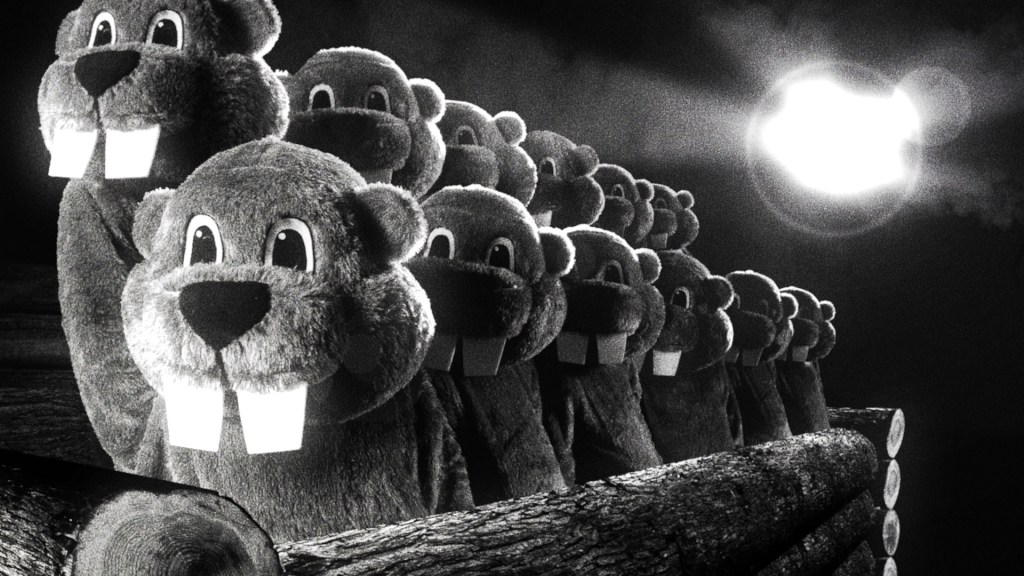
MC: They were manufactured by our friends, the Chinese, who make all our costumes and clothing and props, and even the cameras and lenses! It was sent over by Mascot USA out of Beijing. We had a translator working with us at one point who helped us add an extra tooth for the beaver costume, and the costumes are not in good shape nowadays. They survived two winters with tons of different guys in them, and they’re smelly and moldy and torn apart. But we still take them to film festivals and try to entertain the crowds!

Hundreds of Beavers will screen at Indy Film Fest on April 22 at 4:30pm at the Kan-Kan Cinema in Indianapolis. Buy tickets here.
Indy Film Fest: Interview with It Happened One Weekend writer, director, and star Zac Cooper

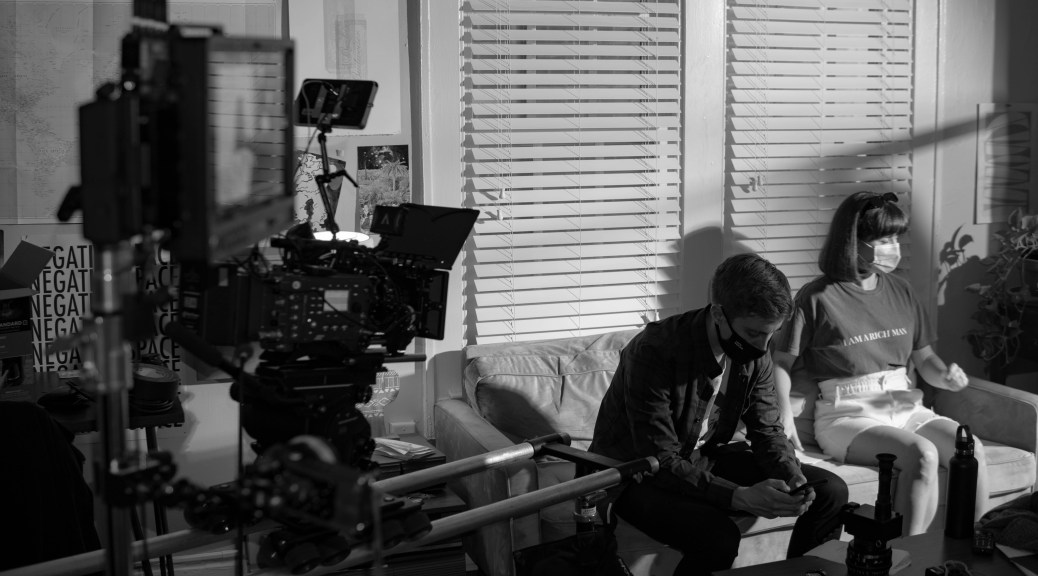
Below is my interview with Zac Cooper, the writer, director, and star of It Happened One Weekend, a romantic comedy about two long-time friends who discover they may or may not have feelings for each other after recent dating struggles. The film had its premiere at the 2022 Indy Film Fest, where it won the “Best of Hoosier Lens” Award. Our conversation has been edited and condensed for clarity.

Ben Sears: The film has been called a “love letter to Indianapolis”, and the affection for the city easily comes through.

Zac Cooper: It definitely is. For reasons that I can’t really put my finger on, Indy felt like home. It was like one of the first places I found that really felt like a home to me. I moved a little bit as a kid, nothing dramatic, but I never felt a real connection to a city, and when I moved here, I moved downtown in 2017 and I really fell in love with the city and Indy felt like home to me. That’s where I feel like the love comes from in the film.

BS: You definitely get a sense of the exploration of what’s new and exciting about the city, especially downtown.

ZC: It’s funny, I know a lot of people who have lived here forever and they always talk about how much it’s changed, but this is kind of the only version of Indy that I know.

BS: Did you always plan on casting yourself as the lead in the film?

ZC: I did, because I knew that, with Merry (Moore), we would have the chemistry that I felt like these characters needed. And I knew that it was going to be a low-budget affair and any time you get more than one person involved, schedules get conflicted, and if you can have one less conflict, it would be logistically easier too.

BS: Was this your first time directing yourself?

ZC: I’ve done it a few other times in some short films. I only direct myself in things that I know I can do. I’m not pushing myself to do Shakespeare or anything, so I try not to be hard on myself but I just trust that this person is just a normal person who makes jokes, which I do myself all the time. But on the production side, it’s very important to have people I trust, who are cool with that process because you spread yourself a little more thin. I view it a little bit as having to wear a lot of hats, especially an independent filmmaker, when you’re on set. I look at it the same way as a cinematographer who can operate their own camera, or something like that, it’s just another tool I might have. 

It Happened One Weekend

BS: Tell me a little about how you came to work with Merry and her casting in the film.

ZC: I met Merry in college during our freshman year, so it’s been almost 10 years since we’ve known each other. We’ve worked on stuff together throughout the years, and she’s one of my favorite people to work with. Going back to trust, I knew that I could trust her if I was spread a little too thin. There were times when she said ‘we should run through this scene more’ and I had to do all these other things, but I knew that I could trust her with that. That was one of the reasons I cast her, not only because she’s great, but because I knew we could pull it off together. And I think if I would have worked with someone else in that role who I wasn’t as familiar with, I think they may have felt a little abandoned at times or that I wasn’t paying enough attention. Which is probably true, but I think Merry just knows how I like to work and what I’m working for.

BS: Chemistry between the two leads in a romantic comedy is really crucial. And that’s another thing that comes across really well, is your familiarity with each other. It almost feels like you’re intruding on their personal lives.

ZC: I’m glad that shows up on screen. That was another reason too [that I cast Merry] because I knew these characters had to feel like they had known each other for a bit when you first meet them, and I knew that Merry and I could easily bring that energy.

It Happened One Weekend

BS: There’s a crucial dramatic scene in the third act that you filmed all in one take. Did you always plan to shoot it that way, or did it unfold naturally?

ZC: No, that was one that I probably hadn’t thought to shoot that way before we got to set. It really just had to do with the space that we were in, it was just a really narrow living room/kitchen area of a two-story townhouse. We were just trying to figure out if we utilize the whole space, or do we keep it in the living room? It kind of just naturally unfolded as we would run through the scene and talking through it with Taylor Dekker, the cinematographer, of doing it handheld and doing it this way. It just came of working through production issues of figuring out how to get the scene done but also making it feel alive and not stagnant.

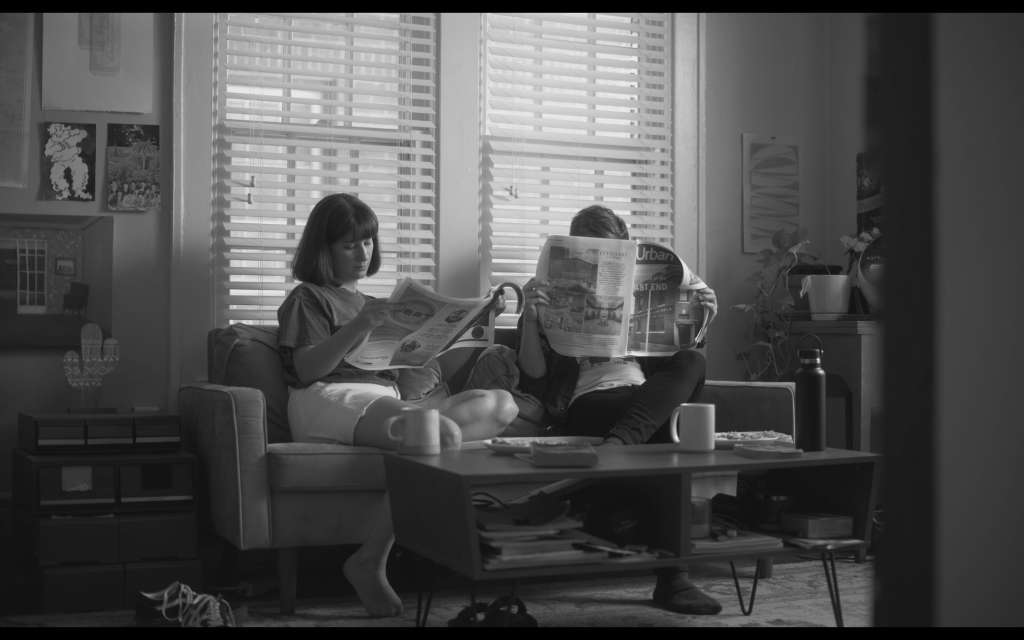
BS: What went behind the decision to shoot the film in black and white?

ZC: That was something that came almost as soon as I thought of the movie. Partially because I just wanted to shoot in black and white because I thought it would be fun. It was something that Taylor and I had talked about doing at some point, and as pretentious as this may be, there is a kind of tradition of first-time filmmakers gathering together with their friends and making something cheap and scrappy and shooting it in black and white. As far as the story goes, I felt like it was appropriate because black and white is very romantic and these characters feel like romance is just around the corner, and that at any time they’re going to meet the right person. So I wanted the audience to feel that way too, and I like the thought of the audience thinking ‘oh, I know where this is going to go’ and then hoping by the end they were taken by surprise just a bit.

BS: Do you see yourself working more in romantic comedies or is this just a unique story you wanted to tell?

ZC: I think a little of both, I don’t feel beholden to that genre. But what I am interested in, and what my mind often goes to, is stories about relationships, so I think I’ll make more things about relationships and they may fall under that rom-com genre, but I don’t feel like that’s what I have to make all the time. I have no shame in the fact that most of what I make is about relationships or romance in some form.