You don’t have to venture all the way to Hollywood to know that quality films can be made anywhere, including in our own backyard. All of the films in the Indiana Spotlight blocks were produced by Indiana-based filmmakers, and it’s that passion for the Hoosier state that shines through in a large number of them. Dreaming of You(th), a wordless story told exclusively through song, takes place in the recognizable steps of the Indianapolis canal at the heart of downtown. Director Mike Woodall uses the universal language of dance to tell the story of a hopeful romance between two middle-aged strangers, and the choreography and camera movement has the energy of a music video.
Crescendo works in a similar way, in that it uses music to tell its story without any dialogue, but directors John Brach, Emily Hunt, and Margaret Murray use creative editing and visuals to sell the emotions. Stories about the creative process are inherently interesting to me, so to see the film tackle an internalized struggle in a unique way was an unexpected highlight of the block. Biran MacNeel’s Weekend in Brazil is all about the aimlessness of that post-high school period when you’re unsure what to make of your life. That protagonist Kiara (a fantastically restrained Aria Harrell) is stuck in her small Indiana town, with little prospects to look forward to beyond her high school friend’s parties, doesn’t help either. Too many independent films go too far by valuing style over substance, but Weekend in Brazil gives its story and characters the emotional honesty they deserve. Another easy standout is Matt Spear’s Love, Grandma, an 8 minute film that tackles the emptiness of those moments immediately after a death. With just a handful of words in the film’s final moments and a surplus of ambient noise, Spear manages to convey the unfathomable grief that a family experiences after a loved one dies. This is one of the best films of the entire festival.
On the documentary side, there’s films that explore Indiana’s past and present. The Diary of Henry J. McBride follows a college student as she researches the titular diary of an Indiana soldier during the Civil War. The film find some interesting avenues of history that would never have otherwise been told. For a more personal touch, check out Rocky Walls’ Gun Control. The film tells the story of local artist Brian Presnell, and his lifelong struggle with gun-related trauma, which began as a child dealing with an abusive stepfather. Presnell’s story is heartbreaking but hopeful, as he finds ways to use a creative outlet for change.
One of the block’s most harrowing but topical offerings is Safe Place, directed by Samuel-Ali Mirpoorian, which recounts the final moments of Jerod Draper’s life. Draper, a southern Indiana man, was arrested and, shortly after arriving in jail, was essentially abused by his jailers by failing to give him appropriate care. Mirpoorian lets the distressing footage from Draper’s cell, and the officers’ depositions, speak for itself but also finds worthwhile interviews from Draper’s friends and family. At 20 minutes, Safe Place could easily be expanded but makes the most of its protracted runtime by focusing on what really matters: a life cut tragically short by a group of people, unable to see what’s happening right in front of them.
The Indiana Spotlight block will screen at Indy Film Fest on July 18 at 7:00pm and 7:15pm at the Living Room Theaters and in Indianapolis, and virtually through July 23.Buy tickets here.
Below is my conversation with Dylan Query, the director and co-writer of Cold Cross, a dramatic Western film being screened at Indy Film Fest. We talk about shooting a period film in Indiana, and the research process involved in making the film. Our conversation has been edited and condensed for clarity.
Ben Sears: Cold Cross started out as a short film, correct?
Dylan Query: That’s right, Cold Cross started out as a short film titled Cold Creek, and we used that short film as a pilot, so to speak. We used the pilot as a proof of concept, a proof of quality, of what a small, local team can produce. And we used that to generate a lot of money, locally, from a very small town where very few people know or care about the film industry. But we were still able to prove to people that it was worth investing in, and we raised $20,000 completely locally. We’re super proud of that and we’re super proud of the support that we’ve had from friends and family and members of the community. But it definitely started out as a short film, but it grew to be so much more.
BS: So was the plan always to make it into a feature eventually?
DQ: No, I don’t think so. I would like to say it was according to plan, but as these things work, it was by complete accident. My film partner, Jacob Steineker, had never been part of any film production before, he’d never acted before, and we had worked on a very small short film that I hired him for, and he became so inspired by that one project that he came back to me a few weeks later and said ‘hey, I have this script for a Western. Would you be interested in making it?’ And by recognizing that the process had inspired him, I wanted to encourage that. So I didn’t grow up a Western fan – it’s not really my interest – but I couldn’t say no. I said ‘yea, let’s do it’, and that’s how Cold Creek was born. And from there we won some awards, including an international award at the Pop Con Film Festival in Indianapolis. And from there we had enough interest in the local community and our fans, and they wanted something more, so that’s how Cold Cross was born.
BS: Was there anything difficult in expanding that short film and making it into feature length?
DQ: Yea, there’s a lot of complications, but my team are amazing problem solvers, and Jacob and I worked closely together to develop the story and expand it. The difficult part of that is doing something that’s within our capability. I think a lot of people will write scripts and they’re not thinking about what resources or locations they’ll have available. And so what was interesting with Cold Cross is that it’s a neo-Western style film, but it’s set in the frontier. We had a lot of friends and family with property, so it was very easy for us to think ‘hey, we can talk to this person and film on this property’, and that cuts down on cost and travel, so little things like that and problem solving, but working within our means. I think that was really key. But that’s not to say there weren’t things that we wanted to do that, to be honest, we didn’t know how we were going to pull it off. But like I said, I have an amazing team, and we were able to think outside the box and create a Western right here in Indiana.
BS: So what is it that you like about the Western genre?
DQ: That’s an interesting question. Like I said, Jacob is the Western buff. I grew up not really liking Westerns at all; in my juvenile ignorance I considered them to be very boring. But when I started working on Cold Creek, there was something about it that I grew to really like. I liked the simplicity, I liked the option of utilizing a lot of natural light to make the film feel more natural, like it’s out in the wilderness. I really liked that aspect of it. I like these classic revenge stories, and Jacob took this kind of cliche, classic revenge Western and we tried to morph it into something more modernized. A lot of things that people have said when they watch Cold Cross, they say it’s a Western, but there are a lot of modern techniques that they didn’t expect. I think that was actually because, with me being the director and cinematographer, since I wasn’t a western fan growing up, that was actually our benefit. We were able to blend old with new and create something fresh.
BS: Speaking of the look of it, the film doesn’t look like a lot of traditional Westerns. When people think of Westerns, they think of big, expansive prairies or deserts. What made you want to utilize the Indiana landscape?
DQ: I tried to limit myself with how I was influencing myself. What I didn’t want to do, when I first started this project, was to start watching a bunch of Westerns because what would happen is I would essentially be influenced by these other films and I would start stealing things unintentionally. So I tried to limit myself a little, but there were certain things that I wanted to explore. One thing that we really enjoyed was the Hatfields versus McCoys, which feels like a Western but it’s set in the same time period as the Wild West. We just really liked that, and it was within our capability to film in the frontier, so to speak, in the Midwest. It was our way of making a Western slightly different from your normal Western.
BS: You make a good point about not wanting to steal other filmmakers’ styles. If I was to make a film, I would want to make it look like a Scorsese film, but then I’d be labeled as a Scorsese imposter. So it’s important to develop your own techniques.
DQ: I agree, when I studied at Ball State University, there’s a small film community there, and I would constantly have people asking me ‘have you seen this’ or ‘you should see this.’ I just try to limit myself because what a lot of people in my craft tend to forget is that films are a distraction. I’d much rather be out there honing my craft, creating my own style for my own projects, instead of watching things that other people have created. Some people might disagree with that, and that’s fine, but I think it’s important to develop your own style, and that’s how you differentiate yourself from the people around you. It’s very easy to copy Tarantino or Scorsese when you’re submerged in all of their content.
BS: What was the most difficult scene to film, either from a practical or emotional standpoint?
DQ: There were two particular scenes that were incredibly difficult to film. The first scene was probably the night chase action scene, in the middle of the film. That particular scene was very difficult for us, not just because of the lighting, but because that was a full, packed day for us. We were filming from dawn to dusk that day, and past that. We started filming around 6am that day, and trying to get as much done as possible, then the night scene came. So we were filming from the break of day until about 2 or 3am. I would say that we were very close to pulling a 24 hour day. By the end of the day though, we were at each other’s throats and we were grouchy, but we finished what we needed to, and that was awesome, but it was very difficult trying to cram that much into one day. I think if I could go back, I would probably have split it up, but on paper I thought it would work, but in reality it didn’t really work the way I wanted it to.
Additionally, I’d say the final scene of the film was very, very difficult. Jacob, with this being his very first feature-length film, and his first writing opportunity, watching him grow throughout this process is something I’m incredibly astounded and proud of. We filmed Cold Cross almost completely chronologically, so what you see is, whenever you see Jacob at the beginning of the film, you’re seeing an early actor. And what’s great about that, is his character is kind of portrayed as being young and ambitious but kind of ignorant about the reality of the world. So as he continues on throughout the film, and as Jacob gains experience as an actor, you’re seeing that level of depth increase in the character itself. What’s amazing is you get this sense of character development with William McCarthy throughout the entire film, and a big proponent of that is that Jacob’s depth as an actor is increasing as the film goes on. And that culminates in the final scene, where Jacob literally gave it his all, and it’s by far the best acting that he’s ever done. It’s in this final scene where things are the most tense and tragic. There was actually one moment during that scene where Jacob had pushed himself so far, and to be honest I think this was a fault of mine as a director, I could have managed him a little better, but there was one moment where he pushed himself so far that right after I said cut, he collapsed. He was clutching his left arm, he couldn’t breathe, and it was a very scary moment, and after that I said ‘OK, we need to be careful.’ It was a slap to the face for me because whenever your talent is in their role, it’s sometimes hard to remember that they’re acting and you might think that they’re just acting their role, but if they’re really into it and getting into this sort of Method acting sort of style, there’s stuff happening internally to them as well, that you have to try to be aware of. That was an eye-opening experience for me, to try to be a lot more observant and aware of my talent and what they’re putting themselves through. But the results speak for themselves; that final scene is just jaw-dropping for us. I hear it from a lot of people, that that was their favorite scene. I owe a lot to Jacob for his efforts and consistent diligence to grow and improve as an actor, it was very profound.
BS: What went into the decision to shoot the film chronologically?
DQ: There were a few exceptions, but we tried for the most part to do it chronologically. We did it that way because we were employing certain tactics like Jacob growing his hair or beard out. We were trying to get this sense of time progressing and I think it was just easier for us to do things chronologically, but it was difficult. We did this thing over the course of two years, so trying to get things to match up scene to scene was sometimes difficult.
BS: What kind of research went into the writing process? There must have been a great deal necessary to get period details right.
DQ: Absolutely, and I think there were a number of things we could have done better, but with our limited budget, we put a lot of effort into props and locations and costumes. We were able to find websites where we could purchase authentic costumes and props. We also turned to friends of ours who are owners of old-style navy revolvers and things like that. All of the gunfire in the film is actually black powder pistols, we’re not using blank cartridges, it’s just black powder without any projectile. So that was really fun and it creates an amazing effect on screen that you just can’t recreate with special effects, or at least not with our budget. As far as the details, I defaulted a lot to Jacob on that. He’s very knowledgeable about what is accurate and what’s not. My expertise was the technicality of production, and Jacob’s expertise was the time-period accurate details, so sometimes we’d be setting up a certain set and I would be setting up a lot of the gear and Jacob would go in and take a look and make adjustments, add certain props, and do what he could to make the set feel more authentic.
We also were in this constant revisionary process with the script. We were editing the script prior to each production day, making very small changes, and I think that was to our benefit. We were consistently improving and updating the script as we went on, and one of the things we would update was adding in little details to make the environment feel more authentic.
Cold Cross will screen at Indy Film Fest on April 23 at 4:00pm at the Kan-Kan Cinema in Indianapolis.Buy tickets here.
Below is my conversation with Wendy McColm, the director, writer, and actress of Fuzzy Head, a psychological thriller being screened at Indy Film Fest. We talk about the challenges of acting in your own project, and the real-life influences behind the film. Our conversation has been edited and condensed for clarity.
Ben Sears: Did you always plan on acting in the film?
Wendy McColm: When I write a movie, I don’t really think about who’s going to act in it, if it’s going to be me or not. But it’s based loosely on my life and my experience, and I think, in my head, I was doing perhaps my last hoorah as an actor. The film ended up taking so long to make that it ended up being a great thing, not just for me as an actor and creator but just, in the end, the healing process of what the film is based off of. To act in those experiences was very surreal. I think, for my next film, I’ll probably have another main actor just because I love watching people acting on screen, and when I’m on screen I can’t really watch behind the camera as much. I have to do one take, go look at it, and maybe do one more, but I usually spend all my time directing the other actors.
BS: You mentioned that it’s based on your real experiences. Can you talk about that a little more? The film has a very fragmented reality, and becomes very surreal in parts, so what is based on your experiences?
WM: The childhood trauma, relationships with family and my mother and sister, and relationships with people and friends. How you run into people in real life and how you interact with other people, and how you’re able to take in other people, and how you can do that after you’ve grown and healed versus when you’re living in a trauma mind. The main character, Marla, is living in a trauma mind of PTSD; I had PTSD and developed PTSD when I was 24 or 25 from living in an abusive relationship, and I dealt with that without knowing for 3 years, and dealt with it while knowing for 3 more years. It feels just like the movie. When you say surreal, I say very real.
BS: Was making the film therapeutic for you?
WM: Yes. Very therapeutic. I didn’t know how it would be, but that’s the only reason I kept getting this signal from the universe saying “you have to make this”, and I didn’t really want to because it’s a drama and I don’t make dramas. But I’m also not a fan of repeating a style, I think it’s boring. I think it’s good to try all kinds of different things, and it was a challenge, but I think it came out great. Dealing with my own personal trauma though, I don’t know. If it works with someone else’s script, I’d like to put my own vision and knowledge of healing and empathy to that, I’d love to do that. But as far as writing my own drama again, I don’t think I’ll ever do that again. It was definitely a fast track way to find out how to do a drama, and the pain that can be involved in making something so deep.
BS: Which aspect of making the film did you enjoy more? Do you like writing, acting, or directing?
WM: I always enjoy the directing on set the most. That’s why we do it, I think. I like writing because it’s a nice outlet, but I could easily write a poem or a song or something, and go perform, and have instant gratification. Writing a movie for a year and nobody knowing where you are and having no accolades – not that anyone needs accolades – it’s kind of nice to share what you’re doing. But when you’re under a rock, you kind of wish people knew what you’re doing. Writing can be fun, but directing is definitely the most fun because you’re working with a team and you’re experiencing your vision coming to life from the page. The best best part is working with the other actors, and seeing what they bring to your script. That’s so thrilling
BS: You’re working in this movie with a lot of established and newer actors. Did you get any advice from Fred Melamed or Alicia Witt or Richard Riehl or anyone else?
WM: You know, they didn’t really give me any advice. They just trusted me and they know that I’ve made a good amount of films and commercials already. The greatest thing about everyone hired, new or seasoned actors, is they were really down for the experience and the ride. When you read the script, I’m pretty sure it’s obvious to everyone that you’re not in for a normal project. You’re in for the unknown, and I think that’s thrilling to people. Most of them, they were just there to support and to take any turn we wanted to take. And I’m eternally grateful to them for that because they didn’t have to do that. They just brought it 110%, so just them showing up 110% teaches you enough.
BS: Was working with them intimidating at all?
WM: With Richard, he’s so sweet right away, so he made it very comfortable for me. I’ve wanted to work with Fred for over 10 years. That was very intimidating but I also think he was trolling me a little bit because he wrote in his contract that he needs A/C, so I don’t think he was serious, but sometimes he’d walk by and be like “if the A/C goes out, I’m gone.” [laughs] And that was so much pressure! We still reach out on facebook sometimes, but obviously he didn’t want it to be hot, and comically enough, the place that we got had central A/C but it turned off halfway through the day. And I had to send out people to Home Depot to get window A/C units, and they were dripping water on the floor and I was freaking out and we were trying our best. It’s just one scene but it worked out well, and he was so excited afterwards. With Alicia, it was intimidating at first to work with her because I kept wondering how she would interpret this mother character. We started with such a sweet scene and I didn’t want to push her too much out of her choices, but I wanted to see what else she could do. So that was intimidating to be like ‘well, what about this?’ They were pure professionals. They’re willing to take direction and are willing to see what happens. The last thing you want, because I’ve been an actor that didn’t get direction before, and the last thing you want is to look stupid in a movie. It’s nice if you have a little direction.
BS: To go back to your performance, it’s a very vulnerable character and a vulnerable performance. You had to do several nude scenes, and obviously you have your own personal connection to the material. Were you nervous at all to put yourself out there like that?
WM: I think I was ready. Nudity doesn’t bother me, I think in the last 7 years and the healing from PTSD, I started to realize all these societal norms and how it’s important to embrace yourself no matter what. It’s part of what I want to show as a creator and as a person. If I’m in front of the screen, that’s important to me, and there’s no safer way to feel completely seen than on camera because it’s a fourth wall. It took me a while to realize that that’s what drew me to film and theater in the first place. You can be angry and win an Oscar, but if you’re angry in real life, you’re a monster. It’s pretty interesting. I think the only thing that scared me about baring my soul was the societal norm that you’re a monster or mean or bad if you have any feeling other than happy or neutral. So showing that to people who are used to seeing comedy from me was a little scary for me.
BS: I think it’s safe to classify Fuzzy Head as a psychological thriller. Are you generally a fan of those kinds of films?
WM: No, it’s not what I lean to. I had to find a way to give some sort of thing people can connect with. Because I’ve seen movies about trauma and I just don’t feel like it hits, and for me as a creator and as a human, something that can be taken in a little more easier. When you go “full trauma”, I don’t know if that’s digestible for people. And this film isn’t easy on the mind by any means. I’ve had people in the audience say they want to leave in the first 20 minutes, but I took a risk in sculpting the film that way. Because with trauma or victims, most people do leave and I was willing to take that risk for the outcome of the ending. Some people have said they wanted to walk out but it’s the throughline of the psychological thriller that keeps them there for the ending, which is what you want. I want them to grow with the main characters, and growing isn’t easy. I had to find a way to keep them wanting to stay there and grow, just like a real life experience.
Fuzzy Head will screen at Indy Film Fest on April 22 at 10:30am at the Kan-Kan Cinema in Indianapolis.Buy tickets here.
Below is my conversation with Mike Cheslik, the director and writer of Hundreds of Beavers, a silent comedy being screened at Indy Film Fest. We talk about the various influences for the gags in the film and the challenges of shooting in the Wisconsin winter. Our conversation has been edited and condensed for clarity.
Ben Sears: Was Hundreds of Beavers always intended to be silent? Or did you get to a certain point when you were writing it when you thought it would be better silent?
Mike Cheslik: Well, it’s hard to remember the exact origins because it was 4 years ago, and the movie just grew out of bar talk, which slowly turned into coffee meetings, which eventually turned into a real project. Ryland [Brickson Cole Tews] and I, who went to high school together in Wisconsin, had just completed Lake Michigan Monster, and we were in the middle of festivals on that movie. That movie ends with a large, silent, animated sequence that’s kind of in a 1920 or 1930s style of live action, and we were able to do that for very cheap. Ryland directed that movie, but I got a lot of free reign on the storyboarded end sequence of Lake Michigan Monster, so with Hundreds of Beavers, the plan was really to lean into all these kinds of animated non-talking sequences. And the film just kind of grew into a full feature-length, entirely gag-driven comedy from that. So we wrote it in the beginning of 2019 and did all the storyboards that year, and the plan was to make something only we would do, which was this totally gag-driven, storyboard-driven physical comedy that’s got a thousand or fifteen-hundred effects shots, but also showcases Ryland’s ability to stand in the cold.
BS: When you’re writing a silent comedy, is it easier to watch other silent films, or did you find yourself watching more modern comedies?
MC: That stuff’s already in our heads from a lifetime of watching cartoons and silent movies and video games. So we didn’t really have to go back and comb through source material when we were writing – it’s just already been in there for years. We had a two page treatment and drew a whole bunch of storyboards out for that. We’d print them out and bring them out in the woods and we’d just cross out each shot as we’d go.
BS: I got a lot of Looney Tunes vibes while watching the film. Would you say that was an influence on you guys when you were coming up with the gags?
MC: Absolutely. And we didn’t even have to go back and watch those because they’re just so ingrained in everyone’s brains. But I do remember there was a Wile E. Coyote when an Acme rocket fails and comes back a few scenes later as a callback, and I just loved the idea of spinning all of these plates. So most of the writing was just spent trying to make this little web of gags that would come back and pay off in a cuckoo way.
It was really all about taking that self-serious wilderness survival story and spoofing it in the way that the Zucker’s spoofed various genres. It was below zero degrees for, like, 8 straight days at one point! We put so much post-animation on it that it looks kind of fake, but he was really out there. We shot for 12 weeks and I’d say 9 of that was outside in the snow. The physical comedy and the Looney Tunes thing was something that we love and felt nobody else was going to do, and you’ve gotta stand out if you’re making an indie comedy.
BS: You mentioned the abundance of jokes and gags that you had written and storyboarded. Were there any that didn’t make the final cut?
MC: Only two. Otherwise, pretty much every single idea we had is in the movie. And when you watch the movie you’ll really realize that these are guys that didn’t say no to any idea. It’s all in there, pretty much.
BS: Were those two jokes cut out because of practical reasons or time constraints, or was it something out of your control?
MC: We shot both of them. One of them, I was told by everyone that it wasn’t funny, so I removed it. The other one was Ryland trying to keep warm by putting a bunch of sticks in his coat and he basically looks like a giant fat suit full of sticks, and then he falls over and can’t get up, and he’s trying to get back up for a minute. We loved it, but it just slowed down the pace at the beginning. Otherwise, everything is in this movie. There were not any other ideas that we had and discarded. It’s all in there.
BS: I’ve got to ask about the costumes. Where did they come from?
MC: They were manufactured by our friends, the Chinese, who make all our costumes and clothing and props, and even the cameras and lenses! It was sent over by Mascot USA out of Beijing. We had a translator working with us at one point who helped us add an extra tooth for the beaver costume, and the costumes are not in good shape nowadays. They survived two winters with tons of different guys in them, and they’re smelly and moldy and torn apart. But we still take them to film festivals and try to entertain the crowds!
Hundreds of Beavers will screen at Indy Film Fest on April 22 at 4:30pm at the Kan-Kan Cinema in Indianapolis.Buy tickets here.
Below is my conversation with Ryan Whitaker, the director and writer of Surprised by Oxford, a film that’s making its world premiere at the Heartland International Film Festival. We talk about the challenges with creating chemistry between stars, filming at Oxford University, and adapting a dense source material. Our conversation has been edited and condensed for clarity.
Ben Sears: Tell me how you came to the project? What was it about Carolyn’s story that spoke to you and believed you could turn it into a movie?
Ryan Whitaker: It was almost five years ago when I read the book and first talked to Carolyn about the rights. The book was recommended to me by my mom and my sister, who thought I would like it because it touched on a lot of things that were interests of mine: British culture, the city of Oxford, and the Inklings, writers like CS Lewis and JRR Tolkien. They were right, I just fell in love with her story and thought it was a beautifully written book, and I immediately began thinking about what this story could look like as a movie. It was a bit of a challenge because it was an almost 400 page memoir with a lot of characters, so it was really about chipping away at the marble and finding the movie hiding within. I loved Carolyn’s story, I loved that it was a coming of age story, a romance, and a spiritual journey. It was all of those things at once.
BS: How much involvement did Carolyn have once the movie was greenlit?
RW: Carolyn has been nothing but supportive and collaborative from the beginning. I knew things were going to be smooth sailing when she read the first draft – which I was terrified to share with her because of all the things I had changed, which you have to do when you’re adapting a story like this – and she responded positively to it and has been nothing but supportive ever since. She’s remained involved, not directly, creatively speaking, but I would call her a close collaborator. She and Kent were on set for production, and she has a cameo in the film. It’s been a great working relationship.
BS: Were there any details that she helped with, from the Oxford atmosphere?
RW: The University of Oxford is a very strange place, if you’ve never been there. If you haven’t been there or toured, a lot of people don’t realize that it’s not one college, it’s a bunch of different colleges in the city of Oxford. The layout of the colleges is unique, in that there’s little walled gardens throughout the city. You have the quad, and the porter’s lodge at the front, and almost every college has a chapel and a dining hall. They’re all similar but they all have their own character. Getting those details as accurate as possible was really important to me. Carolyn was there in the early 90’s, and the film is set in the modern day, so it was a combination of talking to her about what it was like then and how much it’s changed since then. That town hasn’t changed much in a couple hundred years, but we also talked to students who are there today, trying to make it as accurate as possible.
BS: Was there a creative reason to set the film in the modern day, or was it a logistical concern?
RW: It was purely practical, just a budget consideration. The question that I asked was, “does this film need to be set in the early 90’s?” Beyond the fact that this is when Carolyn was at Oxford, it would make more sense that it would be set in the modern day, and it would allow our budget to go further. There were very few things in the story that needed to be updated. For example, there’s a text message that Carolyn sees on Kent’s phone, and in real life, that was an email – in the early days of email. Beyond that, there wasn’t really anything in the story that dictated that it had to be set in that time period.
BS: Speaking of shooting on location at Oxford, how difficult was it to get access to those historic locations? Were there many hoops that you had to jump through?
RW: The original plan was to shoot between terms, in the summer, when classes aren’t in session. We didn’t quite have our financing together, so we ended up pushing it into term time, which made it a little more complicated. Honestly, it really came down to some sheer luck, but then also really great people on the ground, working very hard to secure every location we needed. We were very lucky that we got access to all the locations that we did. We were able to shoot almost everywhere that we were able to, so it was logistically difficult, but you’d never know that from seeing the film, all the chaos outside of the frame.
BS: I know I’d be very nervous the entire time that something would be broken or misplaced. There’s a lot of delicate decorations that would make me anxious.
RW: By far, not only the most expensive location, but the most logistically challenging was the Bodleian Libraries, which are some of the oldest libraries in Europe. We shot upstairs in the Duke Humfrey room, which only deans and students have access to. A few films have shot up there, some have shot downstairs in the Divinity school, but the Duke Humfrey room was the library in the first Harry Potter movie. You can’t touch anything. Every single book has an alarm. You can’t take water on that floor. The gag about the ink pens not being allowed in the library came from a conversation with Carolyn. They’re very particular, so we had some locations like that that required a lot of tip-toeing around. You really don’t want to be the guy that destroys an original Shakespeare folio, or something like that.
BS: How did you come to cast Rose as Carolyn?
RW: I had first seen Rose in a film called Finding You, that my producer Ken Carpenter had done in Ireland, and Ken had said ‘what do you think about Rose in that role?’ So I went and watched that film and found her to be really likeable, the camera really loves her, she has a really great presence on screen. We got together and talked about the character, and I got a really great feeling that she could inhabit this role. The character is a bit of a complicated character, and I needed to cast someone that could somehow be unlikeable and likeable at the same time, and someone who could handle the intellectual side of the character in a way that didn’t feel precocious. I just had a feeling that Rose could do it, and it ended up being a great experience working with her, and after she was attached, it was just about how we build the best possible cast around her.
BS: That character has a steeliness to her that makes you understand how she could be so apprehensive of someone else, but there is a kind of openness that Rose really brings to it.
RW: The messy nature of the character is what I always thought was interesting. Casting is so important because if you cast the wrong person in that role, you don’t want someone that’s only unlikeable. Or at least unlikeable and un-relatable. If the character’s going to be unlikeable, they at least have to be relatable, and I think that’s what Rose really brought to the role.
BS: Rose and Ruairi’s chemistry is really great together, which is really crucial in a romantic comedy, or even a romance. Did you do anything to foster that chemistry or did it just come naturally?
RW: There was very little time – I’m trying to remember back, now – but Ruairi was one of the last people we cast in the film, actually. There wasn’t a lot of time, but I think they did spend some time together before we started shooting. Which was important to me, and to them, just to be around each other and develop a rapport. I do think that helped, but it was a restrained schedule.
BS: It’s not something where you can just put two people together and expect sparks to fly, so it worked out in the end.
RW: And even if you do all the work, whether it’s rehearsals or sending them off to spend the day together, it still might not work on screen. It’s always a bit of a gamble and we were very fortunate that the chemistry was there between the two of them.
BS: You mentioned earlier that you’ve always been a fan of classic literature, which forms a backdrop for the film. Were you worried at all that some of the dense, more academic books wouldn’t translate to general audiences? How did you go about making these people seem so smart but making it relatable?
RW: I realized early on that the most important thing was that the audience doesn’t have to know the literary references. The most important thing is that the audience has to believe that they do, and so that was a guiding principle to me. There is some “inside baseball” in this film, and you may not know the ins and outs of it, but the most important thing is believing that the characters do, so I hope we succeeded on that front. There were certainly even more literary references in earlier drafts of the script, which came down to a practical question of, how much can the audience handle? That was certainly something we talked about, but I just felt from the beginning that, if you know all these references, great. That’s wonderful, but it’s not necessary to enjoy the story.
BS: The romantic comedy can easily be formulaic in its plotting. What are some of the difficulties that you came across to keep this from being formulaic?
RW: Actually, I never saw this as a romantic comedy, I saw it more as a coming of age story. Part of what was unique about Carolyn’s book is that it wasn’t just a romance, it was also a coming of age story, it was a spiritual journey. It was all of those things at once, which I think is unique and I wanted to retain in the telling of the story. It’s easier said than done, and that was one of the more difficult aspects of the adaptation, was finding a way for those storylines to feel like they’re happening simultaneously and they’re all connected. So I guess the answer to the question is that the subversion of expectations was almost built in from the beginning just because it was a very unique type of story.
Surprised by Oxford will screen at the Heartland International Film Festival on October 12 at 7pm at the Deboest Lecture Hall at Newfields in Indianapolis.Buy tickets here.
Below is my conversation with Linh Tran, the director and co-writer of Waiting for the Light to Change, a film that’s making its world premiere at the Heartland International Film Festival. We talk about Vietnamese filmmakers, the complicated process of writing the film, and its visual influences. Our conversation has been edited and condensed for clarity.
Ben Sears: Now that you’ve made your first film, do you find yourself watching movies differently? Do you find yourself analyzing them differently?
Linh Tran: It’s actually a little funny for me because I didn’t grow up watching movies. I didn’t really watch a lot of movies until I was in college, but I guess, from back then to now, there has definitely been a change in how I watch movies. I feel like the change is like, I begin to sympathize and appreciate more things and I watch movies in a kinder way. Now, I feel like I can enjoy them more, actually. I just started watching movies that I enjoy over and over and over again, and the first time is always like watching normally, and the second or third watch is more like a study. It’s a little bit of a learning experience, but at the same time, I don’t think it really differs that much.
BS: Do you find yourself looking at it differently from a technical level, thinking how you would have shot a scene from a different perspective, or a different editing technique?
LT: I don’t think so, actually. Sometimes if something is really outstanding, like a really flashy camera movement, then I would notice it right away, but most of the time I feel like whenever I catch myself doing that, it’s probably because I’m not really into the movie.
BS: You mentioned that you didn’t watch a lot of movies growing up. Is it because you didn’t have access to many of them, or you just didn’t have an interest?
LT: I think both. I’m from Vietnam, and it’s really unfathomable for someone like me – because nobody in my family is in the arts or making movies, or anything like that – and none of the kids that I knew growing up was interested in art. We weren’t encouraged to explore that side; the parents were always saying ‘you have to be good at math’. It just didn’t occur to me that that was a possibility. Making movies was never a thing. We did watch a lot of TV growing up, though. I didn’t get that interested in film until I got to college when I came to the states to study.
BS: Are there any Vietnamese filmmakers that you admire, or that you would recommend?
LT: It’s really hard because I feel like Vietnam was a colony for such a long time, and people were too busy with the war, and people were really poor until the 2000’s. So nobody thought about going to see movies, and now people are going to see movies, but they’re a lot of, like, “instant noodles” kinds of movies. Their arthouse scene is booming right now, and there are a few directors that I know and I like. Dang Nhat Minh made movies in the 90s and earlier, but doesn’t make anything nowadays, and I’ve only seen a couple of his films, but his filmmaking feels very honest and authentic, and very unlike a lot of movies that are made right now. Phan Dang Di, who is still working, and I think he’s really popular on the international film festival circuit. I’ve seen a lot of his movies and I have met him once. He’s a very quiet guy and an interesting character. I got to work with one of the actors that was in one of his movies for one of my short films, and that was really fun. I’m kind of jealous of my friends who are Taiwanese or Chinese or Korean because they have a really long and great cinematic tradition that we don’t have. But at the same time, it’s sort of freeing. You can do whatever you want and there’s no standard or someone to judge. But I’m not in Vietnam right now; hopefully one day I’ll be able to make a feature in Vietnam.
BS: One of the most noticeable things about Waiting for the Light to Change is how most scenes just unfold in these long, unbroken takes. Was it always your intention to film it that way, or did it come about during production, when you were planning it out?
LT: The slowness and rhythm of the films of people like Jia Zhangke and Hong Sang-soo has always appealed to me. With those movies, you can really feel it as if it’s unfolding in front of your eyes. But this was really the first film where I tried to emulate that. It also was because we didn’t have a lot of money or time to shoot the film, so it was a necessity, but at the same time, it works well for the kind of story it is.
BS: I was reminded of Yasujirō Ozu and how his camera was always so static. Was that something you were trying to consciously emulate?
LT: I really like Ozu as well, especially the subject matter of his films. I also really like how stoic his films seem to be. I wasn’t actively thinking of him while I was making the movie, but he’s always been an influence and was probably in the back of my mind. What I like is a lot of restraint. It comes from a character or personality thing, and it kind of extends into the filmmaking.
BS: The dialogue almost feels improvised throughout the film. Was there much improvisation that you allowed from the actors? It feels Ozu-like in that it’s almost like you’re watching something unfolding that you shouldn’t be watching.
LT: So, I’m going to tell you a story of how the script came to be, first. I was a grad student at DePaul University, when they had this program where you pick a script, pitch it, and work on it. This was a very different script, and then we were going to go into production when COVID happened. At one point, after the shoot got pushed a couple times, it wasn’t COVID-friendly, so we put it aside. We thought, let’s just write a new script as what we know as 25, 26-year old’s. At the time, I was working with two playwrights and we wrote the script over Zoom calls, we improvised the dialogue, we divided it into parts, wrote it, read it, and revised it over two months. In January of 2021 we got the first draft, and shooting was in March 2021, so we didn’t have a lot of revision. We were trying to cast the actors who reminded us of the characters we were writing, and we interviewed them and incorporated stories that they told us into the script. Because of COVID, we quarantined the entire crew at the lake house in Michigan where we shot the film. I was so lucky that I got the actors out there a week in advance, so we had the latest draft, we had a table read and I took the script away. When we went into rehearsals, they didn’t have a physical copy to memorize their lines. So during rehearsals, we would improvise these scenes based on what they remember, I would record it on my phone, and write the script based on what they said and send that to them. So on the set, there wasn’t a lot of improvisation, but the improvisation was in the rehearsals.
BS: You can really sense the chemistry between the actors, which is really crucial in this film. Did you do anything beyond quarantining them together to bring that chemistry out?
LT: Yes, in rehearsal, I really tried to get everybody to have trust with each other and establish that kind of familiarity. Before we went to Michigan, I would have these Zoom calls with the actors and I would turn off my camera and let them talk to each other. I would pop in and out, and let them chat on their own. Some of the stories they would tell each other, about their family, or their lives, were really powerful. Sometimes they would just share these things that were so intimate.
BS: Tell me a little about how you chose the location where most of the film takes place.
LT: Well, we didn’t really have money. One of the producers, Jake Rotger, said we could go and shoot at his family’s lake house before he had a story or a script or anything. So we had the location first, and then we tailored the script and the actors and everything to fit the location. Actually, in the original script, there’s a bonfire scene and because we were using the university’s money, they wouldn’t allow us to use fire because it could be too dangerous. We were really upset that morning, we got an email from the school, so we had to think of how we could transform the scene without the fire, so we changed it to a propane oil lamp.
BS: I’ve seen a lot of festival movies that tend to play up the drama with contrivances that don’t really feel authentic, but the drama here is underplayed, which I appreciated. When you were making it, did you ever get the urge to play up the drama?
LT: I don’t like making things so obvious and so external. There’s so much drama going on in everybody’s head all the time, and however we can make that known is more important to me. My best friend bought me a plane ticket to spend Thanksgiving with her. I told my writers I would take notes and come back with a story, so a lot of the bits in the film are things that I’ve experienced in my life. So to me, this is plenty of drama already. And there was a lot of energy on set that it already felt so full to me, and I really didn’t think of making this more dramatic.
BS: You kind of expect that, if things don’t go the protagonists’ way, the world will be over or nothing will ever be the same, but that’s not true to life.
LT: I think, in some sense, it will never be the same. Sometimes you meet someone and you know you’ll never see them again. It’s not always like that, but I don’t think the stakes need to be any higher. When I was writing this, I just really wanted to make something that people around me, people my age, could watch and think ‘oh my god, this is someone I know’.
Below is my conversation with the writer and director of The Moon and Back, an official selection at the 2022 Heartland International Film Festival, and her directorial debut. We discuss the intimidation factor of working with well-known stars, the themes of the movie, and the impact that home movies had on her growing up. Our conversation has been edited and condensed for clarity.
Ben Sears: You only had nine days to shoot the movie, so what was it like to be thrown into that kind of chaos?
Leah Bleich: It was really challenging, I think that our shooting schedule was one of the biggest challenges of the project. I think the only thing that was more difficult was the amount of prep time we had because that was really expedited as well, but I think there’s something really beautiful and fun about not having room to think or dwell or over-think while you’re on set. At every point you just have to keep moving, and that leads to a really charged environment where everyone is doing their job. It’s exhausting but there’s something very fun about that too.
BS: Did the final product have to change at all because of the shortened schedule?
LB: A bit. There was a B-plot that just wasn’t playing when we got into post-production, and part of that was that there was a scene that we just couldn’t get to during production, and it just wasn’t core to the story, which was where the audience was going to be investing emotionally. There were compromises that we made, but I’m very happy that we weren’t forced to cut anything or make sacrifices that affected the central emotional rhythm of the movie.
BS: You’ve directed a few short films before this. Were there any differences in your working style from making a short film versus a feature?
LB: Absolutely. I think the biggest change from my perspective, not necessarily in terms of working style, but one thing that took me by surprise was that, despite the budgetary and time constrictions, this was the first time that I realized what it felt like to be a director, where everybody else was a professional doing their job, and I wasn’t there with a backpack full of all of the props and costume changes. It was a very exciting thing to realize that I had stepped into a team where everybody was supporting one another and I wasn’t just doing everything myself. I think, with short films, unless you’re doing a well-financed short film, you’re just handling everything yourself.
BS: And you’re working with established actors like Nat Faxon and Missi Pyle. Was there a level of intimidation that came with that?
LB: Oh my gosh, absolutely! I don’t think I could overstate that. I remember on my first day of production, we were using my producer’s apartment as a home base, and just that feeling of stepping into her house and knowing that Missi Pyle was in a bedroom getting her hair and makeup done. I’m so honored that they gave me the time, and it was highly educational.
BS: One of your mentors also was Cathy Yan. What kind of advice did she give you, or help you out with?
LB: Contextually, because The Moon & Back was produced through Wayfarer Studios’ competition, they matched each of us with a mentor. Cathy was someone they reached out to and paired her up with me, which I was so excited about because she’s incredible. She was there for every step of the process, and she’s in New York, so we would have Zoom or phone calls. At the transition point between every major stage, whether it was pre-production or production, or post-production, we’d typically get on the phone for an hour or two and talk about everything from the fears that come into place to advice, things to avoid or celebrate. It was a really lovely experience and I’m very grateful to have worked with her.
BS: Coming-of-age films usually feel like they’re at least partially inspired by the filmmakers’ real-life experience. Was that the case with you, or was it a totally original creation?
LB: That’s a question I’ve been asked a lot, especially when we were initially sending out the script. I got a lot of questions about whether it was a true story because there are a lot of natural overlaps: I was a filmmaker making a movie for no money, and so was Lydia. We’re both women and we have a lot of shared characteristics. There’s a lot of myself in Lydia, and in the characters that I wrote, but it’s definitely not a true story either. I’m very grateful that my dad is still here and still alive, and hasn’t written any screenplays – as far as I know, although I’d be glad to hop in there if he chose to do so. So I would say that a lot of it is based in reality. The idea came into existence while I was home during the pandemic, staying with my family for a little bit as we were in that really scary moment, so it’s drawn from a real, emotional place, but I’m also grateful that it’s not based in reality.
BS: Did you or anyone in your family make home videos when you were growing up?
LB: Yea, definitely. I had been playing around with VHS’s before I found out about the Wayfarer competition. It’s funny, when I found out about the Wayfarer competition, I knew they were looking for movies that could be made for a really small amount of money, and I was trying to figure out what my unique angle could be to win. I had previously made a short film on VHS and was having a really fun time playing on VHS, so I had initially pitched this as a VHS story, like a found footage kind of coming-of-age story, because it could stand out and be produced for a small amount of money. It ended up transforming into something else, and I’m really glad that we went the direction that we did. This is all to say that I love VHS and it’s something that I grew up with, and I spent a lot of time digging through the archives of our own home movies. There’s actually a clip of me as a baby, in the montages, subbed in for baby Lydia.
BS: Do you want to continue working in the coming-of-age genre? Did Cathy Yan pitch you on the next DC project?
LB: [Laughs] I love coming-of-age. I certainly wouldn’t turn down a bigger project, but I love big stories, stories with heart. Any project that marries a sense of love and joy, and emotional grounding, with a story that also gets your heart racing is exciting to me. As a creator and a writer, there’s a lot of reason to continue to build in the coming-of-age genre, and it’s something that I can’t get enough of. I’m very happy to continue to work in that space for now, but I wouldn’t say that my ambitions are small in terms of the kinds of things that I’d like to make, but I look forward to continuing to expand as a filmmaker.
I recently spoke with Emily McGovern, the writer and artist of Bloodlust and Bonnets, whose newest graphic novel Twelve Percent Dread is available now. Our conversation has been edited and condensed for clarity.
Ben Sears: Your new book is very different in subject matter from Bloodlust and Bonnets in the way that it’s less silly and fantastical. Do you prefer to write siller, more fantastical stories or did you enjoy writing this more grounded story?
Emily McGovern: I’m lucky to be in the position of just writing whatever I want. Whatever ideas I have, I just turn into comics and people either buy into it or they don’t. For Bloodlust and Bonnets, it had followed on from a short comic I had made and when I was approached about doing a full-length graphic novel, I just thought there was more mileage in it. It was originally a four-page comic that I had written for a competition and I just felt like I had more to do with that kind of situation and those characters. I felt like I had more story to tell and I found those characters fun and the real high-octane silly, absurd stuff, I was really enjoying. Towards the end of that book, I started thinking about the next one. Not in any kind of deliberate way but ideas were coming to me that were more based in reality and something that was closer to my own life. And jokes and situations and characters were coming to me, and the Twelve Percent Dread story developed from that. So it wasn’t a deliberate shift, it was more to do with what ideas are coming to my head at any given moment and I had some things to say that were closer to my own reality, set in a recognizable modern world.
BS: The Katie character is loosely based on yourself, at least in the nannying storyline. Did you find it difficult to write a fictionalized version of yourself?
EM: Well, it’s not really a fictionalized version of myself, unless you think all the characters are fictionalized versions of myself because they’re all saying things that I’ve thought or made up. I think it’s more accurate to say that every character in Twelve Percent Dread says something I don’t necessarily believe, but something that has come into my head. Including characters like Jeremy or Michelle. I don’t think I’m like them but the jokes and stuff that I’ve put in their mouths are thoughts that have come into my head. I think you’re always sort of writing based on what you’re thinking since you can only know what’s going on in your own mind.
In terms of Katie’s situation, I was never in the position of having to share a room in London, though I had some friends that had to do so in Dublin and elsewhere. But after graduating, I did have trouble finding a “graduate job”, so I was nannying for a while; it was under the banner of tutoring, but it was effectively just homework enforcing.
BS: In that respect, in turning part of your life’s story into Katie’s, did you find it easier or more difficult to make jokes about that, or making Katie feel like a more fully-formed character?
EM: I do ultimately think of Katie as separate from me; the situation was inspired by my time as a nanny, and I found myself in funny situations. Just thinking about the interesting dynamic that happens when you’re in charge of a very small person that just happens to be a millionaire. The hierarchy of power is quite interesting, you’re sort of in this service role but a high-level service role. So I took those sorts of dynamics, as opposed to feeling like I was exposing myself, no more than in my previous book which was about psychic eagles and that sort of thing.
BS: For the record, I’d love a separate comic that’s just about the talking eagle from Bloodlust and Bonnets.
EM: [laughs] Yes, I do love it, but there’s a certain quality to a character that appears once every four episodes or so in a sitcom and says something hilarious and leaves again. You don’t want to over-do it.
BS: Twelve Percent Dread is also different from Bloodlust and Bonnets from a visual standpoint. You don’t use any color, and the structure of each page is so unique. Can you tell me a little about the decisions to structure it in the way you did?
EM: I think it’s all quite organic. I did spend a lot of time thinking about some visual aspects of the book. When it comes out, American readers will get a section at the end that shows how different it looked right at the start, where it had the big, four or six panels on each page. I think it was a combination of the way the horizontal panels reflect the text bubbles that we get on our phones, and the kind of 2010s aesthetics with the beveled edges of the panels. I wanted it to reflect that decade; I was writing this during the pandemic, and realized it was going to be a cut-off point between before and after, and this is very much a story from before. And also because that reflects the period of my life when I was in my twenties and living in London myself.
It’s also because my writing is made up of a lot of small moments. I think in a lot of traditional comics, they’re made with six panels or so per page and it’s a collaborative effort with many people, and you can’t just say to a colorist ‘oh, there’s going to be 20 panels on this page.’ It’s got to be a bit more standardized. But my comics tend to be made up of a lot of smaller moments of hesitation, and the rhythm of it has to be very important, so when someone is hesitating over a sentence, it’s very important to me that there be a separate panel while they stumble their way through a sentence, for instance. It kind of diverts from that, or watching a character process something in smaller moments. Some cartoonists really take that to a bigger extreme, where they’ll have a whole page of someone just having a thought, or having twenty or thirty panels of someone moving across a room.
BS: Those in-between moments really help to draw out the humor in a lot of situations.
EM: Yea, I have a friend who says that about my work. A lot of the humor comes from those pauses between things. You have to draw the pause, so it takes up space on the page. Visually, there’s a lot of other stuff that I tried to weave in. I was really focused on zeroes; there’s a lot of O’s and hoops and loops and things like that. There’s things that you don’t want to be too descriptive, but there’s some repetitive imagery that I tried to put in there, so it’ll be interesting to see if people are able to spot that.
BS: Do you read very many comics?
EM: I do. I was never really much of a “U.S.” comics person when I was growing up. I grew up in Belgium, so I would read a lot of Tintin and Asterix. They were my big ones, and I would be more familiar with that sort of Franco-Belgian style. I don’t really know much manga, but when I was in London, this very sweet young lady helped me buy my first manga comic. I do want to start reading more manga.
BS: Do you find that the comics that you read influence your writing style or your sense of humor?
EM: There were some books which had a huge influence on me, when I was a teenager, like the Sandman comics, especially the ones that were more artistically focused. So I really studied those, even before I was a comics artist, but I was really intrigued by the elasticity of the form. During lockdown I probably read Watchmen probably two or three times because there’s so much in there story-wise, and with the recurring imagery. Otherwise, I follow a lot of web comic artists on Instagram and Twitter. I try to follow as many as I can, and I really enjoy seeing someone who’s got a distinctive style. It inspires me when I see someone doing something really weird and different because it reminds you of how boundless the medium is.
BS: You can go into any comics shop and look at a lot of superhero-based comics and – while there are many that look great – they tend to look very similar. So when a comic like yours looks distinctive and unique, I’m already interested, regardless of the subject matter.
EM: Yea, obviously comic books and graphic novels are unlike textbooks, in that you can just pick it up and flip through it and get an idea of whether you’re interested or not. The mainstream comic that I really love in recent years is Saga. The artwork in that is just stunning and it pulls you in. It just has this vibrant quality which is so inviting. When I worked on Bloodlust and Bonnets, I worked with this colorist named Rebekah Rarely, and everybody tells me how great the color is in Bloodlust and Bonnets, and it’s because she did it. And whenever we had a doubt or a question, we would look at Saga, and look at how Fiona Staples did it. And I still do that sometimes if I have to color a comic, I’ll just look at what Fiona did.
BS: It feels like there’s so many comics and graphic novels that are being adapted into movies and TV shows and different properties today. Would you ever want to see your comics get adapted into a movie or TV show?
EM: For sure. I think I’ve said a few times that Twelve Percent Dread is my sort of sitcom. I’m a huge fan of sitcoms, and always have been. My style of writing is very much like that; it’s very joke-based and fast-paced, and I think this book would lend itself quite well to being a TV sitcom or something.
BS: The subject matter is definitely ripe for parody.
EM: My writing is very character-based, and that’s the heart of the sitcom, just characters bouncing off of each other.
BS: Do you think you’ll ever return to these characters? It feels like a collection of characters that could easily become a series.
EM: To be honest, it was really exhausting to make. It took about two years of constant work, and there are advantages to it, but when you work completely on your own it can be a little overwhelming. Obviously it’s nice because you have complete control, but I probably won’t in the immediate future. I have to take some time out, and I’m really enjoying just making shorter-form comics now, which is how I started out. It’s nice to just have a thought, write it down, and have it out within a week or so, and have people see it right after you come up with the idea, as opposed to spending months and months and thinking about it.
Twelve Percent Dread is available wherever books and comics are sold. Emily’s shop and Patreon can be found at www.EmilyMcGovern.com
Below is my interview with Zac Cooper, the writer, director, and star of It Happened One Weekend, a romantic comedy about two long-time friends who discover they may or may not have feelings for each other after recent dating struggles. The film had its premiere at the 2022 Indy Film Fest, where it won the “Best of Hoosier Lens” Award. Our conversation has been edited and condensed for clarity.
Ben Sears: The film has been called a “love letter to Indianapolis”, and the affection for the city easily comes through.
Zac Cooper: It definitely is. For reasons that I can’t really put my finger on, Indy felt like home. It was like one of the first places I found that really felt like a home to me. I moved a little bit as a kid, nothing dramatic, but I never felt a real connection to a city, and when I moved here, I moved downtown in 2017 and I really fell in love with the city and Indy felt like home to me. That’s where I feel like the love comes from in the film.
BS: You definitely get a sense of the exploration of what’s new and exciting about the city, especially downtown.
ZC: It’s funny, I know a lot of people who have lived here forever and they always talk about how much it’s changed, but this is kind of the only version of Indy that I know.
BS: Did you always plan on casting yourself as the lead in the film?
ZC: I did, because I knew that, with Merry (Moore), we would have the chemistry that I felt like these characters needed. And I knew that it was going to be a low-budget affair and any time you get more than one person involved, schedules get conflicted, and if you can have one less conflict, it would be logistically easier too.
BS: Was this your first time directing yourself?
ZC: I’ve done it a few other times in some short films. I only direct myself in things that I know I can do. I’m not pushing myself to do Shakespeare or anything, so I try not to be hard on myself but I just trust that this person is just a normal person who makes jokes, which I do myself all the time. But on the production side, it’s very important to have people I trust, who are cool with that process because you spread yourself a little more thin. I view it a little bit as having to wear a lot of hats, especially an independent filmmaker, when you’re on set. I look at it the same way as a cinematographer who can operate their own camera, or something like that, it’s just another tool I might have.
It Happened One Weekend
BS: Tell me a little about how you came to work with Merry and her casting in the film.
ZC: I met Merry in college during our freshman year, so it’s been almost 10 years since we’ve known each other. We’ve worked on stuff together throughout the years, and she’s one of my favorite people to work with. Going back to trust, I knew that I could trust her if I was spread a little too thin. There were times when she said ‘we should run through this scene more’ and I had to do all these other things, but I knew that I could trust her with that. That was one of the reasons I cast her, not only because she’s great, but because I knew we could pull it off together. And I think if I would have worked with someone else in that role who I wasn’t as familiar with, I think they may have felt a little abandoned at times or that I wasn’t paying enough attention. Which is probably true, but I think Merry just knows how I like to work and what I’m working for.
BS: Chemistry between the two leads in a romantic comedy is really crucial. And that’s another thing that comes across really well, is your familiarity with each other. It almost feels like you’re intruding on their personal lives.
ZC: I’m glad that shows up on screen. That was another reason too [that I cast Merry] because I knew these characters had to feel like they had known each other for a bit when you first meet them, and I knew that Merry and I could easily bring that energy.
It Happened One Weekend
BS: There’s a crucial dramatic scene in the third act that you filmed all in one take. Did you always plan to shoot it that way, or did it unfold naturally?
ZC: No, that was one that I probably hadn’t thought to shoot that way before we got to set. It really just had to do with the space that we were in, it was just a really narrow living room/kitchen area of a two-story townhouse. We were just trying to figure out if we utilize the whole space, or do we keep it in the living room? It kind of just naturally unfolded as we would run through the scene and talking through it with Taylor Dekker, the cinematographer, of doing it handheld and doing it this way. It just came of working through production issues of figuring out how to get the scene done but also making it feel alive and not stagnant.
BS: What went behind the decision to shoot the film in black and white?
ZC: That was something that came almost as soon as I thought of the movie. Partially because I just wanted to shoot in black and white because I thought it would be fun. It was something that Taylor and I had talked about doing at some point, and as pretentious as this may be, there is a kind of tradition of first-time filmmakers gathering together with their friends and making something cheap and scrappy and shooting it in black and white. As far as the story goes, I felt like it was appropriate because black and white is very romantic and these characters feel like romance is just around the corner, and that at any time they’re going to meet the right person. So I wanted the audience to feel that way too, and I like the thought of the audience thinking ‘oh, I know where this is going to go’ and then hoping by the end they were taken by surprise just a bit.
BS: Do you see yourself working more in romantic comedies or is this just a unique story you wanted to tell?
ZC: I think a little of both, I don’t feel beholden to that genre. But what I am interested in, and what my mind often goes to, is stories about relationships, so I think I’ll make more things about relationships and they may fall under that rom-com genre, but I don’t feel like that’s what I have to make all the time. I have no shame in the fact that most of what I make is about relationships or romance in some form.
Below is my interview with Celine Held and Logan George, the directors and writers of their debut feature film Topside, which premiered at SXSW and the Venice Film Festival in 2020 and will be available in select theaters and digitally on March 25. We talk about the real-life inspirations for the film, how Celine prepared to act in the film, and their careful approach to portraying New York City. Our conversation has been edited and condensed for clarity.
Ben Sears: Topside is very clearly influenced by Jennifer Toth’s book The Mole People. What were some of the elements that you took from the non-fiction book that would eventually become this fictionalized film?
Celine Held: The Mole People is from the perspective of Jennifer, who is a journalist, and who went down and had some interactions with some specific people that ended up turning the book in a very different direction. As you’re reading it, you think that it’s purely an exploration of the people that lived in the Freedom Tunnel, and it becomes something a little more different. So we wanted to take her experiences, especially with Bernard, who for us really felt like John in Topside. We felt him in that character, but so many of the other characters that she explored like Blaze went in a direction that we didn’t want to explore. There’s the idea that you could approach this as a journalist going down into the tunnel. Like, there’s always that thing of, what if this is told from the perspective of someone else who is more like your viewer approaching this subject.
Logan George: Where it’s this sort of foreign world and you’re discovering it with them, but we were interested in that idea of normalizing it and having it from the perspective of Little (Zhaila Farmer), and that was our way to be inside the story from the beginning and not have to treat it like such a foreign identity. It’s the home that she knows and understands, and that’s sort of inverted as she goes out into the NYC that we all understand, but that is totally foreign to her. So cinematically, that was really exciting to us. But the one line from the book, which is the opening quote from the film, was almost the genesis for writing the script to begin with.
CH: It was huge for us. We had been into the Freedom Tunnel a few times. The first time I went down there was in 2012, when there was still one person living down there, but in the times that we’ve been down, almost all the graffiti had been painted over and so much has been removed, and it truly feels like you’re entering a different world. It feels so different from the world above; you can hear echoes of people in Riverside Park above you. We wanted to make sure that we were putting our viewer inside that world and not approaching it with an outside eye.
Topside
BS: Was it always the goal to have the film as shown from a child’s perspective, or did that come as you were trying to break the story?
CH: I think that there’s something really magical about how resilient children are. As a two person crew, we filmed for a lot of non-profits and international schools, so we worked with children a lot. We did a piece for a hospital up-state for children who are suffering from severe illnesses, and these children were all smiling, and it felt like something where you could approach something that was so serious and, on the surface, so bleak, and you could find magic in it through a child’s eyes. So we were really drawn to the idea of the resilience of children.
LG: I don’t think there was ever a version of the script where it wasn’t about being a part of Little’s experience of the world.
BS: It’s a smart way to introduce not only the tunnel ecosystem and that way of life, but that transition of going above-ground, and how different that feels.
CH: Yea, I think it’s a little fictionalized because I think her eyes would have been way more affected.
LG: … A lot of conversations about that, yea.
CH: Which is why we went into night so quickly, because we didn’t want it to be such a point but she had to see day. Initially when we were filming that section, we were really hoping it would be a sunset. It was our wish that she would look up and look into these colors of the sky. But we learned that this area where we wanted to film actually is not an area where you’d ever get a sunset.
LG: But it helps a little bit more that it was a more cloudy and overcast day in general, but to her it’s blinding. It harkens to a lot of discussions of how much light she would have been exposed to. The location we worked at was really, truly underground and was like a real black box of a space in a way that the real Freedom Tunnel was not. You get a lot of shafts of light that come down into the Freedom Tunnel during the day, but this space that we filmed in was in Rochester, New York, and it’s a mile and a half-long stretch of tunnel underneath that the city doesn’t know what to do with. It was perfect for what we wanted to do, but it was a huge logistical challenge of how to light all of the scenes that take place down there because you have no natural light available to you. But it ended up serving the story in a really great way because we weren’t dependent on that natural light. Everything that you see, we brought in, essentially.
Topside
BS: The film does do an effective job of portraying that disorienting feeling, just through the sound alone, in those first moments when they go above ground. It helps to sell the feeling with just the ambient sound, and no dialogue. There’s so much noise in NYC, and to go from such a quiet place underground to a place with so much noise.
LG: It’s a really wild intersection, where three different roads meet, and it’s not your classic crossroads – there’s actually five roads that connect. So we had this crosswalk where we just kept the camera rolling, and it’s meant to be incredibly disorienting, and the cacophony of it all ends up working really well. Just being able to throw ourselves into that environment and start filming, where there’s dozens and dozens of people, in the magic that is New York, where hundreds of people are just doing their own thing and have no interest in what you’re doing. It was just a perfect location to be able to film that kind of scene.
BS: New York City, in a lot of movies, can be portrayed as a menacing place, especially for someone seeing it for the first time. I like that, in the film, New York is a scary place, but it’s not menacing, and I think that’s an important distinction.
CH: I think that, in a lot of ways, this was our love letter to New York. Our next feature takes place in Texas, and we’ve lived in New York for over a decade now, and we’ve both had circumstances happen in New York where horrible, intense things have happened. Everyone has those stories, but overall, it’s a place where you can turn a corner and your day was horrible, and then suddenly it’s the best day ever, and there’s something that’s happening that you’ve never seen anywhere else. We wanted it to feel like people are trying to help Nikki (Held) and Little, and it’s Nikki’s blindness to that goodwill. What would the answer have been if she had accepted the help of any of the people that had come to help her? We made it a point for those people to be women because we felt like that is even more of an opportunity for her to accept help. It’s a woman who initially comes down into the tunnel, and the MTA worker, and the woman at the church, and there’s a constant presence of people there who want to help her, but her distrust of the system is so great that it never breaks through.
LG: It was a very conscious choice that we didn’t want to overplay our hand or do any camera trickery or anything heavy-handed about a violent New York. It’s very everyday and commonplace things that she’s interacting with, but it’s her first-time exposure to it that makes it so scary.
Topside
BS: Celine, at what point did you decide to star in the film? I had read that you had gotten to know Zhaila fairly well off-screen.
CH: Logan and I met when we went to NYU when we majored in acting. I started writing this script in 2012, and I started writing it without the idea of playing a character in it. At first, Nikki wasn’t a character and Little was by herself. It wasn’t until after the success of our short film, Caroline, where I play the mother in it, that we thought it would be a good idea. Caroline is a story about a mother and her three children. We were able to get so close with those three children and I was able to kind of internally direct, which was so helpful, and the short wouldn’t have worked without it. So we felt like we could use those same principals for the feature.
LG: It was ultimately very unorthodox, a lot of the ways that Celine was able to direct while being within the scene, which was super important as far as mining the right performances in both Caroline and Topside. Zhaila, just like the kids in Caoline, was never given a script.
CH: Her parents obviously were, and they were super aware of her role. She also was never exposed to any of the more violent elements of the film. She’s actually never seen the film, but she’s really excited, so we’re going to make a cut of the film that’s just her parts of the film. I actually wore an earpiece on set, which Logan used to communicate with me, and we did a lot of pre-production, and we were really on the same page with what we were looking for. So if there was a moment where Zhaila did something that felt very honest but there was a camera bump, or it was out of focus, or whatever, Logan would give me a suggestion or I’d be able to talk back to him during the scene. We cast Zhaila about a year in advance to filming, and I ended up becoming really close with her family. I ended up picking her up from school a few times a week, and we live about 10 minutes away from them in Brooklyn, and it was incredibly helpful. We re-wrote huge parts of the film for her. She decided what color her wings would be, and where we would go and what that would be like. Her vernacular was completely from who she is. We were never trying to make her be someone else. Even in the more intense parts of the films like when she cries, we talked about what makes her scared. She wears her heart on her sleeve, much like Caroline, in Caroline, she’s very vulnerable with her emotions, and I am too, and we would talk about things and that’s how we were able to get those moments out of her. It was very brief, she would cry for just a minute and be like, ‘I’m fine’, and it was just about being able to capture that and spread that out throughout the film.
Topside
BS: Other than spending time with the family and Zhaila before filming, what did you do to prepare for the role? I imagine it’s difficult to get into the headspace of a character like Nikki.
CH: We did two different documentary projects. One where we filmed the people on the streets of New York who were currently experiencing homelessness, called 50 Moments, which also premiered at SXSW, which unfortunately was cancelled but will be online soon. We also did a project where we spent the mornings with families experiencing homelessness in shelters, and these were incredibly informative. There was one woman in particular in 50 Moments that really affected the way that Nikki talked. We recorded this woman for about 40 minutes and I just listened to it constantly. The system is black and white, and it’s not easy to make these rules of where the poverty line is. There’s so much red tape, and so hearing these stories and understanding what this distrust is, you really get it. There aren’t enough shades of gray for these people to come through unscathed. That really affected us, and changed the ending of the film, and a lot of things. There was another woman that we interviewed who talked about how her mother was never meant to be a mother, and that really affected me and changed my perception of what I thought motherhood is. I think that research that we did, about five years before we went into production, was incredibly influential in the character.
BS: It’s easy for films and documentaries about homelessness and homeless people to feel like “misery porn”, but I felt that Topside is ultimately a hopeful film. What did you guys do to try to avoid that misery feeling?
LG: Certainly the idea of operating from Little’s perspective helped to make it not feel so bleak. It’s true, it’s hard to tell stories around this kind of subject matter. We were also out to communicate a sort of sensation, rather than any kind of commentary, about the topic. That feeling of not having a place where you can rest, that moment-to-moment decision-making that has to happen when you don’t have a place to just take a breath, that was what lead to the way that we crafted the story of having to jump from different places and turning into more of a “journey” film and not just sit in a place of misery. Ultimately, there is action and a drive to it, and Nikki is really striving for something throughout the story. It was really important to us that it didn’t feel like it was sitting and languishing in what is ultimately a very sad story. We see the ending as being equal parts hopeful but also very sad and tragic. The ultimate decision that Nikki makes isn’t necessarily a guarantee that Little will have the best life going forward. Some of the stories we’ve heard about the foster system isn’t a guarantee that the child is going to be well taken care of, but that felt like a real change within Nikki, which was important for us. The decision that she makes is ultimately something that she never would have made at the beginning of the film.
CH: We also felt like it was an opportunity to humanize a population that often doesn’t receive that kind of respect. Hopefully in all of our films, the next time you get on the subway, maybe you’ll see a Nikki, and maybe your perception of that person will be different than it would have been before you saw the film. That idea was always in the back of our heads.


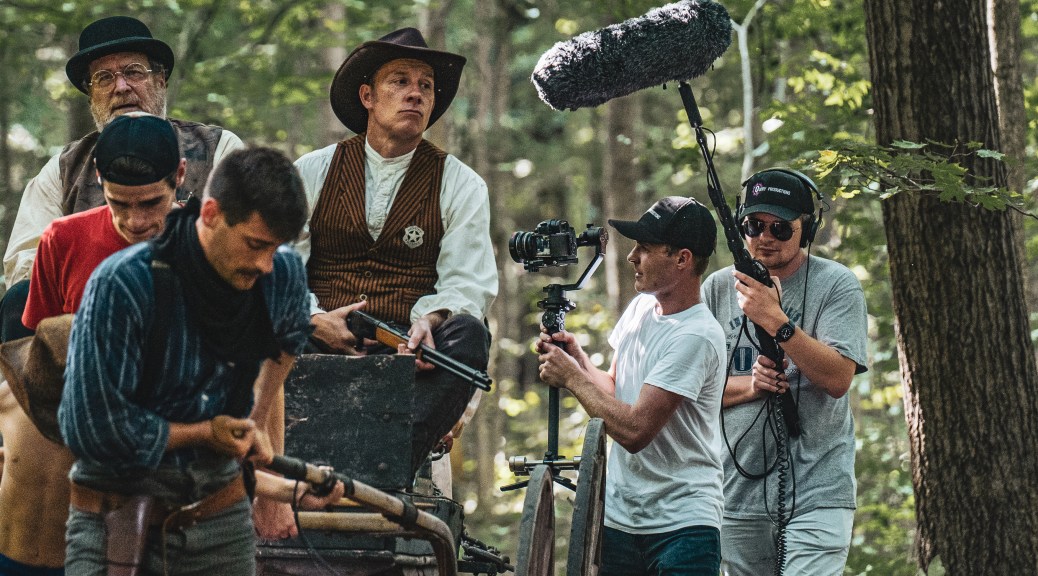



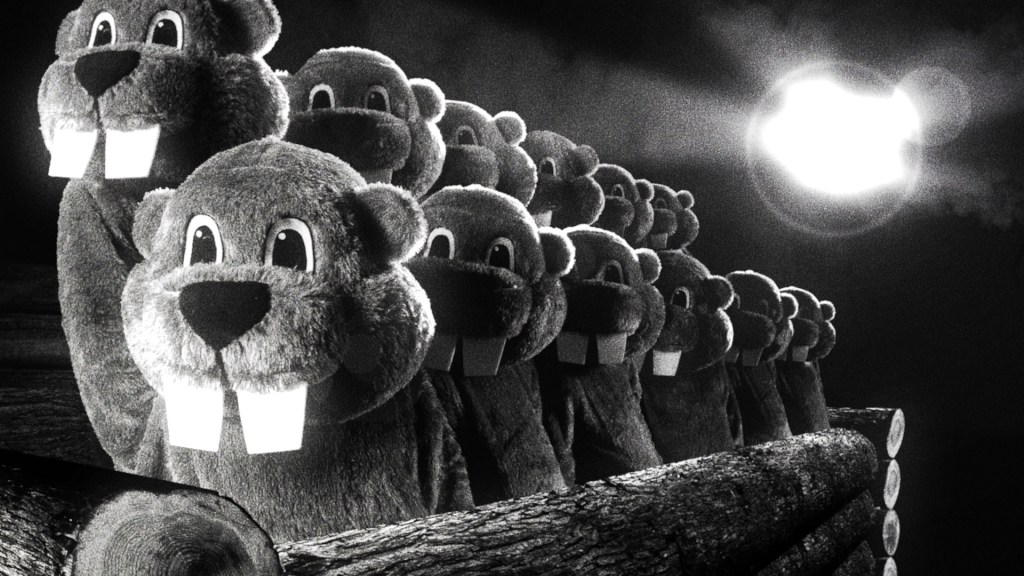


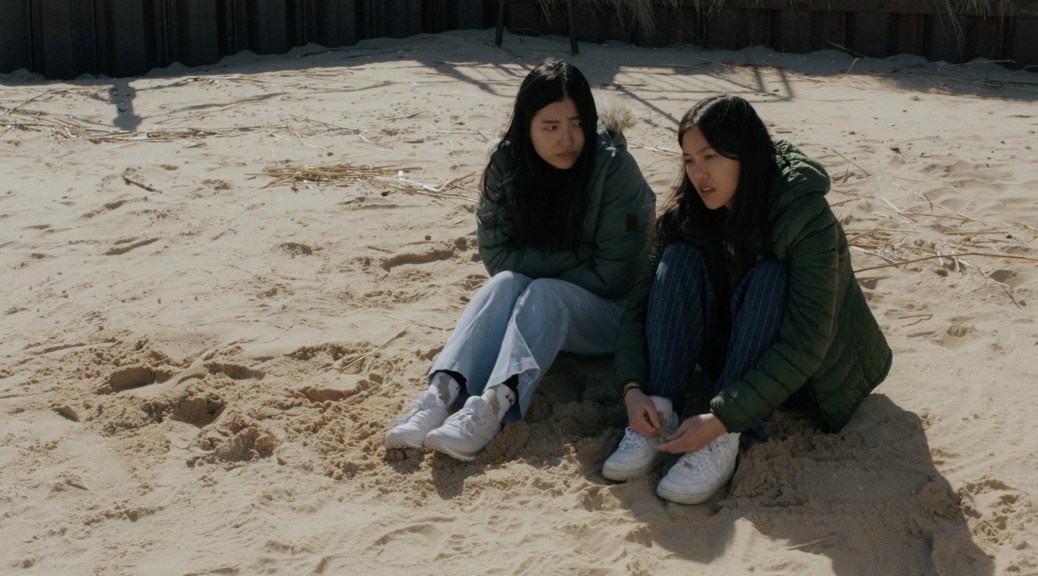


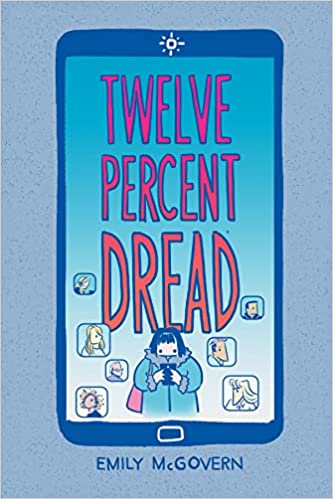
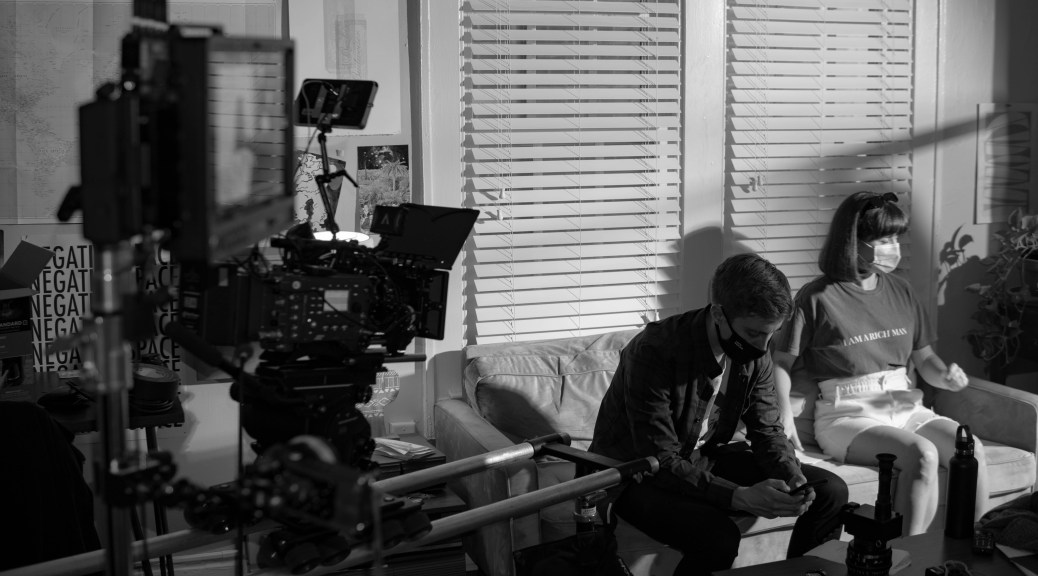


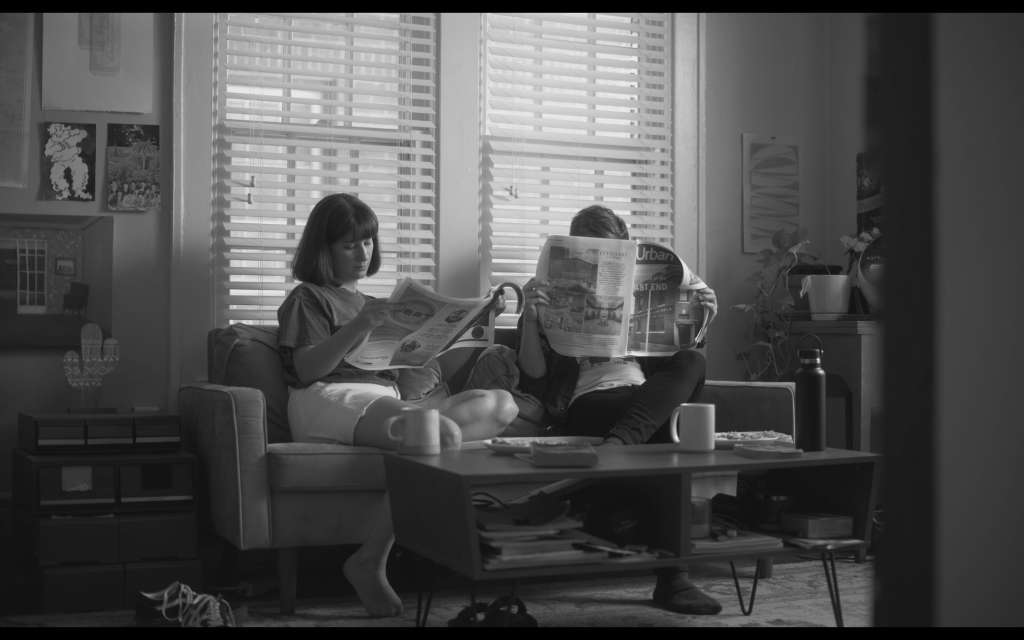


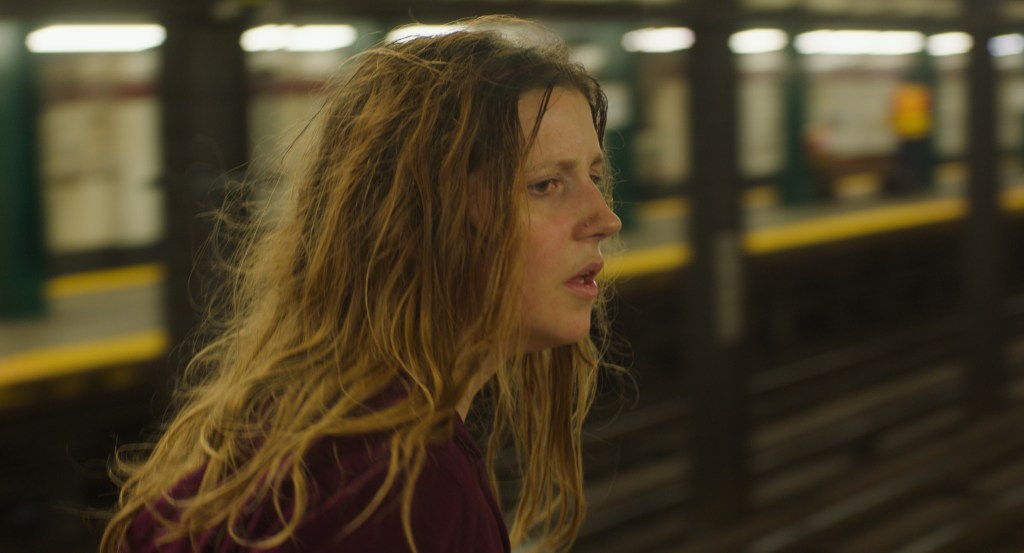


 The Movie State