

After the Hunt
- Director: Luca Guadanigno
- Writer: Nora Garrett
- Starring: Julia Roberts, Michael Stuhlbarg, Ayo Edibiri, Andrew Garfield, Chloë Sevigny
Grade: C
Luca Guadagnino has been a hard-working director for the past couple years. Having three films released within two years of each other, he is putting out films at a rate unlike most filmmakers working today. His latest, After the Hunt, sees what is possibly his biggest and most ambitious film yet, unabashedly delving into modern-day topics with honesty that many filmmakers have yet to do.
After the Hunt stars an ensemble cast, including Julia Roberts, Andrew Garfield, Ayo Edibiri, Michael Stuhlbarg and Chloë Sevigny. Alma Imhoff (Roberts) is a professor on path for tenure, who finds herself in a conflict when Maggie Price (Edibiri), one of her students, accuses Hank Gibson (Garfield), another professor and close colleague, of sexual assault. The three fail to grapple with the truth, becoming tangled in a maze of lies and deception that forever changes their lives.
To no surprise, After the Hunt is an extraordinarily acted film. Julia Roberts delivers one of her strongest performances in years as a drug-addicted professor who finds herself in a professional and personal conflict with her colleagues. Her slow descent into madness is perfectly captured through Roberts’ mannerisms, with her subtle facial expressions speaking volumes of the character and her development.
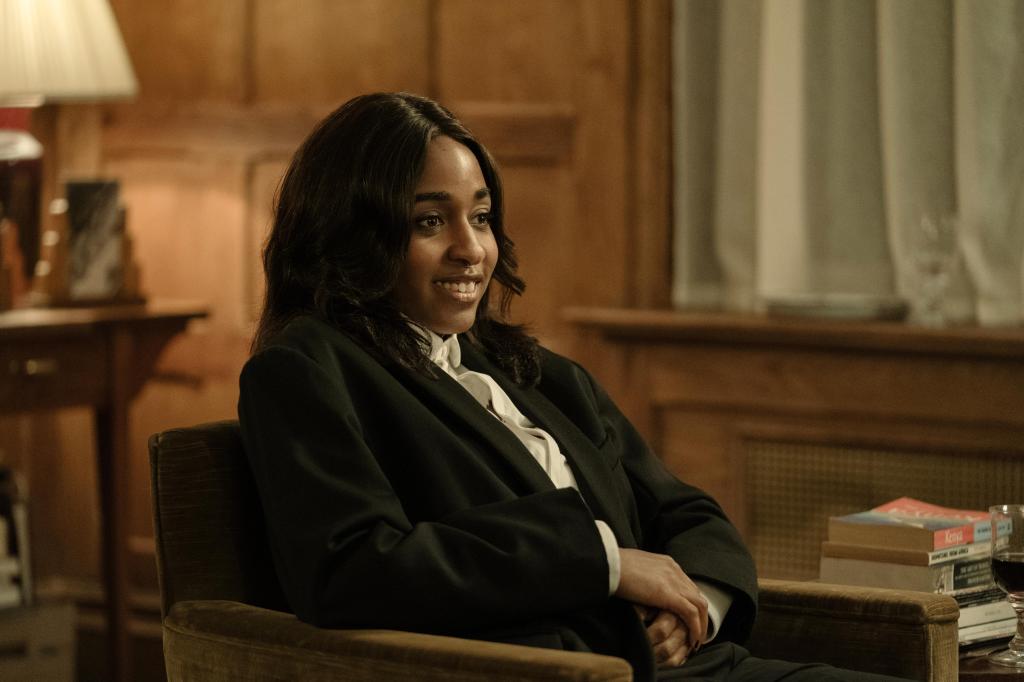
While they’re not as strong as Roberts, Andrew Garfield and Ayo Edibiri also give two of the best performances of their careers. Garfield’s free-spirited nature represents the mystery surrounding his character beautifully, blending loud monologues with spit acting in an extremely impactful manner. A scene involving Garfield expressing his anger toward his firing to Julia Roberts stands as his best scene due to the ferociousness he brings to his character, both physically and mentally. Edibiri also expertly crafts a character of mystery, imbuing the average Gen Z college student with a set of secrets. Their performances get stronger as the characters start to reveal their true intentions, which allows the actors to let loose and bring the film to life.
After the Hunt explores various aspects of our current world, including the pursuit of success, power dynamics, morality, and the impact of speaking out against your oppressors. While Nora Garrett, the film’s screenwriter, has a lot to say about these ideas, the film finds them more interesting than how they are portrayed on screen. Guadagnino adopts a dull approach to telling this story in his direction, focusing heavily on philosophical dialogue that drain the film of nuance, rather than sparking an engaging conversation. As the film wraps up, the ideas it presents seem almost meaningless by the end.
For a film that explores numerous ideas, it is understandable to have a lengthy runtime; however, After the Hunt uses its runtime to its detriment, stretching the script far too thin and eventually making its ideas uninteresting. There are numerous instances where the film repeats itself, attempting to convey that the path to success involves stripping away one’s humanity. One of the film’s opening sequences at a house party sees this idea presented during a conversation with Maggie and a group of professors, as well as nearly every sequence involving a conversation between Alma and Hank. While the concept of sacrificing to achieve success has proven successful in many films, such as Nightcrawler and Whiplash, Guadanigno spends far too much time displaying this basic theme in a standard way instead of doing something new with it.
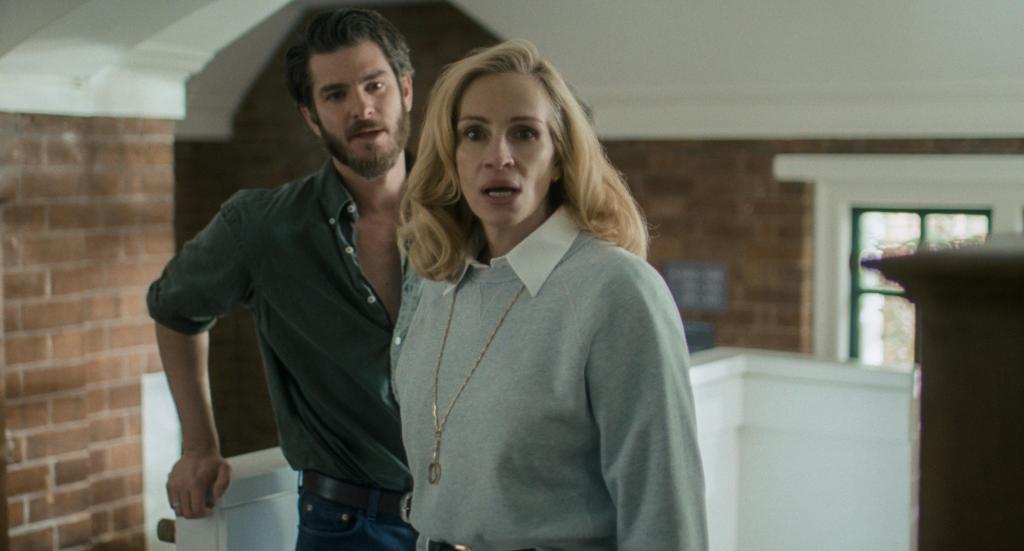
Malik Hassan Sayid’s cinematography overall lacks the spark and gravitas that Guadagnino’s previous films possess, but there are times when it stands out more than the traditional drama. The camera focuses heavily on the gestures and blocking of the actors, and how this repetition is carried throughout the film, effectively paralleling the film’s ideas of imitation. Though the beige color scheme and elemental compositions contribute to the film’s dull execution of the story.
Trent Reznor and Atticus Ross are two of the best film composers working today, but their work on After the Hunt is entirely forgettable. Instead of giving the film a distinct style and rhythm, the orchestral score lacks energy and originality, especially compared to the composers’ previous collaborations with Guadagnino. The film uses its score minimally, which not only contributes to its forgettability but also fails to make an impact when music does appear. It also frequently uses a ticking clock sound, and although it’s intended to create a feeling of tension in the film, the slow pace makes for a disjointed inclusion.
After the Hunt has many commendable aspects and the ingredients of a good movie, but it is bogged down by self-indulgence and an unnecessarily long runtime that makes it seem far more interesting than it actually is. While the mysterious screenplay can make for an interesting discussion, talking about the film is far superior to actually sitting through it.
After the Hunt was screened as a Special Presentation at the Heartland International Film Festival. Amazon/MGM will release the film nationwide on October 17.
OSCAR POTENTIAL:
- If the Best Actress race becomes thin, Julia Roberts has a chance of sneaking in. While it may not be her best performance, she brings enough nuance to leave enough of an impression on Oscar voters. The film could be perceived as too divisive for the Oscars, however, and since Guadagnino’s past few films have failed to receive any recognition at the Academy, this film may continue that pattern.
 The Movie State
One thought on “After the Hunt Review”