

Sentimental Value
- Director: Joachim Trier
- Writer: Joachim Trier, Eskil Vogt
- Starring: Renata Reinsve, Stellan Skarsgård, Inga Ibsdotter Lilleaas, Elle Fanning
Grade: A-
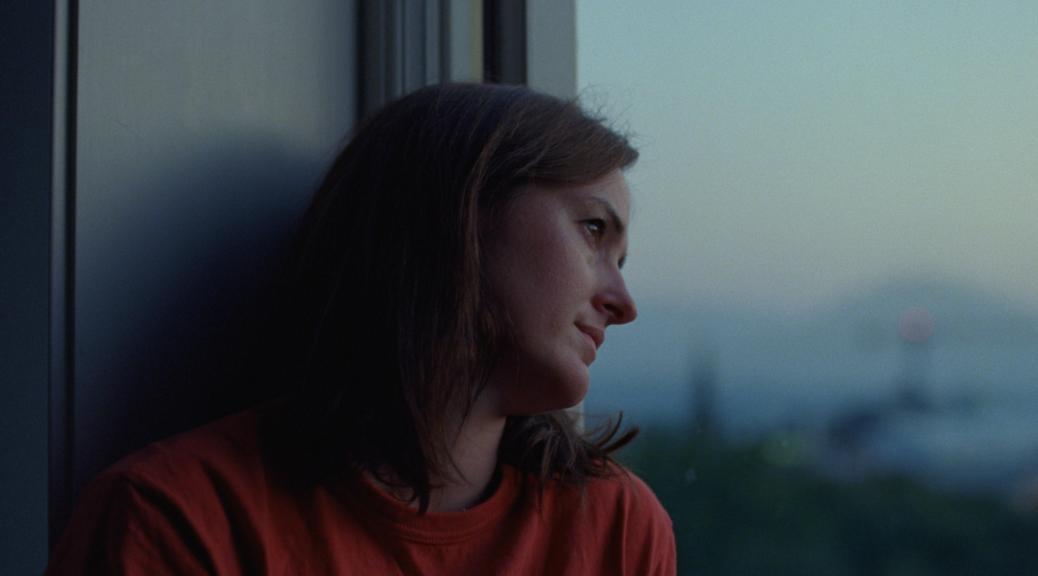
Beloved international auteur Gustav Borg (Stellan Skarsgård), the ersatz lead character of Sentimental Value, has written what may be his best, and possibly last, film, and he’s written it especially with his daughter Nora (Renata Reinsve) in mind for the lead role. For any actor, this would be seen as a no-brainer decision to gain some bona fide recognition. But Nora rejects his film, without even reading the script, and the remainder of Norwegian director Joachim Trier’s latest film presents an intriguing, nuanced look at why.
Trier – who writes the screenplay with regular collaborator Eskil Vogt – grounds the film in an elegant home in Sweden, which has housed the Borg family for generations. Though Sentimental Value isn’t the kind of film which only takes place within one location, the building is central to understanding Gustav, Nora, her younger sister Agnes (Inga Ibsdotter Lilleaas), and their relationships. The film begins at the wake of Gustav’s ex-wife, and we get a brief tour through the house and Nora’s secrets. We also learn that there’s an unfixable crack from the foundation running all the way to the top of the home, and this is as heavy-handed as the film gets, thankfully.
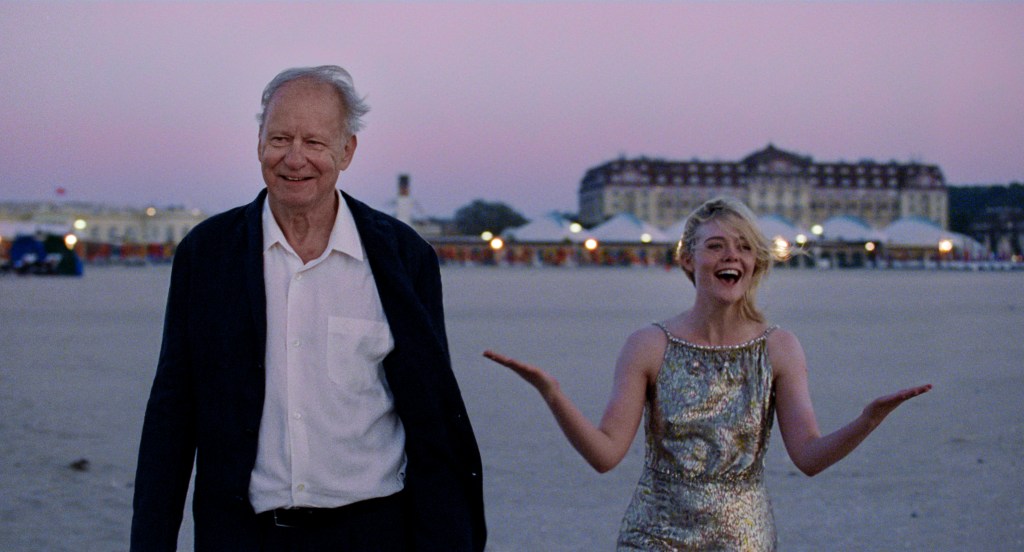
Today, Nora lives as an actress on stage, yet Gustav still tries to lure her to his film. She still resents him for being an absentee father for most of her life, caring more about being admired and making films than raising his children. When she says no, he recruits American actress Rachel Kemp (Elle Fanning) after they meet at an international film festival, and her star power is enough to get the film greenlit (by Netflix, no less). A lesser film would depict Rachel as naive, or out of her depth with Borg’s work and its meaning. On the contrary, when we see their rehearsals, Gustav is impressed with her work and knows she’ll be great in his film. But she’s not Nora, and Gustav made the film with her in mind, hoping it will be a way to connect with his estranged daughter and maybe, possibly, make up for all the time he lost when she was growing up.
Interestingly, the second act of Sentimental Value takes a detour from the present-day drama to take a deep dive into the Borg family’s past. Like most Swedes of the era, Gustav’s parents were embroiled in conflict once the Nazis came to power. His mother was a part of a young group of protesters, and was soon captured and tortured, where she never fully recovered mentally. Trier’s magic trick is in taking all of these long-standing threads of inherited trauma and connecting them to the present-day, without feeling strained or superfluous.
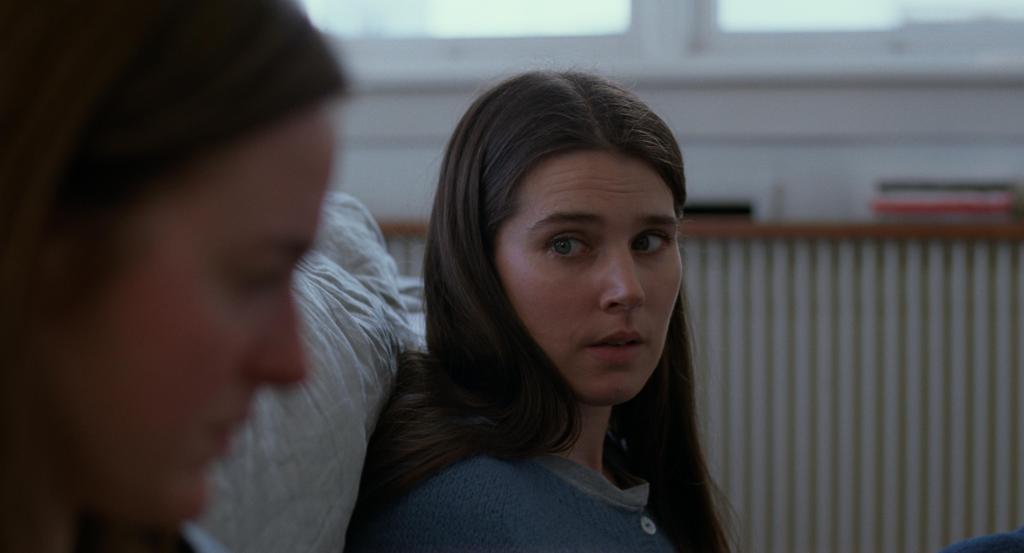
Beyond the layered story, the main draw of Sentimental Value is in the performances of its cast. Reinsve continues to show she’s one of the best young stars of her generation, and a clear source of inspiration for Trier. Skarsgård, meanwhile, gives perhaps his best performances of his long career; Gustav is, at his heart, a prickly character, and it’s part of what keeps him from actually apologizing and resurrecting with Nora. Meanwhile, Inga Ibsdotter Lilleaas nearly steals the show as the equally conflicted Agnes, who occasionally assists Gustav with research, and starred in one of his acclaimed films as a child actor, but still harbors a similar resentment towards him.
With family dramas, it becomes almost inevitable to shout “just talk to each other!” at the screen. Sentimental Value explores a group of fascinating characters, somehow both loathsome and sympathetic in equal measure, and helps to understand why this can be so difficult. Much like Worst Person in the World, Trier takes a familiar and accessible genre and imbues it with heart, nuance, and real pathos.
Sentimental Value was screened as the International Closing film at the Heartland International Film Festival. Neon will release the film in select theatres on November 7 before expanding to theaters nationwide in the following weeks.
- The sky is the limit with Sentimental Value. When The Worst Person in the World over-performed with the Oscars, it officially put Trier on the Academy’s radar. (It also doesn’t hurt that no less than Charlie XCX declared it to be “Joachim Trier Summer” at her Coachella set.) Now, with an even more broadly praised film (about filmmaking, no less, the Grand Prix award at Cannes, and near universal critical acclaim, expect the film to not just lead amongst non-English film nominees, but be one of the leading nominees overall. That means nominations for Best Picture, Best Original Screenplay, and Best Director are virtual locks. Not to mention the almost guaranteed win in International Feature.
- It’s still too early, frankly, but it’s hard not to see Stellan Skarsgård as the front-runner in Best Supporting Actor. Yes, like most years, it’s debatable if it’s actually a lead or supporting performance, but he’ll take full advantage of category placement regardless.
- Reinata Reinsve was arguably in 6th place in Best Lead Actress for her work in Worst Person in the World. With her enhanced profile in the intervening years, a thin lineup of competition in the category, and her incredible work in Sentimental Value, I expect her to land her first nomination.
- If the Academy is especially taken with the film, we could see either Elle Fanning or Inga Ibsdotter Lilleaas, or both, nominated in Best Supporting Actress.
 The Movie State
4 thoughts on “Sentimental Value Review”