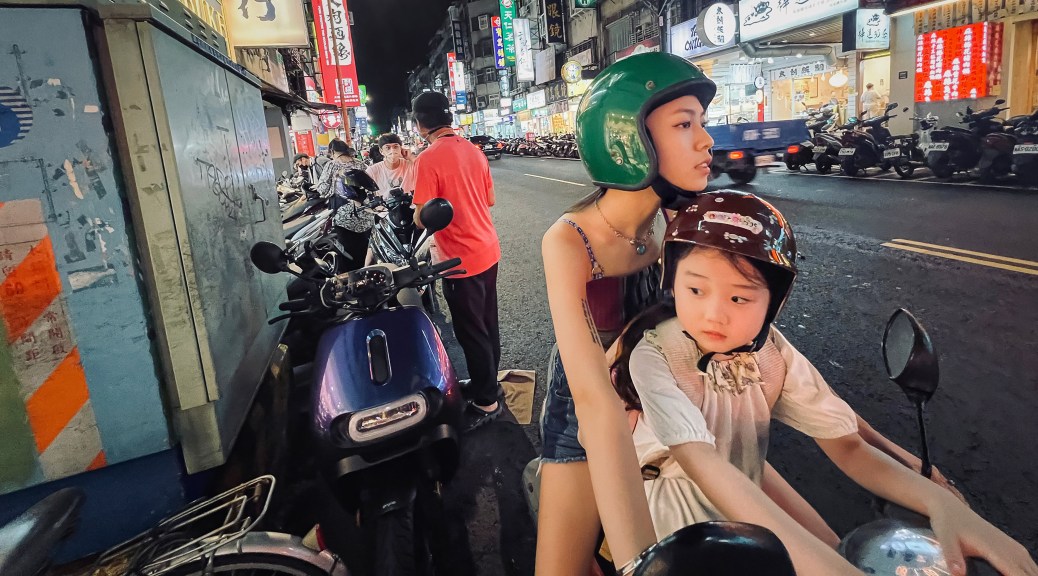

Left-Handed Girl
- Director: Shih-Ching Tsou
- Writer: Shih-Ching Tsou, Sean Baker
- Starring: Janel Tsai, Ma Shih-yuan, Nina Ye, Brando Huang, Alvin Lin, Blaire Chang
Grade: B+
Recent four-time Oscar winner Sean Baker may be the carrot at the end of the stick that is Left-Handed Girl for cinephiles, but he’s a secondary force in director Shih-Ching Tsou’s delightful family dramedy. It’s easy to understand the duo’s collaboration; they co-directed Take Out in 2004, and have had a working relationship together on most of Baker’s projects in the intervening years. Baker’s sensibilities can be seen within the story (he’s the co-writer of the screenplay along with Tsou, and serves as the film’s editor), but the film is more than a triumph of good editing and writing.
Like all of Baker’s projects, Left-Handed Girl is concerned with people on the margins of society, simply trying to get by under a cruel system that values output more than anything. The film is centered around a single family of women of varying ages, but one could get the sense that similar stories could easily be found anywhere amongst the busy night market where most of the film is set.
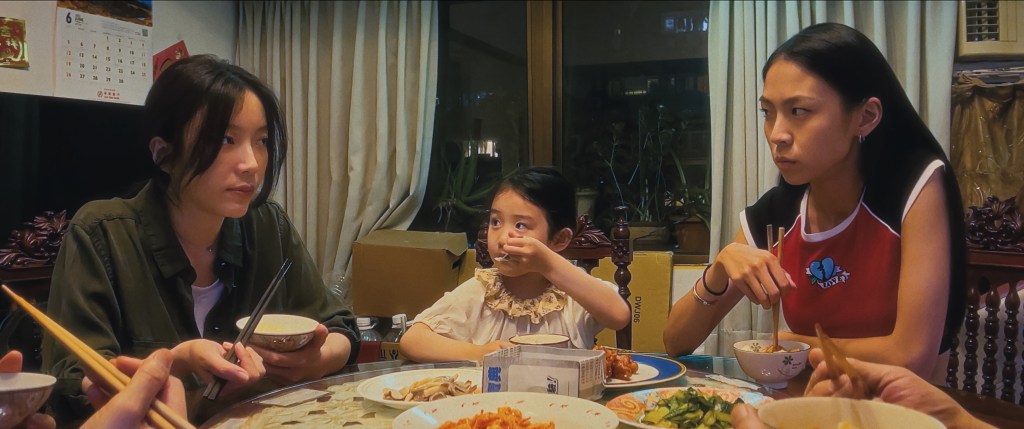
Tsou begins the film at a kind of refresh point for mother Shu-Fen (Janel Tsai), as she moves her daughters, teenager I-Ann (Ma Shih-yuan), and five-year old I-Jing (Nina Ye) into a new home in Taipei, where she opens a noodle stall at the market. Like most young adults, I-Ann rebels against her mother whenever possible, who would rather work for more money at a betel nut stand, where things may or may not be fully above board. An already fragile bond grows even more tenuous when Shu-Fen’s deadbeat husband is hospitalized, and only has a few days left to live. We never learn too many details beyond an inference that he had abandoned them, but I-Ann’s antagonism towards him – and her mother for paying for his funeral after he dies – feels like the tip of an iceberg between the two. Caught in the middle is I-Jing, as she’s molded by what she absorbs from both of them.
I-Jing is the titular left-handed girl, and her traditionalist grandfather forbids her from using it, calling it her “Devil’s Hand”. Once tensions between Shu-Fen and I-Ann start to boil over, and Shu-Fen begins to feel the pressure from the stall’s landlord over past-due rent, I-Jing starts to use her Devil’s Hand to steal small trinkets and toys from other shops nearby. At its heart, Left-Handed Girl tells a story of familial tendencies, and what gets handed down from one generation to the next. On the margins of the central drama is Shu-Fen’s fractured relationship with her own mother, and how she’s cast as the black sheep amongst her own, more successful, siblings.
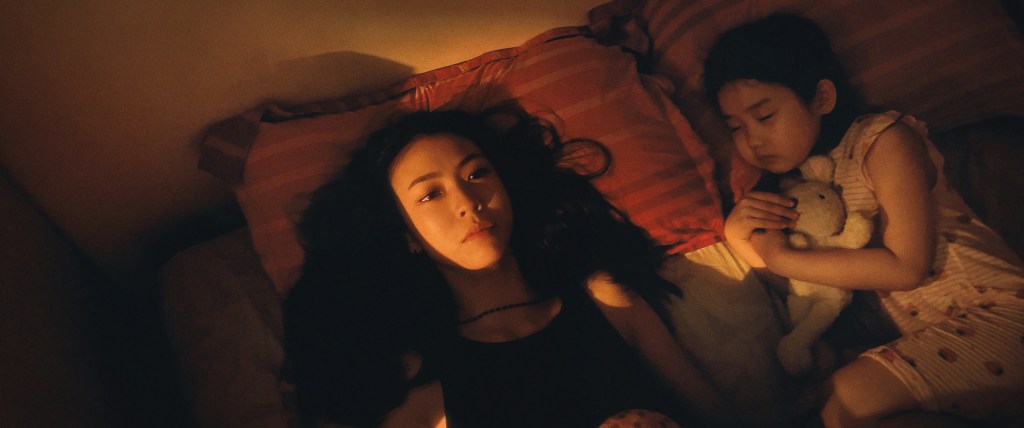
It’s rare when a movie is centered around characters who feel like they’ve always existed outside the confines of the screen, but the humanistic touches throughout Left-Handed Girl help add some needed flavor to a genre which can often feel manipulative. Too often, the story evolves thanks to a decision which feels out of place, or to cook up drama simply for the sake of cooking up drama. Tsou and Baker let the exposition come naturally, and the trio of performances feel as lived-in as Chen Ko-chin and Kao Tzu-Hao’s voyeuristic iPhone cinematography. Indeed, Tsou filmed in real locations in Taiwan with a minimal crew and non-professional actors, and it’s this commitment to verité filmmaking which lends Left-Handed Girl its power. It doesn’t hurt that Tsou is Taiwanese, so her familiarity with the customs and culture can be felt on the page and on the screen.
The film’s climax, where all of the varying secrets and subplots seep out into the open – and which I won’t dare spoil here – threaten to reach into that melodramatic territory, but speaks to Tsou’s hidden agenda. That is, the conflict between what we reveal to others – even members of our own family – and what we keep hidden, either out of self-preservation or shame or any number of reasons (to say nothing of the even more complex gender and class dynamics inherent within modern Taiwan). Tsou may have been a steadily working force within independent film for the past 20 years, but Left-Handed Girl feels like a full announcement of her creative voice, and her solo directorial debut is one of 2025’s most confident films.
Left-Handed Girl is now playing in select theaters. The film will be available to stream on Netflix on November 28.
- The film scored Taiwan’s official selection for Best International Feature, but it faces a mountain of competition amongst bigger, flashier titles. Now that the dust has mostly settled, and Netflix has a clearer picture of critical and audience reactions to their films this year, I’m not sure where Left-Handed Girl will lie on their priority list for campaigning. Perhaps if they lean into Academy name-checking and put Sean Baker out front, the film could gain some more traction. Nevertheless, a nomination would be surprising.
 The Movie State
3 thoughts on “Left-Handed Girl Review”