
Hamnet
- Director: Chloé Zhao
- Writer: Chloé Zhao, Maggie O’Farrell
- Starring: Jessie Buckley, Paul Mescal, Emily Watson, Jacobi Jupe, Noah Jupe, Joe Alwyn
Grade: A-
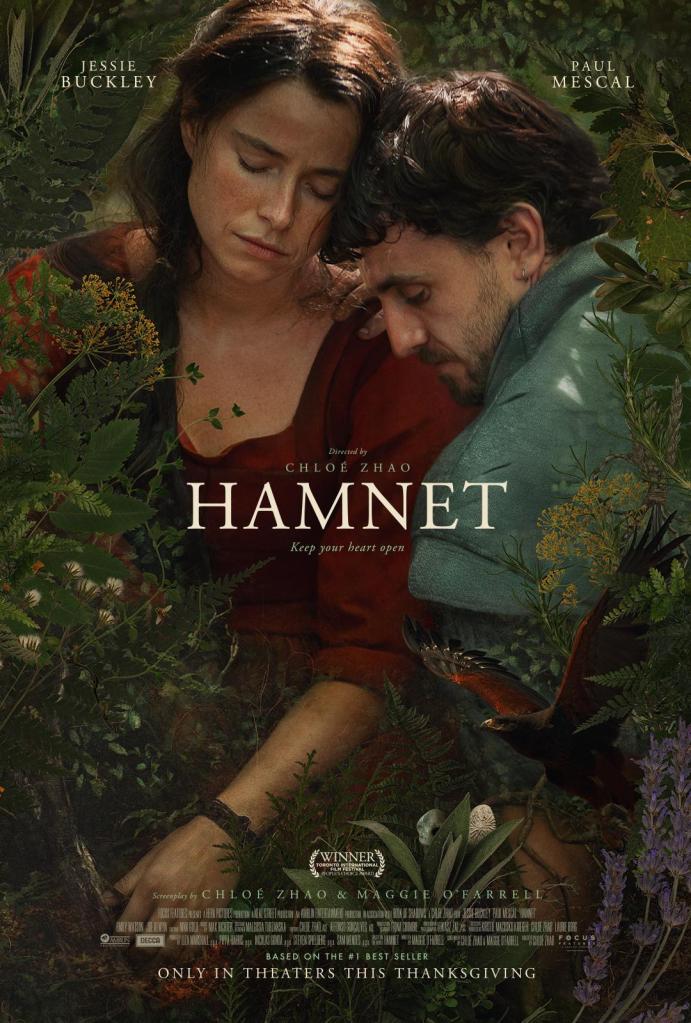
Maggie O’Farrell’s 2020 novel Hamnet took a new approach to exploring the world of Shakespeare. Instead of focusing solely on the Bard of Avon himself, O’Farrell shone a light on his family—namely, his wife Agnes and his youngest son, Hamnet. The book explores the grief that befalls Hamnet’s family when he dies suddenly during a plague, and how that experience led to the crafting of one of Shakespeare’s most iconic plays, Hamlet. In the film adaptation, Academy Award winning director Chloé Zhao employs her signature naturalistic brand of filmmaking to add even more emotional depth to this fictional tale grounded in the history of one of our greatest storytellers. The film is an excellent complement to the book, staying faithful to the roots but branching out on its own artistically.
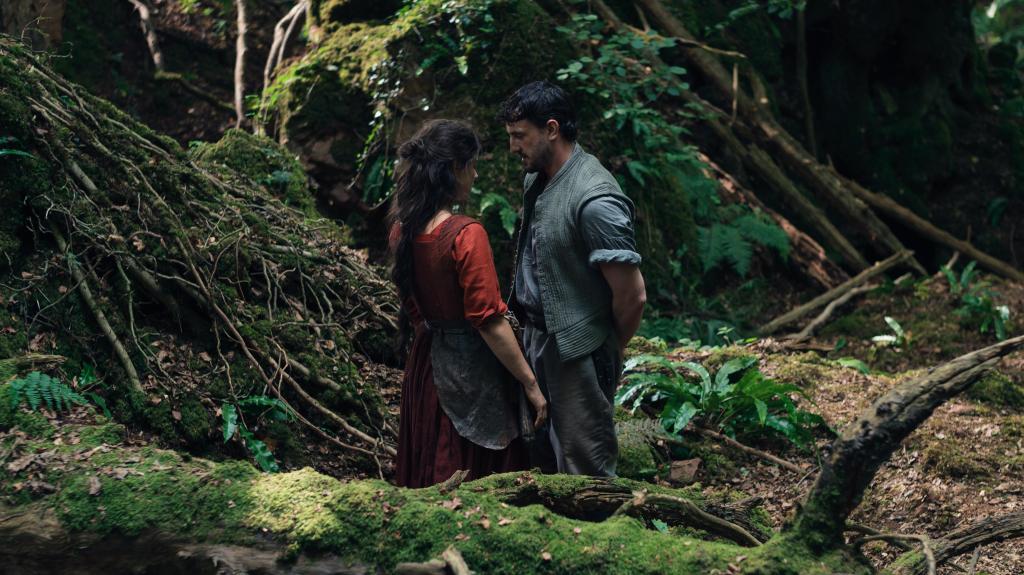
As only the second woman ever to win the Oscar for Best Director, it is fitting that Zhao – who co-writes the screenplay with O’Farrell – is the one to tackle this story centered primarily around Agnes (Jessie Buckley), a woman historically relegated to the shadow of her husband. Some of the best scenes in the film come when Agnes is connecting with nature. Zhao’s ability to capture natural landscapes in a way that makes them feel like characters in the film work well here in helping us understand Agnes, who is much more at home in the wild than she is trudging through the monotonies of daily life. We even come to understand her relationship with others by way of her affection for the natural world. She uses the passing of her hawk as an opportunity to bond with her children, teaching them about death in an imaginative way that only she could conjure. Buckley’s performance is almost certainly the best of her career. She is able to simultaneously portray an outsider who marches to the beat of her own drum, while making the audience feel as though they understand her deeply and personally.
The other standout performance comes from young newcomer Jacobi Jupe. While his older brother Noah (who plays Hamlet in the film’s portrayal of Shakespeare’s play) has cut his teeth in Hollywood in films such as A Quiet Place, Ford v Ferrari, and Honey Boy, this is the younger brother’s time to shine. His portrayal of Hamnet is the emotional anchor of the film, ensnaring the audience in a way that allows his inevitable tragedy to pack an impactful punch. It would be an enormous task for even a seasoned actor to take on the weight of the excruciating death that propels the back half of the film, but Jupe does so effortlessly. His ability to convey both his joy and pain through the subtlest of glances is top-notch. If he chooses to further pursue a career in acting, he will be someone to watch.
One of the biggest changes from the source material is the prominence of William (Paul Mescal). In the novel, he is largely kept at arm’s length, living on the fringes of the reader’s attention. Hamnet pushes the poet much more to the forefront, a choice that surely materialized at least in part to give Mescal a showcase. As the film progresses, I wasn’t sure that this choice was going to work. The appeal of the novel was that William (who is never named in the book) was largely absent from Agnes and his family for long stretches of time, allowing the reader to truly feel her solitude and anguish. The film notes those absences, but they aren’t always felt as strongly because Mescal pops back up rather quickly to keep the plot moving along. The runtime doesn’t allow for the volume of those solitary scenes. Nevertheless, it’s hard to complain about additional screentime for Mescal, as his William is built upon yet another quiet, emotionally resonant performance which audiences have come to expect from him.
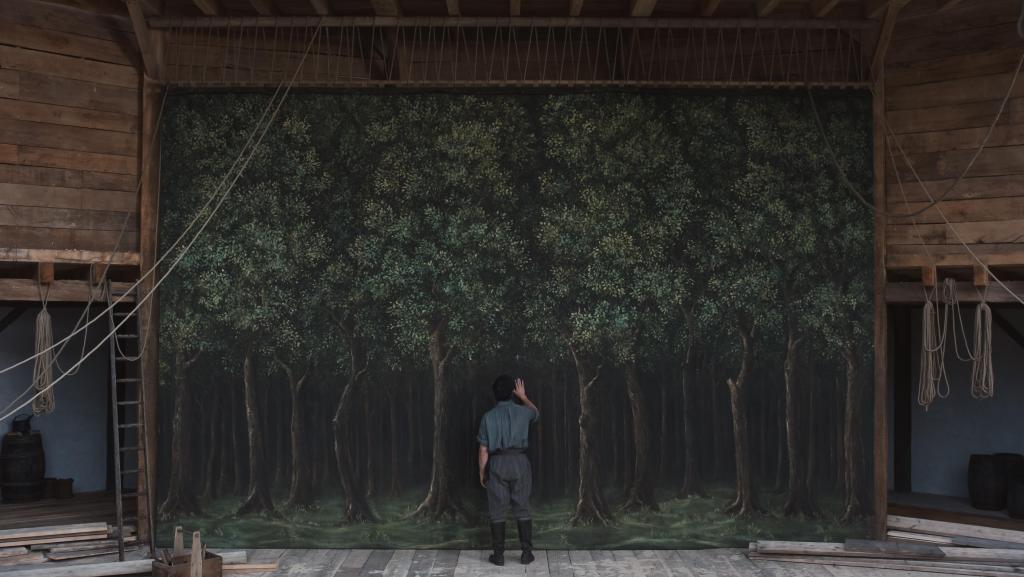
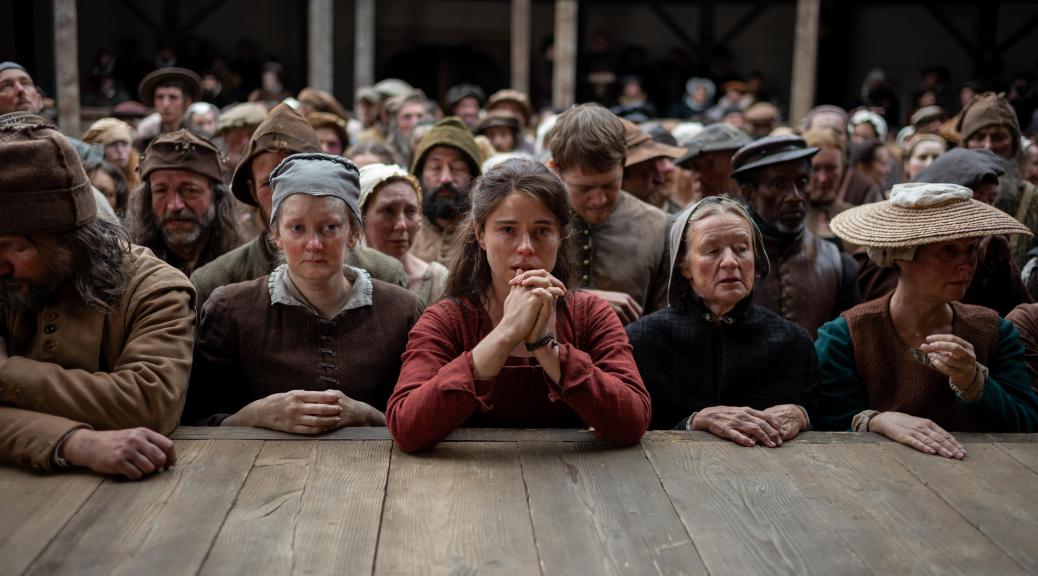
Hamnet completely brought me back on board in a big way during the final act. Some of the real estate that could have been devoted to Agnes’ solitude gets tacked on to the concluding scene when she travels to London to get a glimpse of her husband’s mysterious life. The novel gives us just a quick snapshot of Agnes experiencing the production of Hamlet, but this adaptation really allows this crucial moment to breathe—a choice that solidified this as a great piece of filmmaking. The result is an opportunity for Buckley to display her full acting range in one scene, bringing the film to a poignant conclusion. We’re left with the notion that while grief may endure, it can be used in a way that allows us to live on.
Hamnet is now in theaters nationwide.
- Labeling Hamnet as “Oscar bait” feels like a disservice to the quality of the filmmaking here. Nevertheless, the film has a multitude of Academy-friendly qualities going for it—It’s a period piece directed by an auteur who is a previous winner. Add to that 3 previous acting nominees in Buckley, Mescal, and Watson and you have a perfect formula for awards greatness. The film is considered by many to be a top 3 contender for Best Picture, with additional nominations likely for Director, Actress, Supporting Actor, Adapted Screenplay, Casting, Cinematography, Editing, Production Design, Costume Design, and Score. One year after Mikey Madison and Demi Moore ran a neck-and-neck race for Best Actress that went down to the wire, Buckley is the film’s best shot for a win, with many regarding her as the clear front-runner for Best Actress with no consensus number 2.
 The Movie State
4 thoughts on “Hamnet Review”