


Avatar: Fire and Ash
- Director: James Cameron
- Writers: James Cameron, Rick Jaffa, Amanda Silver
- Starring: Sam Worthington, Zoe Saldaña, Sigourney Weaver, Oona Chaplin, Stephen Lang, Kate Winslet, Jack Champion, Jamie Flatters, Britain Dalton, Trinity Jo-Li Bliss
Grade: C
It’s a worldwide event when James Cameron releases a new film. Not only does he push for original storytelling for the big screen, but he provides a spectacle that very few modern films offer. Whether it’s his Avatar films or Titanic, his movies bring people to the box office unlike any other filmmaker. Avatar: Fire and Ash is Cameron’s latest entry into the franchise, hoping to recapture the grand scale and universal storytelling of the previous two films.
The movie once again follows the Sully family, led by Jake (Sam Worthington) and Neytiri (Zoe Saldaña), this time in heavy grief due to the death of the eldest son, Neteyam (Jamie Flatters), in The Way of Water. Struggling to move forward with their trauma, they once again find themselves at odds with Recom Miles Quaritch (Stephen Lang), as he tries to take over the Na’vi land. The Sully family also encounter the Ash people, led by Varang (Oona Chaplin), who become allied with the humans in order to gain control on Pandora.
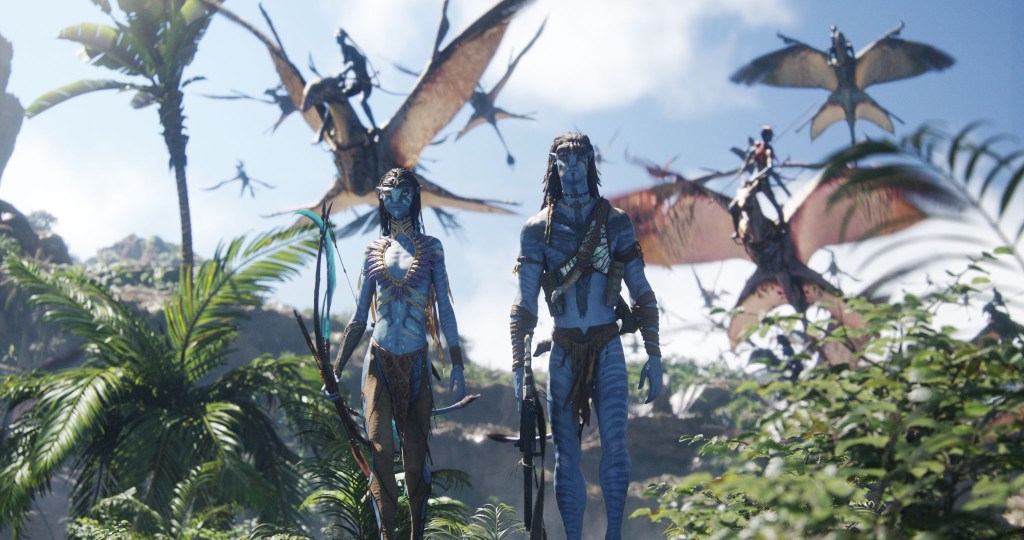
Shooting back-to-back with The Way of Water, most of the gorgeous crafts carry over into Avatar: Fire and Ash. The film once again has some of the best visual effects of all time, seamlessly capturing the world of Pandora through digital effects and motion-capture. Having the actors actually film while underwater is once again effective, with extremely fluid motion that makes the world feel lived in. Although it is scaled back compared to the other two films, the use of color is gorgeous, conveying a sense of fantasy and wonder that makes every frame a joyous view.
3D has always been hit or miss, with some films overdoing the 3D to a nauseating degree while others fail to justify its use. Avatar: Fire and Ash is one of the rare films that gets 3D right. Cameron and his crew find purpose with the 3D, integrating it into the film in organic ways that enhances the viewing experience. Whether it’s a sea monster swimming along the ocean or a bird flying across the hilltops, the film is well worth the trip to the theater for the 3D alone.
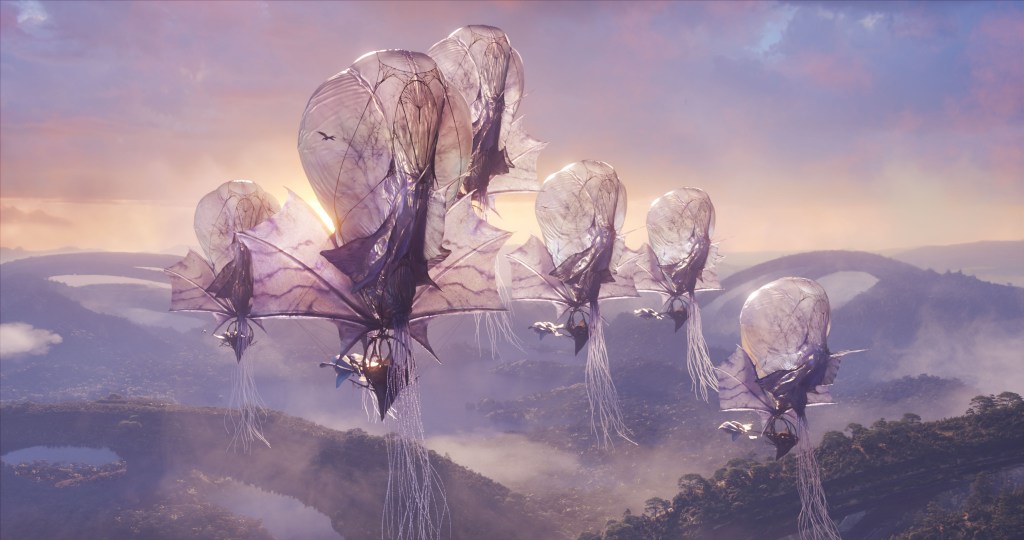
Although the Avatar films have their fair share of fans, many criticize the films for having surface-level storylines, as well as borrowing from other films like Dances with Wolves. Although Avatar: Fire and Ash arguably borrows the least out of the three films in the series, the screenplay, written again by Cameron, Rick Jaffa, and Amanda Silver, is not nearly as strong as it should be. There are some interesting ideas at play about faith and power, especially in regards to Varang and her tribe, but they aren’t delved into nearly enough to make a worthwhile experience. What could’ve been a thought-provoking tale of how the thirst for power can shape a civilization, it instead comes across as just another Avatar film.
Oona Chaplin chews up the scenery as Varang, with her spontaneity and physical presence heightening the stakes of the film unlike any other villain in the Avatar universe. A sequence involving Quaritch meeting with Varang reveals some layers to her character that make for a well-rounded villain, but instead of fulfilling her arc, Varang is sidelined as the love interest for the rest of the film. While there were tons of tense moments with her in the first half, she becomes far less interesting as a character as the film progresses.
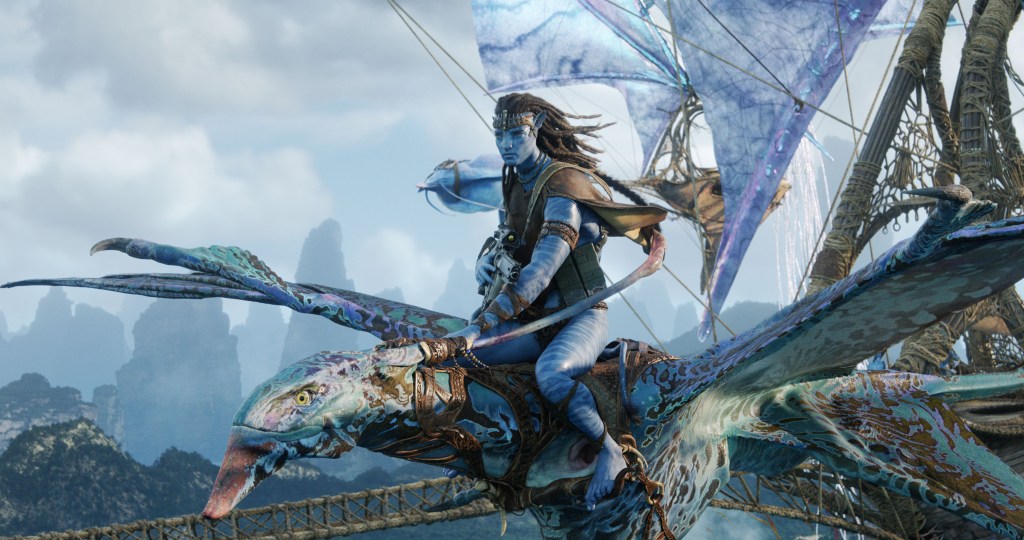
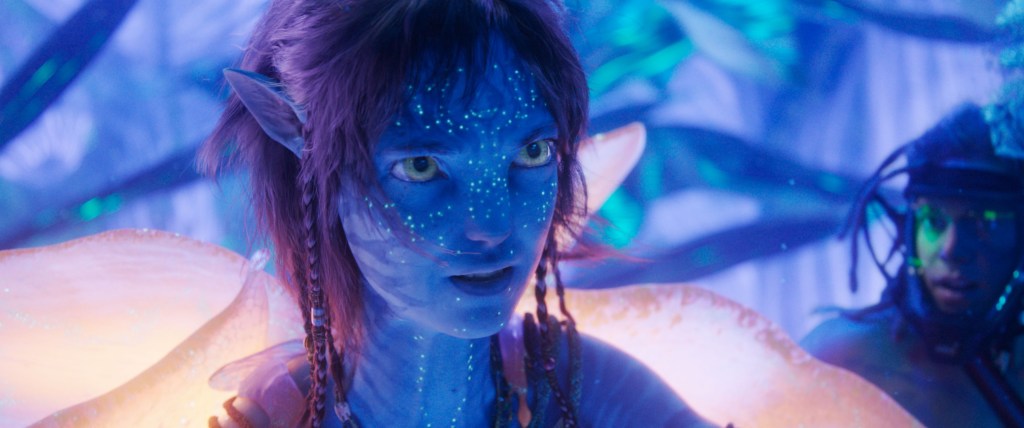
Besides Tuk (Trinity Jo-Li Bliss), who is completely sidelined in Fire and Ash, each member of the Sully family is given their own intellectual development. While this would normally be a positive, sadly, most of their development is a rehash of The Way of Water. Kiri (Sigourney Weaver) is once again trying to find herself, Lo’ak (Britain Dalton) wants to prove himself to his family as well as prove that Payakan the Tulkun should not have been cast out from his clan, and Jake is once again trying to navigate the best path for his family in order for them to have a happy life. There are some new and interesting storylines at play, including Neytiri overwhelmed with guilt and shame for her son’s death, but too much of the film plays to what the franchise has always done, lacking the intrigue of its predecessors.
Part of what made Avatar and The Way of Water so popular and beloved is its world building. James Cameron built an alien universe unlike anything seen in film before, with its popularity even leading to the creation of a theme park based on Pandora. Avatar: Fire and Ash has next to zero world building, which was a letdown. Franchise films don’t have to reinvent themselves with each project, but because the film is introducing a new tribe of Na’vi, it’s disheartening not to see them get the treatment like the Metkayina clan in The Way of Water. With fire as the Ash people’s main element, there is a lot of opportunity for Cameron and the visual effects artists to come up with something wholly unique and awe-inspiring for the audience with their settlement, but very little is done to represent them and their environment, instead coming across as a lazy version of the Elephant’s Graveyard in The Lion King.
The Avatar films have had beefy runtimes, but because the films are doing so much world and character building, they have felt justified. Because Fire and Ash is scaled back compared to the other two films, the 3-hour length comes across as entirely unnecessary. A kidnapping and rescue plotline in particular stands as one of the ways the runtime is bloated, failing to progress the story or characters in any way. With the film also repeating plot beats from the previous films, the duration felt especially tedious.
Avatar: Fire and Ash delivers on the flawless visual effects and massive spectacle that those would come to expect from a James Cameron film, but the bloated and surface-level story made the film a major step down from the last two Avatar films. While his direction is as dynamic as his films from decades past, the script feels as if it’s on auto-pilot, failing to justify its existence outside of its groundbreaking technical achievements. The Avatar films are just like a roller coaster; an intense and visceral experience, but after a couple rides through, it becomes less and less impactful.
Avatar: Fire and Ash will be released in theaters nationwide on December 19.
- Fire and Ash is a shoe-in to win Best Visual Effects, and with the Academy becoming more lenient on nominating blockbusters in the sound category, it should have no problem getting into Best Sound. Because of the shorter wait between films and lack of world building, it could result in the film not receiving as much passion for a Best Picture and Best Production Design nomination. If it scores great with audiences and rakes in another $2 billion, then it could sneak in one of the bottom five spots for Best Picture, but it’s unlikely for this film to receive equal or more love compared to Avatar: The Way of Water.
 The Movie State
2 thoughts on “Avatar: Fire and Ash – Movie Review”