
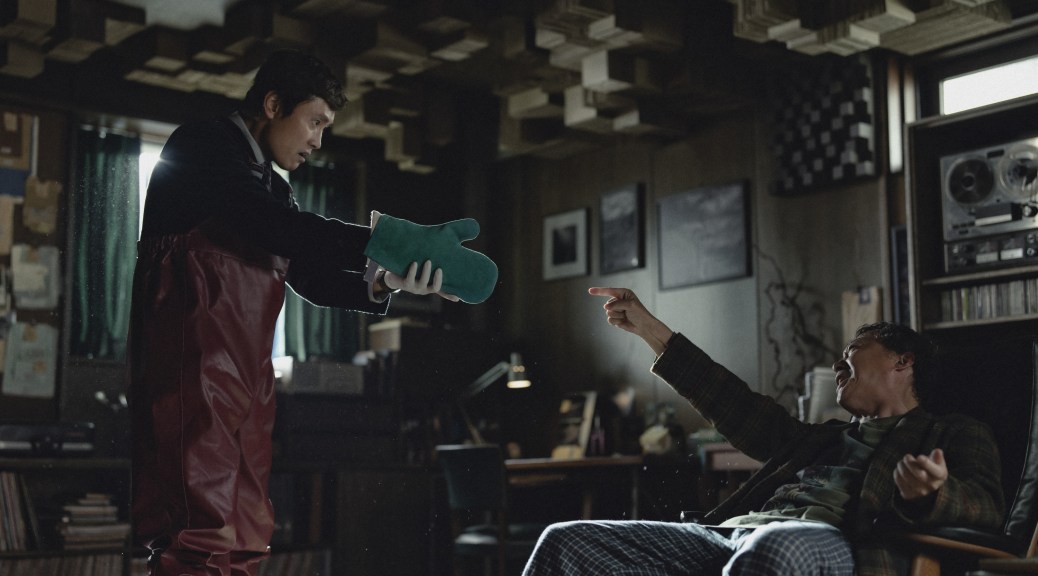

No Other Choice
- Director: Park Chan-wook
- Writer: Park Chan-wook, Lee Kyoung-mi, Lee Ja-hye, Don McKellar
- Starring: Lee Byung-hun, Son Ye-jin, Park Hee-soon, Lee Sung-min, Yeom Hye-ran, Cha Seung-won, Kimm Woo-seung
Grade: B
With his latest creation No Other Choice, Park Chan-wook takes his turn to adapt Donald E. Westlake’s 1997 horror novel The Ax. It is the second film adaptation of that source material, following The Axe, a film by director Costa-Gavras that was released 20 years ago. This interpretation follows Yoo Man-su (Lee Byung-hun), an everyday Korean family man who has lost his longtime job with a paper-making company due to an American takeover. He identifies a new path for himself, and resorts to dangerous lengths to eliminate his competition in hopes of securing his family’s future. The story of a man turning to crime to better his life is a story we’ve probably all encountered in film before, so many of the story beats may be familiar to fans who enjoy a good thriller. As with most of his films, though, Park takes an eclectic approach to genre here—mixing dark comedy, horror, and satirical elements to give the film a unique flavor. There’s enough of that flair infused here to keep the film feeling fresh and interesting.
The editing from frequent Park collaborator Kim Sang-bum and (on his first Park film) Kim Ho-bin helps to elevate the film beyond the standard “man-against-the-world” rampage flick. Choices made throughout keep audiences on their toes, putting them right into the perilous situations that Man-su finds himself in. Cuts are varied and unexpected, never allowing for complacency in the viewing experience. For a story where disaster could strike at every turn, this method is particularly effective. The shot selection is also noteworthy, with the camera being placed in unconventional ways that immerse us in the action. One particularly memorable shot comes through the bottom of a drinking glass as Yoo Man-su imbibes for the first time in a while, allowing us to hit rock bottom right alongside him.
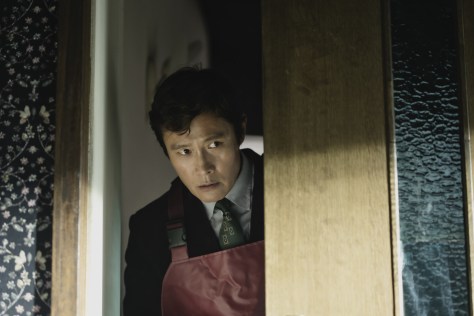
Lee’s performance is where the film really shines. It’s a tough task for an audience to sympathize with a character who commits such dastardly deeds, but it’s nearly impossible not to root for Man-su. What’s most endearing is that he is so ill-suited to the agenda he’s committed himself to; he would be much more at home in the paper-making industry in which he can no longer claim membership. While we may not agree with his actions, Lee brings so much humanity to the role that it feels natural to want him to succeed. Watching someone struggle time and time again in pursuit of their goals could become monotonous, but he finds new ways to highlight the character’s shortcomings in every scene. Lee’s understanding of this character and his ability to translate a mindset that may not be in line with how the audience would think is a testament to his skillful storytelling.
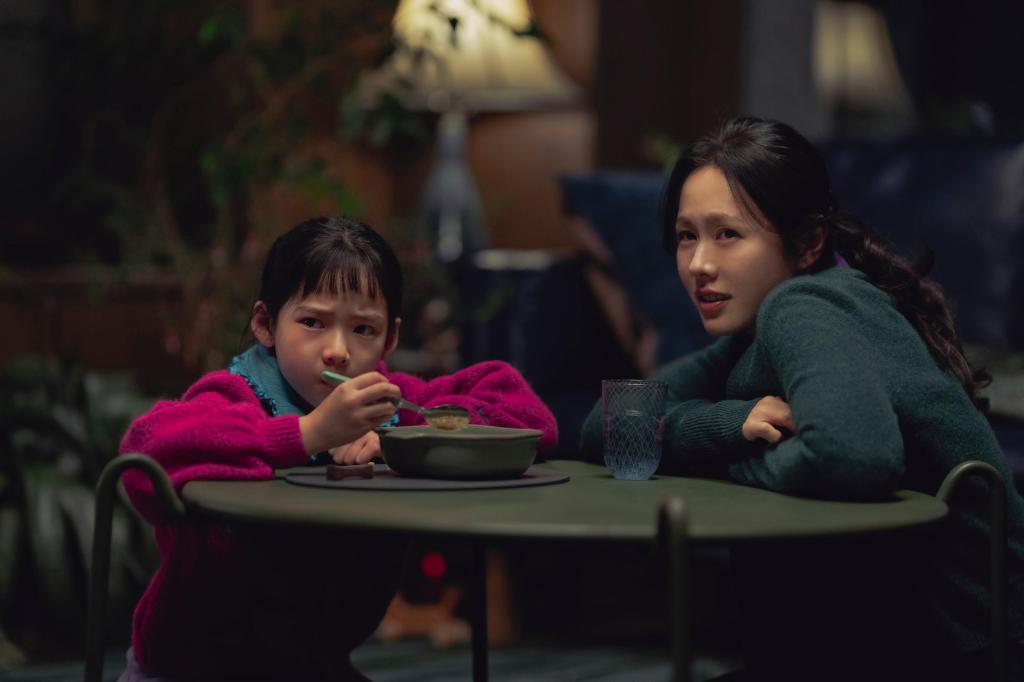
Another noteworthy performance comes from Son Ye-jin, who plays Man-su’s wife, Mi-ri. If Man-su is the catalyst that drives the action of the film forward, Mi-ri is the presence that brings the story down to earth and puts it into perspective. It’s easy to get caught up in the thrill of Man-su’s endeavors, but when his wife is on screen we come to understand how high the stakes are not just for one man, but for his entire family. Son brings an ease to the duality of her role; sometimes she’s challenging her husband and sometimes she’s complicit in his crimes, but she slips into those frames of mind seamlessly. We’re never unsure of her motives or questioning her position.
The main criticism I have of the film lies in the exploration of the themes. The film’s title sets us up to question whether Man-su’s actions are justified, or if there were other ways forward for him. It’s understandable that the writers would not want to hit us over the head with that question throughout the runtime, but there was almost no space in the script for Man-su to grapple with other ways to get his life back on track. The film presents him initially attempting to make ends meet by working in an unfulfilling job, but he jumps from that to the far end of the spectrum, embarking on a murderous agenda that completely consumes him. It’s as though he feels he can’t get off this ride once it’s started, but I would have loved to see him grapple with that a bit more. It can be a bit unbelievable that someone as common as Man-su would move in such a risky direction without even a guarantee that mission success results in the life he is looking to restore. I understand the absurdity of the predicament is meant as an over-the-top indictment of a system that equates success in the workplace to success in life, but some more resistance could have sharpened the story.
While this may not be Park’s strongest film (I was particularly fond of Decision to Leave, one of my favorite films of 2022), it’s still a success overall. Audiences will enjoy the ride, asking themselves along the way what they would do if they felt they had no other choice.
No Other Choice will be released in select theaters on December 25 before expanding nationwide in subsequent weeks.
- The film is one of four international productions that have gained substantial awards traction this season. While contenders such as Sentimental Value, It Was Just an Accident, and The Secret Agent may have a bit more buzz, No Other Choice is holding its own so far in precursors, showing up with recognitions from critics’ groups and scoring a trio of Golden Globe nominations including Best Motion Picture – Musical or Comedy, Best Motion Picture – Non-English Language, and Best Actor in a Motion Picture – Musical or Comedy for Lee. Its best chance at an Oscar nod is in the Best International Feature category, where it seems to be a lock for a nomination. There is a chance it could slide into a Best Picture ten lineup, but with an already packed international slate, it’s not a guarantee.
 The Movie State