54. Tell it Like a Woman (Best Original Song)
For the longest time, even the most die-hard Oscar watchers doubted the very existence of Tell it Like a Woman. The film barely had an IMDb page on nomination morning, much less a website or viewing availability. But after finally viewing the film, I can confirm that the film itself is the least interesting part about its lore. What’s most surprising about the film’s lack of quality is that it boasts an incredibly likable and popular cast, including Jennifer Hudson, Marcia Gay Harden, Eva Longoria, and Cara Delevingne, among others. Anthology films rarely work – especially when each part comes from a different voice – but it’s as if the creative forces banded together to make the most basic, shallow films possible. Female empowerment is a great idea, but I assume the working title for Tell it Like a Woman was something like #GirlPower. The nominations for the 95th Oscars revealed a lot of things about the Academy and what they value, and the most telling is that they will reward songwriter Diane Warren every single year she is eligible, regardless of whether they’ve actually seen the film or not, and Tell it Like a Woman is the strongest evidence to support that theory.
53. The Martha Mitchell Effect (Best Documentary Short)
I’ve always had a unique fascination with the Watergate scandal and everything it unearthed in American politics, and I imagine I’m not alone. Which is why it’s understandable to make a documentary about one of its lesser-known figures, Martha Mitchell. Unfortunately, The Martha Mitchell Effect unfolds as little more than a standard-issue Wikipedia entry masquerading as a film. It would have been the easiest thing in the world for the filmmakers to connect Martha Mitchell, and how she was treated, to the politics of today (gendered, social, and governmental). Instead the film offers little more insight than what could be gleaned from a US history class or an episode of the first season of the Slow Burn podcast.
52. The Flying Sailor (Best Animated Short)
You don’t often see an animated film, regardless of its length, that’s based on a true story. Such is the case though with The Flying Sailor, which is inspired by the real-life Halifax explosion in 1917. The explosion causes its titular subject to re-examine his life and his own mortality as he faces his impending doom. A mixed bag of animation quality and styles ultimately leads to a middling film that could have been better.
51. Blonde (Best Actress)
As a film, Blonde is awful. But for the Oscars to reward Ana de Armas for her fearlessly committed performance, I have nothing to complain about. Even the various crafts, like the costumes or the production design or the cinematography or makeup/hairstyling work, could have and should have received Oscar nominations. The fault with Blonde lies in Andrew Dominik and his shallow – and, too frequently, distasteful – depiction of Marilyn Monroe. The film could have been an enlightening way to right the wrongs of Monroe’s life, but instead Dominik doubled down on her suffering or reduced her internal desires to the lowest common denominator. I have no doubt that Ana de Armas will be an Oscar nominee again. It’s simply a bummer that her first nomination had to be for Blonde.
50. The Boy, the Mole, the Fox, and the Horse (Best Animated Short)
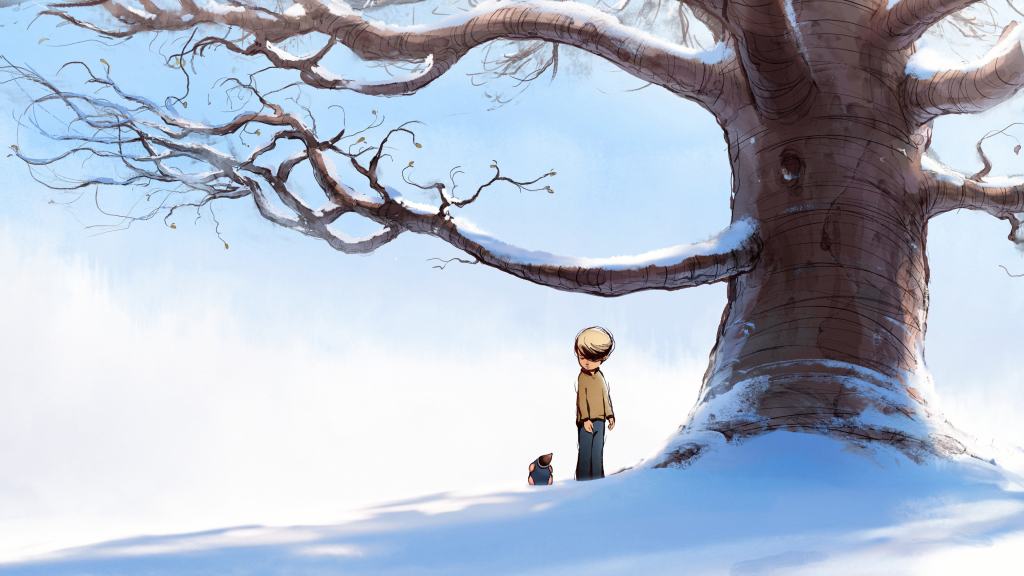
This film is likely winning its category, and its backing by Apple TV+ is a major factor, not to mention the A-list talent attached to it. Of course, it’s based on the acclaimed children’s book by Charles Mackesy (who co-wrote and co-directed the adaptation). Producers include JJ Abrams and Woody Harrelson, plus voice talents of Gabriel Byrne, Tom Hollander, and Idris Elba. But there’s something hollow about The Boy, the Mole, the Fox, and the Horse that I couldn’t get on board with. When the main thrust of your animated film’s dialogue is weighty existential platitudes about believing in yourself or supporting a friend, you’re putting your thumb on the scale of the audience’s reaction that doesn’t feel completely genuine. Nevertheless, the animation is solid, matching the ink-drawn style of the book. Perhaps I’m being a grump about this one, and perhaps a second viewing would change my opinion. But there are better, more genuine contenders among the animated short film category.
49. Night Ride (Best Live-Action Short)
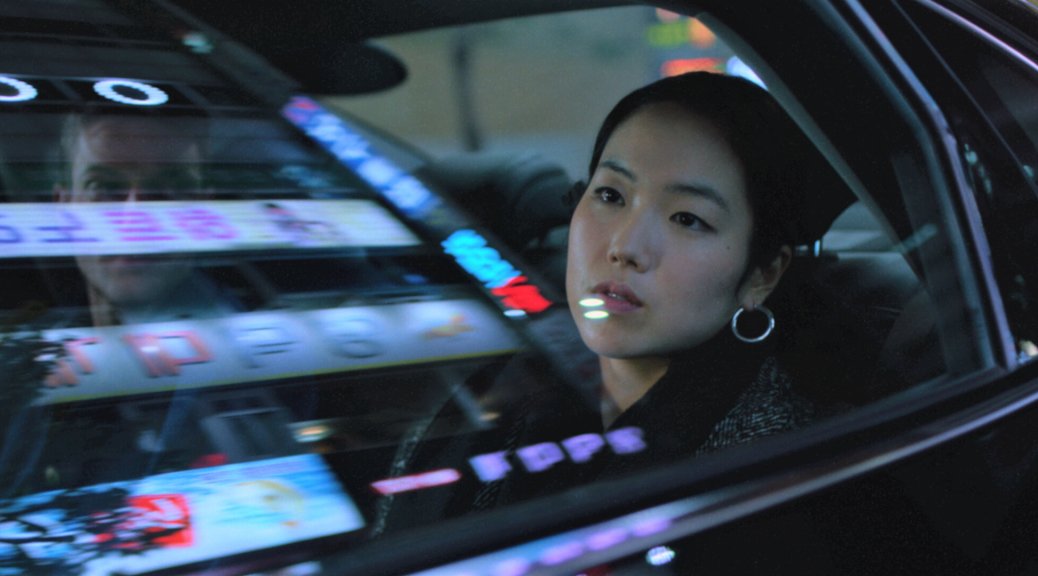
Night Ride certainly feels like it’s trying to say something profound but needs more consistent writing to actually get that message across. It’s a film about marginalized people finding commonality, but feels too slight because of its varying tones. A young woman, who’s also a little person, inadvertently commandeers a tram on a snowy night, picking up passengers along the way. One of those passengers happens to be a trans woman who’s harassed after flirting with another man. The film looks nice enough with some snappy editing, but by the time the credits rolled, I didn’t feel all of what the film was wanting me to feel. Perhaps these issues could be fixed with a longer runtime but as it stands, Night Ride is a misfire.
48. Stranger at the Gate (Best Documentary Short)
I have no doubt that the creative minds behind Stranger at the Gate set out to make an informative documentary about a little-known community about the transformative power of empathy. But there’s a darker message within the film that rings hollow the more you pick it apart. Stranger at the Gate chronicles the story of a man, driven to extremism and violence against the Muslim community, and how he eventually found acceptance within it. My initial reaction to the film was mostly positive, but after considering the film’s unspoken message that minorities must be overly accommodating to people that wish them harm, rather than the structures that create that harm in the first place, quickly sank my feelings overall.
47. Le Pupille (Best Live-Action Short)
Le Pupille benefits from increased visibility on Disney+, not to mention its producer Alfonso Cuarón, sporting a unique visual style. At times borrowing from Wes Anderson’s filming style and color palette, the film stands out from this year’s Live Action Short nominees. It’s the only film of the nominees that’s set in the past, and it deals with children as the main protagonists. Specifically, a group of children at an Italian orphanage during WWII. Credit to writer and director Alice Rohrwacher for centering the dramatic conflict not on whether the plucky youngsters will get adopted, but on the interior and exterior conflict within them. The film has its moments, and features some natural performances, but could have used some kind of dramatic inertia to justify its 38-minute runtime.
46. An Irish Goodbye (Best Live-Action Short)
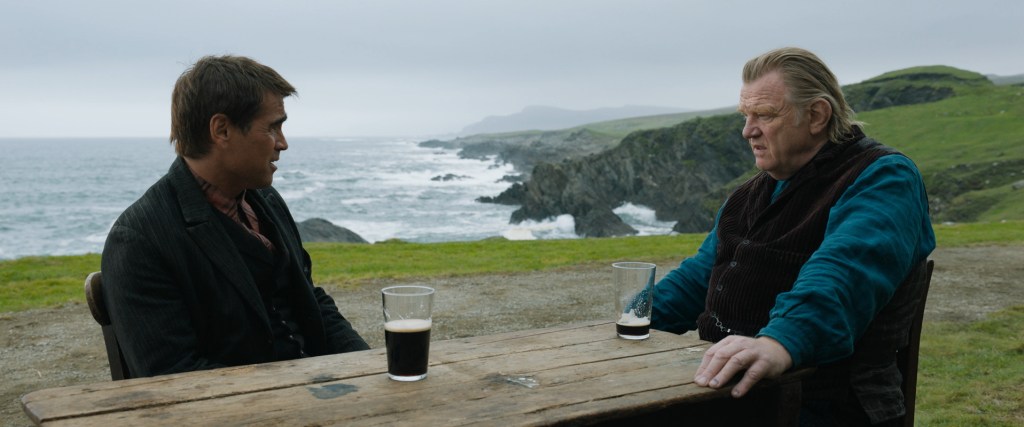
Unfortunately for An Irish Goodbye, The Banshees of Inisherin was released in the same year. Or it could be fortuitous for its Oscar chances, coasting on a wave of Irish goodwill. Either way, the film is a perfectly capable short film that shares a handful of thematic similarities to Martin McDonagh’s film. It’s about Turlough and Lorcan, two brothers, one mentally handicapped and played brilliantly by James Martin, who have to decide how to move on after their mother’s death. Turlough, the older, more practical brother, wants to sell the family farm but Lorcan wants to stay. Directors Tom White and Tom Berkeley inject a good amount of humor to prevent it from getting too dour – something all too common amongst the shorts categories.
45. Ivalu (Best Live-Action Short)
Part travelog, part heartbreaking portrait of a family, Ivalu is a product of rural Greenland but contains sentiments that translate beyond its remote origins. It’s the story of a girl in search of her older sister all by herself – her family’s concern is mostly absent – who suddenly goes missing. She visits all the locations they used to run away to when things got difficult, which brings up fond memories. There’s an underlying darkness revealed by the end of it, but Ivalu could have easily expanded on the emotional fallout from the events depicted. Still, it’s gorgeously shot and takes full advantage of Greenland’s countryside, and star Mila Heilmann Kreutzmann handles her role with tenderness. If this is most people’s first encounter with Greenlandic film, it’ll be a solid entry point.
44. Haulout (Best Documentary Short)
Haulout contains what could be the most surprising cinematic reveal of any film amongst the batch of nominees. What starts out as a simple film about a man in isolation pans over to show that he’s very much not alone. The film shows the harsh and unpleasant reality of the life of a biologist studying walruses, and the effects that climate change has had on them. But where the film succeeds is in its minimalism, eschewing any talking heads or on-screen text and telling its story only through the sparse notations of its human protagonist. Nature documentaries are commonplace in the Documentary Short category, and Haulout is a worthy nominee, less for its subject matter and more in its storytelling technique.
43. How Do You Measure A Year? (Best Documentary Short)
Jay Rosenblatt’s second Oscar nominated documentary short in two years is just as personal as his first. It’s much more simple than When We Were Bullies but retains the same emotional complexity. In a kind of real-life take on Boyhood, Rosenblatt set out to interview his daughter on her birthday every year since she was 2 to ask her the same set of questions, including “what do you want to be when you grow up” and “what’s your greatest fear.” The results aren’t anything terribly surprising. We see her go from a spunky toddler whose favorite thing is lollipops, to a restless teenager who loves sleeping, to a more mature, self-aware young adult. Anyone with kids will connect with How Do You Measure a Year?, a microcosm of the evolution that our greatest accomplishments go through; I just don’t know how much it will resonate beyond Oscar season.
42. Close (Best International Feature)
Most of the elements within Close are solid, if not great. From the performances of its cast – especially lead Eden Dambrine – to Frank van dan Eeden’s cinematography to Valentin Hadjadj’s score, and more. But something within director and co-writer Lukas Dhont’s semi-autobiographical coming-of-age drama feels hollow, a collection of moments and sentiments we’ve seen in plenty of other films before. Not to mention, after the inciting incident around the 45 minute mark, the film simply feels like it meanders for the remaining hour, without adding much new to say. The film will surely elicit a deep emotional reaction if you’re invested enough in the material, but without that, Close isn’t close enough.
41. The Elephant Whisperers (Best Documentary Short)
I like nature documentaries as much as the next person. And The Elephant Whisperers is a more than capable entry, which generally sees at least one nominated film per year. The documentary short deals with a remote village in South India as it takes care of orphaned, sick, and abandoned elephants. It’s an intimate look at how the elephants’ caretakers view these creatures not just as another animal to look after, but as members of their own family. They learn and grow together, and director Kartiki Gonsalves shows how the elephants do the same. But The Elephant Whisperers doesn’t do much to distinguish itself from other documentaries of its ilk, some of which are similarly available on Netflix.
















 The Movie State