It’s always nice to see actors challenging themselves after more family-friendly fare, and this is the case with Pearce Joza’s starring turn in Under the Lights. Viewers may recognize the actor from Disney’s Zombies franchise, but here he’s given the room to show his depth. Miles Levin, who writes and directs, expands on his short film of the same name, about a high schooler named Sam (Joza) with epilepsy who desperately wants to attend his prom. The story is full of mostly standard stuff, with Sam finding the courage, accepting his limitations, and finding his true friends, but Levin’s heart is in the right place.
The cast list is unusually stacked, with Randall Park, Nick Offerman, Mary Holland, and Mark Duplass making cameo appearances, plus Lake Bell playing Sam’s overly protective mother. Joza’s performance stands up to scrutiny, as he plays into Sam’s teenage naivety but bullish determination. After all, what teenager doesn’t feel deathly determined to prove their doubters wrong, regardless of their own potential health issues? I don’t know if any version of the film exists which scratches deeper beneath the surface, but Under the Lights is the kind of regional film festival title which comes and goes without much further investigation. Of course, it’s great to see accurate representation of little-seen disabilities on film, and Joza proves that he can easily break from the Disney mold, so Levin’s film is ultimately a mild net positive.
Another Heartland film featuring recognizable faces comes in the form of Elena Oxman’s Outerlands, starring Orange is the New Black star Asia Kate Dillon. The film is one of the few purely adult-oriented offerings at Heartland, as it explores a number of difficult topics without reservation. Though there are some rough edges in some areas, Dillon shines in a difficult role.
The film follows Cass (Dillon), a restaurant server who has a brief fling with Kalli (Louisa Krause), a new server with a shady past. Before long, Kalli asks Cass to take care of her tween daughter Ari (Ridley Asha Bateman) while she goes out of town for a job. Cass can barely take care of herself, but the added responsibility of a young girl who could care less about her or her problems. There isn’t much, dramatically speaking, to sustain the 100 minute runtime, but Oxman doesn’t go down unnecessary avenues, nor do characters behave like they’re in a movie. Outerlands may not be the standout film of the festival, but it’s not a total downer either.
Virtually every film festival, every year, contains some version of Adult Children, an indie comedy featuring overly qualified stars in overly written situations. Director Rich Newey’s still young career is full of Hallmark-esque holiday rom-coms, and screenwriter Annika Marks’ script sets up the major conflict – such as it is – not unlike those same films. Morgan (Ella Rubin) has to write a college application essay, but struggles for inspiration. The plot kicks in when her older half-brother Josh (Thomas Sadoski) relapses and comes to live with her and her parents.
Her other half-siblings Dahlia (Aya Cash) and Lisa (Betsy Brandt) have their own existential issues, but they come together to support him. The film succeeds more on the interpersonal relationships between them, and less when they’re on their own. Lisa is the type-A neurotic wife and mother in a loveless marriage, and now she’s dealing with a possible unplanned pregnancy. Dahlia is a directionless nude model between relationships, strapped for cash and needing a place to live. Josh is reeling from a break-up, but there’s not much more to him that this. Everyone is cast to perfection and Newey utilizes their strengths (Rubin is especially strong in the second half), but Adult Children plays out mostly how you’d expect once the plot is set up. There are dramatic contrivances between the siblings – not to mention the casual hostility towards sobriety and addicts – but there’s a level of nuance that comes into focus. In spite of its issues, I left the film mostly feeling warmer towards the interpersonal dynamics and performances overall.
Mistura is a film that’s easy to root for, and sometimes that’s enough to carry it through. It helps when, right off the bat, we learn that Norma’s (Bárbara Mori) husband has absconded unexpectedly with another woman and she’s left reeling. Sure, she has a decent home in Lima in 1965, but she has no prior ambitions and only has a limited amount of time before she’s left essentially destitute. Her only resource is to start a fine dining restaurant within her own home and dedicate it to her parents’ French heritage, recreating the dishes she grew up loving and hoping to spread that love to those around her.
Unfortunately that love doesn’t catch on quite so easily, and the restaurant comes dangerously close to shuttering. It’s not until Norma begins to take the advice of her staff, and they begin to adopt the cultures and cuisines of their own backgrounds, that the restaurant really takes off. Ultimately, Mistura is a safely enjoyable period piece that doesn’t challenge much but goes down smoothly regardless. Mori is steady as the lead, and her relationship and chemistry with right hand man Oscar (Pudy Ballumbrosio) is an unvarnished bright spot. The restaurant didn’t change the world, or Peru, and neither will the film, and that’s okay.
Admittedly, I watched Soft Leaves over a week ago, and not much has stuck with me in the intervening days. That probably says more about me than the film itself, but it’s a smartly assembled but sleepy film nonetheless. Writer-director Miwako Van Weyenberg’s feature debut film tackles a culture clash between a single family, and a little girl caught in the middle. When Yuna’s (Lill Berteloot) Swedish father suffers a serious accident, her estranged Japanese mother (who moved back to Japan after their divorce) moves in with her and her older brother Kai (Kaito Defoort) to take care of her.
Berteloot is the standout element of the film, playing a girl who’s wiser than her years but still innocent enough to made the occasional bad decision. Thankfully Van Weyenberg’s screenplay doesn’t insert drama where it doesn’t need to be, instead letting the cultural differences and the familial drama play out mostly naturally. Tristan Galand’s cinematography helps to add a wistful air of nostalgia, evoking the summer haze of foggy memories that may or may not be true. Soft Leaves won’t go down as the best film of the festival, nor is it the worst, but it’s hard not to wish it left a more lasting impression once it ends.
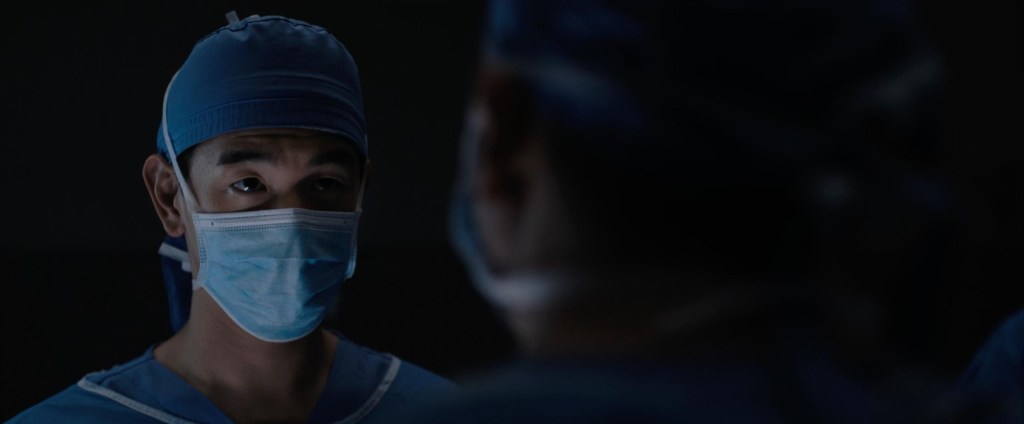
Let’s get the obvious out of the way first: Transplant feels, at best, like an updated version of Whiplash within the confines of a hospital. This isn’t necessarily a bad thing, as the stakes within the former are certainly more crucial (heart surgery) than the latter (jazz music). But first-time feature director Jason Park’s film lacks the same pizzazz and snappy magnetism that worked so well for Damien Chazelle. Thankfully Park has enough to offer, including a subtle commentary on race and assimilation, that it doesn’t feel like a completely empty endeavor.
The film concerns Dr. Jonah Yoon (Eric Nam), an ambitious resident who has his eyes set on a heart transplant fellowship at his hospital. But he has to work under the tutelage of Dr. Harmon (Bill Camp), a renowned surgeon who has a contentious relationship with his staff, and it’s on full display during Jonah’s first surgery with him. Throughout Transplant, the two go back and forth, as Harmon gaslights and needles Yoon beyond his comfort zone, always escaping responsibility or blame. Throughout all of this, Yoon has to care for his mother (Michelle Okkyung Lee), who’s suffering from cancer and has nobody else to take her to and from chemo appointments. Camp has made a career out of supporting character turns, but he takes full advantage of the spotlight here, and Nam carries the film well enough when it focuses on him. At only 94 minutes, the film hums along nicely and knows when to hit the dramatic beats effectively. But the ending comes a little abruptly, even if it is ultimately cathartic. Much like Chazelle with his debut feature, Park could have an exciting career to come after Transplant.
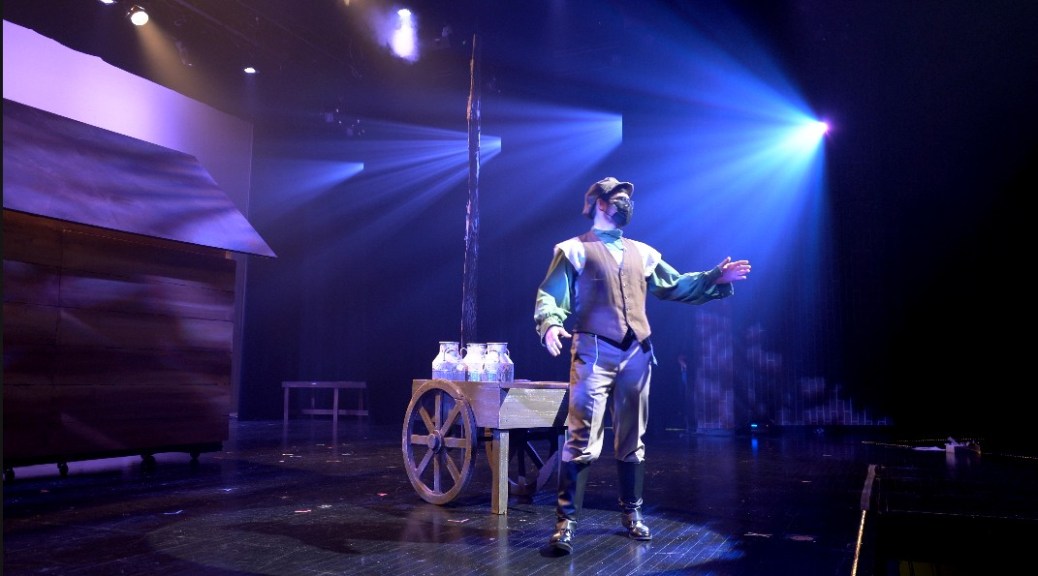
Below is my conversation with Lauren Z. Ray, the director of Winter Fantasy, a documentary about the small town of Logansport, Indiana, and the theater program that forms a kind of backbone throughout the community for its young artists. The film is making its World Premiere at the Heartland Film Festival. We discuss her thought process behind inserting herself in the film, the universality of small-town theater programs, and life in the arts post-high school. Our conversation has been edited and condensed for clarity.
Ben Sears: Logansport is such a unique place, and the film really captures that nicely.
Lauren Z. Ray: That was part of the goal. I always wanted to showcase Winter Fantasy, but I wanted to make this film very Logansport and very Hoosier as well. I kind of had this bucket list of items that I wanted to include, whether it’s a quick B-roll shot or a scene, just to give that texture and vibe to everything. In Indiana, I always think they have fantastic sunsets, so I wanted to include that, or a bonfire, which were very special to me when I was growing up.
BS: Did you have a goal in mind when you first conceived of the film, besides featuring the program? Did the story change at all throughout production?
LR: Totally, the initial idea was a micro-doc, under 20 minutes. I just wanted to showcase what Winter Fantasy is, and that’s it. But I hadn’t really been back to my high school, or talked to anybody in 10 years. But upon arriving, as I started setting up interviews and going through all my old things, I didn’t even really think of myself at first, but I started getting nostalgic.
My first interview is with the manager of McHale, and after that interview, I wanted to just explore everything with high school and Winter Fantasy, so I went through everything in my bedroom. That’s when I realized how much of my story needed to be included in this story in order for it to make sense. From there, I also wanted to include the stories of people who went on to become professionals after going through Winter Fantasy. Every documentary I’ve done is like detective work, it’s journalism. You learn more about the story through the interviews you do; it became a lot longer in the process of all the interviews and learning everyone’s stories. I initially wanted it to be just about Winter Fantasy, but it ended up being about my acting career, Winter Fantasy, and all the decades of people who have done the show.
BS: It’s interesting that you never even considered inserting yourself into the story because it helps to ground the story through your eyes.
LR: That’s how it felt at the time. It became more of a first-person documentary, which I had never done before. That really challenged me because I didn’t know how I could make it happen. Normally I’m the one behind the camera, so I knew I’d have to allow someone else behind the camera and help them to understand my vision. I hadn’t seen too many first-person documentaries, so I watched a lot, and I had to learn how this style is done. It was definitely a big process.
BS: You stay focused on Logansport and this specific program, but do you see this program as a microcosm of similar small town arts programs? Do you think there are similar stories like this across the country?
LR: I think so, I think it’s totally relatable. I remember when I did my first documentary, which was about a small town in Indiana, and I thought ‘this town’s really quirky and unique.’ And then everyone who saw it had a relationship to a small town across America somewhere, and it was relatable to a lot of people, even if they weren’t from this particular town. I think with this one, it was the same thing. People had either gone through their own musical theater program, or someone they knew went on to become someone from their theater program. Any time I’ve explained to someone what I was working on, people say they relate to it and they tell me stories about their programs, or their experiences with it. People totally understand that theater kids and staff tend to be very quirky by design, so I definitely think it’s a relatable topic, even though it’s just about Logansport, Indiana.
BS: You also have, later in the film, the experiences from you and your friend in Chicago, and the struggles with finding work in the arts after high school. Was that another avenue that was unplanned as well?
LR: Yes, actually, I was hoping I could get a hold of Dannie Smith. She didn’t know who I was, but I knew who she was because I went to all of her Winter Fantasy shows. I was absolutely obsessed! [laughs] I had never met her before, and the conversation we had on her couch was so crazy because of how similarly our stories had aligned. I had no idea, when I had called her initially, that she had retired from acting; I thought she was still acting. To learn that it was for similar reasons to me was really interesting.
BS: A development like that could be seen as a kind of mood killer, but in Winter Fantasy, it’s kind of hopeful, and a celebration of theater, and what people can do when they work together.
LR: I think a lot of people can relate to that as well. I know a lot of people that pursued theater after high school but couldn’t find any success, so I hope they can find something relatable in that. I think, accidentally, I always try to make my stories a feel-good story of some type. Those are the types of stories that I prefer to see, myself.
BS: Have you shown the film to the Logansport community at large yet?
LR: I haven’t. I’m very excited to do that, though. In January of this year, literally a week after I had finished, I had the cast come and see the film. Heartland is taking place during the school’s fall break, so that didn’t work out for them to screen it. But on November 8th, I’m going back to Logansport again, and I’ll do a public screening at McHale auditorium. I’m very excited, and this year’s Winter Fantasy is the following weekend, so I’m hoping it’ll hype up the town to show up and support that show this year.
Winter Fantasy will have in-person screenings at the Heartland Film Festival in Indianapolis, and will be available to stream online throughout the festival.Buy tickets here.
Below is my conversation with Travis Wood, Alex Mallis, and Weston Auburn. Travis and Alex serve as the directors of The Travel Companion, and the two wrote the screenplay along with Weston. The film is an indie comedy making its Midwest Premiere at the Heartland Film Festival about a pair of long-time friends and the chaos that comes when a romantic interest enters their lives. We discuss how the duo began working together, the real-life parallels that inspired the story, and the logistics of filming in airports. Our conversation has been edited and condensed for clarity.
Ben Sears: Alex and Travis, you both did a short film together, but this is both of your first times directing a feature. How did you come together on this, and what was the process like co-directing a film? Was it any different than making a short film?
Alex Mallis: We came together when we were part of a filmmaking collective called Meerkat Media, and we started making shorts together, and I think we just have a similar mentality and desire to be improvisational. Ultimately, one thing that I was attracted to about Travis is he was down to just do it. With any artistic process, there’s always hurdles, either existential or self-made creative hurdles, and Travis had this energy about him and I really appreciated that. We both came from skateboarding and this DIY practice, and we were just hanging out at a film festival and he was telling me that he was potentially going to lose his flight benefits because his buddy, who works at an airline, got a new girlfriend. So that was the launching point for this project, and more generally, we were both at a place where we thought ‘let’s do this’. It really synced up, and pretty quickly, Travis introduced me to Wes, and it all came together pretty quickly.
Travis Wood: I think it all came pretty natural. We didn’t sit down at a table and say “here’s what co-directing looks like.’ We were both very invested to make this, and we both just had that same energy to get it done. It’s like a natural dance and we’re usually pretty aligned to think of what works.
BS: Travis, it sounds like one of the characters was kind of a proxy for you; did you write that character from your perspective, or did it require some input from both of you?
TW: I think the general framework was certainly inspired by my life, but when we got to writing it, we were all three just telling each other different stories about life experiences and jobs that we’ve had. I feel like we just made an amalgamation of our experiences and put those into each character. Simon’s (Tristan Turner) day job was inspired by Alex’s job of filming taxis, and then there’s Wes’s day job and dealing with bosses and an advertising environment.
Weston Auburn: I would also say that Travis is way more chill than Simon is. He has a much smoother way of operating than what Simon does.
BS: You filmed a few scenes in airports and on planes. Was it difficult, logistically speaking, to get access to those airports, or were there a lot of regulations to go around?
AM: You’d be surprised, our airport footage was broken up into two sections. The more locked-down, dialogue heavy scenes were filmed at the West Chester airport in upstate New York, and that was a negotiation with them, getting permits, and it was all pretty straightforward. But the more montage-y footage was all filmed at JFK in New York City. That was basically just me and the actor. I had a fully refundable ticket in order to get through security, a small camera, and a gimbal, and we started shooting some sneaky shots. By the end of the four hours we spent at the airport, we were running full speed through the terminal getting shots. Turns out that, once you’re through security, it’s kind of a utopia where you can do whatever you want. Nobody blinked an eye, security didn’t look at us, nobody seemed to care what we were doing. In the age of influencers and travel bloggers, I think they assumed that’s what we were doing.
The only person who approached us was another filmmaker. He ended up PA’ing for, like, two hours. [laughs] I was sprawled out on the ground, trying to balance the gimbal, and he came up to me and said ‘hey, can I help you?’ Pretty quickly, he was carrying batteries and extra bags and running interference. He was the only person who noticed us.
BS: Tell me a little about how you landed on casting Tristan and Anthony [Overbeck].
TW: I think Anthony was an early person we had in mind. He’s very much in the independent film scene like this. We reached out, he sent an awesome tape, and I think he was the first person we had locked down. Tristan was a pretty big search; we worked with an awesome casting director, Alan Scott Neal. The film was non-union, so that limits your pool, and you have to find a new path. With Tristan, it was like, this dude totally could be an experimental documentary filmmaker, he just had that look.
BS: They believably play friends who have known each other for most of their lives. Did their chemistry together come naturally?
AM: They briefly met during the casting process, but their acting styles just came together and it was very natural. I think Tristan’s background is a bit more by-the-book, and I think it all felt really natural from the first take. It wasn’t something we even had to navigate, it was almost instantaneous.
TW: We had a really fantastic AD, and she read the script and understood it so she was able to create a schedule that allowed us to create a level of intimacy that they needed to express. They were able to build up their relationship during the shooting process, so by the time we got to more heavy, intimate scenes, they were able to do that even better.
WA: We also should mention Naomi Asa, who crushed her scenes, and we were super fortunate to have found her. She’s a bit of an undiscovered talent who acts during her free time.
AM: She was fantastic. All of our actors, we were super fortunate to find because of our tiny budget. We were squeezing every ounce of juice out of the lemon, so to have everyone ready every day so that we didn’t have to exert any energy making sure they understood what was going on. I really respect them for that.
BS: To talk about the meat of the film, what do you think that the flights that Simon gets ultimately represent to him? Is it a way for him to hold onto his friendship with Bruce? Is it simply a way for him to get out and travel the world and escape his dead-end life? Does he actually see it as a way to get his project made, or is it something else?
AM: I think we discussed that a lot throughout the writing process, and shooting and editing. I think it’s all of those things. On the one hand, it’s a very practical, very incredible resource that anybody would love. Free flights, and making a travelogue, those go together extremely naturally, and to potentially lose that benefit would be devastating. And then at the same time, it’s representative of this untapped potential, like when something is still a possibility in your head, it can feel calming. The imperfections haven’t shown up, the shortcomings haven’t shown up, so I think for him the flights give him a creative purpose.
The flights are also a connection to his best friend, and he and Bruce (Overbeck) met a long time ago, and though their lives have started to diverge, the flights are like this glue that binds them. Simon maybe doesn’t see that explicitly, but he starts to wonder, if they don’t have these flights, then what are they to each other? It’s this central piece of their friendship, and when that starts to come into question, he feels frantic, even if he doesn’t quite understand what’s happening, he does understand on an emotional level that the careful balance of his life is being threatened.
TW: I think, even in real life, I didn’t realize until I was about to lose them how much of an actual thing they were to me. When you have a successful film, for example, it’s something to talk about in a conversation. But, especially in Simon’s case, it’s a crutch to lean back onto. If you can’t talk about the film, you can at least talk about that time you went to Tokyo.
BS: Travis, since this is based, at least partially, on your experience, was it difficult to write that character and uncover some uncomfortable truths about yourself?
TW: I’ve had this friend who works at the airline for 10 years, and I know him well enough to have both sides of the conversation. In real life, it was not a thing at all, so it was actually really fun to explore those conversations and take it to this extreme. Even early on, when he started dating someone, I wondered ‘does she like to travel? Maybe I should keep it’, so it was nice to have an outlet to process and see those things through like an alternate universe. It was a good coping mechanism, if nothing else.
BS: The film skewers the independent film world, but it never feels like it’s mean-spirited. Was it difficult to strike the right balance of parody without making it seem too cartoonish?
AM: One of our guiding principals while writing this was that it has to feel real and grounded. I think with comedy, that’s a decision you can choose to accept or ignore. For us, we wanted it to feel lived-in and real, so that informed the type of comedy that we tried to incorporate.
TW: I think it was a little easier to write, too, because we are all these independent filmmakers, chatting with other filmmakers, and going to screenings. A lot of that stuff is really present for all three of us; I don’t think we had to dig too deep to find those moments that are both true and funny.
The Travel Companion will have in-person screenings at the Heartland Film Festival in Indianapolis, and will be available to stream online throughout the festival.Buy tickets here.
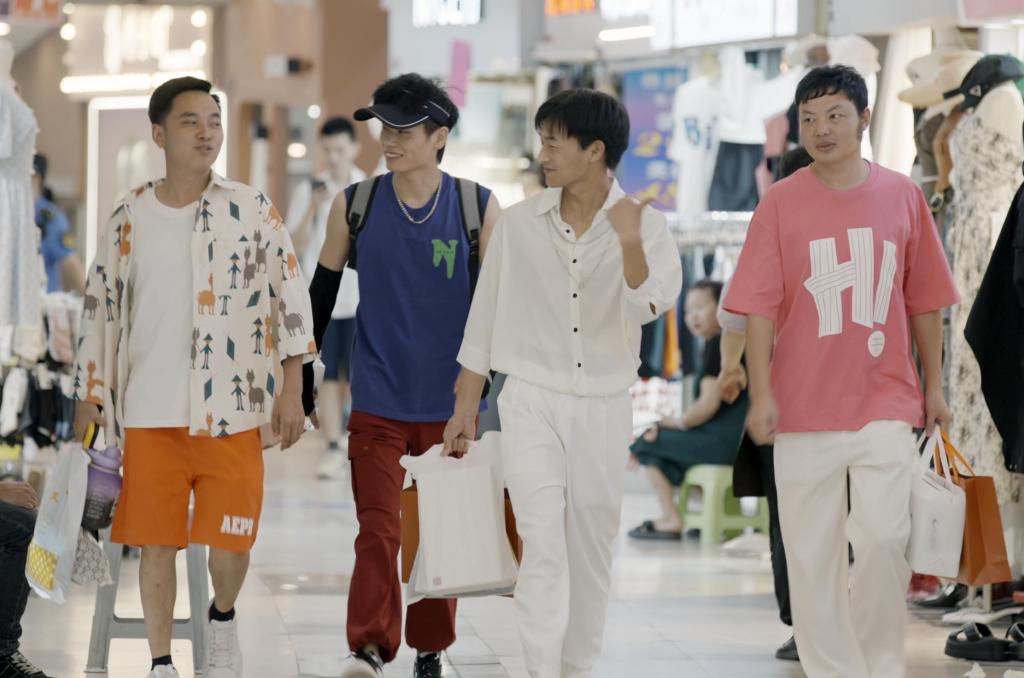
If nothing else, The Dating Game is a welcome reminder that I’ll be eternally grateful for meeting my wife before the advent of dating apps. Violet Du Feng’s documentary may take place in China, but the issues present feel universally relevant. The film follows Hao, one of China’s leading “dating experts” as he tries to coach a group of young men into finding a match by any means necessary. Though, as the documentary quickly reveals, he’s far from knowledgeable in the ways of love, and much less in understanding women and what they want. His advice tends to boil down to buying new wardrobes, looking cool via profile photos to add to a dating profile, and boasting about life accomplishments and experiences, whether they’re true or not. This leads to some of the cringiest comedy of the year, especially once the clueless men are wrangled into meeting women in the real world with next to no preparation.
Besides the small group of men, Du Feng eventually expands to show the larger cultural attitude towards dating in modern China. One fascinating segment shows a large gathering of middle-aged parents in a park, so desperate to find matches for their children, that they essentially LARP as dating profiles on their behalf. Also crucial is the opening statement that, after China’s end of the One Child policy, the country was left with an imbalance of men and women. But one of The Dating Game‘s most surprising developments comes as Du Feng spends time during Hao’s personal life to show that not only is he married, but his wife is also a dating coach with a much different approach to her female clients. Though this avenue provides some fascinating dramatic developments, one almost wishes the entirety of the film was centered around their relationship. Regardless, The Dating Game is an engrossing reflection of modern dating culture, toxic masculinity, and the eternal quest for companionship.
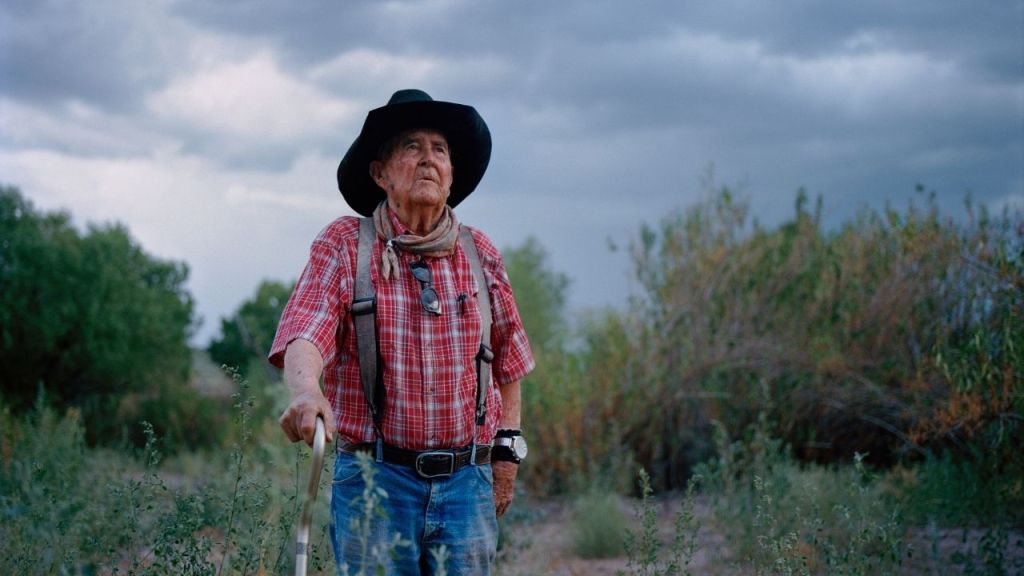
Life on the open range has been romanticized throughout cinematic history in the Western genre, but Land With No Rider shows the harsh realities that modern ranchers face. Director Tamar Lando zeroes in on a group of cattle farmers in New Mexico as they eke out a simple existence trying to survive in spite of all the hardships faced amongst modern independent farmers. The biggest challenge lies in climate change, and the lack of viable vegetation for their cows to eat.
Much like the existence it depicts, Land With No Rider treads along at a leisurely pace, often to its own detriment. Of course, this shouldn’t discount the harrowing material seen, but the film could use some additional speed to get through its (admittedly brief) runtime. Farmers inarguably play a critical role in the stability of the country, yet they’re frequently overlooked or oversimplified. Lando’s film is gorgeously lensed, taking full advantage of the New Mexican expanse, and showing every crag in its aging subjects’ faces. It’s hard to find too many faults with the film overall, but one can’t help but wish it moved at a more urgent clip to match its subject matter.
I first watched Natchez in June as part of the Tribeca Film Festival, but it’s stuck in my memory in the intervening months as a vital and visceral look at America’s past and present. The antebellum south has always felt like it comes from another plane of existence entirely with its outlandish traditions and personalities. Susannah Herbert’s documentary feels less like a history lesson and more like a tour through how those traditions and personalities reckon with the titular Mississippi town’s dark history.
Like most southern cities in the pre-Civil War era, Natchez relied heavily on the slave trade and slave labor, and many large plantations still stand today. This is the backbone of Herbert’s film, as she follows a select number of individuals who rely on telling the town’s history through their own perspectives. There’s one charismatic, Black tour guide who makes no attempt to sugar coat the painful experiences of so many Black men, women, and children who made their way through Natchez. Many of the film’s most difficult moments come as fellow residents confront him through thinly-veiled racial means to let him know they don’t approve of the stories he tells or how he depicts the town. On the other side, there’s the White tour guides, who mostly show off the plantations and simply gloss over – or, in at least one case, defend and ridicule – the presence of slaves. The result is an often shocking, yet sad reality of modern America and certain groups’ views on race, and one of the year’s best documentaries.
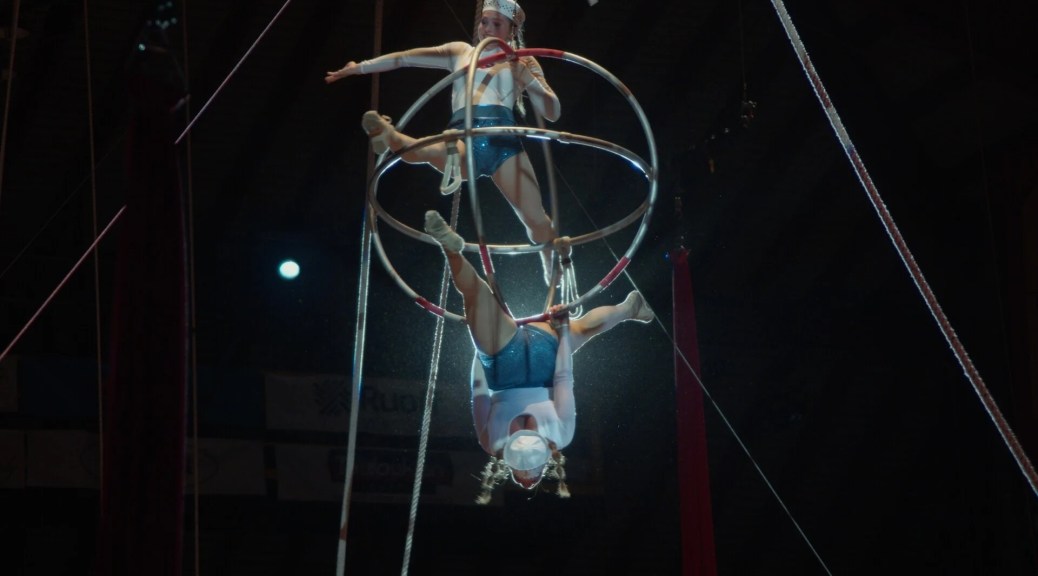
Every small town has its quirks, and The Amateur Circus is an exercise in showing the civic pride that one small town has in its long-standing tradition. That is, the titular circus, run exclusively by amateurs every year in Peru, Indiana. There’s nothing particularly special about the circus – there’s no death-defying stunts or animals or stage acts that couldn’t be seen in a professional circus all across the country. But first-time feature director Erik Thein goes out of his way to show just how dedicated the citizens of Peru are in putting out the best show possible.
From single digit-aged kids to grown adults, there’s an enthusiasm felt for the town circus, and we frequently hear, through Thein’s interviews, that families often pass down that enthusiasm from generation to generation. The Amateur Circus is a film of two halves: first, it depicts the town’s parade in anticipation of the opening night, and second, it shows the opening of the circus. Perhaps the film would be better served if it had touched on life in Peru outside of the circus, showing how dependent the town is on its financial windfall. Based on the film, you might walk away thinking anyone and everyone within Peru dedicated their entirely livelihoods to putting the show together. But at only 65 minutes, the film aims for positivity first and foremost, and if it enlightens even one person to what a dedicated group of individuals can do together, The Amateur Circus is a success.
There’s an inherent messiness at the heart of Finger Laced Crown; some intentional by its writer-director Brandon C. Lay, and some unintentional. What is intentionally messy is the love life of our protagonist Lemon Drop (Torez Mosley), a proudly bisexual spray paint artist who has trouble staying committed to one romantic partner. Some of this is tied up in trauma from a recent ex, Nadine (Syd Stauffer), a married woman who didn’t reciprocate Lemon Drop’s feelings. It probably doesn’t help that Lemon Drop’s mother is an alcoholic who has to rely on her daughter to take care of her financially and physically.
Where the film gets unintentionally messy is in its overall structure and lack of thematic elements. A bizarre portion of the first act relies on Lemon Drop (yes, that’s her government name) explaining what an NFT is, and how she relies on them to sell her art. Never mind the fact that her spray paintings, mostly pseudo-abstract neon sunsets and moonscapes, look like something you’d see likely see on Pinterest or Etsy, not a high-end art gallery. If there is a connection to be made between Lemon Drop’s life as an artist and her love life, Finger Laced Crown struggles to make it. Mosley’s performance is admirable, especially in the flashback scenes showing how her tryst with Nadine began, but the film dries out when its occasionally meandering plot develops. There’s an interesting story to be found with these characters, but it’s currently more like a rough sketch than a finished masterwork.
Midwinter presents a decidedly adult story of love and betrayal by inter-weaving characters with a shared past. Writer-director Ryan Andrew Balas focuses on parallel storylines between Nadine and Jack, a husband and wife (played by Marlowe Holden and Chadwick Sutton), and Mia (Julia D’Angelo), a musician, and Lena (Charlie Traisman), a songwriter hired to help Mia with her next hit. Relationships get more complex and complicated, and loyalties begin to blur – especially when Nadine gets sick and can no longer keep up with their young son.
Here is an independent film unafraid to discuss open relationships/polyamory, and queer love, without resorting to easy stereotypes or quick understandings of characters. Though the film sometimes leans a little too heavily into its indie trappings, including a mushroom trip between Mia and Lena, there are solid performances all around and Balas directs the film with visual flair. Midwinter offers a number of thoughtful conversations about heartbreak, love, and hope, and how those seemingly opposed ideas can often intersect, and it’s one of the best films of Indy Film Fest.
Perhaps what’s most impressive about If That Mockingbird Don’t Sing is that its writer-director just recently turned 20 years old. Sophie Bones – who makes a small cameo appearance as well – riffs on Juno and teenage pregnancy with the right balance of laughs and heart, even when its characters are often painted with a broad brush. The story follows Sydnie (played with an impressive maturity by Aitana Doyle), who discovers she’s pregnant after breaking up with her dipshit college-bound boyfriend Lucas (Braxton Fannin).
There are abrupt character shifts, like the almost forced love triangle that develops about halfway through, or Lucas’s changing feelings on being a father or his immediate reaction to the gender of the baby. But Bones peppers in some truly thoughtful and genuine scenes that elevate If That Mockingbird Don’t Sing above your run of the mill regional film festival indie. A scene between Sydnie and Lucas’s mother Carrie (Catherine Curtin) subverts expectations by painting the two as allies, rather than showing Carrie as the agitator. Scenes like this go a long way in differentiating the film from your average romantic comedy with overly qualified stars in supporting roles. The whole endeavor isn’t perfect, but it’s got enough positives to show that Bones has the chops to be a young, original voice in indie storytelling.
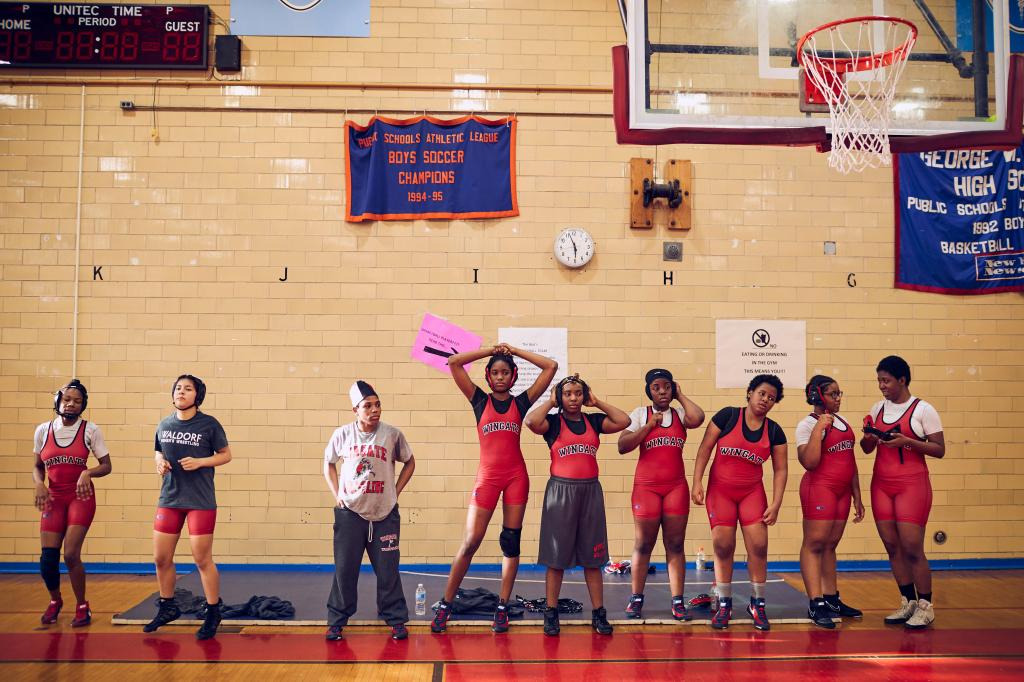
All American is one of the more conventional documentaries to be found at Heartland, but it’s no less emotional. First-time director Mark Andrew Altschul chronicles the girls wrestling movement in high school sports, but his film smartly details the complicated personal lives of its subjects off the mat just as much as it does on. The film isn’t explicitly about the immigrant experience, but the trio of girls just happen to be first-generation Americans living in various areas of New York.
Altschul shows the girls’ struggles not only to excel in the sport, but to gain the acceptance of their family, friends, and the culture at large. The film’s most heartbreaking storyline comes from a girl whose family immigrated from Yemen, and who go so far as to kick her out of the home simply for wanting to play a sport traditionally dominated by men. This is in line with the other characters, whose families come from more traditional backgrounds and believe that a girl’s place is in the home. But it’s encouraging to see so many girls persevere through adversity and acceptance, and it ultimately makes All American a winner.
There’s nothing inherently disagreeable about 2:15 PM, a Korean melodrama from first-time director Seryong Jeong, with a script from Ok-nyeon Park. At times, the film reminded me of Hirokazu Kore-eda’s Monster, which also played at Heartland and was one of my favorite films of last year. But what the former lacks is the latter’s ability to dig beneath the surface to offer a message that resonates after the credits end.
Jeong’s film concerns two young girls, played by Park So-yi and Gi So-you, and their budding friendship in the face of adverse circumstances. Hyun-su (Park So-yi) finds Min-ha (Gi So-you) on her way home from school when her father breaks a window in a fit of anger. Seeing someone in need of a friend, she begins a daily ritual of coming to Min-ha’s home and spending their brief window of time together. Jeong does a nice job of inserting drama naturally, like in exploring Min-ha’s father’s abusive behavior, or in Hyun-su’s impending move to Canada. That he manages to achieve all of this within 75 minutes is all the more impressive, but I can’t help but wish there was more to latch onto at the end of the day.
Alonso Ruizpalacios channels Alfonso Cuaron and The Bear with La Cocina, an exquisitely crafted but occasionally stilted drama. The film introduces its conflict early on, setting the stage for a great deal of tension, but it abruptly changes gears in its second half to become a bizarrely ineffective story of immigration. Set over the course of a single day in a generic New York restaurant simply called “The Grill”, the film follows the grunts at the front and back of house as management investigates a large chunk of money that was allegedly stolen the previous night.
All of this serves as the backdrop for the drama between Julia (Rooney Mara), a waitress, and Pedro (Raul Briones), a line cook. She recently discovered she’s pregnant, and he wants to support her decision to get an abortion. Mara and Briones are naturally charismatic together and separately, but the film goes on extended tangents that work perfectly well on paper but grind everything to a halt. One scene shows the kitchen going on a back-and-forth of colorfully insulting each other in their native tongues and, though this is probably La Cocina’s most effective instance of the film’s vision, there are similar scenes that don’t work as well. Still, Ruizpalacios gets the details of life in a busy restaurant right more often than not, like in Luis (Eduardo Olmos), the management underling who appeals to the immigrants by appearing friendly, but secretly has the boss’s best interests at heart. And the film looks incredible, shot in black and white in the Academy aspect ratio. Ruizpalacios especially flexes his muscles behind the camera with a virtuoso minutes-long oner during the chaotic lunch rush, where the lines between reality and fantasy blur. There’s a leaner version of La Cocina that’s undoubtedly much more effective, but it’s hard not to be frustrated by the film as it stands.
No other film at Heartland this year has a logline as hilarious as Stripper Boyz. Serving as a kind of documentary-narrative hybrid, the film tackles male body positivity in an ingeniously inventive way, thanks to the chemistry and instincts of its stars. Stephen Sanow and Jozef Fahey – Stephen is the credited director, and both are credited writers – are long-time friends and struggling actors, and Jozef is engaged, so Stephen decides to throw Jozef a bachelor party. But rather than your typical night of debauchery with friends, the pair travel to Las Vegas, where they try to learn the ropes as male strippers.
The film has a lot of fun with blurring the lines of reality and fiction, as we’re often left wondering how much of what we’re seeing is a bit, versus what is genuine. Stephen’s excuse for embarking on the journey is so that he can give his friend more confidence in himself and in his impending marriage, and Jozef is fully game with what is admittedly a kind of insane idea. If the majority of the conflict within Stripper Boyz was in Jozef’s unwillingness to do what Stephen wants, the film wouldn’t resonate as long as it does. Rather, the conflict comes from outside forces and setbacks beyond their control. Thankfully, the duo have enough comedic chops to make enough worthwhile content without stretching the premise beyond its breaking point.
Gentrification is a word we all know and understand, but Emergent City takes an in-depth look at how and why it happens, in one of the biggest hotbeds for the trend. Documentarians Jay Arthur Sterrenberg and Kelly Anderson dedicate almost 10 years to filming the changes to the neighborhood of Sunset Park, a multi-cultural melting pot near the waterfront of Brooklyn. When the industrial warehouses and factories that flourished in the 1950s were left mostly empty and abandoned, the city tried to invigorate the area by turning the buildings into multi-use facilities called Industrial City, leading to upscale restaurants and businesses like what we see in most downtown areas throughout the country.
Sterrenberg and Anderson take an on-the-ground approach to the film, showing various organizations and town hall meetings, as the community pushes back against further re-zoning and redevelopment. It’s hard not to be won over to the community’s side, but Sterrenberg and Anderson are careful enough to occasionally show the potential upside to more development – like additional jobs and revitalizations to areas that were essentially blights beforehand. It can often feel like an uphill battle whenever community members – especially predominantly non-white community members – fight against a multi-billion dollar company, but Emergent City is an engrossing look at democracy in action, full of colorful personalities worth rooting for.
For four years beginning in 2003, a group of eight artists, art students, and friends ventured to create their own space in the bowels of the Providence Place Mall. Jeremy Workman’s documentary Secret Mall Apartment seeks to tell the nearly unbelievable true story of the apartment, but it quickly morphs into a portrait of how art and creativity can shape a group of people. Michael Townsend, an artist and teacher at RISD, spearheaded the project after discovering a small, undeveloped area within the mall, and he quickly makes it a kind of clubhouse for his friends to share ideas, and also play PlayStation.
It’s amusing how quickly the gang adapts to making the “apartment” their own hidden space. They subsist on food from the food court and popcorn from the movie theater. At one point, they raise the idea of getting a PO Box within the mall, so they can receive mail and make it an official address. But the heart of Secret Mall Apartment is a look at Michael’s belief that art can be anything you make, whether it’s murals of masking tape in a children’s hospital or an ad-hoc apartment with stolen electricity. Michael is an easily likable figure, even when his obsession with the apartment essentially ruins his marriage, so when the inevitable happens and the apartment is discovered, you’re still rooting for him. There isn’t much thematic weight to the film overall, but it’s a good time peppered with humor and insight about the arts, so it ultimately feels like a worthwhile endeavor.
The last gasp of summer is rendered with care and vitality in Jared Isaacs’ An Autumn Summer, a freewheeling look at a group of friends’ gradual realization that things may never be the same, for better and worse. But Isaacs, who writes and directs, rarely injects drama where it doesn’t belong, instead choosing to let his young actors see where the scene takes them. It feels as if they were given mostly free reign to improvise, and it makes this summer getaway in the northern Michigan lakeside feel like a natural extension of their lives and rituals, rather than a film with a predetermined beginning, middle, and end. Though the plot is less important here, it’s centered on Kevin (Mark McKenna) and Cody’s (Lukita Maxwell) romance, as college looms and they fear they could lose everything they have.
Isaacs’ dialogue occasionally feels a little writerly, and perhaps he could have cut the film down from its 98 minute runtime. This is a film where conversations span the gamut from college parties to the Big Bang to dreams of marriage and children, all with abundant theater kid energy. Maxwell and McKenna are the standouts and emotional anchors of the film, but Louise Barnes, Katie Baker, Tony Horton, Julian Bass, and Jun Yu make each of their characters feel distinct, and less like different mouthpieces for Isaacs to use. An Autumn Summer may be Jared Isaacs’ directorial debut, but it’s a supremely confident film that belongs at the top of your Heartland watchlist.
At only 78 minutes, Love, Danielle gets a number of sentiments right about life with cancer, but could stand to expand a bit more on its themes. In the opening minutes of the film, we learn that Danielle (Devin Sidell) has been diagnosed with a BRCA1 genetic mutation, which puts her at higher risk for ovarian and breast cancer. She then has to choose whether she wants to have preventive surgery to remove her breasts and ovaries, in spite of her desire to have children. Given that the film follows Sidell’s real-life experience with BRCA, and her co-screenwriter credit along with Steve Sears, the film feels like an accurate, genuine depiction of those who go through this very unique phenomenon. But as if BRCA wasn’t enough, Danielle’s sister Amy (Jaime King) is going through her own cancer journey, and she has to deal with lingering familial trauma from her absentee father (Barry Bostwick) and her uber-picky mother (Lesley Ann Warren).
First-time director Marianna Palka mostly avoids the quirkiness that comes with the cancer dramedy, instead exploring Danielle’s relationships with her family and loved ones. Sidell is disarmingly vulnerable in her performance, never shying away from the uglier sides of having cancer, and the specific guilt of having a treatable form when someone you love is suffering. More often than not, a film is better served when it doesn’t belabor a plot point or character beat, but here is a case where the film would have benefitted from more room to breathe. Still, Love, Danielle gets the emotions right in a genre where shortcuts are too frequently taken.
The Worlds Divide opens with a title card declaring that the film was entirely drawn and animated by one person, writer-director Denver Jackson. Though it’s almost fully unnecessary, it can be seen as both an excuse for any shortcomings, and a humble-brag for what’s to come. Though the animation is undoubtedly impressive in its intricacies, it still needs some refinement that could have come from at least a second set of eyes. The issues which plagued Jackson’s previous film The Crown of Babylon (which played at Heartland in 2021), mostly the inaccurate lip syncing, continue here, but Jackson still retains his knack for original sci-fi storytelling.
The film concerns Natomi (voiced by Breanna Pearl), who lives in a dystopian dictatorship where no plants or vegetables have grown for ages. She’s transported by her father to a distant world called Esluna, where he’s seen as a kind of god, and various forces try to destroy her. She learns she has unique powers and teams up with a ragtag crew – including a robotic teddy bear – to return her home. Jackson wears his influences on his sleeves, from Star Wars to The Matrix and the films of Studio Ghibli. This, along with an almost punishingly convoluted plot and a nearly 2-hour runtime, makes the film harder to sit through than it should be, but there’s no denying Jackson can craft engaging action set pieces. It’s a miracle for any independent animated film to see the light of day, so it’s even more miraculous for one made from a single person. But that won’t stop me from wishing The Worlds Divide was a more engaging film.
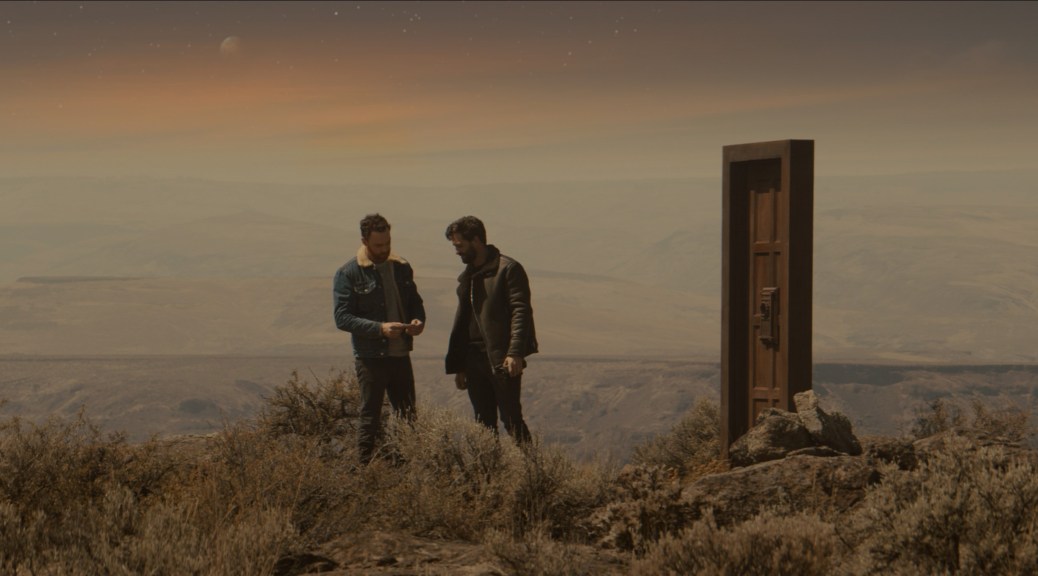
Sometimes an original sci-fi property doesn’t need a crazy, high-concept premise to succeed. Saturn starts with a simple enough hook: a planet suddenly appears in the sky. But director Eric Esau’s film uses this sci-fi backdrop more as a way to explore more dramatic tensions brought to the surface by the unexpected development. The film mostly becomes a weepy familial drama between a man named James (Dominic Bogart), his wife Sarah (Piercey Dalton), and their son George (Elijah Maximus), in the imminent days before the end of the world. Without delving into spoilers, Saturn looks at what it means to be a hero, and the cost of self-sacrifice. We rarely see the planet, so we’re left with its implications, and what regular people would do in the face of unprecedented circumstances.
Esau’s script, which he co-writes with Anna Esau and Douglas Haines, leans into ancient mythology, as we learn that James is a “shepherd”, an ancient being responsible for protecting Earth. So, with the arrival of the planet, he has to choose between saving humanity, or abandoning Earth and escaping with his family to another planet. Even a passing glance at a regional film festival will reveal that low-budget sci-fi can easily lead to embarrassing disaster, so Saturn immediately gains points for not stepping on rakes at every turn. The film looks great, even when it’s as dimly lit as the later seasons of Game of Thrones. Though the meat of the film could stand to be more compelling, it’s hard not to recommend an original idea made with care like this.
You’d think a production featuring the likes of Elizabeth Deschanel and Sam Trammell would feel like more than a micro-budget indie, but such is not the case with the sci-fi dud ReEntry. Remember the plot point in Annihilation where Oscar Isaac inexplicably returns from a void, only to find himself barely functioning as a human or relating to his wife, Natalie Portman? This is essentially the structure for first-time director Brendan Choisnet’s film, working from Daniel Nayeri’s script, but it removes any nuance or menace from the proceedings.
Deschanel plays Elenore, the wife of Lucas (Trammell), a scientist who disappears for a year after going into a portal to another dimension. He returns one year later, and she begins to suspect he’s not who she remembers. Cracks begin to form as she wonders how she can move on, if he’s not the man she’s come to love. Thankfully, without spoiling, Choisnet doesn’t belabor the point until the finale, and the second half provides a sort of interesting rumination on love. It’s just too bad that neither Lucas nor Elenore are terribly interesting as characters, nor do Descanel or Trammell give the kinds of performances that rise above the middling material.













 The Movie State