Tag Archives: featured

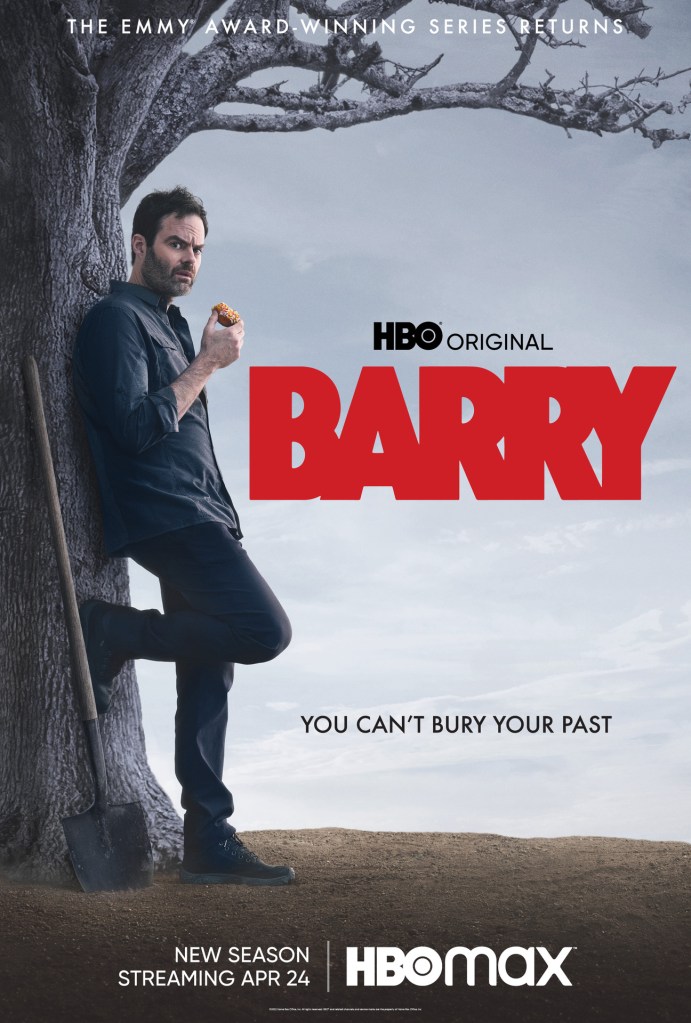
Barry: Season 3, Episode 2 – TV Review

“limonada”

  • Creator: Alec Berg and Bill Hader
  • Starring: Bill Hader, Sarah Goldberg, Stephen Root, Henry Winkler, Anthony Carrigan

Grade: A-

Old habits die hard, and this seems to be the theme not only of Barry overall but in this week’s episode in particular. The lingering question after “Forgiving Jeff” was how Barry would handle the fallout of Gene discovering his true nature. Turns out, he’s gone off the deep end in a way we haven’t seen from him before, and the results are concerning, to say the least. And Barry’s not the only one who’s reverting back to old, bad habits.

Continue reading Barry: Season 3, Episode 2 – TV Review

We Own This City – Limited Series Review

We Own This City

  • Creator: David Simon and George Pelecanos
  • Starring: Jon Bernthal, Dagmara Dominczyk, Wunmi Mosaku, Josh Charles, David Corenswet, Delaney Williams, Darrell Britt-Gibson
  • Six episode limited series. Six episodes watched for review.

Grade: A-

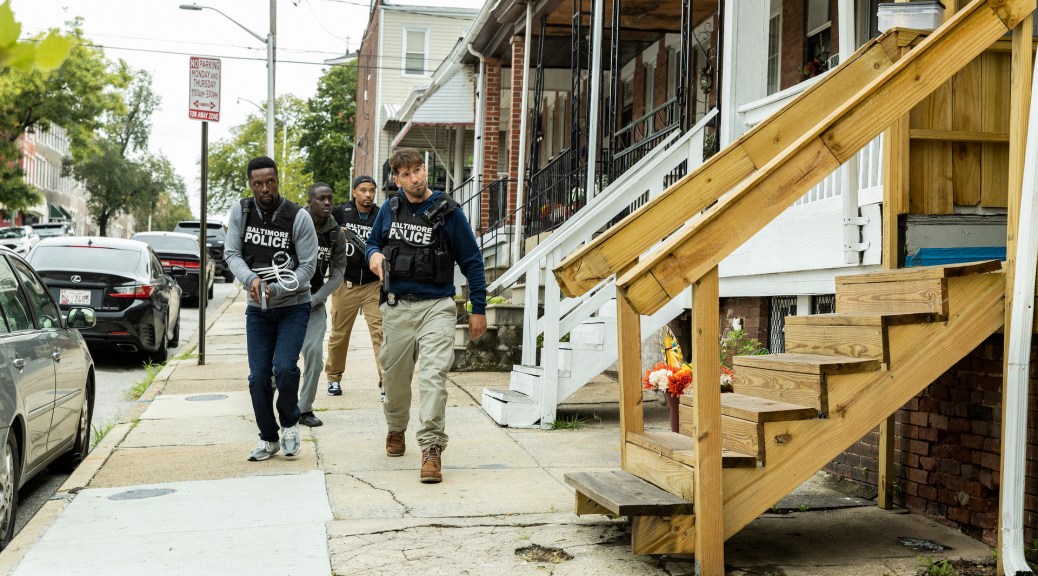
“We own this city” is often a familiar rallying cry in rap songs, used to highlight the downtrodden, the forgotten, and the rejects of the rapper’s home town. But, in the hands of David Simon and George Pelecanos, the phrase “we own this city” becomes something of an ominous threat. Simon, the maestro of The Wire, often cited as one of the greatest TV shows ever made, imbues We Own This City with a lot of similarities of the landmark series, but updates it to reflect Baltimore’s ever-changing landscape.

Continue reading We Own This City – Limited Series Review

Barry: Season 3, Episode 1 – TV Review

“Forgiving Jeff”

  • Creator: Alec Berg and Bill Hader
  • Starring: Bill Hader, Sarah Goldberg, Stephen Root, Henry Winkler, Anthony Carrigan

Grade: A-

It’s been nearly three years to the day since the world was treated to a new episode of HBO’s dark comedy Barry. And in those three years, the world has surely changed significantly, so how much will a new season reflect those changes? The premiere episode, “Forgiving Jeff” is a clear indication that, though the show won’t be addressing the pandemic just yet, the world within the show is very much a different place.

Continue reading Barry: Season 3, Episode 1 – TV Review

Dual – Movie Review

Dual

  • Director: Riley Stearns
  • Writers: Riley Stearns
  • Starring: Karen Gillan, Aaron Paul, Beulah Koale, Theo James

Grade: B-

In just a handful of feature films as a writer and director, Riley Stearns has firmly established himself as a connoisseur of dark, deadpan humor. But he uses this style of comedy to effectively explore surprisingly complex themes. 2019’s The Art of Self-Defense used its humor as a way to explore toxic masculinity and the ways it permeates our culture. Dual scratches the surface of bigger ideas, but is less successful in its execution. Stearns is unquestionably a unique voice in the independent film landscape today though, which earns Dual a certain amount of brownie points.

Continue reading Dual – Movie Review

Japan’s Warrior Filmmaker: The Films of Akira Kurosawa – One Wonderful Sunday

One Wonderful Sunday (Postwar Kurosawa 2)

  • Starring: Isao Numasaki, CHieko Nakakita

Grade: A

One Wonderful Sunday is a contemporary Kurosawa film set against postwar Japan as it was under allied occupation. It follows a young couple having a date on a tight budget of 35 yen between the two of them. Prior to the war, Yuzo (Isao Numasaki) and Masako (Chieko Nakakita) dreamed of opening their own café with affordable drinks and pastries. However, the war changed things. 

Continue reading Japan’s Warrior Filmmaker: The Films of Akira Kurosawa – One Wonderful Sunday

All the Old Knives – Movie Review

All the Old Knives

  • Director: Janus Metz Pederson
  • Writers: Olen Steinhauer
  • Starring: Chris Pine, Thandiwe Newton, Laurence Fishburne, Jonathan Pryce

Grade: C-

Officially speaking, we’re out of the first quarter of the year of our Lord 2022. But All the Old Knives may as well have been released in the first quarter, when studios traditionally dump all their projects in which they have zero faith to make any lasting impact. This effect is exacerbated when a movie premiere on streaming services, when they can be buried amongst the platform’s endless library, which makes it harder for any film that’s barely promoted beyond an obligatory banner ad to make any lasting impact. Not that the film does itself any favors though, as it’s the kind of lazy genre exercise that barely justifies its existence.

Continue reading All the Old Knives – Movie Review

Saga: Chapters Fifty-Six & Fifty-Seven – Comics Review

Saga: Chapters Fifty-Six & Fifty-Seven

  • Writer: Brian K. Vaughan
  • Illustrator: Fiona Staples

Grade: B

Chapters Fifty-Six and Fifty-Seven are plagued by the same issues as the middle installments of any ongoing TV series or comic. That is, they’re slowly paced and narratively stalled. Now that Fifty-Five has set up the second half of the series and introduced some new characters, Fifty-Six’s primary goal is to set up incoming plot threads. Alana’s ship is boarded early on by a mysterious band – in more ways than one – of smugglers. And, of course, they’re all different species, all of which have never been seen before in the series.

Continue reading Saga: Chapters Fifty-Six & Fifty-Seven – Comics Review

Japan’s Warrior Filmmaker: The Films of Akira Kurosawa – No Regrets for Our Youth

No Regrets for Our Youth (Postwar Kurosawa 1)

  • Starring: Sutsuko Hara, Denjirō Ōkōchi, Susumu Fujita, Haruko Sugimura

Grade: C

Following the end of World War II, while Japan transitioned to being under occupation by Allied forces, Kurosawa began exploring the state of his country and its role in the war. With No Regrets for Our Youth, he examined the sociopolitical climate at home as Japan’s militarism changed and the war raged. He accomplished this by drawing inspiration from the 1933 Takigawa Incident, in which a professor at Kyoto University was fired for perceived Marxist teachings. Yet Kurosawa uses his version of the Takigawa Incident as a jumping off point for a greater story he has to tell. 

Continue reading Japan’s Warrior Filmmaker: The Films of Akira Kurosawa – No Regrets for Our Youth

Japan’s Warrior Filmmaker: The Films of Akira Kurosawa – The Men Who Tread on the Tiger’s Tail

The Men Who Tread on the Tiger’s Tail (Early Kurosawa 4)

  • Starring: Denjirô Ôkôchi, Susumu Fujita, Ken’ichi Enomoto, Masayuki, Mori

Grade: C

There’s something to the brevity of Kurosawa’s The Men Who Tread on the Tiger’s Tail that gives the film a sense of intimacy. Since it was filmed during WWII, mostly on one set, and with a runtime that doesn’t break an hour, it nearly comes across as a stage play more than a film. This is fitting given it’s an adaptation of a famed story that was popular in Noh and Kabuki theater. The story follows a Lord with his samurai retainers in 12th century Japan sneaking past enemy territory disguised as monks. Along the way, they must convince a brigade of guards that they are in fact monks and not a party for the Lord with a price on his head. 

Continue reading Japan’s Warrior Filmmaker: The Films of Akira Kurosawa – The Men Who Tread on the Tiger’s Tail

Topside: Interview with co-director Logan George and co-director and star Celine Held

Below is my interview with Celine Held and Logan George, the directors and writers of their debut feature film Topside, which premiered at SXSW and the Venice Film Festival in 2020 and will be available in select theaters and digitally on March 25. We talk about the real-life inspirations for the film, how Celine prepared to act in the film, and their careful approach to portraying New York City. Our conversation has been edited and condensed for clarity.

Ben Sears: Topside is very clearly influenced by Jennifer Toth’s book The Mole People. What were some of the elements that you took from the non-fiction book that would eventually become this fictionalized film?

Celine Held: The Mole People is from the perspective of Jennifer, who is a journalist, and who went down and had some interactions with some specific people that ended up turning the book in a very different direction. As you’re reading it, you think that it’s purely an exploration of the people that lived in the Freedom Tunnel, and it becomes something a little more different. So we wanted to take her experiences, especially with Bernard, who for us really felt like John in Topside. We felt him in that character, but so many of the other characters that she explored like Blaze went in a direction that we didn’t want to explore. There’s the idea that you could approach this as a journalist going down into the tunnel. Like, there’s always that thing of, what if this is told from the perspective of someone else who is more like your viewer approaching this subject.

Logan George: Where it’s this sort of foreign world and you’re discovering it with them, but we were interested in that idea of normalizing it and having it from the perspective of Little (Zhaila Farmer), and that was our way to be inside the story from the beginning and not have to treat it like such a foreign identity. It’s the home that she knows and understands, and that’s sort of inverted as she goes out into the NYC that we all understand, but that is totally foreign to her. So cinematically, that was really exciting to us. But the one line from the book, which is the opening quote from the film, was almost the genesis for writing the script to begin with.

CH: It was huge for us. We had been into the Freedom Tunnel a few times. The first time I went down there was in 2012, when there was still one person living down there, but in the times that we’ve been down, almost all the graffiti had been painted over and so much has been removed, and it truly feels like you’re entering a different world. It feels so different from the world above; you can hear echoes of people in Riverside Park above you. We wanted to make sure that we were putting our viewer inside that world and not approaching it with an outside eye.

Topside

BS: Was it always the goal to have the film as shown from a child’s perspective, or did that come as you were trying to break the story?

CH: I think that there’s something really magical about how resilient children are. As a two person crew, we filmed for a lot of non-profits and international schools, so we worked with children a lot. We did a piece for a hospital up-state for children who are suffering from severe illnesses, and these children were all smiling, and it felt like something where you could approach something that was so serious and, on the surface, so bleak, and you could find magic in it through a child’s eyes. So we were really drawn to the idea of the resilience of children.

LG: I don’t think there was ever a version of the script where it wasn’t about being a part of Little’s experience of the world.

BS: It’s a smart way to introduce not only the tunnel ecosystem and that way of life, but that transition of going above-ground, and how different that feels.

CH: Yea, I think it’s a little fictionalized because I think her eyes would have been way more affected.

LG: … A lot of conversations about that, yea.

CH: Which is why we went into night so quickly, because we didn’t want it to be such a point but she had to see day. Initially when we were filming that section, we were really hoping it would be a sunset. It was our wish that she would look up and look into these colors of the sky. But we learned that this area where we wanted to film actually is not an area where you’d ever get a sunset.

LG: But it helps a little bit more that it was a more cloudy and overcast day in general, but to her it’s blinding. It harkens to a lot of discussions of how much light she would have been exposed to. The location we worked at was really, truly underground and was like a real black box of a space in a way that the real Freedom Tunnel was not. You get a lot of shafts of light that come down into the Freedom Tunnel during the day, but this space that we filmed in was in Rochester, New York, and it’s a mile and a half-long stretch of tunnel underneath that the city doesn’t know what to do with. It was perfect for what we wanted to do, but it was a huge logistical challenge of how to light all of the scenes that take place down there because you have no natural light available to you. But it ended up serving the story in a really great way because we weren’t dependent on that natural light. Everything that you see, we brought in, essentially.

Topside

BS: The film does do an effective job of portraying that disorienting feeling, just through the sound alone, in those first moments when they go above ground. It helps to sell the feeling with just the ambient sound, and no dialogue. There’s so much noise in NYC, and to go from such a quiet place underground to a place with so much noise.

LG: It’s a really wild intersection, where three different roads meet, and it’s not your classic crossroads – there’s actually five roads that connect. So we had this crosswalk where we just kept the camera rolling, and it’s meant to be incredibly disorienting, and the cacophony of it all ends up working really well. Just being able to throw ourselves into that environment and start filming, where there’s dozens and dozens of people, in the magic that is New York, where hundreds of people are just doing their own thing and have no interest in what you’re doing. It was just a perfect location to be able to film that kind of scene.

BS: New York City, in a lot of movies, can be portrayed as a menacing place, especially for someone seeing it for the first time. I like that, in the film, New York is a scary place, but it’s not menacing, and I think that’s an important distinction.

CH: I think that, in a lot of ways, this was our love letter to New York. Our next feature takes place in Texas, and we’ve lived in New York for over a decade now, and we’ve both had circumstances happen in New York where horrible, intense things have happened. Everyone has those stories, but overall, it’s a place where you can turn a corner and your day was horrible, and then suddenly it’s the best day ever, and there’s something that’s happening that you’ve never seen anywhere else. We wanted it to feel like people are trying to help Nikki (Held) and Little, and it’s Nikki’s blindness to that goodwill. What would the answer have been if she had accepted the help of any of the people that had come to help her? We made it a point for those people to be women because we felt like that is even more of an opportunity for her to accept help. It’s a woman who initially comes down into the tunnel, and the MTA worker, and the woman at the church, and there’s a constant presence of people there who want to help her, but her distrust of the system is so great that it never breaks through.

LG: It was a very conscious choice that we didn’t want to overplay our hand or do any camera trickery or anything heavy-handed about a violent New York. It’s very everyday and commonplace things that she’s interacting with, but it’s her first-time exposure to it that makes it so scary.

Topside

BS: Celine, at what point did you decide to star in the film? I had read that you had gotten to know Zhaila fairly well off-screen.

CH: Logan and I met when we went to NYU when we majored in acting. I started writing this script in 2012, and I started writing it without the idea of playing a character in it. At first, Nikki wasn’t a character and Little was by herself. It wasn’t until after the success of our short film, Caroline, where I play the mother in it, that we thought it would be a good idea. Caroline is a story about a mother and her three children. We were able to get so close with those three children and I was able to kind of internally direct, which was so helpful, and the short wouldn’t have worked without it. So we felt like we could use those same principals for the feature.

LG: It was ultimately very unorthodox, a lot of the ways that Celine was able to direct while being within the scene, which was super important as far as mining the right performances in both Caroline and Topside. Zhaila, just like the kids in Caoline, was never given a script.

CH: Her parents obviously were, and they were super aware of her role. She also was never exposed to any of the more violent elements of the film. She’s actually never seen the film, but she’s really excited, so we’re going to make a cut of the film that’s just her parts of the film. I actually wore an earpiece on set, which Logan used to communicate with me, and we did a lot of pre-production, and we were really on the same page with what we were looking for. So if there was a moment where Zhaila did something that felt very honest but there was a camera bump, or it was out of focus, or whatever, Logan would give me a suggestion or I’d be able to talk back to him during the scene. We cast Zhaila about a year in advance to filming, and I ended up becoming really close with her family. I ended up picking her up from school a few times a week, and we live about 10 minutes away from them in Brooklyn, and it was incredibly helpful. We re-wrote huge parts of the film for her. She decided what color her wings would be, and where we would go and what that would be like. Her vernacular was completely from who she is. We were never trying to make her be someone else. Even in the more intense parts of the films like when she cries, we talked about what makes her scared. She wears her heart on her sleeve, much like Caroline, in Caroline, she’s very vulnerable with her emotions, and I am too, and we would talk about things and that’s how we were able to get those moments out of her. It was very brief, she would cry for just a minute and be like, ‘I’m fine’, and it was just about being able to capture that and spread that out throughout the film.

Topside

BS: Other than spending time with the family and Zhaila before filming, what did you do to prepare for the role? I imagine it’s difficult to get into the headspace of a character like Nikki.

CH: We did two different documentary projects. One where we filmed the people on the streets of New York who were currently experiencing homelessness, called 50 Moments, which also premiered at SXSW, which unfortunately was cancelled but will be online soon. We also did a project where we spent the mornings with families experiencing homelessness in shelters, and these were incredibly informative. There was one woman in particular in 50 Moments that really affected the way that Nikki talked. We recorded this woman for about 40 minutes and I just listened to it constantly. The system is black and white, and it’s not easy to make these rules of where the poverty line is. There’s so much red tape, and so hearing these stories and understanding what this distrust is, you really get it. There aren’t enough shades of gray for these people to come through unscathed. That really affected us, and changed the ending of the film, and a lot of things. There was another woman that we interviewed who talked about how her mother was never meant to be a mother, and that really affected me and changed my perception of what I thought motherhood is. I think that research that we did, about five years before we went into production, was incredibly influential in the character.

BS: It’s easy for films and documentaries about homelessness and homeless people to feel like “misery porn”, but I felt that Topside is ultimately a hopeful film. What did you guys do to try to avoid that misery feeling?

LG: Certainly the idea of operating from Little’s perspective helped to make it not feel so bleak. It’s true, it’s hard to tell stories around this kind of subject matter. We were also out to communicate a sort of sensation, rather than any kind of commentary, about the topic. That feeling of not having a place where you can rest, that moment-to-moment decision-making that has to happen when you don’t have a place to just take a breath, that was what lead to the way that we crafted the story of having to jump from different places and turning into more of a “journey” film and not just sit in a place of misery. Ultimately, there is action and a drive to it, and Nikki is really striving for something throughout the story. It was really important to us that it didn’t feel like it was sitting and languishing in what is ultimately a very sad story. We see the ending as being equal parts hopeful but also very sad and tragic. The ultimate decision that Nikki makes isn’t necessarily a guarantee that Little will have the best life going forward. Some of the stories we’ve heard about the foster system isn’t a guarantee that the child is going to be well taken care of, but that felt like a real change within Nikki, which was important for us. The decision that she makes is ultimately something that she never would have made at the beginning of the film.

CH: We also felt like it was an opportunity to humanize a population that often doesn’t receive that kind of respect. Hopefully in all of our films, the next time you get on the subway, maybe you’ll see a Nikki, and maybe your perception of that person will be different than it would have been before you saw the film. That idea was always in the back of our heads.