

The Adam Project
- Director: Shawn Levy
- Writers: Jonathan Tropper, TS Nowlin, Jennifer Flackett, Mark Levin
- Starring: Ryan Reynolds, Walker Scobell, Jennifer Garner, Zoe Saldaña, Mark Ruffalo, Catherine Keener
The Adam Project

The Most Beautiful (Early Kurosawa 2)
The Most Beautiful is a wartime propaganda film about women working in an optics factory directed by Kurosawa in a pseudo documentary style. He was originally approached to make a film about Zero fighter pilots but, at that stage of the war, it wasn’t feasible to loan out Japanese military assets for the sake of a film shoot. He instead made The Most Beautiful, a film that stands as a unique outlier in his filmography. While it isn’t necessarily good, especially in comparison to the rest of Kurosawa’s work, The Most Beautiful does have some things going for it and is a curious example of an instance where a filmmaker may not fully believe in the material he’s creating.
Continue reading Japan’s Warrior Filmmaker: The Films of Akira Kurosawa – The Most Beautiful
The Dropout
You had to know that when the salacious details about Theranos and Elizabeth Holmes came forward, Hollywood would come knocking sooner than later. Sure enough, at least two fictionalizations of Holmes’ life are moving forward, and potentially more to come. Adam McKay’s feature film version is in production, and will star Jennifer Lawrence as Holmes. But first comes Hulu’s miniseries, which is based on the ABC News podcast of the same name.
Continue reading The Dropout – Limited Series Review
Sanshiro Sugata (Early Kurosawa 1)
Akira Kurosawa’s Sanshiro Sugata is an impressive debut for one of cinema’s greatest artists despite being more straightforward and slightly less existential and sub-textual than the majority of his career. The film follows Sanshiro Sugata, a jiu- jitsu pupil who becomes enamored with judo after a fight. He seeks out the maligned master of judo, a discipline seen as a cheap imitation of jiu-jitsu, to learn about the martial art. Along the way, tensions between a jiu-jitsu dojo and the judo master’s dojo rise and Sugata falls in love with the daughter of an aged jiu-jitsu master.
Continue reading Japan’s Warrior Filmmaker: The Films of Akira Kurosawa – Sanshiro Sugata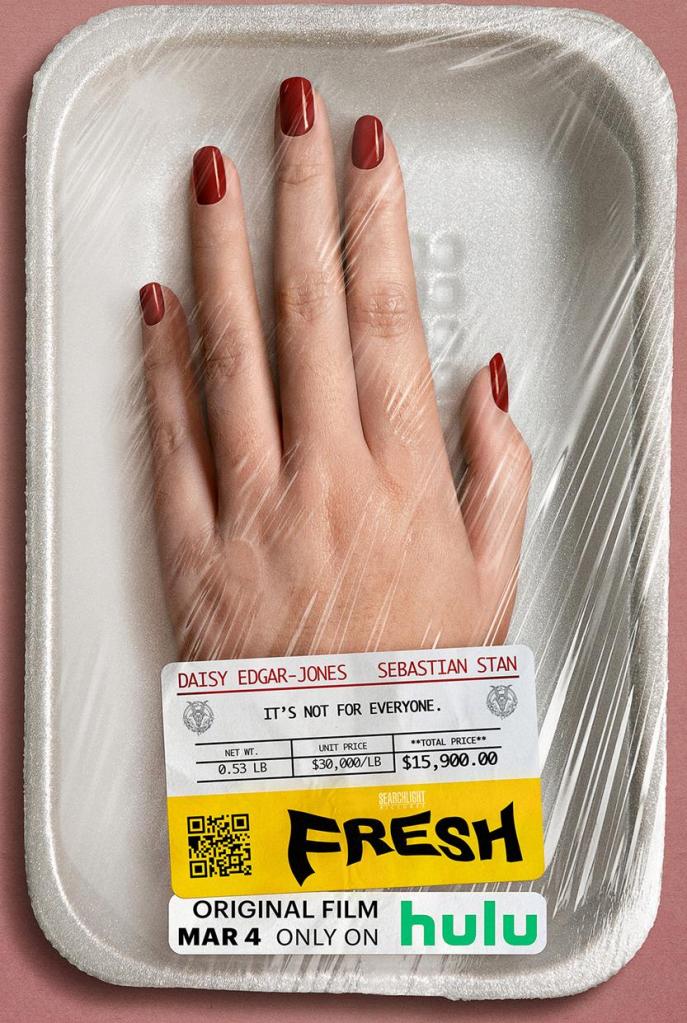
Fresh
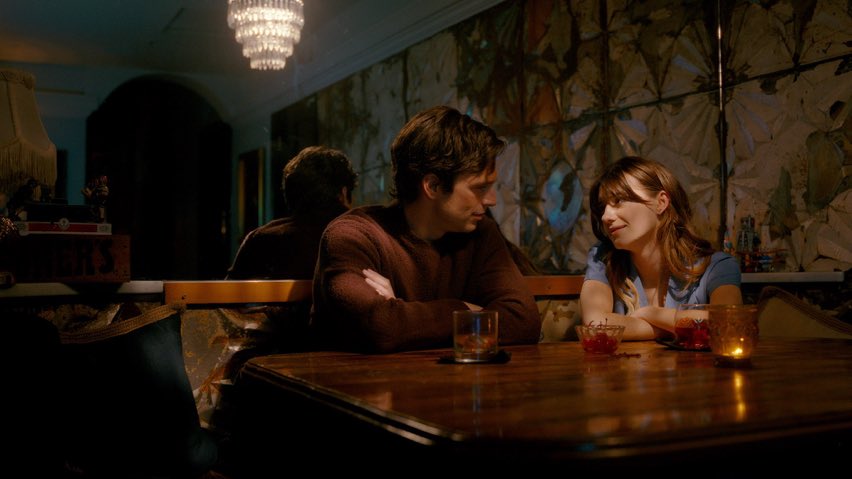
Take one part horror film, one part revenge thriller, a heavy dose of post-MeToo commentary, and a good helping of chemistry between two likable actors, and you have the perfect distillation of Fresh. First-time director Mimi Cave, working from a script by Lauryn Kahn, displays a nice confidence in the material, but lacks the discipline in a few key areas to make the film truly memorable. Nevertheless, Cave populates the film with Daisy Edgar-Jones and Sebastian Stan, two capable, charming actors as the leads, which goes a long way to making Fresh an enjoyable ride overall.
Continue reading Fresh – Movie Review
After Yang
Kogonada’s sophomore feature further establishes the writer and director as a unique voice amongst new filmmakers. His 2017 debut, Columbus, explored how beauty can be found amongst the mundane, and After Yang contains similarly profound ideas. Specifically, the film is about preserving the memories of those we love after they’re gone. What will we remember about them? And what will they remember of us?
Continue reading After Yang – Movie Review
Throne of Blood (Shakespeare & Kurosawa 1)
Opening Thoughts
I first came to know Akira Kurosawa’s work when I was a teenager and a burgeoning movie snob. It was 2004, I was 17 years old, and I had just discovered IMDb’s now defunct message boards. Desperate to watch anything and everything, I perused the IMDb Top 250 regularly and would lurk on the message boards of movies I was interested in.
Continue reading Japan’s Warrior Filmmaker: The Films of Akira Kurosawa – Throne of Blood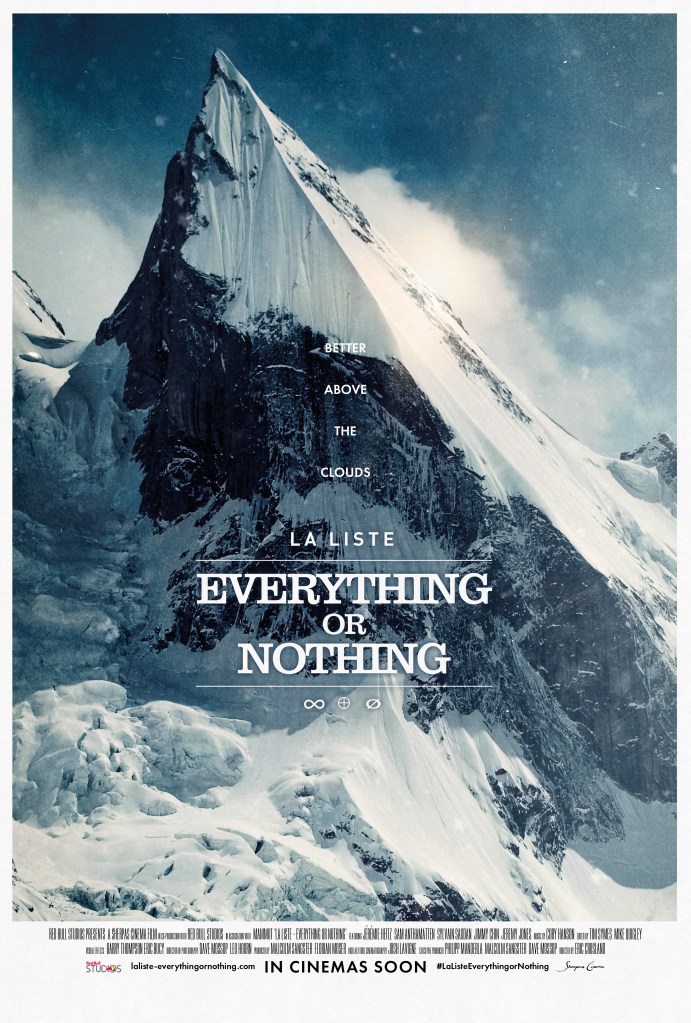
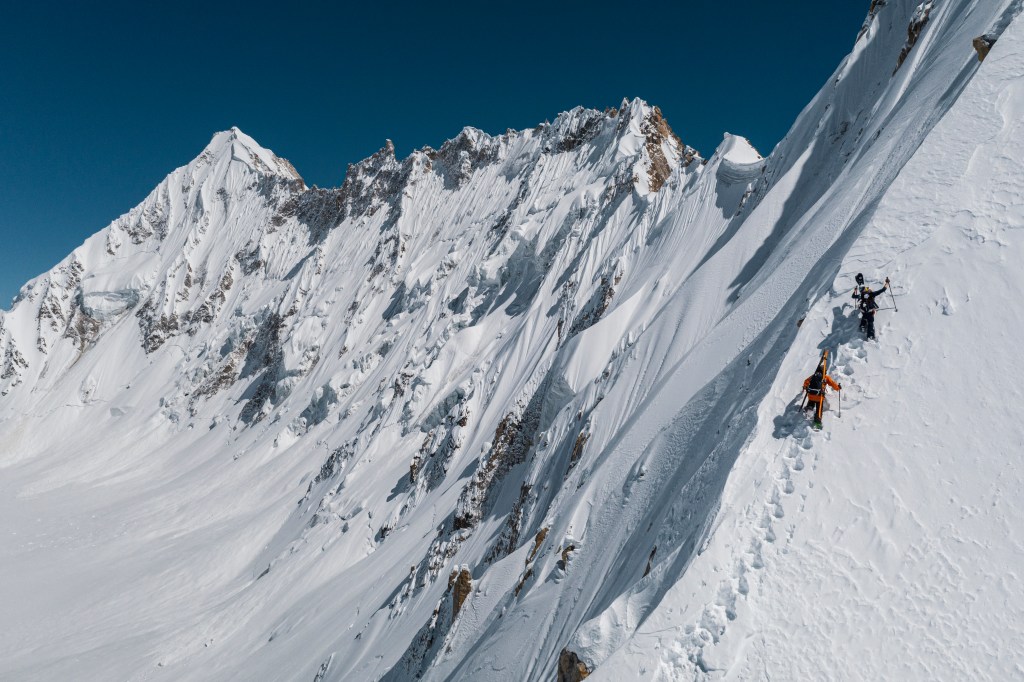
I recently spoke with Eric Crosland, director of La Liste: Everything or Nothing, a documentary chronicling extreme skiers as they attempt to conquer some of Earth’s most extreme peaks. Our conversation has been edited and condensed for clarity.
Ben Sears: What was the most difficult thing for you, logistically speaking, to shoot?
Eric Crosland: The most difficult thing was getting there at the right time of year. For the skiing to be the way these guys wanted it, to ski it really aggressively and fast, you really needed nice snow pack and really good outer skiing, and at those higher mountain ranges it only happens once a year for a couple hours, or maybe once every two years. So the hardest part was really knowing when to be there.
BS: How about from a technical standpoint? What was the most difficult thing about setting up the cameras?
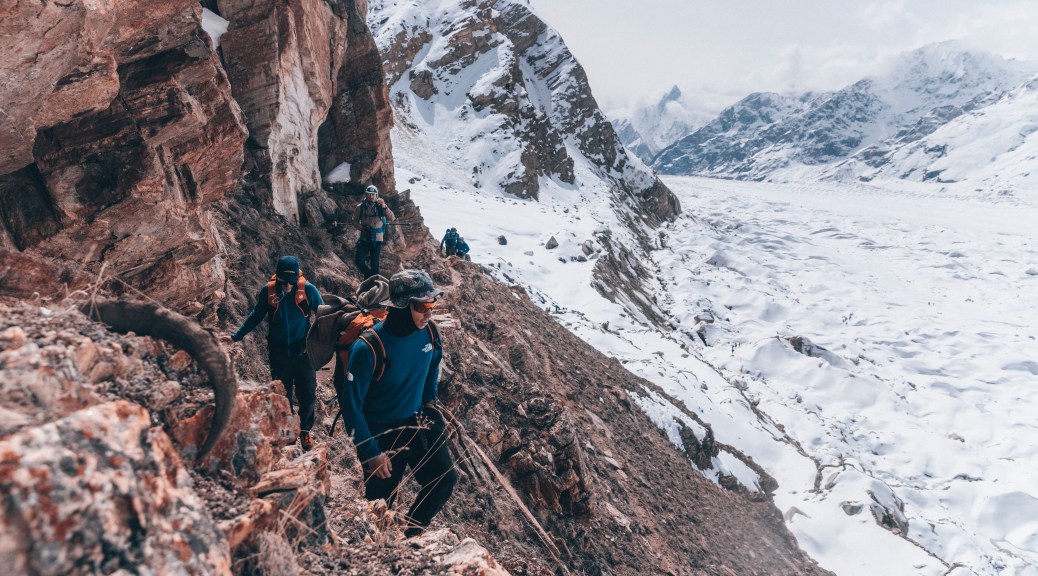
EC: The cameraman – the on-wall cameraman who was actually climbing up to the summits of the peaks with them – that job was probably the hardest because they had to climb as well as operate the cameras They were bringing really small cameras and it was really hard to get good audio and cover the climb in a verite manner. It was so cold and you’re always catching up and they’re climbing quite fast, so that’s one of the most highly skilled positions.
We learned a lot about the drones as we went. The first time we went to Peru, we didn’t unlock them because they’re only set to fly 5,000 meters above your controller because of DGI and aviation rules. But you can hack it so you can fly it as high as you want, above the operator, so that’s what we did in the second and third expeditions; we went into the software and removed that restriction so we could fly it 6,000 feet above the drone operator and get much better shots. But it became really difficult to manage the battery because you burn almost 3 quarters of your battery just getting it up to the proper height, and then you have to get the shot and get it back down before it dies. And because of the cold, the higher you go, the colder it gets, so the batteries would degrade and get colder as you go up.
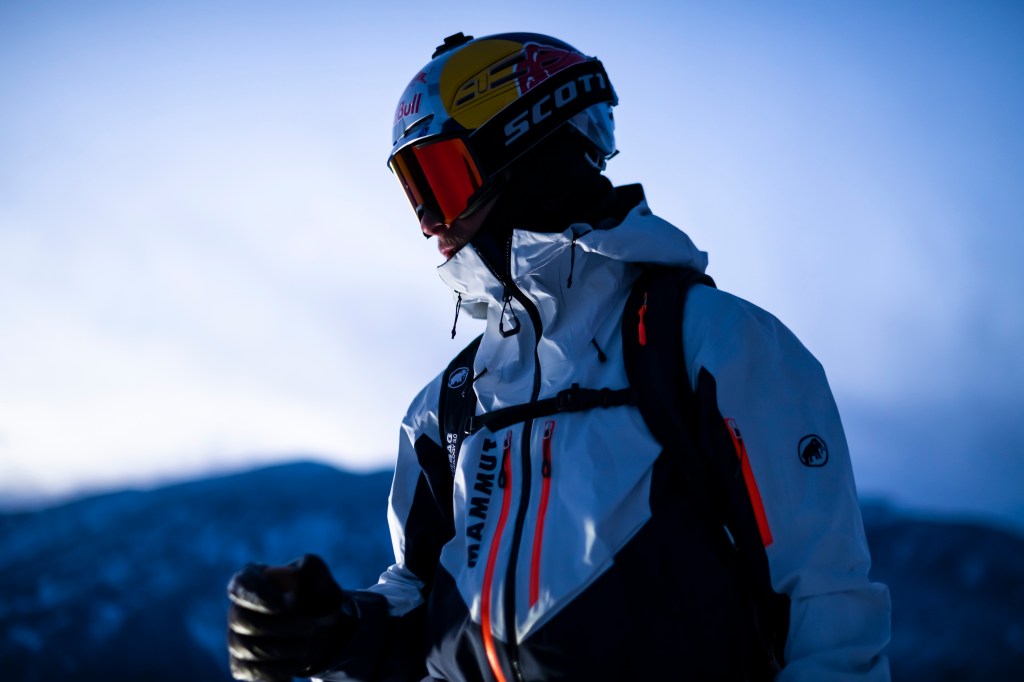
BS: I felt a lot of similarities in the film to Free Solo, where the filmmakers there were worried about Alex’s safety but still wanted to make a compelling film. How did you balance your desire to get good footage with making sure everything is safe and nobody gets hurt?
EC: As far as those guys skiing, and where they wanted to ski, and how they wanted to ski, it was completely up to them. It’s so much pressure on these expeditions, especially when you’re going deep into Pakistan where it takes 5 days just to get to base camp and 10 days from your house before you even see the mountain. Everybody’s feeling the pressure, including the athletes. It was something I really had to wrestle with and learn, to let them decide where and when they wanted to ski, and not give them any input because it would be too much if anything went wrong. You’d have to live with it for the rest of your life and it would be a horrible feeling. It was so dangerous, what they were doing, that you just had to let them make the decision. As far as them opening up to the camera and developing their characters, that was really difficult too because I feel like, coming from a couple guys who just made their own ski movies, they weren’t really as open as some other people would have been because a lot of the film was in English and there was a language barrier. I feel like that was a huge challenge, to capture the moments when these guys were really being themselves or actually making decisions.
BS: You’ve spent a lot of time in the mountains and have done a lot of commercial work in extreme terrain. Was there anything you learned while making this about skiing that you hadn’t learned before?
EC: Yes, I think I had always been told that there’s always so much pressure on the expeditions to come home with enough footage to make a sequence. So it’s always a struggle to enjoy the mountains while you’re there because you never know if you’re gonna get back. That’s something I didn’t do too much but I think I’ve learned more while I was editing the project and realizing that it would be really hard to get back to any of these areas, and try to separate yourself at least once a day and take it in. That’s always been the biggest challenge.
As far as skiing, I had no experience in these crazy Himalayan snow packs or where you’re really close to the equator [in Peru]. Just trying to figure out if the snow was safe or if there would be an avalanche, or if it was even skiable was a huge learning curve, just to see what snow was like in the biggest mountain ranges in the world.

BS: It’s ironic that this is being released during the winter Olympics. Are you watching that and thinking ‘that’s nothing’ or ‘that’s like amateur hour compared to what I’ve seen’?
EC: I have a lot of respect for athletes at the Olympics, obviously. It’s crazy how skiing is just syphoned into so many sub-genres like cross-country or big air or slopestyle or racing. It’s like cycling, so it’s really interesting to see how core each of those sub-genres can get and how they’re all part of the sport of skiing but each one can go so deep into their specific discipline. For me, I think skiing is a tool for exploring the mountains; that’s how it was developed, as a way of hunting in the mountains. It was a pure form of what we were doing but I appreciate all sides of it. But it is interesting to see the winter Olympics all on man-made snow in the middle of a desert. That being said, I think climate change is really changing the sport a lot.
BS: That was in the back of my mind as I watched the film. How does the climate crisis affect this sport? Will these athletes be able to do these big mountain expeditions ten years from now? Or are they even thinking that far into the future yet?
EC: I don’t think they are; I think that how climate change is affecting the mountains, from the snow pack, to the windows in which you can ski when it’s stable, it’s shortening, and the time periods are switching. Traditionally, all the big ski movies that you saw in the 90s and early 2000s were all made in the first or second week of April or last week of March, when the snow was consistently good that year for alpine descents. Now it’s in the middle of March and it’s maybe only a couple of days before it gets too warm. You basically have to go to places much longer and really hope you catch the window because there’s no consistency anymore. When it warms up, it warms up really quickly and it’s done, so it’s definitely made it way more challenging. You really get to see the differences after you do a bunch of winters in a row for 10 years or something, you can really see it changing.
BS: There were several potential setbacks throughout the film, from Mika’s injury to the difficult weather conditions. Were you ever worried that you wouldn’t get enough material after all of that?
EC: Yea, so many times I had people telling me I should shut it down and it’s not doable. Either someone’s going to die or you’re not going to make the movie. The Mika situation was the first expedition in the film and really affected everybody from there from a safety standpoint. For a long time we didn’t even know if we could use Mika’s footage because it was tied up in usage rights and other legal issues. And then COVID came and that paused us, and we ran out of money and we were basically working for free to finish the film, so we were going over insane hurdles to get it done. We always knew we could do it, it was just a matter of taking it one step at a time. I think Jeremie felt a lot of guilt for inviting Mika on that expedition and when that [injury] happened, he took that really personally, even though he caught Mika and saved his life. That really made him question why he wanted to ski 6,000 meter peaks. Then they hopped into Pakistan after that, which was insanely ambitious and dangerous, so we were on pins and needles the whole time right up until this past September to know if we could even make the movie. There were a lot of key issues and story elements that were up in the air until the last minute.
BS: Where do you see these big mountain free-skiing expeditions going from here, now that these guys have tackled these giant mountains? Is there anything bigger or better that they can do?
EC: Yea, I think Pakistan is insane because of how many mountains are there. It is the biggest and most beautiful mountain range in the world. Nepal steals a lot attention because it has Mount Everest but Pakistan has so many mountains that are above 7,000 meters and there’s so much unexplored skiing there. You could ski there for a lifetime, and nobody is skiing there. But they’re really dangerous mountains. The other place that doesn’t get skied very much is the Kluane national park in Canada – in the Yukon territories – which is where Mount Logan is. It’s virtually unexplored from a free-riding standpoint, but it’s really remote and hard to get to. There’s lots of zones, it’s just a matter of how much travelling you want to do to get to the bottom of the runs. There’s a lifetime of skiing in these mountains, but what’s stopped everybody before is just walking for 2 weeks just to even look at it.
La Liste: Everything or Nothing will release on VOD on February 15.

Inventing Anna
You’ve seen Inventing Anna before. In some form or another, this story has been told many, many times already. Of course, the specifics like the people involved and the setting are unique, but everything about Shonda Rhimes’ newest Netflix series suffers from being too familiar without having anything significant or new to say. Even the show’s tagline, which punctuates every episode’s opening – “What you’re about to see is completely true. Except for the made up parts” – feels like it’s been done before. Perhaps the best analogy to Inventing Anna is Scorsese’s magnum opus of American excess The Wolf of Wall Street, but without the “can you believe this is really happening?” bugnuts details.
Continue reading Inventing Anna – Limited Series Review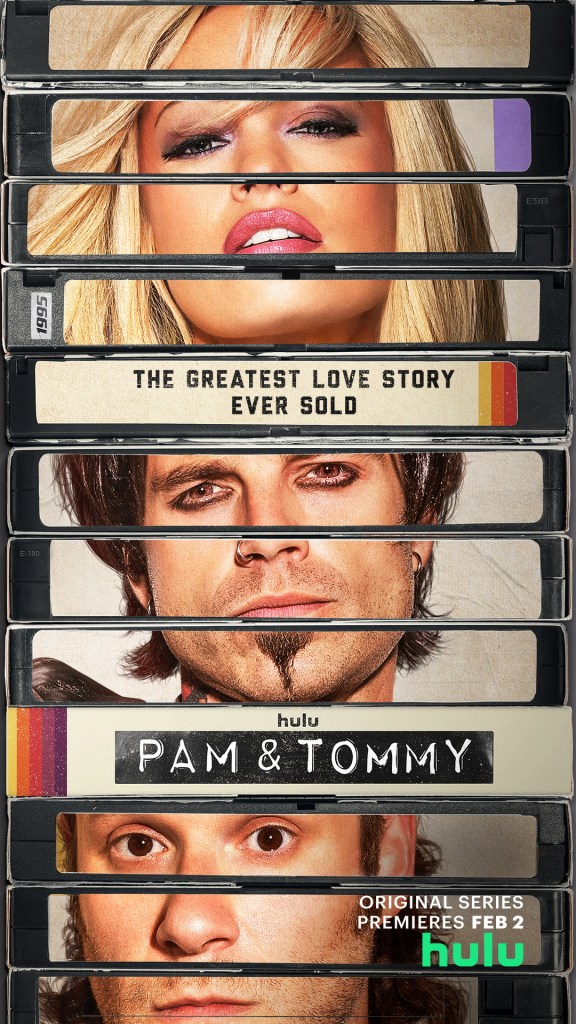
Pam and Tommy
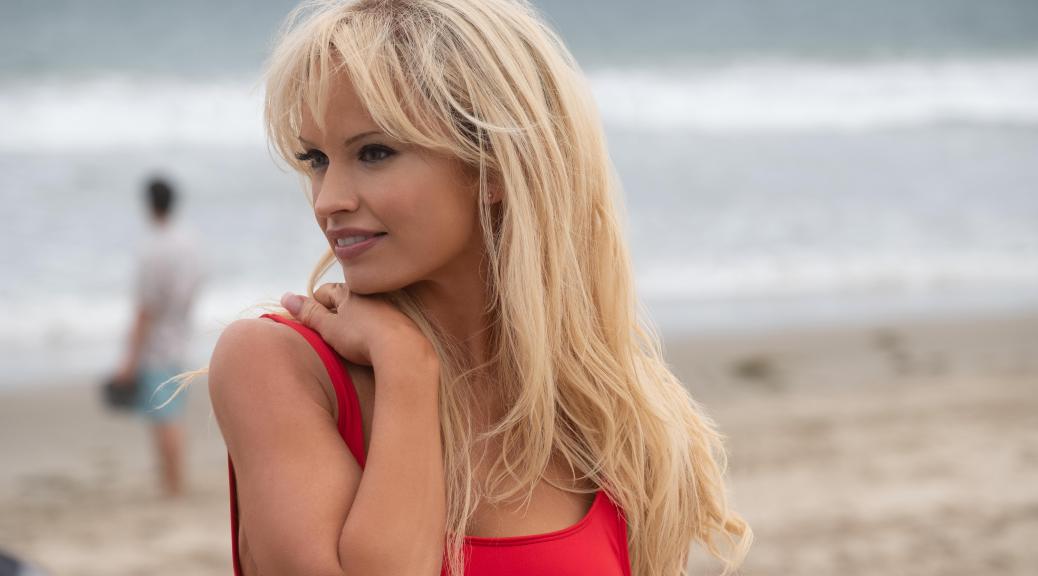
Color me surprised that, when browsing the full list of credits for Hulu’s new limited series, Ryan Murphy is nowhere to be found. Among his exhaustive resume as a writer, director, and producer, Murphy has become ubiquitous in the last few years, especially with his American Crime Story series, as re-investigating moments that broke through pop culture – particularly moments that painted certain people in negative lights without giving them their own platform. This recent phenomenon isn’t exclusive to Murphy, though, as podcasts (Slow Burn), documentaries (Framing Britney Spears), and more television shows (When They See Us) have made a big impact in the way we think about celebrities – in one sense of the word or another – and their often tarnished legacies.
Continue reading Pam and Tommy – Limited Series Review


 The Movie State