All posts by Ben Sears

Every 2022 Oscar Nominee Ranked

53. Being the Ricardos (Best Actress, Best Actor, Best Supporting Actor)

Your mileage will surely vary on this one depending on your level of tolerance for Aaron Sorkin. As for me, any film that features a third-act deus ex phone call and a completely pointless series of talking head interviews – populated by actors, not the real people! – is enough to jump ship for good. Yes, Nicole Kidman, Javier Bardem, JK Simmons (all of whom received acting nominations, and Kidman could very well win Best Actress) and Nina Arianda are quite good in each of their roles, getting at the heart of their characters beyond simple pantomime. Being the Ricardos is the only Oscar-nominated film that I initially disliked and subsequently despised whenever I would come back to thinking of it later on.

52. Four Good Days (Best Original Song)

Poor Diane Warren. Year after year, the Academy continues to trot her out to the Oscar ceremony for her songwriting, only to pull the rug out from her and award someone else. She certainly won’t be winning for “Somehow You Do”, and perhaps it’s a coincidence that the film it was written for is as lazy as the Academy’s box-checking nomination. Premiering at Sundance back in 2020, Four Good Days is a collection of misguided scenes and character beats that would feel like too much for a Lifetime Original Movie. Mila Kunis and Glenn Close do their best, but the material they’re given is so ham-fisted and tired that these very capable actresses could do this work in their sleep.

51. Lead Me Home (Best Documentary Short)

It’s unfortunate that this documentary short will most likely win its category simply because it concerns a pressing current issue that hits close to the homes of many of the Academy’s voters. To be clear, the film shows a side of America’s homeless population that isn’t always shown, and the result is often heartbreaking. But Lead Me Home asks nothing of the homeless crisis beyond “did you know that homeless people are real people?” The film could have expanded on America’s broken system and why more and more people are finding themselves unable to afford homes that are only getting more and more expensive. Perhaps, if the filmmakers were to develop the short into a feature, they could investigate these issues. But, as it stands, Lead Me Home ultimately feels like a puff piece for the national news.

50. Coming 2 America (Best Makeup & Hairstyling)

When last we saw Eddie Murphy, he was courting a Best Actor nomination for his turn in Dolemite Is My Name in 2019. I don’t know who convinced Murphy and Arsenio Hall to reunite (along with Dolemite director Craig Brewer) and make a sequel to Coming to America more than 30 years later but it’s clear that nobody had more than a passing interest in making a film that justifies doing so. Lazy jokes and cultural observations abound throughout Coming 2 America‘s unforgiveable 110-minute runtime, with the only joke that elicited a laugh from me revolving around a Shake Weight. Were it not for the film’s admittedly solid use of prosthetics and makeup, this film would rightfully be placed amongst the ash heap of history, along with many of Murphy’s other misbegotten films.

49. Don’t Look Up (Best Picture, Best Original Screenplay, Best Original Score, Best Editing)

Nearly 3 months after watching it for the first and only time, the rotten taste of Don’t Look Up has mostly washed out of my mouth. But I simply can’t forgive the film’s lazy approach to satire, the wasted potential of its A-list cast, or its insane editing, which landed it a Best Editing nomination. (If any professional film editors are reading this, I would love to be enlightened on the film’s editing merits, or lack thereof. Please reach out to me.) Thankfully the Academy didn’t feel as strongly about it as I had feared, only giving it four nominations when many more could have easily happened. That it stands little-to-no chance of winning any of those four awards is extremely comforting.

48. When We Were Bullies (Best Documentary Short)

I have no doubt that director Jay Rosenblatt set out with the best of intentions when conceiving When We Were Bullies. The film interrogates a specific incident from Rosenblatt’s time in fifth grade wherein a classmate was bullied. Far be it from me to demerit someone else’s way of healing with something that’s haunted them for decades, but the resulting film is dramatically inert. There’s nothing wrong with a small-scale documentary that only deals with a handful of characters, but Rosenblatt makes too many questionable narrative decisions to make this a memorable experiment.

47. Bestia (Best Animated Short)

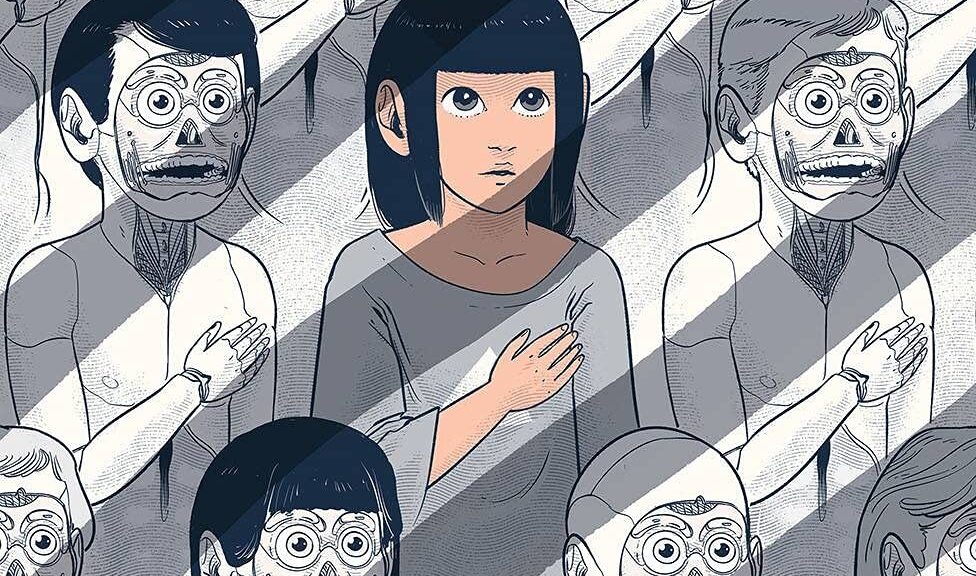
There’s always at least one animated short every year that provides enough nightmare fuel to last until next year’s ceremony. In 2022, that designation goes to Bestia. A stop-motion curio that’s supposedly based on true events from the dictatorship in Chile, Bestia focuses on one woman’s career under the secret police, and her relationship with her dog. But it’s not just the visuals that are unsettling here, as each human character is a kind of unflinching porcelain shape, and everything else is either covered in felt or shaped out of paper. Bestia portrays a person with a terrible occupation, plus some disturbingly strange habits, all to middling effect.

46. On My Mind (Best Live-Action Short)

Director Martin Strange-Hansen’s short is incredibly simple on its surface, but packs an emotional punch with its conclusion. When a despondent man walks into a bar, he notices a karaoke machine and requests to sing the song before he goes to visit his wife. Strange-Hansen’s heart is in the right place, and Rasmus Hammerich gives a fine performance, but the film is filled too much with petty roadblocks to keep the drama going for its 18-minute runtime.

45. The Hand of God (Best International Feature)

Paolo Sorrentino’s semi-autobiographical story feels like (at least) two films mashed together, and only one of those is relatively successful. The first half establishes Fabietto (Filippo Scotti), his family, and his love of soccer great Diego Maradona in Naples, Italy. Far too many plot threads and characters are introduced far too quickly early on to get a handle on the themes of the film. The second half slows down and focuses better, but by then I had mostly checked out. The Hand of God also isn’t helped by Fabietto feeling like a dry lump of clay, though Scott does his best in a few key scenes. At least Sorrentino makes the most of the Naples scenery, along with Daria D’Antonio’s cinematography, to make a visually invigorating film.

44. Free Guy (Best Visual Effects)

I imagine that Free Guy received its nomination not because it had the best visual effects to choose from but because it had the most visual effects. Especially in its early scenes, there’s hardly a single frame that doesn’t have some sort of computer-generated imagery – it does take place inside a video game, after all. It’s important to note that the film likely took the place of fellow short-listed films like The Matrix: Resurrections and Godzilla vs. Kong, films that incorporated their effects more smoothly and effectively. Still, you can’t be too mad at Free Guy; it’s the kind of turn-your-brain-off popcorn film that is typically relegated to the Visual Effects category with virtually zero chance of winning.

43. Ascension (Best Documentary Feature)

In Jessica Kingdon’s feature debut, what begins as a shockingly subversive way of showing the sheer amount of stuff we make in the world – most of it likely going to waste – eventually loses its focus. The film deals with the myriad ways that China perceives work, and the ways that that definition is rapidly changing today. From mind-numbingly monotonous factories to sex doll decorators to bodyguard training, every occupation is shown with an observant eye, and Kingdon lets events fold completely naturally. Though there is plenty of interesting material to be found here, it’s not enough to justify its 98-minute runtime.

42. Nightmare Alley (Best Picture, Best Cinematography, Best Production Design, Best Costume Design)

There’s lots to like about director Guillermo del Toro’s follow-up to his last film, which won 4 Oscars, including Best Picture. In fact, a lot of what worked in The Shape of Water is evident in Nightmare Alley as well, like the production design, costumes, and cinematography. But where Nightmare Alley suffers is in its predictable script, which feels like a distillation of every grifter story you’ve ever seen. Del Toro imbues the first half with some interesting details but fails to make all of it feel fresh.

41. Boxballet (Best Animated Short)

A wordless animated film from Russian director Anton Dyakov, Boxballet is a surprisingly endearing tale of how opposites attract. The animation is perhaps the most “traditional” of this year’s nominees in the Animated Short category, but the characters are uniquely designed to emphasize their features. In essence, Boxballet is a love story between a boxer and a ballet dancer as they find mutual solace in the way they’re perceived by the world around them.

40. Belfast (Best Picture, Best Director, Best Original Screenplay, Best Supporting Actor, Best Supporting Actress, Best Sound, Best Original Song)

Belfast could potentially win Best Picture, or it could go home empty handed on Oscar night. Writer and director Kenneth Branagh’s semi-autobiographical account of his childhood in the titular Irish town checks all of the boxes of an awards favorite: great performances, a historical backdrop that provides plenty of drama, and a dynamic visual style. And while my initial feelings on the film were positive as I left the theater, I slowly began to realize the film’s flaws. Chief among them being the screenplay, which throws out a lot of ideas and plotlines without fully investing in any of them. Judi Dench, Ciaran Hinds, Jamie Dornan, and Caitriona Balfe all give magnetic and memorable performances, but they’re left stranded by a script that puts weight on everything and nothing simultaneously. There’s a version of Belfast that could be a great, worthy Best Picture winner; instead it’s just a collection of fleeting memories.

The Dropout – Limited Series Review

The Dropout

  • Creator: Elizabeth Meriweather
  • Starring: Amanda Seyfreid, Naveen Andrews, William H. Macy, Laurie Metcalf, Stephen Fry, Dylan Minnette, Kurtwood Smith, Camryn Mi-Young Kim, Bashir Salahuddin, Sam Waterston
  • Eight episode mini-series. Seven episodes watched for review.

Grade: B+

You had to know that when the salacious details about Theranos and Elizabeth Holmes came forward, Hollywood would come knocking sooner than later. Sure enough, at least two fictionalizations of Holmes’ life are moving forward, and potentially more to come. Adam McKay’s feature film version is in production, and will star Jennifer Lawrence as Holmes. But first comes Hulu’s miniseries, which is based on the ABC News podcast of the same name.

Continue reading The Dropout – Limited Series Review

Fresh – Movie Review

Fresh

  • Director: Mimi Cave
  • Writer: Lauryn Kahn
  • Starring: Daisy Edgar-Jones, Sebastian Stan

Grade: B

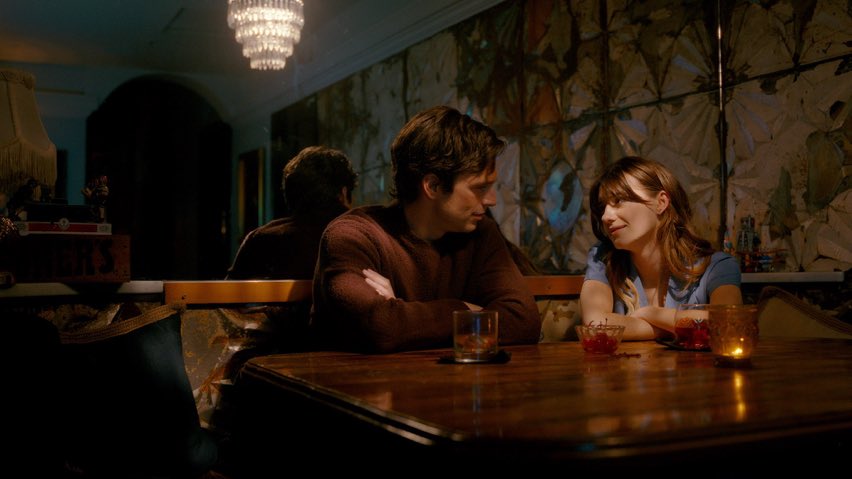
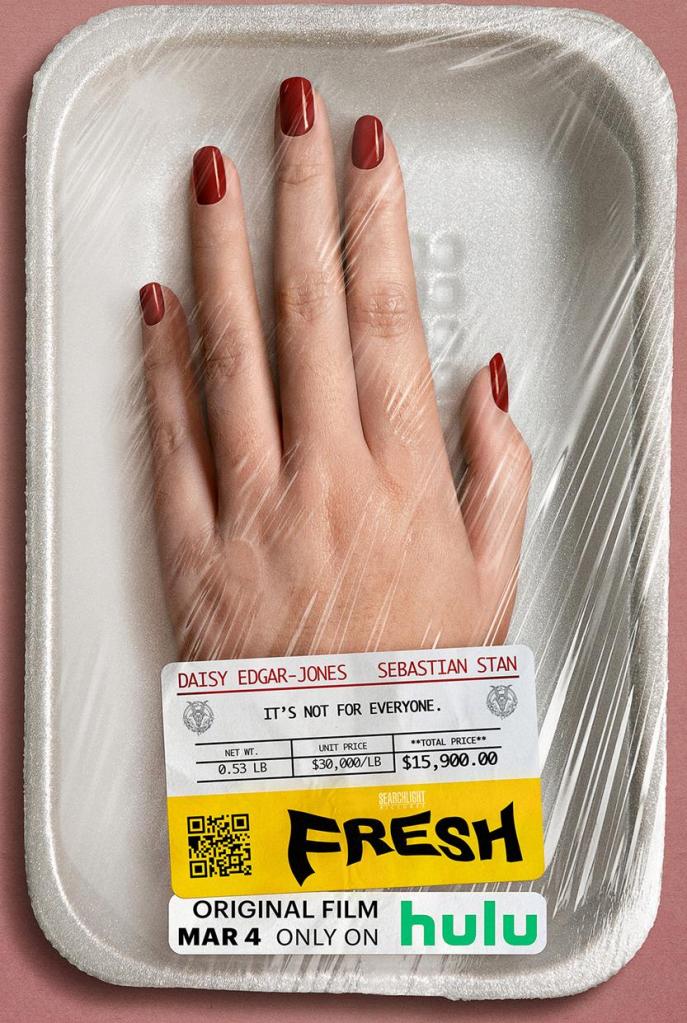
Take one part horror film, one part revenge thriller, a heavy dose of post-MeToo commentary, and a good helping of chemistry between two likable actors, and you have the perfect distillation of Fresh. First-time director Mimi Cave, working from a script by Lauryn Kahn, displays a nice confidence in the material, but lacks the discipline in a few key areas to make the film truly memorable. Nevertheless, Cave populates the film with Daisy Edgar-Jones and Sebastian Stan, two capable, charming actors as the leads, which goes a long way to making Fresh an enjoyable ride overall.

Continue reading Fresh – Movie Review

After Yang – Movie Review

After Yang

  • Director: Kogonada
  • Writer: Kogonada
  • Starring: Colin Farrell, Jodie Turner-Smith, Justin H. Min, Malea Emma Tjandrawidjaja, Haley Lu Richardson, Sarita Choudhury

Grade: A-

Kogonada’s sophomore feature further establishes the writer and director as a unique voice amongst new filmmakers. His 2017 debut, Columbus, explored how beauty can be found amongst the mundane, and After Yang contains similarly profound ideas. Specifically, the film is about preserving the memories of those we love after they’re gone. What will we remember about them? And what will they remember of us?

Continue reading After Yang – Movie Review

La Liste: Everything or Nothing: Interview with director Eric Crosland

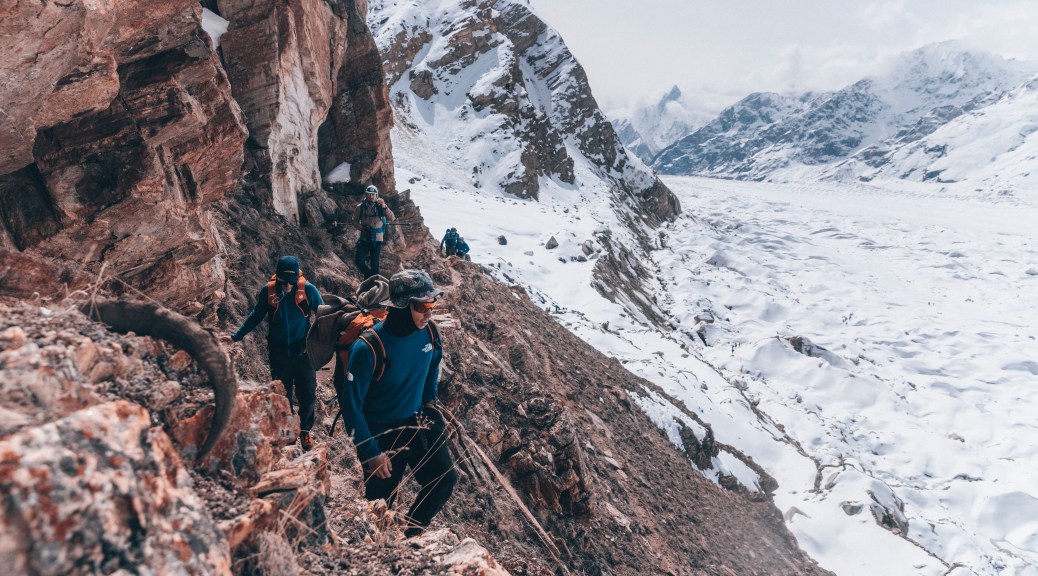
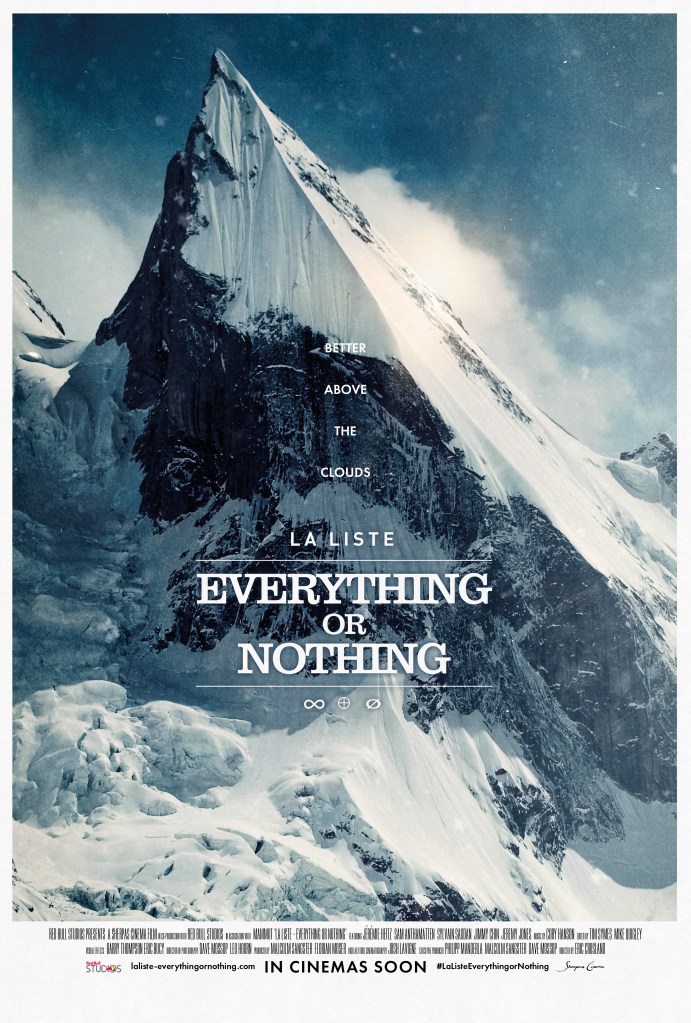
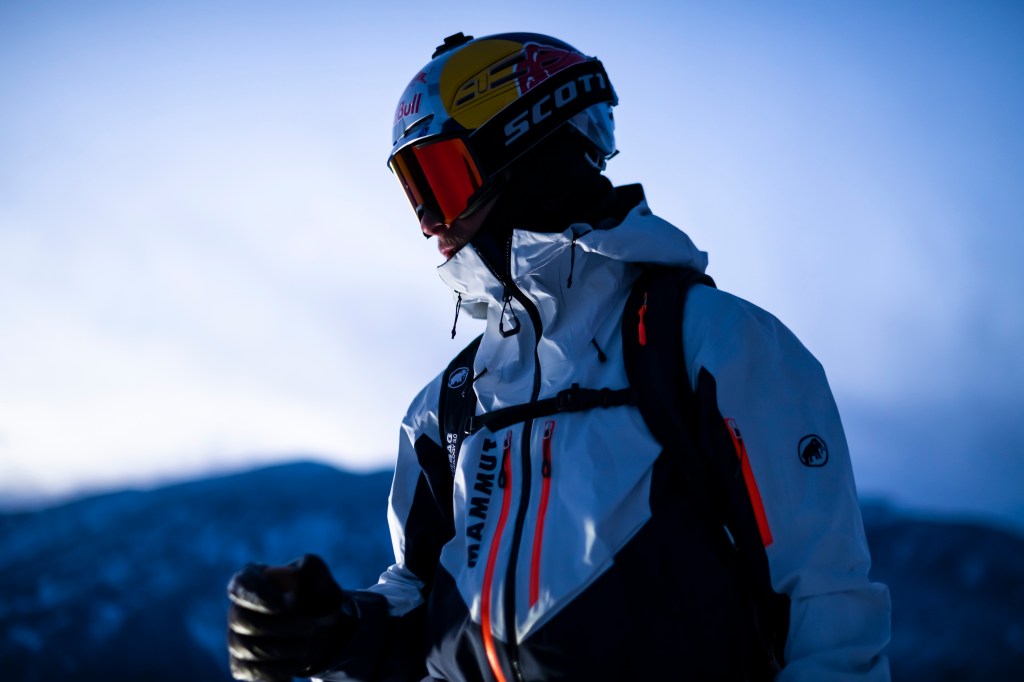
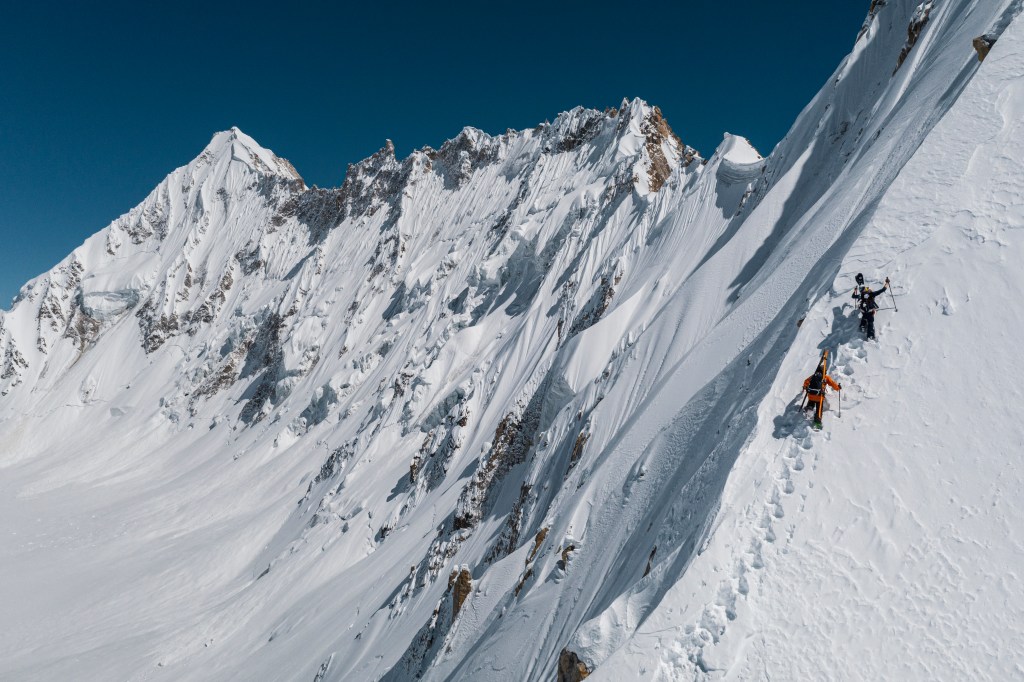
I recently spoke with Eric Crosland, director of La Liste: Everything or Nothing, a documentary chronicling extreme skiers as they attempt to conquer some of Earth’s most extreme peaks. Our conversation has been edited and condensed for clarity.

Ben Sears: What was the most difficult thing for you, logistically speaking, to shoot?

Eric Crosland: The most difficult thing was getting there at the right time of year. For the skiing to be the way these guys wanted it, to ski it really aggressively and fast, you really needed nice snow pack and really good outer skiing, and at those higher mountain ranges it only happens once a year for a couple hours, or maybe once every two years. So the hardest part was really knowing when to be there.

BS: How about from a technical standpoint? What was the most difficult thing about setting up the cameras?

EC: The cameraman – the on-wall cameraman who was actually climbing up to the summits of the peaks with them – that job was probably the hardest because they had to climb as well as operate the cameras They were bringing really small cameras and it was really hard to get good audio and cover the climb in a verite manner. It was so cold and you’re always catching up and they’re climbing quite fast, so that’s one of the most highly skilled positions.

We learned a lot about the drones as we went. The first time we went to Peru, we didn’t unlock them because they’re only set to fly 5,000 meters above your controller because of DGI and aviation rules. But you can hack it so you can fly it as high as you want, above the operator, so that’s what we did in the second and third expeditions; we went into the software and removed that restriction so we could fly it 6,000 feet above the drone operator and get much better shots. But it became really difficult to manage the battery because you burn almost 3 quarters of your battery just getting it up to the proper height, and then you have to get the shot and get it back down before it dies. And because of the cold, the higher you go, the colder it gets, so the batteries would degrade and get colder as you go up.

La Liste: Everything or Nothing

BS: I felt a lot of similarities in the film to Free Solo, where the filmmakers there were worried about Alex’s safety but still wanted to make a compelling film. How did you balance your desire to get good footage with making sure everything is safe and nobody gets hurt?

EC: As far as those guys skiing, and where they wanted to ski, and how they wanted to ski, it was completely up to them. It’s so much pressure on these expeditions, especially when you’re going deep into Pakistan where it takes 5 days just to get to base camp and 10 days from your house before you even see the mountain. Everybody’s feeling the pressure, including the athletes. It was something I really had to wrestle with and learn, to let them decide where and when they wanted to ski, and not give them any input because it would be too much if anything went wrong. You’d have to live with it for the rest of your life and it would be a horrible feeling. It was so dangerous, what they were doing, that you just had to let them make the decision. As far as them opening up to the camera and developing their characters, that was really difficult too because I feel like, coming from a couple guys who just made their own ski movies, they weren’t really as open as some other people would have been because a lot of the film was in English and there was a language barrier. I feel like that was a huge challenge, to capture the moments when these guys were really being themselves or actually making decisions.

BS: You’ve spent a lot of time in the mountains and have done a lot of commercial work in extreme terrain. Was there anything you learned while making this about skiing that you hadn’t learned before?

EC: Yes, I think I had always been told that there’s always so much pressure on the expeditions to come home with enough footage to make a sequence. So it’s always a struggle to enjoy the mountains while you’re there because you never know if you’re gonna get back. That’s something I didn’t do too much but I think I’ve learned more while I was editing the project and realizing that it would be really hard to get back to any of these areas, and try to separate yourself at least once a day and take it in. That’s always been the biggest challenge.

As far as skiing, I had no experience in these crazy Himalayan snow packs or where you’re really close to the equator [in Peru]. Just trying to figure out if the snow was safe or if there would be an avalanche, or if it was even skiable was a huge learning curve, just to see what snow was like in the biggest mountain ranges in the world.

La Liste: Everything or Nothing

BS: It’s ironic that this is being released during the winter Olympics. Are you watching that and thinking ‘that’s nothing’ or ‘that’s like amateur hour compared to what I’ve seen’?

EC: I have a lot of respect for athletes at the Olympics, obviously. It’s crazy how skiing is just syphoned into so many sub-genres like cross-country or big air or slopestyle or racing. It’s like cycling, so it’s really interesting to see how core each of those sub-genres can get and how they’re all part of the sport of skiing but each one can go so deep into their specific discipline. For me, I think skiing is a tool for exploring the mountains; that’s how it was developed, as a way of hunting in the mountains. It was a pure form of what we were doing but I appreciate all sides of it. But it is interesting to see the winter Olympics all on man-made snow in the middle of a desert. That being said, I think climate change is really changing the sport a lot.

BS: That was in the back of my mind as I watched the film. How does the climate crisis affect this sport? Will these athletes be able to do these big mountain expeditions ten years from now? Or are they even thinking that far into the future yet?

EC: I don’t think they are; I think that how climate change is affecting the mountains, from the snow pack, to the windows in which you can ski when it’s stable, it’s shortening, and the time periods are switching. Traditionally, all the big ski movies that you saw in the 90s and early 2000s were all made in the first or second week of April or last week of March, when the snow was consistently good that year for alpine descents. Now it’s in the middle of March and it’s maybe only a couple of days before it gets too warm. You basically have to go to places much longer and really hope you catch the window because there’s no consistency anymore. When it warms up, it warms up really quickly and it’s done, so it’s definitely made it way more challenging. You really get to see the differences after you do a bunch of winters in a row for 10 years or something, you can really see it changing.

La Liste: Everything or Nothing

BS: There were several potential setbacks throughout the film, from Mika’s injury to the difficult weather conditions. Were you ever worried that you wouldn’t get enough material after all of that?

EC: Yea, so many times I had people telling me I should shut it down and it’s not doable. Either someone’s going to die or you’re not going to make the movie. The Mika situation was the first expedition in the film and really affected everybody from there from a safety standpoint. For a long time we didn’t even know if we could use Mika’s footage because it was tied up in usage rights and other legal issues. And then COVID came and that paused us, and we ran out of money and we were basically working for free to finish the film, so we were going over insane hurdles to get it done. We always knew we could do it, it was just a matter of taking it one step at a time. I think Jeremie felt a lot of guilt for inviting Mika on that expedition and when that [injury] happened, he took that really personally, even though he caught Mika and saved his life. That really made him question why he wanted to ski 6,000 meter peaks. Then they hopped into Pakistan after that, which was insanely ambitious and dangerous, so we were on pins and needles the whole time right up until this past September to know if we could even make the movie. There were a lot of key issues and story elements that were up in the air until the last minute.

BS: Where do you see these big mountain free-skiing expeditions going from here, now that these guys have tackled these giant mountains? Is there anything bigger or better that they can do?

EC: Yea, I think Pakistan is insane because of how many mountains are there. It is the biggest and most beautiful mountain range in the world. Nepal steals a lot attention because it has Mount Everest but Pakistan has so many mountains that are above 7,000 meters and there’s so much unexplored skiing there. You could ski there for a lifetime, and nobody is skiing there. But they’re really dangerous mountains. The other place that doesn’t get skied very much is the Kluane national park in Canada – in the Yukon territories – which is where Mount Logan is. It’s virtually unexplored from a free-riding standpoint, but it’s really remote and hard to get to. There’s lots of zones, it’s just a matter of how much travelling you want to do to get to the bottom of the runs. There’s a lifetime of skiing in these mountains, but what’s stopped everybody before is just walking for 2 weeks just to even look at it.

La Liste: Everything or Nothing will release on VOD on February 15.

Inventing Anna – Limited Series Review

Inventing Anna

  • Creator: Shonda Rhimes
  • Starring: Julia Garner, Anna Chlumsky, Arian Moayed, Anders Holm, Laverne Cox, Alexis Floyd, Anthony Edwards

Grade: C

You’ve seen Inventing Anna before. In some form or another, this story has been told many, many times already. Of course, the specifics like the people involved and the setting are unique, but everything about Shonda Rhimes’ newest Netflix series suffers from being too familiar without having anything significant or new to say. Even the show’s tagline, which punctuates every episode’s opening – “What you’re about to see is completely true. Except for the made up parts” – feels like it’s been done before. Perhaps the best analogy to Inventing Anna is Scorsese’s magnum opus of American excess The Wolf of Wall Street, but without the “can you believe this is really happening?” bugnuts details.

Continue reading Inventing Anna – Limited Series Review

Pam and Tommy – Limited Series Review

Pam and Tommy

  • Creator: Robert Siegel
  • Starring: Sebastian Stan, Lily James, Seth Rogen, Nick Offerman, Taylor Schilling

Grade: B

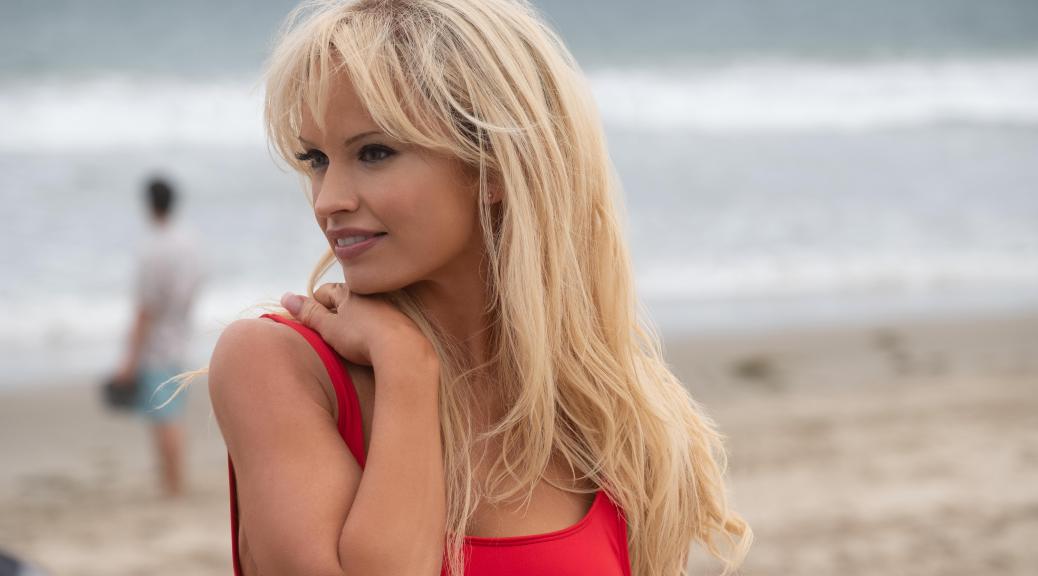
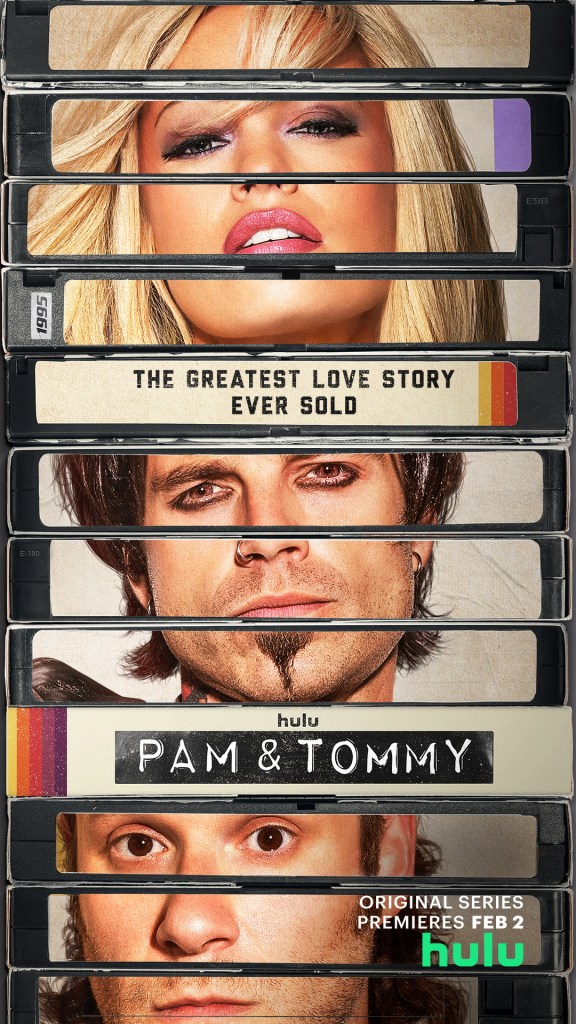
Color me surprised that, when browsing the full list of credits for Hulu’s new limited series, Ryan Murphy is nowhere to be found. Among his exhaustive resume as a writer, director, and producer, Murphy has become ubiquitous in the last few years, especially with his American Crime Story series, as re-investigating moments that broke through pop culture – particularly moments that painted certain people in negative lights without giving them their own platform. This recent phenomenon isn’t exclusive to Murphy, though, as podcasts (Slow Burn), documentaries (Framing Britney Spears), and more television shows (When They See Us) have made a big impact in the way we think about celebrities – in one sense of the word or another – and their often tarnished legacies. 

Continue reading Pam and Tommy – Limited Series Review

Made In Korea – Comics Review

Made In Korea

  • Writer: Jeremy Holt
  • Illustrator: George Schall

Grade: B+

One of the most interesting elements of Made In Korea actually comes after the story proper comes to an end. Not that creator Jeremy Holt’s latest is anything less than an engrossing, humbling narrative, but the graphic novel provides a fascinating outside perspective in its already expansive world. Throughout the course of the novel – a collection of the first 6 comics released in 2021, labeled as Volume One – Holt puts a fresh take on a familiar sci-fi conceit.

Continue reading Made In Korea – Comics Review

Saga: Chapter Fifty-Five – Comics Review

Saga: Chapter Fifty-Five

  • Writer: Brian K. Vaughan
  • Illustrator: Fiona Staples

Grade: B

Through sheer serendipity alone, I picked up the collected works of Saga at the start of this year and had finished reading the most recent issue earlier this week. Knowing absolutely nothing about the plot, much less its footprint amongst science fiction, I had mostly started reading because of the name recognition of its author, Brian K. Vaughan. I had devoured his Y: The Last Man series years ago and have remained a stalwart of his nuanced, thoughtful writing style.

Continue reading Saga: Chapter Fifty-Five – Comics Review