Writer: Bradley Cooper, Will Arnett, Mark Chappell
Starring: Will Arnett, Laura Dern, Andra Day, Bradley Cooper, Christine Ebersole, Ciarán Hinds, Sean Hayes, Amy Sedaris
Grade: A-
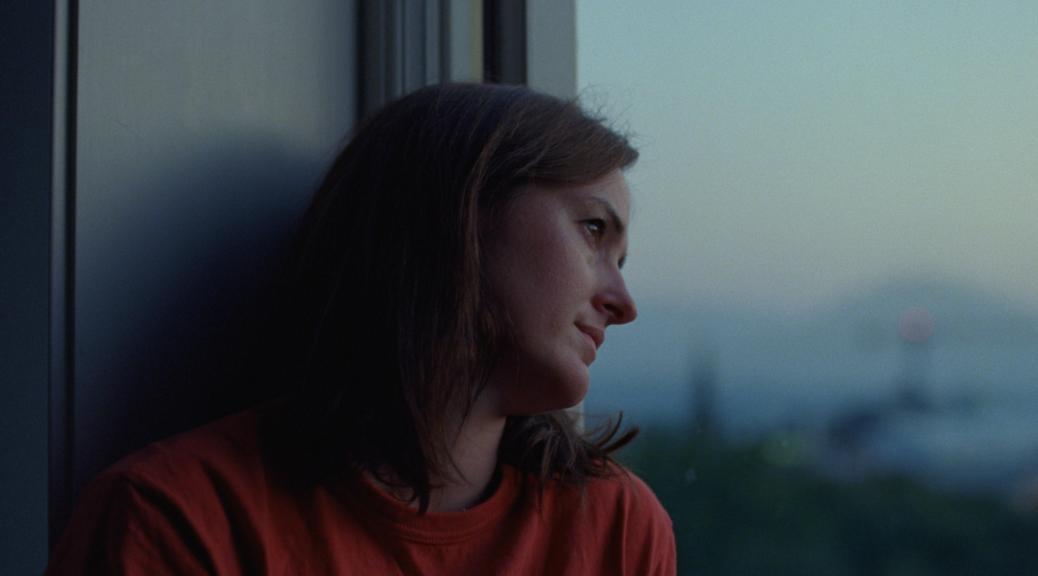
You don’t need me to tell you that tragedy plus time equals comedy. This is essentially the formula for Bradley Cooper’s third directorial effort, Is This Thing On?, and it continues the actor-director’s streak of simple but effective character studies. But, rather than leveling up his production budget, Cooper has chosen to scale back and create a more intimate, personal story that still caters to his sensibilities as a storyteller.
Starring: Renata Reinsve, Stellan Skarsgård, Inga Ibsdotter Lilleaas, Elle Fanning
Grade: A-
Beloved international auteur Gustav Borg (Stellan Skarsgård), the ersatz lead character of Sentimental Value, has written what may be his best, and possibly last, film, and he’s written it especially with his daughter Nora (Renata Reinsve) in mind for the lead role. For any actor, this would be seen as a no-brainer decision to gain some bona fide recognition. But Nora rejects his film, without even reading the script, and the remainder of Norwegian director Joachim Trier’s latest film presents an intriguing, nuanced look at why.
Starring: Joel Edgerton, Felicity Jones, William H. Macy, Kerry Condon, Clifton Collins Jr., Will Patton
Grade: A
In the entire history of the universe, since matter was first created, the time which humans have occupied on Earth has been microscopic. And the average life span of an average human fractures that already tiny number into an even smaller percentage. In other words, the modern world which you or I are seeing and experiencing is just a small bit of what’s come before and what will come after. This is, ostensibly, a review of Clint Bentley’s Train Dreams, the best film of the year, but because it’s a film that spoke to me on a deeper, more human level than any film in a long time, I feel it warrants a more philosophical and personal discussion.
Starring: Vahid Mobasseri, Mariam Afshari, Ebrahim Azizi, Hadis Pakbaten, Majid Panahi, Mohamad Ali Elyasmehr
Grade: A-
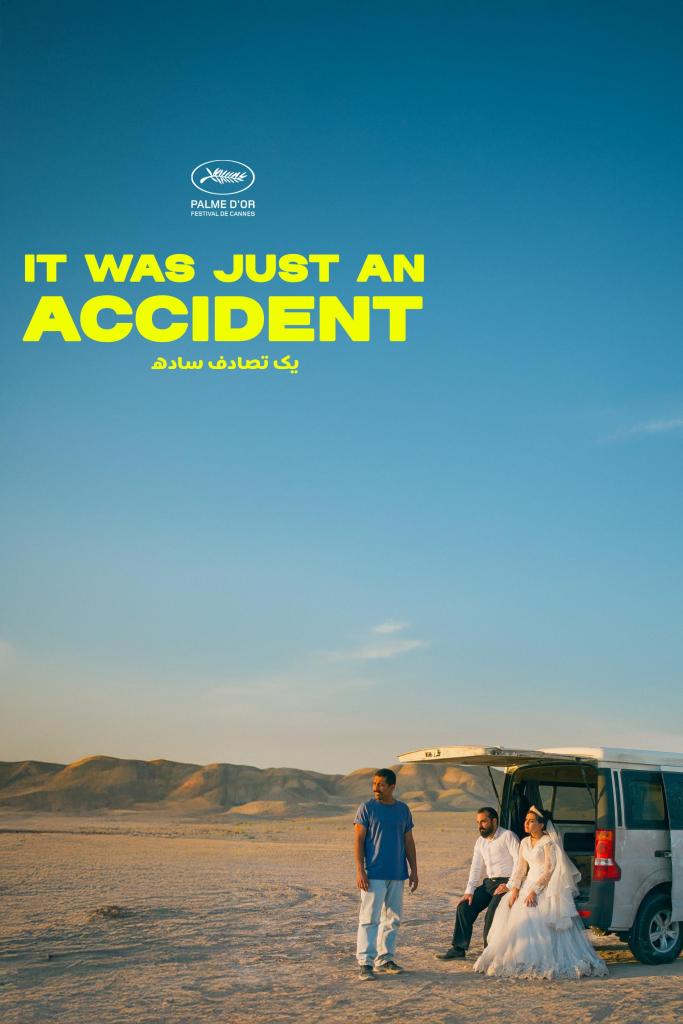
Getting any film made, even under the best of circumstances, is a small kind of miracle. For auteur Jafar Panahi, getting a film made under the Iranian regime is another kind of miracle entirely – not to mention an active act of resistance. Panahi has faced difficulties making films before (his last film, No Bears, was made while he was under house arrest). But It Was Just an Accident is as openly critical towards his government as possible, and presents a moral and existential quandary that anyone can relate to when living under fear.
It’s always nice to see actors challenging themselves after more family-friendly fare, and this is the case with Pearce Joza’s starring turn in Under the Lights. Viewers may recognize the actor from Disney’s Zombies franchise, but here he’s given the room to show his depth. Miles Levin, who writes and directs, expands on his short film of the same name, about a high schooler named Sam (Joza) with epilepsy who desperately wants to attend his prom. The story is full of mostly standard stuff, with Sam finding the courage, accepting his limitations, and finding his true friends, but Levin’s heart is in the right place.
The cast list is unusually stacked, with Randall Park, Nick Offerman, Mary Holland, and Mark Duplass making cameo appearances, plus Lake Bell playing Sam’s overly protective mother. Joza’s performance stands up to scrutiny, as he plays into Sam’s teenage naivety but bullish determination. After all, what teenager doesn’t feel deathly determined to prove their doubters wrong, regardless of their own potential health issues? I don’t know if any version of the film exists which scratches deeper beneath the surface, but Under the Lights is the kind of regional film festival title which comes and goes without much further investigation. Of course, it’s great to see accurate representation of little-seen disabilities on film, and Joza proves that he can easily break from the Disney mold, so Levin’s film is ultimately a mild net positive.
Another Heartland film featuring recognizable faces comes in the form of Elena Oxman’s Outerlands, starring Orange is the New Black star Asia Kate Dillon. The film is one of the few purely adult-oriented offerings at Heartland, as it explores a number of difficult topics without reservation. Though there are some rough edges in some areas, Dillon shines in a difficult role.
The film follows Cass (Dillon), a restaurant server who has a brief fling with Kalli (Louisa Krause), a new server with a shady past. Before long, Kalli asks Cass to take care of her tween daughter Ari (Ridley Asha Bateman) while she goes out of town for a job. Cass can barely take care of herself, but the added responsibility of a young girl who could care less about her or her problems. There isn’t much, dramatically speaking, to sustain the 100 minute runtime, but Oxman doesn’t go down unnecessary avenues, nor do characters behave like they’re in a movie. Outerlands may not be the standout film of the festival, but it’s not a total downer either.
Virtually every film festival, every year, contains some version of Adult Children, an indie comedy featuring overly qualified stars in overly written situations. Director Rich Newey’s still young career is full of Hallmark-esque holiday rom-coms, and screenwriter Annika Marks’ script sets up the major conflict – such as it is – not unlike those same films. Morgan (Ella Rubin) has to write a college application essay, but struggles for inspiration. The plot kicks in when her older half-brother Josh (Thomas Sadoski) relapses and comes to live with her and her parents.
Her other half-siblings Dahlia (Aya Cash) and Lisa (Betsy Brandt) have their own existential issues, but they come together to support him. The film succeeds more on the interpersonal relationships between them, and less when they’re on their own. Lisa is the type-A neurotic wife and mother in a loveless marriage, and now she’s dealing with a possible unplanned pregnancy. Dahlia is a directionless nude model between relationships, strapped for cash and needing a place to live. Josh is reeling from a break-up, but there’s not much more to him that this. Everyone is cast to perfection and Newey utilizes their strengths (Rubin is especially strong in the second half), but Adult Children plays out mostly how you’d expect once the plot is set up. There are dramatic contrivances between the siblings – not to mention the casual hostility towards sobriety and addicts – but there’s a level of nuance that comes into focus. In spite of its issues, I left the film mostly feeling warmer towards the interpersonal dynamics and performances overall.
Mistura is a film that’s easy to root for, and sometimes that’s enough to carry it through. It helps when, right off the bat, we learn that Norma’s (Bárbara Mori) husband has absconded unexpectedly with another woman and she’s left reeling. Sure, she has a decent home in Lima in 1965, but she has no prior ambitions and only has a limited amount of time before she’s left essentially destitute. Her only resource is to start a fine dining restaurant within her own home and dedicate it to her parents’ French heritage, recreating the dishes she grew up loving and hoping to spread that love to those around her.
Unfortunately that love doesn’t catch on quite so easily, and the restaurant comes dangerously close to shuttering. It’s not until Norma begins to take the advice of her staff, and they begin to adopt the cultures and cuisines of their own backgrounds, that the restaurant really takes off. Ultimately, Mistura is a safely enjoyable period piece that doesn’t challenge much but goes down smoothly regardless. Mori is steady as the lead, and her relationship and chemistry with right hand man Oscar (Pudy Ballumbrosio) is an unvarnished bright spot. The restaurant didn’t change the world, or Peru, and neither will the film, and that’s okay.
Admittedly, I watched Soft Leaves over a week ago, and not much has stuck with me in the intervening days. That probably says more about me than the film itself, but it’s a smartly assembled but sleepy film nonetheless. Writer-director Miwako Van Weyenberg’s feature debut film tackles a culture clash between a single family, and a little girl caught in the middle. When Yuna’s (Lill Berteloot) Swedish father suffers a serious accident, her estranged Japanese mother (who moved back to Japan after their divorce) moves in with her and her older brother Kai (Kaito Defoort) to take care of her.
Berteloot is the standout element of the film, playing a girl who’s wiser than her years but still innocent enough to made the occasional bad decision. Thankfully Van Weyenberg’s screenplay doesn’t insert drama where it doesn’t need to be, instead letting the cultural differences and the familial drama play out mostly naturally. Tristan Galand’s cinematography helps to add a wistful air of nostalgia, evoking the summer haze of foggy memories that may or may not be true. Soft Leaves won’t go down as the best film of the festival, nor is it the worst, but it’s hard not to wish it left a more lasting impression once it ends.
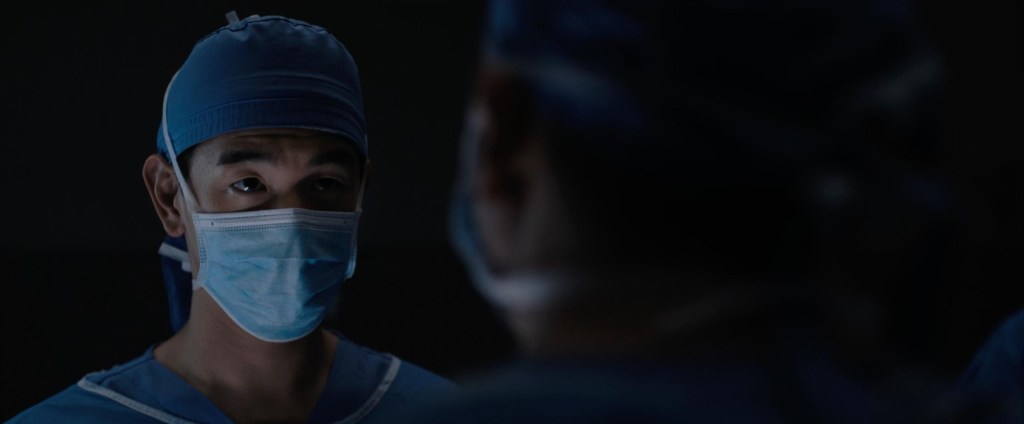
Let’s get the obvious out of the way first: Transplant feels, at best, like an updated version of Whiplash within the confines of a hospital. This isn’t necessarily a bad thing, as the stakes within the former are certainly more crucial (heart surgery) than the latter (jazz music). But first-time feature director Jason Park’s film lacks the same pizzazz and snappy magnetism that worked so well for Damien Chazelle. Thankfully Park has enough to offer, including a subtle commentary on race and assimilation, that it doesn’t feel like a completely empty endeavor.
The film concerns Dr. Jonah Yoon (Eric Nam), an ambitious resident who has his eyes set on a heart transplant fellowship at his hospital. But he has to work under the tutelage of Dr. Harmon (Bill Camp), a renowned surgeon who has a contentious relationship with his staff, and it’s on full display during Jonah’s first surgery with him. Throughout Transplant, the two go back and forth, as Harmon gaslights and needles Yoon beyond his comfort zone, always escaping responsibility or blame. Throughout all of this, Yoon has to care for his mother (Michelle Okkyung Lee), who’s suffering from cancer and has nobody else to take her to and from chemo appointments. Camp has made a career out of supporting character turns, but he takes full advantage of the spotlight here, and Nam carries the film well enough when it focuses on him. At only 94 minutes, the film hums along nicely and knows when to hit the dramatic beats effectively. But the ending comes a little abruptly, even if it is ultimately cathartic. Much like Chazelle with his debut feature, Park could have an exciting career to come after Transplant.
Below is my conversation with Lauren Z. Ray, the director of Winter Fantasy, a documentary about the small town of Logansport, Indiana, and the theater program that forms a kind of backbone throughout the community for its young artists. The film is making its World Premiere at the Heartland Film Festival. We discuss her thought process behind inserting herself in the film, the universality of small-town theater programs, and life in the arts post-high school. Our conversation has been edited and condensed for clarity.
Ben Sears: Logansport is such a unique place, and the film really captures that nicely.
Lauren Z. Ray: That was part of the goal. I always wanted to showcase Winter Fantasy, but I wanted to make this film very Logansport and very Hoosier as well. I kind of had this bucket list of items that I wanted to include, whether it’s a quick B-roll shot or a scene, just to give that texture and vibe to everything. In Indiana, I always think they have fantastic sunsets, so I wanted to include that, or a bonfire, which were very special to me when I was growing up.
BS: Did you have a goal in mind when you first conceived of the film, besides featuring the program? Did the story change at all throughout production?
LR: Totally, the initial idea was a micro-doc, under 20 minutes. I just wanted to showcase what Winter Fantasy is, and that’s it. But I hadn’t really been back to my high school, or talked to anybody in 10 years. But upon arriving, as I started setting up interviews and going through all my old things, I didn’t even really think of myself at first, but I started getting nostalgic.
My first interview is with the manager of McHale, and after that interview, I wanted to just explore everything with high school and Winter Fantasy, so I went through everything in my bedroom. That’s when I realized how much of my story needed to be included in this story in order for it to make sense. From there, I also wanted to include the stories of people who went on to become professionals after going through Winter Fantasy. Every documentary I’ve done is like detective work, it’s journalism. You learn more about the story through the interviews you do; it became a lot longer in the process of all the interviews and learning everyone’s stories. I initially wanted it to be just about Winter Fantasy, but it ended up being about my acting career, Winter Fantasy, and all the decades of people who have done the show.
BS: It’s interesting that you never even considered inserting yourself into the story because it helps to ground the story through your eyes.
LR: That’s how it felt at the time. It became more of a first-person documentary, which I had never done before. That really challenged me because I didn’t know how I could make it happen. Normally I’m the one behind the camera, so I knew I’d have to allow someone else behind the camera and help them to understand my vision. I hadn’t seen too many first-person documentaries, so I watched a lot, and I had to learn how this style is done. It was definitely a big process.
BS: You stay focused on Logansport and this specific program, but do you see this program as a microcosm of similar small town arts programs? Do you think there are similar stories like this across the country?
LR: I think so, I think it’s totally relatable. I remember when I did my first documentary, which was about a small town in Indiana, and I thought ‘this town’s really quirky and unique.’ And then everyone who saw it had a relationship to a small town across America somewhere, and it was relatable to a lot of people, even if they weren’t from this particular town. I think with this one, it was the same thing. People had either gone through their own musical theater program, or someone they knew went on to become someone from their theater program. Any time I’ve explained to someone what I was working on, people say they relate to it and they tell me stories about their programs, or their experiences with it. People totally understand that theater kids and staff tend to be very quirky by design, so I definitely think it’s a relatable topic, even though it’s just about Logansport, Indiana.
BS: You also have, later in the film, the experiences from you and your friend in Chicago, and the struggles with finding work in the arts after high school. Was that another avenue that was unplanned as well?
LR: Yes, actually, I was hoping I could get a hold of Dannie Smith. She didn’t know who I was, but I knew who she was because I went to all of her Winter Fantasy shows. I was absolutely obsessed! [laughs] I had never met her before, and the conversation we had on her couch was so crazy because of how similarly our stories had aligned. I had no idea, when I had called her initially, that she had retired from acting; I thought she was still acting. To learn that it was for similar reasons to me was really interesting.
BS: A development like that could be seen as a kind of mood killer, but in Winter Fantasy, it’s kind of hopeful, and a celebration of theater, and what people can do when they work together.
LR: I think a lot of people can relate to that as well. I know a lot of people that pursued theater after high school but couldn’t find any success, so I hope they can find something relatable in that. I think, accidentally, I always try to make my stories a feel-good story of some type. Those are the types of stories that I prefer to see, myself.
BS: Have you shown the film to the Logansport community at large yet?
LR: I haven’t. I’m very excited to do that, though. In January of this year, literally a week after I had finished, I had the cast come and see the film. Heartland is taking place during the school’s fall break, so that didn’t work out for them to screen it. But on November 8th, I’m going back to Logansport again, and I’ll do a public screening at McHale auditorium. I’m very excited, and this year’s Winter Fantasy is the following weekend, so I’m hoping it’ll hype up the town to show up and support that show this year.
Winter Fantasy will have in-person screenings at the Heartland Film Festival in Indianapolis, and will be available to stream online throughout the festival.Buy tickets here.
Starring: Aziz Ansari, Keanu Reeves, Seth Rogen, Keke Palmer, Sandra Oh, Stephen McKinley Henderson
Grade: B-
Actors becoming directors has become a more common trend in recent years. With Scarlett Johansson’s debut film, Eleanor the Great, releasing only a couple weeks ago, and Bradley Cooper set to release his third feature, Is This Thing On?, in December, actors have been inspired by their on-set experience to direct their own movies. Aziz Ansari is the latest actor-turned-director with his film Good Fortune, an absurd comedy that nails the current state of America.
Below is my conversation with Travis Wood, Alex Mallis, and Weston Auburn. Travis and Alex serve as the directors of The Travel Companion, and the two wrote the screenplay along with Weston. The film is an indie comedy making its Midwest Premiere at the Heartland Film Festival about a pair of long-time friends and the chaos that comes when a romantic interest enters their lives. We discuss how the duo began working together, the real-life parallels that inspired the story, and the logistics of filming in airports. Our conversation has been edited and condensed for clarity.
Ben Sears: Alex and Travis, you both did a short film together, but this is both of your first times directing a feature. How did you come together on this, and what was the process like co-directing a film? Was it any different than making a short film?
Alex Mallis: We came together when we were part of a filmmaking collective called Meerkat Media, and we started making shorts together, and I think we just have a similar mentality and desire to be improvisational. Ultimately, one thing that I was attracted to about Travis is he was down to just do it. With any artistic process, there’s always hurdles, either existential or self-made creative hurdles, and Travis had this energy about him and I really appreciated that. We both came from skateboarding and this DIY practice, and we were just hanging out at a film festival and he was telling me that he was potentially going to lose his flight benefits because his buddy, who works at an airline, got a new girlfriend. So that was the launching point for this project, and more generally, we were both at a place where we thought ‘let’s do this’. It really synced up, and pretty quickly, Travis introduced me to Wes, and it all came together pretty quickly.
Travis Wood: I think it all came pretty natural. We didn’t sit down at a table and say “here’s what co-directing looks like.’ We were both very invested to make this, and we both just had that same energy to get it done. It’s like a natural dance and we’re usually pretty aligned to think of what works.
BS: Travis, it sounds like one of the characters was kind of a proxy for you; did you write that character from your perspective, or did it require some input from both of you?
TW: I think the general framework was certainly inspired by my life, but when we got to writing it, we were all three just telling each other different stories about life experiences and jobs that we’ve had. I feel like we just made an amalgamation of our experiences and put those into each character. Simon’s (Tristan Turner) day job was inspired by Alex’s job of filming taxis, and then there’s Wes’s day job and dealing with bosses and an advertising environment.
Weston Auburn: I would also say that Travis is way more chill than Simon is. He has a much smoother way of operating than what Simon does.
BS: You filmed a few scenes in airports and on planes. Was it difficult, logistically speaking, to get access to those airports, or were there a lot of regulations to go around?
AM: You’d be surprised, our airport footage was broken up into two sections. The more locked-down, dialogue heavy scenes were filmed at the West Chester airport in upstate New York, and that was a negotiation with them, getting permits, and it was all pretty straightforward. But the more montage-y footage was all filmed at JFK in New York City. That was basically just me and the actor. I had a fully refundable ticket in order to get through security, a small camera, and a gimbal, and we started shooting some sneaky shots. By the end of the four hours we spent at the airport, we were running full speed through the terminal getting shots. Turns out that, once you’re through security, it’s kind of a utopia where you can do whatever you want. Nobody blinked an eye, security didn’t look at us, nobody seemed to care what we were doing. In the age of influencers and travel bloggers, I think they assumed that’s what we were doing.
The only person who approached us was another filmmaker. He ended up PA’ing for, like, two hours. [laughs] I was sprawled out on the ground, trying to balance the gimbal, and he came up to me and said ‘hey, can I help you?’ Pretty quickly, he was carrying batteries and extra bags and running interference. He was the only person who noticed us.
BS: Tell me a little about how you landed on casting Tristan and Anthony [Overbeck].
TW: I think Anthony was an early person we had in mind. He’s very much in the independent film scene like this. We reached out, he sent an awesome tape, and I think he was the first person we had locked down. Tristan was a pretty big search; we worked with an awesome casting director, Alan Scott Neal. The film was non-union, so that limits your pool, and you have to find a new path. With Tristan, it was like, this dude totally could be an experimental documentary filmmaker, he just had that look.
BS: They believably play friends who have known each other for most of their lives. Did their chemistry together come naturally?
AM: They briefly met during the casting process, but their acting styles just came together and it was very natural. I think Tristan’s background is a bit more by-the-book, and I think it all felt really natural from the first take. It wasn’t something we even had to navigate, it was almost instantaneous.
TW: We had a really fantastic AD, and she read the script and understood it so she was able to create a schedule that allowed us to create a level of intimacy that they needed to express. They were able to build up their relationship during the shooting process, so by the time we got to more heavy, intimate scenes, they were able to do that even better.
WA: We also should mention Naomi Asa, who crushed her scenes, and we were super fortunate to have found her. She’s a bit of an undiscovered talent who acts during her free time.
AM: She was fantastic. All of our actors, we were super fortunate to find because of our tiny budget. We were squeezing every ounce of juice out of the lemon, so to have everyone ready every day so that we didn’t have to exert any energy making sure they understood what was going on. I really respect them for that.
BS: To talk about the meat of the film, what do you think that the flights that Simon gets ultimately represent to him? Is it a way for him to hold onto his friendship with Bruce? Is it simply a way for him to get out and travel the world and escape his dead-end life? Does he actually see it as a way to get his project made, or is it something else?
AM: I think we discussed that a lot throughout the writing process, and shooting and editing. I think it’s all of those things. On the one hand, it’s a very practical, very incredible resource that anybody would love. Free flights, and making a travelogue, those go together extremely naturally, and to potentially lose that benefit would be devastating. And then at the same time, it’s representative of this untapped potential, like when something is still a possibility in your head, it can feel calming. The imperfections haven’t shown up, the shortcomings haven’t shown up, so I think for him the flights give him a creative purpose.
The flights are also a connection to his best friend, and he and Bruce (Overbeck) met a long time ago, and though their lives have started to diverge, the flights are like this glue that binds them. Simon maybe doesn’t see that explicitly, but he starts to wonder, if they don’t have these flights, then what are they to each other? It’s this central piece of their friendship, and when that starts to come into question, he feels frantic, even if he doesn’t quite understand what’s happening, he does understand on an emotional level that the careful balance of his life is being threatened.
TW: I think, even in real life, I didn’t realize until I was about to lose them how much of an actual thing they were to me. When you have a successful film, for example, it’s something to talk about in a conversation. But, especially in Simon’s case, it’s a crutch to lean back onto. If you can’t talk about the film, you can at least talk about that time you went to Tokyo.
BS: Travis, since this is based, at least partially, on your experience, was it difficult to write that character and uncover some uncomfortable truths about yourself?
TW: I’ve had this friend who works at the airline for 10 years, and I know him well enough to have both sides of the conversation. In real life, it was not a thing at all, so it was actually really fun to explore those conversations and take it to this extreme. Even early on, when he started dating someone, I wondered ‘does she like to travel? Maybe I should keep it’, so it was nice to have an outlet to process and see those things through like an alternate universe. It was a good coping mechanism, if nothing else.
BS: The film skewers the independent film world, but it never feels like it’s mean-spirited. Was it difficult to strike the right balance of parody without making it seem too cartoonish?
AM: One of our guiding principals while writing this was that it has to feel real and grounded. I think with comedy, that’s a decision you can choose to accept or ignore. For us, we wanted it to feel lived-in and real, so that informed the type of comedy that we tried to incorporate.
TW: I think it was a little easier to write, too, because we are all these independent filmmakers, chatting with other filmmakers, and going to screenings. A lot of that stuff is really present for all three of us; I don’t think we had to dig too deep to find those moments that are both true and funny.
The Travel Companion will have in-person screenings at the Heartland Film Festival in Indianapolis, and will be available to stream online throughout the festival.Buy tickets here.
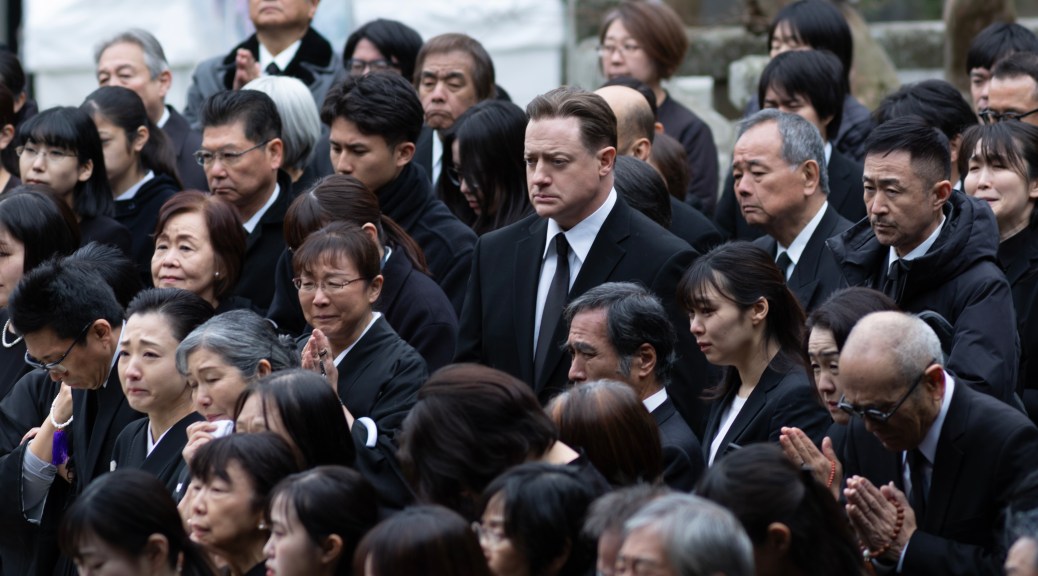
There are over 300 companies today throughout Japan employing actors, not for film or television roles, but as ordinary people helping other ordinary people to get through the day. Rental Family explores the almost too bizarre to be true phenomenon and the emotional toll it takes from both sides. It’s a slam-dunk premise for a weepy dramedy, but director Hikari’s film is too unfocused to be as resonant as intended.









 The Movie State