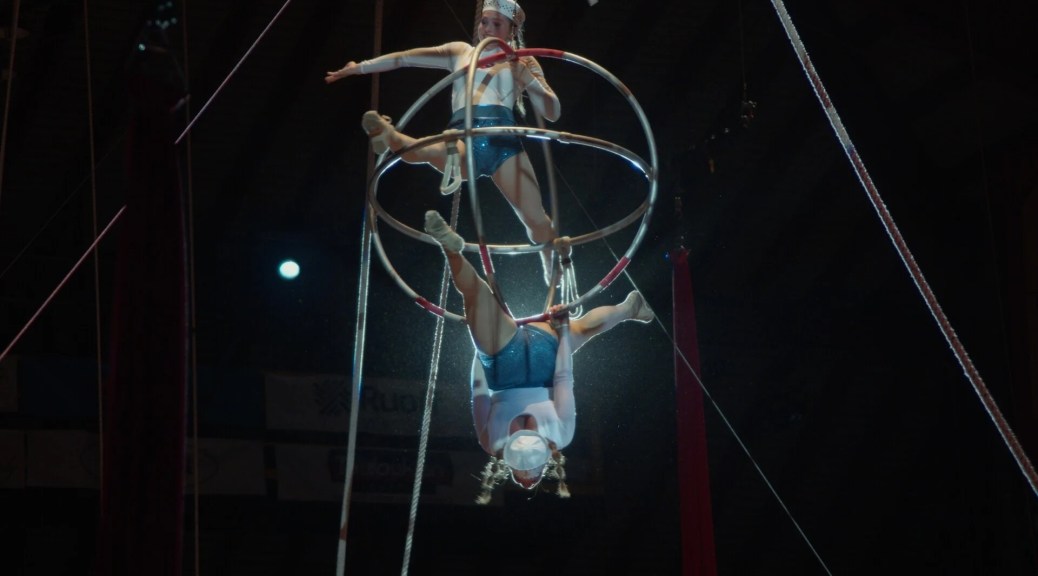
Every small town has its quirks, and The Amateur Circus is an exercise in showing the civic pride that one small town has in its long-standing tradition. That is, the titular circus, run exclusively by amateurs every year in Peru, Indiana. There’s nothing particularly special about the circus – there’s no death-defying stunts or animals or stage acts that couldn’t be seen in a professional circus all across the country. But first-time feature director Erik Thein goes out of his way to show just how dedicated the citizens of Peru are in putting out the best show possible.
From single digit-aged kids to grown adults, there’s an enthusiasm felt for the town circus, and we frequently hear, through Thein’s interviews, that families often pass down that enthusiasm from generation to generation. The Amateur Circus is a film of two halves: first, it depicts the town’s parade in anticipation of the opening night, and second, it shows the opening of the circus. Perhaps the film would be better served if it had touched on life in Peru outside of the circus, showing how dependent the town is on its financial windfall. Based on the film, you might walk away thinking anyone and everyone within Peru dedicated their entirely livelihoods to putting the show together. But at only 65 minutes, the film aims for positivity first and foremost, and if it enlightens even one person to what a dedicated group of individuals can do together, The Amateur Circus is a success.
There’s an inherent messiness at the heart of Finger Laced Crown; some intentional by its writer-director Brandon C. Lay, and some unintentional. What is intentionally messy is the love life of our protagonist Lemon Drop (Torez Mosley), a proudly bisexual spray paint artist who has trouble staying committed to one romantic partner. Some of this is tied up in trauma from a recent ex, Nadine (Syd Stauffer), a married woman who didn’t reciprocate Lemon Drop’s feelings. It probably doesn’t help that Lemon Drop’s mother is an alcoholic who has to rely on her daughter to take care of her financially and physically.
Where the film gets unintentionally messy is in its overall structure and lack of thematic elements. A bizarre portion of the first act relies on Lemon Drop (yes, that’s her government name) explaining what an NFT is, and how she relies on them to sell her art. Never mind the fact that her spray paintings, mostly pseudo-abstract neon sunsets and moonscapes, look like something you’d see likely see on Pinterest or Etsy, not a high-end art gallery. If there is a connection to be made between Lemon Drop’s life as an artist and her love life, Finger Laced Crown struggles to make it. Mosley’s performance is admirable, especially in the flashback scenes showing how her tryst with Nadine began, but the film dries out when its occasionally meandering plot develops. There’s an interesting story to be found with these characters, but it’s currently more like a rough sketch than a finished masterwork.
Midwinter presents a decidedly adult story of love and betrayal by inter-weaving characters with a shared past. Writer-director Ryan Andrew Balas focuses on parallel storylines between Nadine and Jack, a husband and wife (played by Marlowe Holden and Chadwick Sutton), and Mia (Julia D’Angelo), a musician, and Lena (Charlie Traisman), a songwriter hired to help Mia with her next hit. Relationships get more complex and complicated, and loyalties begin to blur – especially when Nadine gets sick and can no longer keep up with their young son.
Here is an independent film unafraid to discuss open relationships/polyamory, and queer love, without resorting to easy stereotypes or quick understandings of characters. Though the film sometimes leans a little too heavily into its indie trappings, including a mushroom trip between Mia and Lena, there are solid performances all around and Balas directs the film with visual flair. Midwinter offers a number of thoughtful conversations about heartbreak, love, and hope, and how those seemingly opposed ideas can often intersect, and it’s one of the best films of Indy Film Fest.
Starring: Daniel Kaufman, Jim Lujan, Maureen McElheron
Grade: B-
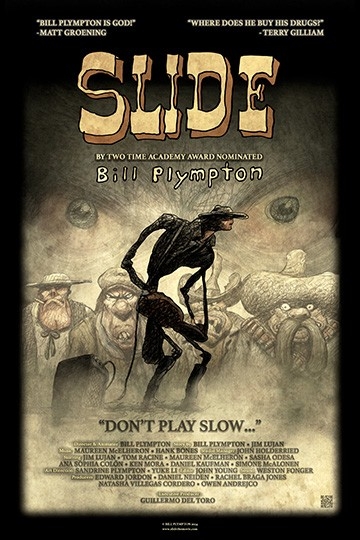
Animation is a personal favorite medium of filmmaking for many reasons. The way it is able to capture the magic and imagination of filmmaking without any practical limitations has been the basis of many of my all-time favorite films. It pushes the limits of filmmaking as an art form. While it may not be a new favorite of mine, Slide reminds me of why I love animation so much.
Starring: Josh Bywater, Angela Morris, Timmy Hart Barron, Laura T. Fisher, John Lister
Grade: B-
Family knows the best ways to love, but they also know the best ways to hurt. In Never Not Yours, directors John Klein and Steve Kniss utilize the idea to present a family in crisis. Or perhaps, like most families, there was always a crisis unfolding, but nobody wanted to acknowledge it. Though large parts of the film will feel familiar and, at times, predictable, Klein and Kniss know how to dig into the roots of the characters they’ve crafted, and that goes a long way in making the film enjoyable.
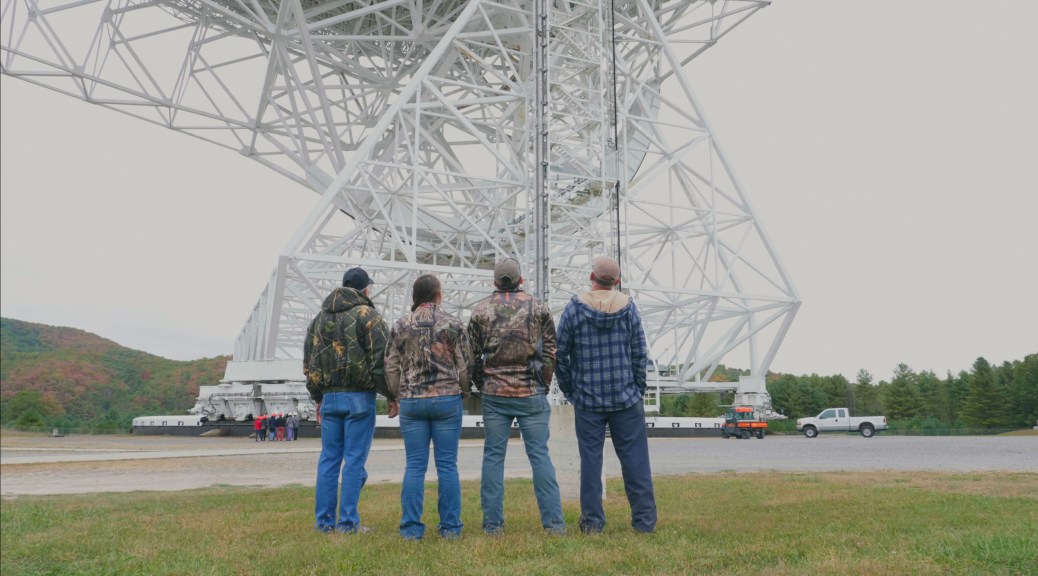
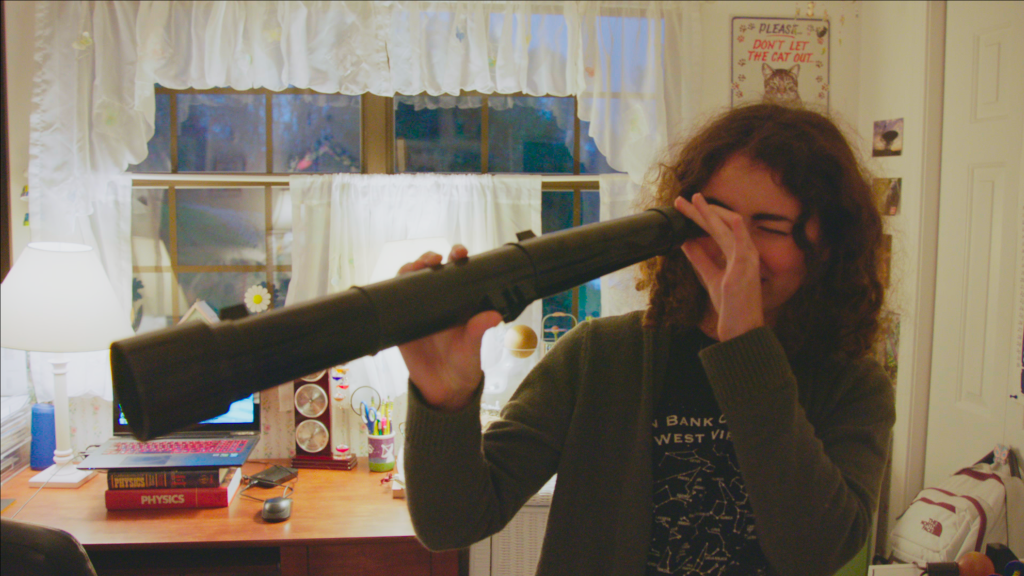
Below is my conversation with Katie Dellamaggiore, the director of Small Town Universe, a documentary about a small town in West Virginia, where cell phones and wireless internet are forbidden. But beyond the quirky origins of the town, the film explores the people within it, and their reliance on the funding that makes the space telescope possible. The film is making its Indiana premiere at the Heartland Film Festival. We discuss her origins with the project, the state of science in America, and belief in extraterrestrials. Our conversation has been edited and condensed for clarity.
Ben Sears: With any documentary, I’m always curious about how you initially came across the subject matter. So what was it that got you interested in making Small Town Universe? Do you have a personal connection to the town?
Katie Dellamaggiore: Actually, I had no prior relationship to the topic. For better or worse, I didn’t get much of a science education when I was younger. My husband, who’s my filmmaking partner, he’s very much into science fiction, like Star Wars and Star Trek. So I didn’t have that background going into it, but I think that’s probably why I was somewhat attracted to the story. Because it’s fun to learn something as an adult, making a film about a subject that you didn’t get a chance to learn about when you were younger.
In 2015 or 2016, I had just finished a film called Brooklyn Castle, and we had just had 2 kids, and my mom had died that year as well. But one night, my husband and I were chatting, and I asked, ‘do you think there’s a town with no cell phones?’ It wasn’t really clear to me at the time, but I was addicted to my cell phone, and it was the ramp up to the election. I had two babies at home but wasn’t getting out of the house a lot, and I think I was missing my mom a lot and her phone calls. So I googled it, and that’s how Green Bank, West Virginia came up. I couldn’t believe it! As I got more excited about the topic, it just evolved into something more than that. At the beginning, I thought maybe there could be a story about the fact that there are no cell phones, but it became more interesting to tell a story from the point of view of how the science was connecting people in the town.
BS: One of the segments of the documentary is about the people who move there specifically because they have the Electromagnetic Hypersensitivity. Did they have any kinds of reservations around you filming with them? Did it take any convincing to get them to be part of this?
KD: It’s interesting, because when I did that initial google search, a lot of the videos were news pieces that tended to hyper-focus on them because it’s kind of sexy and gets clicks. Some of them were desperate, for good reason, to want to tell their stories. Sometimes, maybe they weren’t aware that people were taking advantage of them, but they were very open because they want to be heard and have their story told. So I’d say there wasn’t a lot of trepidation because they wanted to get the word out. That being said, it was really important for me to figure out how to tell this story without having it ever feel like some sort of “gotcha” piece. It’s not my job to figure out the science behind this.
Sue, the person we ended up filming with, we hit it off because we’re both from New York. There was just an instant connection, and she was really happy to share her story. There wasn’t a lot of trepidation, but I think I felt like it could easily go in a bad direction. They will tell you that there are members of the community who maybe shouldn’t be on camera. So I just chose not to film with them. But it made me really happy, and they’ve all seen the film, and they’re really happy with it because there’s not much worse than having the subjects not feel good about the end product. The film isn’t about specifically their issue, so I’m happy for them to use it as much as they want. But Small Town Universe isn’t out there trying to convince people that cell phones are bad.
BS: Were there any technical limitations that made it difficult to shoot with them?
KD: The whole town, actually. For the majority of the time, we weren’t allowed to use wireless microphones. It wasn’t just Sue, but it was part of the rules that existed in Green Bank. Whenever we were filming in and around the telescope, we had to use a boom microphone. Not just a boom mic, but it had to be plugged into the back of the camera. So we had to make really small movements and couldn’t get far away from the action. It kind of challenged the way that we captured things. We were always really close to everything that was going on.
Looking back, we have some B-roll of wide shots, but the action was never happening in a wide shot. We always had to be right next to people, so that added some intimacy, but it was really because we had no choice. If we were really far away from the subject, we wouldn’t be capturing sound and I’d have no idea what was going on.
BS: When you first started filming, did you have a set idea of who you were going to follow, or did that change as you got more oriented into the town?
KD: My first trip to Green Bank, I went by myself as a research trip. I met George on my first trip, and then I met the folks who worked at the telescope and a woman named Karen early on. There were a few people I wanted to film with, and it didn’t pan out. Within a year of going down there, I met Ellie and her family, and Sue.
BS: One of the recurring questions that comes up throughout Small Town Universe is whether anybody believes in extraterrestrials, or life on other planets. Did you believe in that before shooting the film, and did that change all once you were done?
KD: I didn’t really think about it much before I started working on this. If you had asked me, I’d probably say ‘yea, I hope so!’ But like I said, I wasn’t the person who devoured a lot of content about it. My husband watches stuff like Ancient Aliens [laughs], but that wasn’t me. Now, I think, how can you believe that there’s not? Or at least scientifically speaking, when you understand the science behind it, there’s nothing kooky about it at all. I’m all-in about the Dirac equation now, and I just think that, as a species, there’s nothing better than continuing to challenge what we think and what we know. That’s what science is, and the science of extraterrestrial life is, like, a constant search for something that we don’t know the answer to. I think that just makes us better human beings, to not stop asking.
BS: Part of the backbone of the film is how the American government treats science as a priority. Did making this film change how you view our prioritization of science and exploration?
KD: It doesn’t appear that it’s a priority right now. I’m not an expert on this, but I think we tend to prioritize things that make money. Basic scientific research often doesn’t make money, so what’s wonderful about this telescope is that they have this program called Open Skies, where anybody who has an idea can apply for time on the telescope. So when federal funding gets taken away from something like this, that’s the thing that goes away first. For this facility to remain open now, from the National Science Foundation and Breakthrough Listen, it’s great, but it’s not a big government priority. Any kind of space exploration today is being funded by billionaires, for better or worse.
Small Town Universe will have in-person screenings at the Heartland Film Festival in Indianapolis, and will be available to stream online throughout the festival.Buy tickets here.
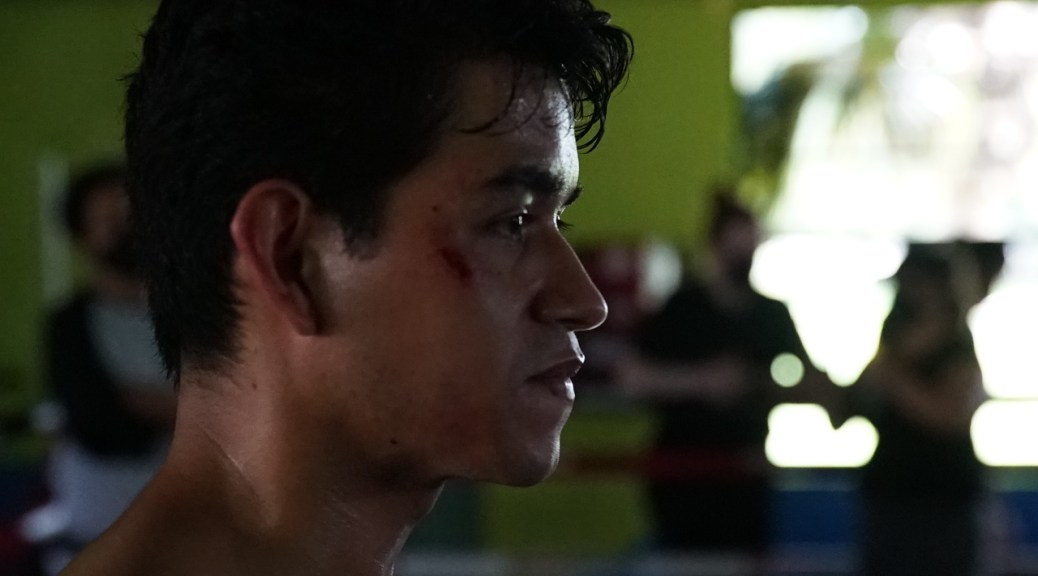
Starring: Germain Arroyo, Victor Rivers, Marisa Davila, Brody Wellmaker
Grade: B
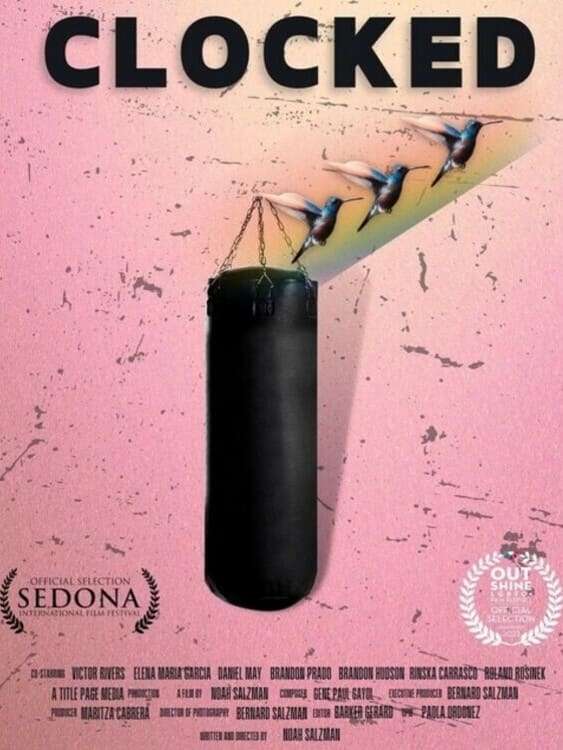
This year’s Indy Film Fest has previewed a variety of coming-of-age films. Movies like Last Days of Summerand No Right Waypresent an original take on the familiar genre by shedding light on unfamiliar territory. Clocked is another film in this genre as it shows the struggles of growing up through gender and sports.
Starring: Ava Acres, Chelsea Bo, Eliza Coupe, Sufe Bradshaw
Grade: B
There are plenty of films about the relationship between a young adolescent and older adult figure, with one of my favorites being 2021’s C’mon C’mon. There’s something about this slice-of-life format that’s always such a joy to experience. Seeing two unlikely protagonists bond over their shared issues is constantly heartwarming, no matter how many times it’s portrayed on film. While the structure of No Right Way parallels similar films of the genre, this edition brings a newfound perspective that feels extremely fresh.
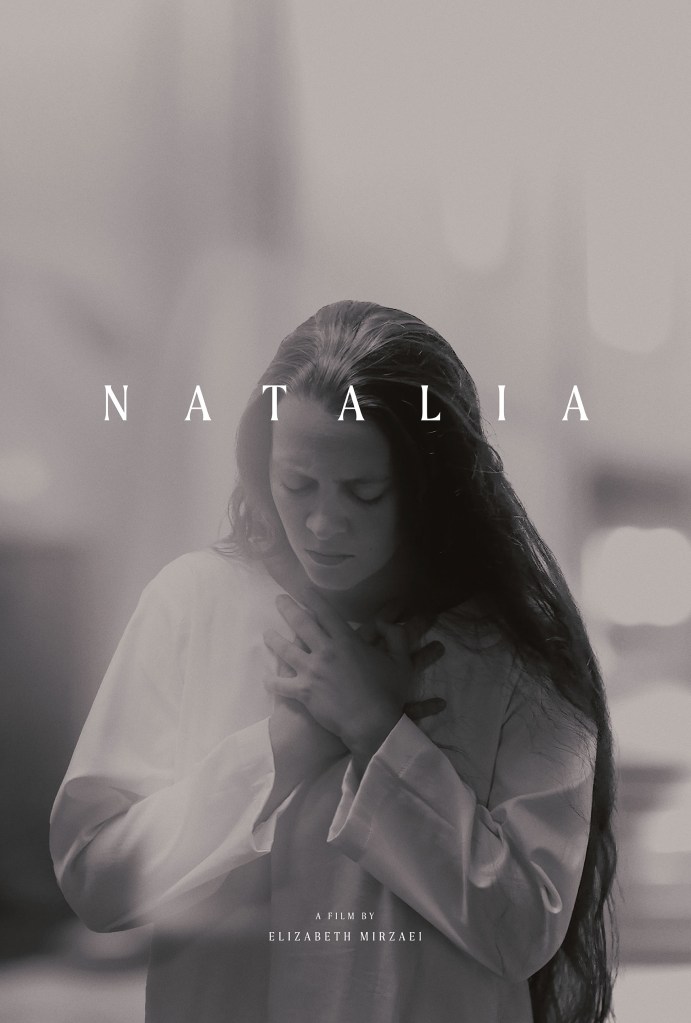
Faith in a higher power can manifest itself in unique ways. In Elizabeth Mirzaei’s enlightening documentary Natalia, faith is personified in its titular charismatic subject as she trains for the sisterhood in the Byzantine Catholic church. For most men and women of faith, they’re called into the life because they view it as just that – a calling. But for Natalia, a 29-year old from rural Ohio, the answer is more complicated.
Below is my conversation with Alex Rodgers, the first-time director and writer of Last Days of Summer, a drama shot in and around Indianapolis. We discuss the state of the film industry in Indiana, the inspirations for the film, and learning experiences from making his first film. Our conversation has been edited and condensed for clarity.
Ben Sears: You’re an Indiana native and you’ve been working in and around the film scene for many years. How do you feel about the state of Hoosier filmmaking today?
Alex Rodgers: I would love to highlight the work that my colleagues Kurtis Bowersock, Zac Cooper, Victoria Britton, Zachariah Haske, and Matt McMahon are doing with A Few Friends. What they do is really cool for the narrative space. Zac’s feature It Happened One Weekend was a real inspiration point for our film. I think it really showed what the community can do when it comes together and works within the constraints of a small budget. Our biggest resources and strengths are our collaborations with each other and I think Indy is really good about showing up for its own.
There’s also a lot of really interesting work being done in the documentary space by people like Will Wertz, Kolton Dallas, Hannah and Myers Lindgren. Seeing their work really inspired me to dip my toes into the short doc space going forward. A few other people whose work I admire are Jake Huber who continually raises the bar for music videos and spec pieces in the city. Matt Spear’s short film Love, Grandma was one of the most beautifully shot things I’ve seen come out of Indy and just an incredibly impressive narrative debut. I’ve also had the pleasure of being on set with Joe Frank, an incredible DP, cam-op, 1st AC, you name it. He’s the man. Nick Kartes is a gaffer who I got to be on set with once who is just a treasure trove of knowledge and skill. I could go on. All in all, Indy is filled with massively talented people who are producing work that inspires me on a daily basis. My relationships with the Few Friends crew in particular are what led me to be able to do this film at all. They were there every step of the way and just as responsible as I am for getting another narrative feature in the books for Indy. I hope that our community continues to collaborate, grow, and uplift each other while raising the bar for the level of work we are known for. Indy is a great film city. The rest of world just might not know it yet, but we do.
BS: You filmed most of Last Days of Summer in the Indy neighborhood of Woodruff Place. Was there any creative choice that went behind that, or was it more because of logistics?
AR: I lived in Woodruff Place for 4 out of the 10 years that I’ve lived in Indianapolis. It’s a beautiful neighborhood, it used to be its own town, it’s very historically preserved, so a lot of the houses are incredibly interesting and historical. So from an aesthetic standpoint, we couldn’t have picked a better spot. Kurtis, the cinematographer, has lived there with his family for I don’t know how many years, but he knows everybody in the neighborhood, so it was easy to secure the locations and film on the street. It was like we were filming in our neighborhood, so it never felt like we were trespassing in any way, or co-opting a space.
BS: You didn’t feel like you didn’t belong there.
AR: Yea, it felt like we were just making a movie in the neighborhood, and we got a lot of support from the people in the neighborhood. Everybody that we talked to about the project seemed excited by the idea of it. I think people who know of Woodruff, and live in Woodruff, are pretty passionate about it. It’s a real gem in Indy.
BS: Just from driving through the neighborhood, it seems kind of unique here in Indy. It’s a historic place, with really old, really beautiful homes. But there’s a newer vibe to it, without being gentrified, so there’s that extra juxtaposition that you get within the film, which you’d get if you’re in Indy.
AR: I grew up in a small town, and something about the suburbs of a small town was really interesting as a setting to me. And I feel like Woodruff supplied that. It matched the vision in my head. Plus, I was living in Woodruff when I was writing the film, so I kind of wrote with the idea of filming there.
BS: Your crowdfunding page states that you wanted Last Days of Summer to feel like a “love letter to the Midwest”. How did you envision that coming out in the film?
AR: I think, in the small town feel, and the sensibilities of the characters, especially the young characters. In Summer’s character, and Johnny’s character, there’s a sort of sense of something more being out there. Growing up in a small town, I relied on my imagination a lot, like wanting more from the world than you have on your plate. There’s something about that which was interesting to me, and the beauty and simplicity of a small town life. There’s something really nice about knowing all of your neighbors on a first-name basis, but there can be cons to that as well. I’ve always been interested in exploring that within small communities.
BS: There is that kind of feeling when you grow up so close to family and relatives. One of the biggest takeaways I had with the film was in the generational trauma, passing the mistakes of the adults down to the their kids. That’s something that’s kind of midwestern, but not exclusively so.
AR: Exactly. I think an example of that would be in Summer’s character, and her mom, Kim, has a really bad taste in men, and I think Summer kind of reflects that.
BS: When I was watching the film, it reminded me a lot of some of Sofia Coppola’s films. And you had listed on the crowdfunding page that The Virgin Suicides was an inspiration for the film. Would you say Sofia Coppola has been an influence for you?
AR: Absolutely. I think, especially her earlier work like The Virgin Suicides and Lost in Translation are some of my top films of all time. The Virgin Suicides was maybe the single biggest influence on this movie, out of any other film that we were influenced by. It influenced a lot of the creative decisions we made, from certain frames to the colors. The tonality of The Virgin Suicides, some of the storytelling techniques, like looking back on an event that had such an impact on some of these characters and this community, those were some things that I took in the writing process pretty early on. Initially, the narration was going to be from Ricky’s point of view, but that changed over the course of production.
BS: What made you want to shift the focus of that?
AR: I don’t remember what we came up against, but there was some limitation from Ricky’s point of view, so it didn’t make sense for him to have all of the information I wanted the narrator to communicate. So making the narrator omniscient, or making it someone from the neighborhood that’s telling it from a future perspective, after they have all the details, that made more sense from an informational standpoint.
BS: Much like The Virgin Suicides, adding the omniscient narrator, and looking back at something which is, in essence a tragedy. But there’s also something kind of beautiful about it all, and there’s that juxtaposition within Last Days of Summer.
AR: I think that film just has so many things I admire. I just rewatched it again recently. It’s so heavy, but it’s so good at communicating these feelings of love and yearning and being young, but feeling trapped. I was really drawn to how it was able to communicate those things. The parents’ relationship to the children in that movie is really fascinating. They love their children, and they’re trying to do right by them, but it leads to the worst outcome. I think there’s something really interesting about trying and failing within those relationships.
BS: Last Days of Summer is your first feature, and you’re working with a lot of newer and first-time actors. Did you learn anything about yourself while making this, or what to do/what not to do on future projects?
AR: The whole process was a lot of learning, and trying and failing on my end. This was my first time working with a team of this size, and being at the head of the ship. We were super blessed with who we got; I’m incredibly proud of the cast and the performances they gave.
My buddy Arman, who plays Johnny, we went to college together. We’ve been friends for 10 years now, and he’s been in anything I’ve made since then. He’s like the De Niro to my Scorsese, so I always write with him in mind, and his younger brother Refik has been getting into theater, and I was able to see a couple of his performances. So when I wrote the film, I wrote it with them in mind for the brothers. We used Backstage to cast a lot of the talent. That’s how we found Celina, who plays Summer, and Teresa, who plays her mom. We were able to find people who had more experience than what I was used to working with, so that was really cool to work with them and see their ideas and methods. With every actor, and every crew member, everyone’s got their own mode of thinking, and their approach, so a lot of the directing was communication and people management. Trying to figure out what the person needs from you to get to their best place. I don’t know if I have any specific takeaways, but I think it’s a case-by-case basis, and I think for us, the relationships were such a huge part of this movie. It was like a family dynamic; we shot almost every day for 20 days, so everyone got really close really quickly.
I wish we had more time for rehearsals, I think in the future, I’ll do more rehearsals, and a lot of the people I worked with on this liked that idea. So that’s one thing I’d be curious to do, trying to work out some of the kinks in a safer environment. It’s a high-wire act.
Last Days of Summer will premiere as the opening night film at Indy Film Fest on April 24 at 7:30pm at the Living Room Theater in Indianapolis.Buy tickets here.Alex Rodgers’ documentary short film Daniel will also screen at the festival and can be watched virtually and in-person.Buy tickets here.
Below is my conversation with Milana Vayntrub, the director and star of Pickled Herring, a comedic short film being screened at Indy Shorts 2023. We talk about personal experiences that led to the creation of the film, comedic influences, and the difficulties of being funny while being physically restricted. Our conversation has been edited and condensed for clarity.
[Note: This interview was conducted before the SAG-AFTRA strike went into effect]
Ben Sears: Tell me a little about the collaborative process with Marina (Shiffrin), after she had written the script. You’ve spoken about how you have a kind of similar relationship with your own father as your character in the film.
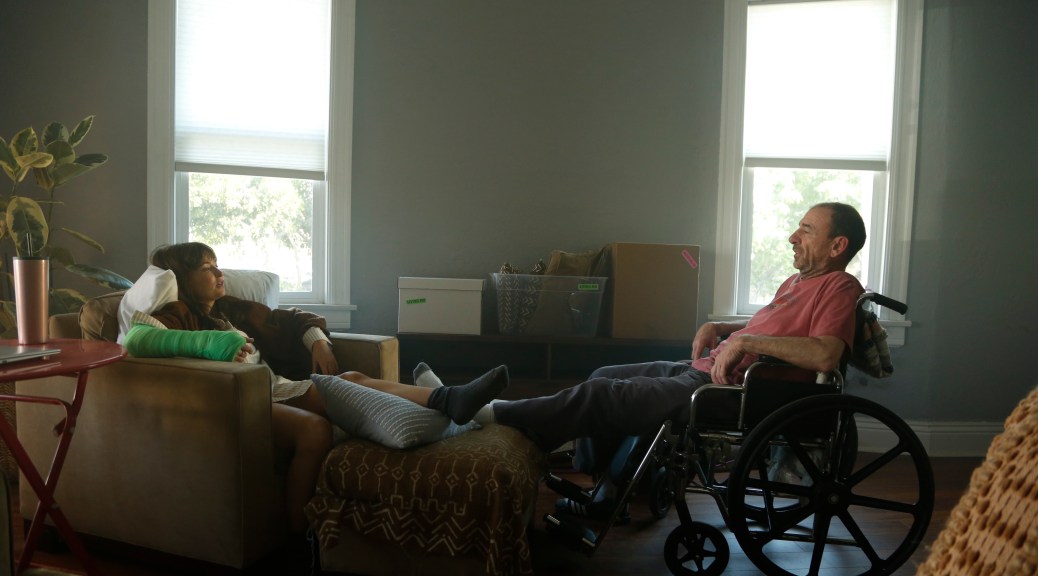
Milana Vayntrub: Marina and I conceptualized the movie together years ago, though we were just chatting. We had been friends for a while, we met working on @Midnight, and we bonded over our Soviet dads. She had just gotten hit by a car, and I had just had a baby, which is a lot like getting hit by a car. She had her dad come and help her, and I had mine come and help me, and we were just talking about all the ways we love them, and all the ways they drive us crazy. Which I think is relatable for most parents. Then we were like ‘this is a story, this is too relatable,’ and we came up with the idea for the short and she wrote it all out, and we were able to make it really quickly.
BS: How much of your character in the story came from you and your experiences, and how much came from Marina?
MV: I think we have a lot of common experiences, both our dads are joke-tellers, they’re both hyper resourceful in ways that we’re like ‘how did you do that, and why?’ They have a lot in common, so I’d say there’s a shared story, but in terms of the literal events of the film, I’d say it’s probably 70-30. There are little anecdotes in there that my dad would say, but most of it is her story.
BS: Has your father seen the film yet?
MV: Yes, and he actually helped us get some of the rights. There’s a Russian song in there and he was working with us to help get it all approved. He doesn’t speak English that well, so he doesn’t really care or get it, whereas Marina’s dad, who speaks Russian really well, thinks of it as the best movie in the world, maybe second to The Godfather. He’s shown it to people at all sorts of family functions, so he’s our biggest fan, so I’m sure he sees himself in that.
BS: Were you nervous at all to show it to your dad?
MV: I wasn’t because I’m so straightforward with him. I didn’t really care what his feedback would be. [Laughs] But I was actually nervous to show it to my mom because I knew her feedback would be “when are you going to make a movie about me?”
BS: So is that going to be the sequel then?
MV: [Laughs] Yes! It’ll be Pickled Cod: The Milana Vayntrub Story.
BS: Do you think you could ever expand this material to be feature length? Could you see yourself making a feature film about similar themes?
MV: Yes, I think it could be a movie, but right now I’m focusing on it maybe being a TV show.
BS: Would that be something that you’d likely direct, or star in, or both?
MV: I would be very happy to have either opportunity, but if there’s somebody more qualified to do either of those positions, I’ll allow it.
BS: Which aspect of filmmaking do you find more joy from: acting, directing, or writing? Or is it a totally different experience based on the project?
MV: I enjoy directing the most, but acting is a lot easier, and less time consuming. It’s really nice to show up and act when you can trust the director, and feel like there’s a collaboration. The thing that I was always most enlivened by, as an actor, was when I could go to set and contribute and say ‘what if I said it this way’ or ‘what if we built this scene to have more tension, or more comedy’ and then I realized that’s what a director does all the time, except they’re not normally in front of the camera. So I said, ‘if that’s my favorite part of this, then how do I focus on doing that the most?’ So directing has been a majority of my year, and it’s been so fun. But, as you know as a new parent – and this is a wholly original thought that nobody has ever said before – but being a working parent is hard.
BS: Nope, that wasn’t my experience at all. No changes whatsoever.
MV: [Laughs] Yes, I’m sure for you and your partner, it’s been a breeze, but we don’t live in a particularly feminist industry or world or country. There are a lot of things that are missing in the support of being working people, and I really wanted a heavy hand in raising my kid, so that’s been the biggest push and pull. However, I’m making it work and I’m very grateful to get to direct, and work, this year.
BS: Was there ever a version of the film where you were not planning on acting in it? Did having that firsthand experience, and relating to the material, influence your decision to act as well?
MV: It was a big part of Marina’s decision. Every decision was made in tandem, but when we met, she kind of told me ‘I can’t wait for you to play me in a movie!’ So that’s kind of what this was the manifestation of, but we were also thinking about how many actors do comedy and drama and speak both languages – because I do speak a little bit of Russian in the film – so that narrowed the pool. If I had found somebody – and, to be fair, I didn’t too a very deep dive – and knew somebody that would be best for this, I would love to work with that person, even now.
BS: What are some comedic influences for you? When you’re trying to hone your comedic style, do you prefer dark comedy, or sillier Airplane-esque comedy, or more improv-heavy films?
MV: Step Brothers I think is my favorite comedy of all time. That movie has a little of the slapstick, but a lot of the comedy feels very improv heavy, and the writing is incredible on top of it. I think it’s the funniest movie ever made. I can’t wait until my son is old enough to see it so I can share it with him. Maybe I’ll fast forward through the balls on the drums part though.
I would love to act in a movie like that, and I would love to direct a movie like that. In terms of what I like to make, I love to work with actors who can improvise, and Rene Gube, who plays my husband in Pickled Herring, is that. I met him doing improv, and I was always such a fan of his on stage because he was so grounded and so quick, and his delivery was always so conversational. For years I’ve been thinking about how I can work with him, and that seemed like it was in line with the things that I find most funny. There’s actually a part in the movie where he improvised, and I cracked up, and that is a natural reaction. As a director, working with someone like Dimiter Marinov, who plays my dad, he’s great a taking notes. It was so fun to be able to mold him; Marina and I were writing alts, and throwing them out to him. There was one sequence where I’m on the couch and he’s just a busy-body behind me, which is exactly who Marina and I’s dads are, and we got to give him a different prop and a different line every time. That’s a real gift as a director, to work with somebody who can just roll with it.
BS: You get to do some physical comedy since you’re so immobile for most of the film. Was it a challenge to be funny without being able to move around much?
MV: Well I probably could have done a better job of being immobile, to be honest. We had to cut around some of the times when I forgot. I was recently listening to an interview with Quentin Tarantino where had to play someone with a hurt arm, and he actually had to put pins in his cast to continue to feel the pain. I was already nursing during the movie, and I was already in enough pain that I didn’t feel like I needed to do that, but I respect that and can see why it works. But I love physical comedy; I didn’t even really think of this movie as a fairly physical film, for that very reason, because I am in the wheelchair for a lot of it. I think actually Dimiter has a whole sequence that just feels like a clown bit. He’s incredibly physical and so funny.
BS: Have you started writing your Oscar speech yet, for when you win Best Live Action Short?
MV: I started that when I was 5 years old! I’m been practicing my whole life!
Pickled Herring will screen as part of the Comedy block at Indy Shorts on July 20 at 7:45 in Indianapolis, and virtually through July 23.Buy tickets here.
Below is my conversation with Dylan Query, the director and co-writer of Cold Cross, a dramatic Western film being screened at Indy Film Fest. We talk about shooting a period film in Indiana, and the research process involved in making the film. Our conversation has been edited and condensed for clarity.
Ben Sears: Cold Cross started out as a short film, correct?
Dylan Query: That’s right, Cold Cross started out as a short film titled Cold Creek, and we used that short film as a pilot, so to speak. We used the pilot as a proof of concept, a proof of quality, of what a small, local team can produce. And we used that to generate a lot of money, locally, from a very small town where very few people know or care about the film industry. But we were still able to prove to people that it was worth investing in, and we raised $20,000 completely locally. We’re super proud of that and we’re super proud of the support that we’ve had from friends and family and members of the community. But it definitely started out as a short film, but it grew to be so much more.
BS: So was the plan always to make it into a feature eventually?
DQ: No, I don’t think so. I would like to say it was according to plan, but as these things work, it was by complete accident. My film partner, Jacob Steineker, had never been part of any film production before, he’d never acted before, and we had worked on a very small short film that I hired him for, and he became so inspired by that one project that he came back to me a few weeks later and said ‘hey, I have this script for a Western. Would you be interested in making it?’ And by recognizing that the process had inspired him, I wanted to encourage that. So I didn’t grow up a Western fan – it’s not really my interest – but I couldn’t say no. I said ‘yea, let’s do it’, and that’s how Cold Creek was born. And from there we won some awards, including an international award at the Pop Con Film Festival in Indianapolis. And from there we had enough interest in the local community and our fans, and they wanted something more, so that’s how Cold Cross was born.
BS: Was there anything difficult in expanding that short film and making it into feature length?
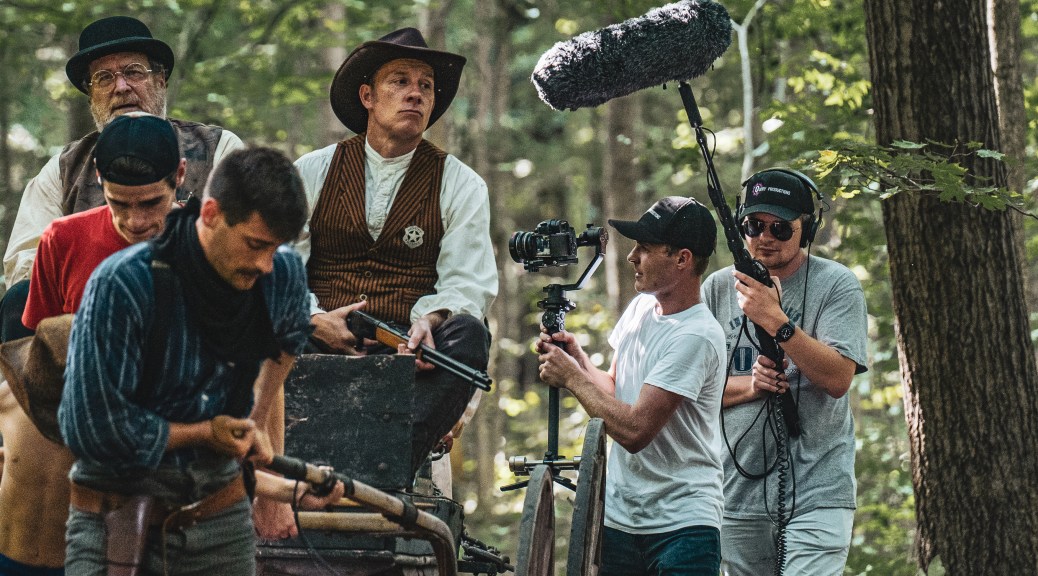
DQ: Yea, there’s a lot of complications, but my team are amazing problem solvers, and Jacob and I worked closely together to develop the story and expand it. The difficult part of that is doing something that’s within our capability. I think a lot of people will write scripts and they’re not thinking about what resources or locations they’ll have available. And so what was interesting with Cold Cross is that it’s a neo-Western style film, but it’s set in the frontier. We had a lot of friends and family with property, so it was very easy for us to think ‘hey, we can talk to this person and film on this property’, and that cuts down on cost and travel, so little things like that and problem solving, but working within our means. I think that was really key. But that’s not to say there weren’t things that we wanted to do that, to be honest, we didn’t know how we were going to pull it off. But like I said, I have an amazing team, and we were able to think outside the box and create a Western right here in Indiana.
BS: So what is it that you like about the Western genre?
DQ: That’s an interesting question. Like I said, Jacob is the Western buff. I grew up not really liking Westerns at all; in my juvenile ignorance I considered them to be very boring. But when I started working on Cold Creek, there was something about it that I grew to really like. I liked the simplicity, I liked the option of utilizing a lot of natural light to make the film feel more natural, like it’s out in the wilderness. I really liked that aspect of it. I like these classic revenge stories, and Jacob took this kind of cliche, classic revenge Western and we tried to morph it into something more modernized. A lot of things that people have said when they watch Cold Cross, they say it’s a Western, but there are a lot of modern techniques that they didn’t expect. I think that was actually because, with me being the director and cinematographer, since I wasn’t a western fan growing up, that was actually our benefit. We were able to blend old with new and create something fresh.
BS: Speaking of the look of it, the film doesn’t look like a lot of traditional Westerns. When people think of Westerns, they think of big, expansive prairies or deserts. What made you want to utilize the Indiana landscape?
DQ: I tried to limit myself with how I was influencing myself. What I didn’t want to do, when I first started this project, was to start watching a bunch of Westerns because what would happen is I would essentially be influenced by these other films and I would start stealing things unintentionally. So I tried to limit myself a little, but there were certain things that I wanted to explore. One thing that we really enjoyed was the Hatfields versus McCoys, which feels like a Western but it’s set in the same time period as the Wild West. We just really liked that, and it was within our capability to film in the frontier, so to speak, in the Midwest. It was our way of making a Western slightly different from your normal Western.
BS: You make a good point about not wanting to steal other filmmakers’ styles. If I was to make a film, I would want to make it look like a Scorsese film, but then I’d be labeled as a Scorsese imposter. So it’s important to develop your own techniques.
DQ: I agree, when I studied at Ball State University, there’s a small film community there, and I would constantly have people asking me ‘have you seen this’ or ‘you should see this.’ I just try to limit myself because what a lot of people in my craft tend to forget is that films are a distraction. I’d much rather be out there honing my craft, creating my own style for my own projects, instead of watching things that other people have created. Some people might disagree with that, and that’s fine, but I think it’s important to develop your own style, and that’s how you differentiate yourself from the people around you. It’s very easy to copy Tarantino or Scorsese when you’re submerged in all of their content.
BS: What was the most difficult scene to film, either from a practical or emotional standpoint?
DQ: There were two particular scenes that were incredibly difficult to film. The first scene was probably the night chase action scene, in the middle of the film. That particular scene was very difficult for us, not just because of the lighting, but because that was a full, packed day for us. We were filming from dawn to dusk that day, and past that. We started filming around 6am that day, and trying to get as much done as possible, then the night scene came. So we were filming from the break of day until about 2 or 3am. I would say that we were very close to pulling a 24 hour day. By the end of the day though, we were at each other’s throats and we were grouchy, but we finished what we needed to, and that was awesome, but it was very difficult trying to cram that much into one day. I think if I could go back, I would probably have split it up, but on paper I thought it would work, but in reality it didn’t really work the way I wanted it to.
Additionally, I’d say the final scene of the film was very, very difficult. Jacob, with this being his very first feature-length film, and his first writing opportunity, watching him grow throughout this process is something I’m incredibly astounded and proud of. We filmed Cold Cross almost completely chronologically, so what you see is, whenever you see Jacob at the beginning of the film, you’re seeing an early actor. And what’s great about that, is his character is kind of portrayed as being young and ambitious but kind of ignorant about the reality of the world. So as he continues on throughout the film, and as Jacob gains experience as an actor, you’re seeing that level of depth increase in the character itself. What’s amazing is you get this sense of character development with William McCarthy throughout the entire film, and a big proponent of that is that Jacob’s depth as an actor is increasing as the film goes on. And that culminates in the final scene, where Jacob literally gave it his all, and it’s by far the best acting that he’s ever done. It’s in this final scene where things are the most tense and tragic. There was actually one moment during that scene where Jacob had pushed himself so far, and to be honest I think this was a fault of mine as a director, I could have managed him a little better, but there was one moment where he pushed himself so far that right after I said cut, he collapsed. He was clutching his left arm, he couldn’t breathe, and it was a very scary moment, and after that I said ‘OK, we need to be careful.’ It was a slap to the face for me because whenever your talent is in their role, it’s sometimes hard to remember that they’re acting and you might think that they’re just acting their role, but if they’re really into it and getting into this sort of Method acting sort of style, there’s stuff happening internally to them as well, that you have to try to be aware of. That was an eye-opening experience for me, to try to be a lot more observant and aware of my talent and what they’re putting themselves through. But the results speak for themselves; that final scene is just jaw-dropping for us. I hear it from a lot of people, that that was their favorite scene. I owe a lot to Jacob for his efforts and consistent diligence to grow and improve as an actor, it was very profound.
BS: What went into the decision to shoot the film chronologically?
DQ: There were a few exceptions, but we tried for the most part to do it chronologically. We did it that way because we were employing certain tactics like Jacob growing his hair or beard out. We were trying to get this sense of time progressing and I think it was just easier for us to do things chronologically, but it was difficult. We did this thing over the course of two years, so trying to get things to match up scene to scene was sometimes difficult.
BS: What kind of research went into the writing process? There must have been a great deal necessary to get period details right.
DQ: Absolutely, and I think there were a number of things we could have done better, but with our limited budget, we put a lot of effort into props and locations and costumes. We were able to find websites where we could purchase authentic costumes and props. We also turned to friends of ours who are owners of old-style navy revolvers and things like that. All of the gunfire in the film is actually black powder pistols, we’re not using blank cartridges, it’s just black powder without any projectile. So that was really fun and it creates an amazing effect on screen that you just can’t recreate with special effects, or at least not with our budget. As far as the details, I defaulted a lot to Jacob on that. He’s very knowledgeable about what is accurate and what’s not. My expertise was the technicality of production, and Jacob’s expertise was the time-period accurate details, so sometimes we’d be setting up a certain set and I would be setting up a lot of the gear and Jacob would go in and take a look and make adjustments, add certain props, and do what he could to make the set feel more authentic.
We also were in this constant revisionary process with the script. We were editing the script prior to each production day, making very small changes, and I think that was to our benefit. We were consistently improving and updating the script as we went on, and one of the things we would update was adding in little details to make the environment feel more authentic.
Cold Cross will screen at Indy Film Fest on April 23 at 4:00pm at the Kan-Kan Cinema in Indianapolis.Buy tickets here.








 The Movie State