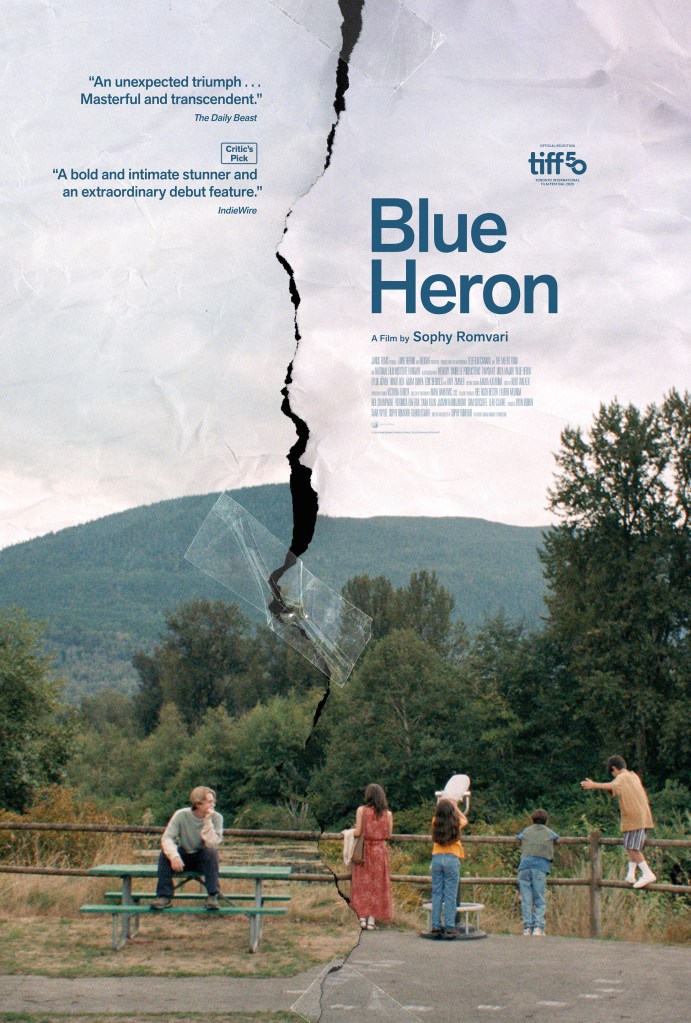
Blue Heron
- Director: Sophy Romvari
- Writer: Sophy Romvari
- Starring: Eylul Guven, Iringó Réti, Ádám Tompa, Edik Beddoes, Amy Zimmer, Liam Serg, Preston Drabble, Lucy Turnbull, Jecca Beauchamp
Grade: A-
How could this have been prevented? It’s frequently one of the first questions asked once tragedy strikes, and it’s one that Blue Heron, the stunningly assured debut feature from writer-director Sophy Romvari, wrestles with. There are elements of the film that are autobiographical to Romvari’s life, accentuated by specificities which feel like they were plucked from her memories. But its greatest triumph is in not feeling so isolated, as if anyone can find something relatable within its story.
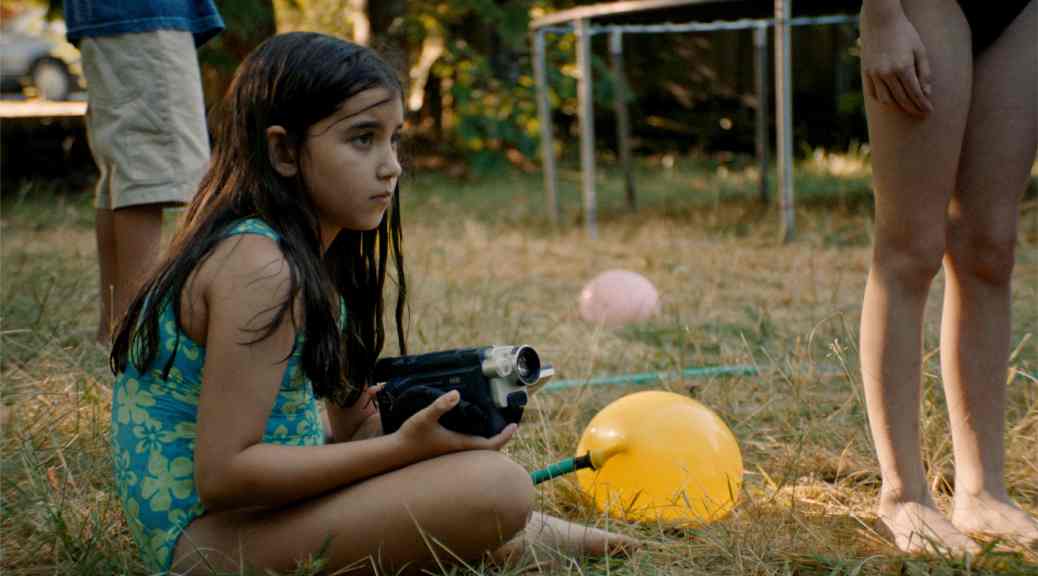
It begins, as most formative memories do, in the summer, some time in the 90s. Blue Heron picks up when a family of six has just relocated to a new home on Vancouver Island. We don’t get many details regarding the circumstances of the move or where they moved from, but Romvari makes this lack of information feel like a natural part of the story, rather than a lazy screenwriting shortcut. Here is where Romvari’s own experiences inform the film, as her family also undertook a similar move when she was a child. Because the film is mostly told from the perspective of the only daughter, Sasha (Eylul Guven), an ordinary preteen who adapts rather well, all things considered. Romvari films these scenes mostly from a distance as observational, whimsical fractures of half-remembered memories. Blue Heron initially presents itself as a simple series of inconsequential vignettes, until a common theme begins to emerge.
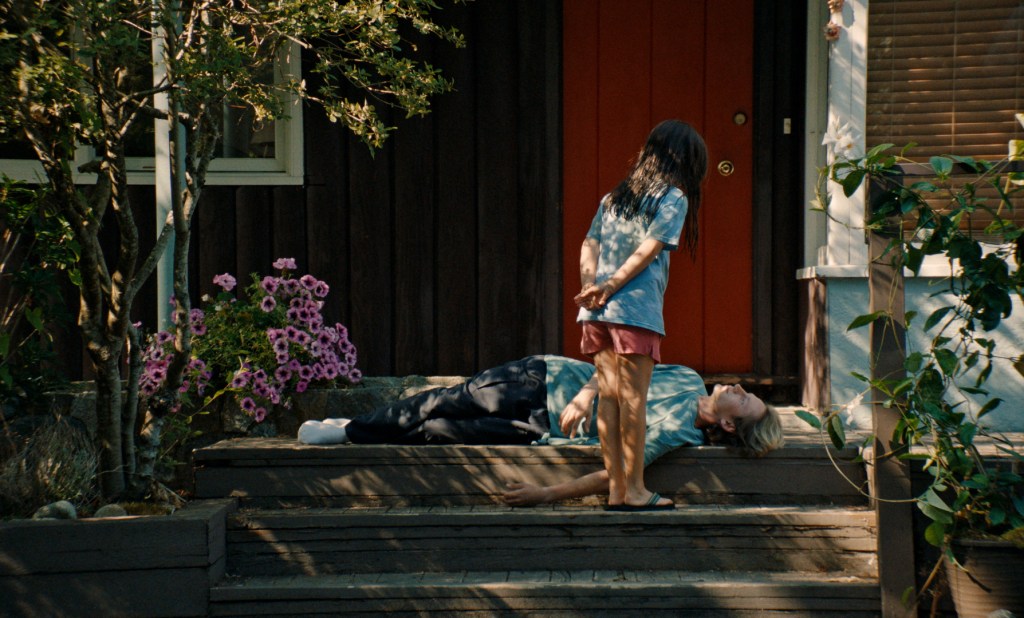
Sasha’s oldest brother Jeremy (Edik Beddoes) begins acting out; at first, it’s relatively innocuous – bouncing a basketball against the house, wandering off unannounced during a getaway to the beach, turning the light on in the makeshift darkroom his father works in. But Jeremy, without uttering more than a few lines throughout the entirety of Blue Heron, exudes a menacing demeanor that befuddles his parents – credited simply as Mother (Iringó Réti) and Father (Ádám Tompa) – and leads them to worry about their safety. It’s clear to outside observers that Jeremy is either presenting as a textbook example of a cry for help, or has some kind of undiagnosed disorder which prevents him from expressing himself accurately. There are cultural differences at play which surely factor into their reactions to Jeremy; Sasha’s parents are Hungarian immigrants and, though it’s left unspoken, they surely don’t want to be seem as the troublesome foreigners, causing a stir immediately upon moving. Everything comes to a head once Jeremy’s parents have had enough and seek to have him voluntarily placed in a foster system.
Of course, looking at Jeremy as a simple case of teenage angst is greatly oversimplifying the life of a person. Without spoiling things, the final third of Blue Heron sees Sasha around 20 years later (now played by Amy Zimmer) trying to understand not just Jeremy’s mentality, but that of her parents. Something tragic has happened to him in the intervening years, and Romvari smartly allows us to fill in the blanks to figure out what happened. Just as One Battle After Another was praised for not mentioning Trump or the current regime, Blue Heron succeeds because it’s a film which tackles universal regrets. Whether it was a troublesome relationship, or an unimaginable tragedy, or a missed opportunity, we all have events which have shaped our lives for better or worse, which we’ll perhaps never fully understand.
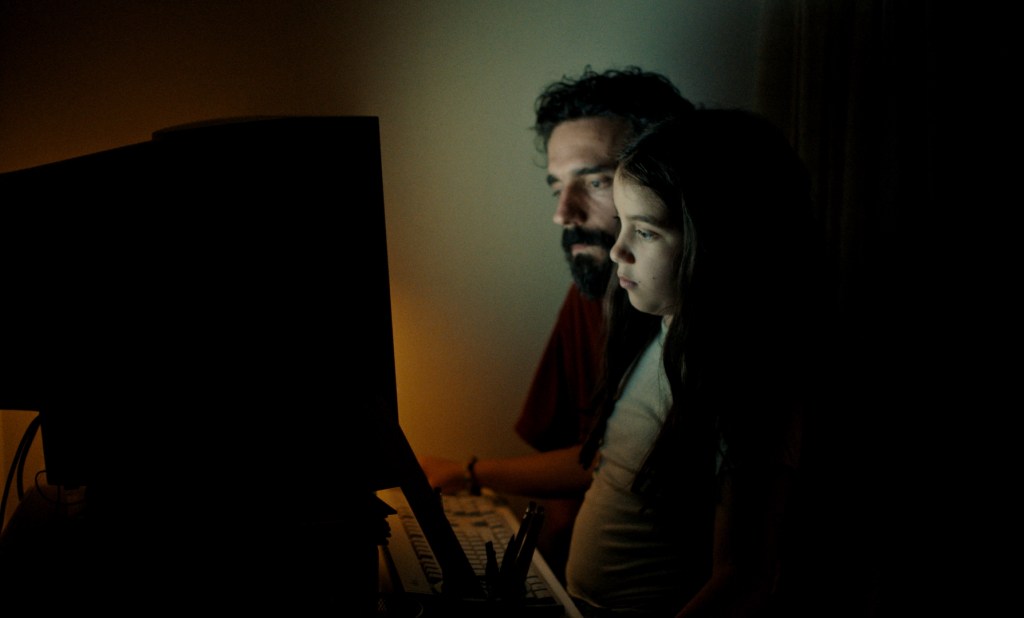
While watching the film, I was reminded of Aftersun and Petite Maman, and how those films sought to burrow inside the minds of unknowable figures. And as with those films, Romvari’s feels like a tangible slice of a world which extends beyond the boundaries of the film we’re seeing. Blue Heron uses a kind of magical realism in its finale to allow Sasha to express her unspoken regrets. It’s a gamble which could easily muddle the ultimate message, or come off as melodramatic, but Romvari makes it look effortless and easy to understand. It’s possible that its revelations won’t feel as emotionally impactful on future rewatches, but Romvari has crafted a quietly devastating portrait with enough small wonders to hold up as one of the year’s best films.
Janus Films will release Blue Heron in select theaters on April 17 and expand in the following weeks.
OSCAR POTENTIAL:
- None, but the film should be an easy contender for the Indie Spirit Awards or the Gothams in several categories.


One thought on “Blue Heron Review”