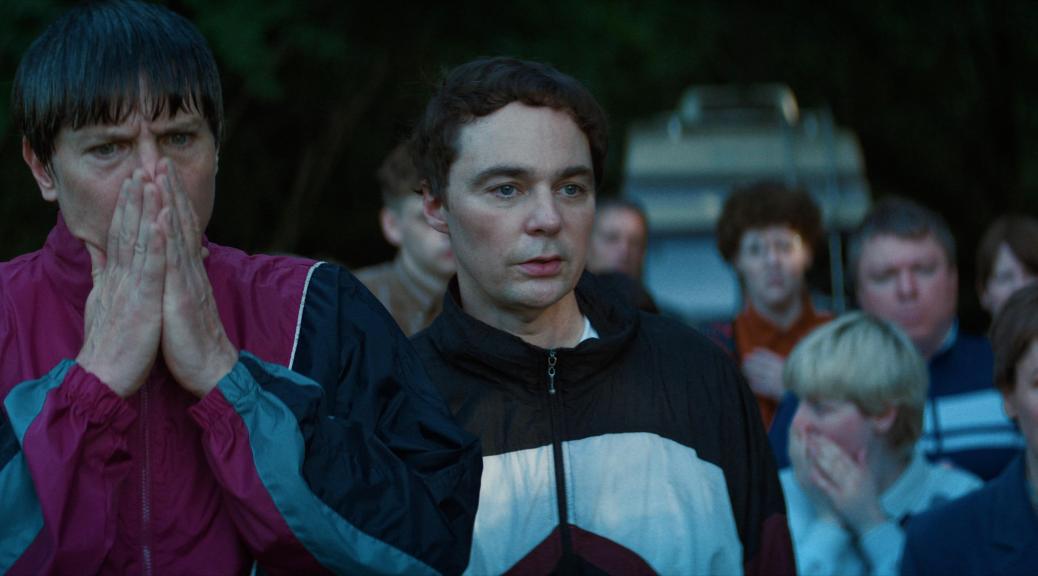
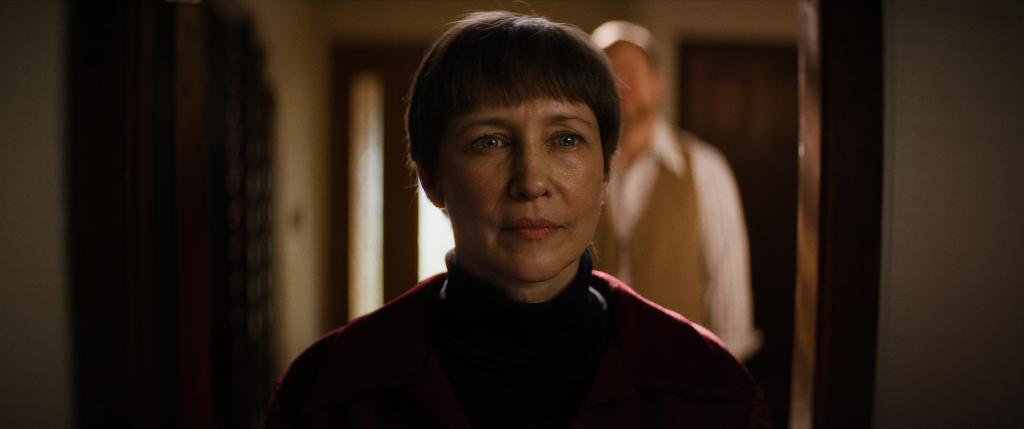
Beyond their leader’s insatiable quest for control, the defining characteristic that all cults share is a belief that we’re meant for a greater purpose. Those who join cults believe that the world has failed them, in one way or another, or that they’re missing out on a larger meaning. The Leader chronicles the Heaven’s Gate cult, the personalities that founded it, and those that got caught up in the charade, until their infamous mass suicide in 1997. Textually speaking, the film won’t reveal much that hasn’t already been explored in countless documentaries, essays, podcasts, books, et cetera, but director Michael J. Gallagher effectively and stylistically delves into the culture of beliefs cultivated by Marshall Applewhite (Tim Blake Nelson) and his wife, Bonnie Nettles (Vera Farmiga).
It’s true that The Leader explores the kind of material which would easily become a Netflix limited series, given the ripe avenues for exploration available. But Gallagher manages to chronicle the early days of Marshall and Bonnie’s relationship in the 1970s, the evolutions of their beliefs, and what drove a select few of their followers to join them. Notably, the two didn’t rule with an iron fist, keeping their flock together out of fear of leaving, but there is an element of shame and control utilized to keep them in line. Beyond the intrigue of the story, the film boasts a deep bench of well-known actors to follow the journeys of the followers. Jim Parsons is the most devoted, searching for meaning after various addictions. Though we unfortunately don’t know much about their pre-cult lives, Simon Rex and Grace Caroline Curry take up the bulk of the second act as ersatz partners, despite the cult’s forbiddance of “earthly desires.” The Leader won’t go down as the definitive fictionalization of Heaven’s Gate, but it’s a mesmerizing and well-made account of the methodical loss of personhood, and an unfortunate blight in recent American history.
Plenty of comedy can be easily mined from funerals, but Wake wastes its likeable cast on a number of first-thought-best-thought comic situations. Take it from me, who’s worked in elder law and estate planning for the better part of a decade: death makes people say and do crazy things, especially amongst family members who presumably love and cherish one another. Director Devon Michaels tells the story of a handful of disparate siblings as they prep for their father’s funeral, and all the ways that one of the most important days of their lives goes wrong. At a punishing 102 minutes, the film draws out one unfunny development after another, jumping from sibling to sibling as we struggle to care about how they’re reckoning with their father’s untimely death.
Directed with a never-static camera seemingly set on a constantly loose dolly track, Wake follows a number of character archetypes before and during the “longest day of one’s life,” according to an opening title card. Credit to screenwriters Michaels and Kelly O’Malley for not throwing in too many pratfalls or WaCky ShEnAniGanS, though perhaps doing so would have at least given the film some life, rather than a series of prolonged conversations about their father’s wishes. Even the presences of likeable, comedic actors like Chris Parnell, Rikki Lindhome, Cole Sprouse, Nelson Franklin, and Peter Gardner feel like wasted potential, as they’re not allowed to fly loose or show off their dramatic sides. They say that, before you die, your entire life flashes before your eyes. If this is true, I can only hope that my time watching Wake is omitted.
Buy virtual and in-person tickets here.
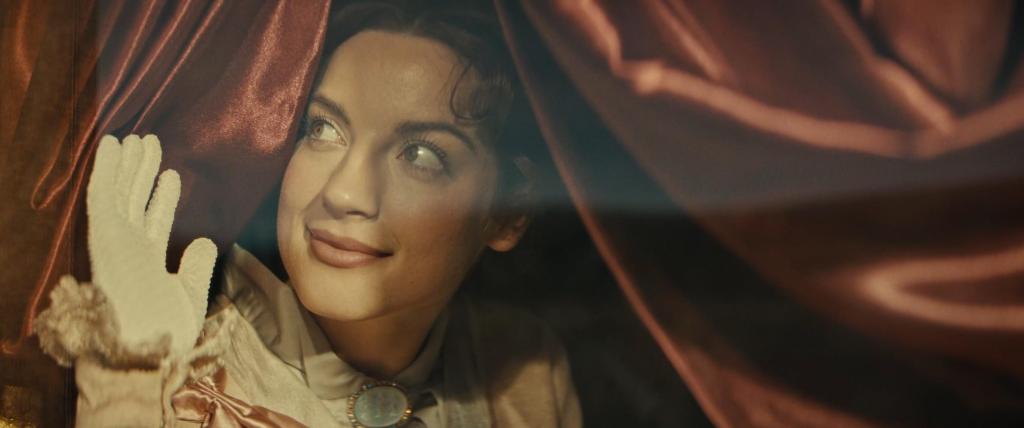
Grand, historical epics are a rare breed at regional film festivals – especially from first-time directors with no notable star power amongst the cast or crew (unless you count the Triple T Ranch in Ohio as an executive producer). Nevertheless, Medora: Empress of the Badlands exists as a handsomely-made but empty Western about the unusual settling of a crucial portion of America. The aforementioned first-time director is Daniel Bielinski, who also writes the screenplay based on true events beginning in 1883 about the rise and fall of the Marquis de Mores (Robert Strange) and his wife Medora (Baylee Toney). Budgetary information isn’t widely available, but one can imagine that Bielinski spared no expense, with elaborate costumes and production design to go with the time period. It’s just too bad that the story can’t match the ambition of the crafts; rather, the film feels like a boilerplate History Channel miniseries with uninteresting characters making a series of pre-determined decisions.
Medora: Empress of the Badlands could easily become a more focused story about the inherent lie of the American Dream. De Mores actually sets out to fulfill that dream when he arrives in Little Missouri, buying up a chunk of land, and opening his own slaughterhouse. It’s not entirely clear why the film is named after Medora, as it only sometimes, sort of, focuses solely on her. His is the more interesting story – she has next to no agency, instead mostly fretting over him and seeking to build a church. Meanwhile, he’s threatened repeatedly, both verbally and physically, simply because he’s a Frenchman (descended from royalty, no less) and the locals fear an outsider’s takeover of land they presume should be theirs. For a 124-minute historical docu-drama, Empress of the Badlands leaves a lot to be desired, but Bielinski manages to put together something easily digestible out of a task that was likely much more difficult than most could imagine.

