
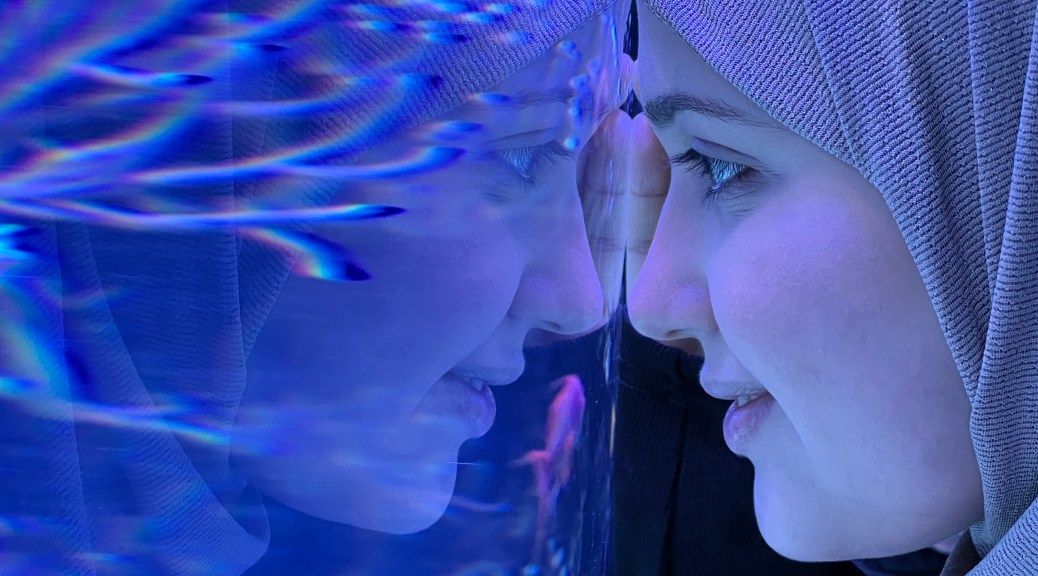

One in a Million
- Director: Itab Azzam, Jack MacIness
Grade: A-
Filmmakers Itab Azzam and Jack MacInnes take us on a 10 year journey following Israa, an 11 year old girl who is energetic and ready for the journey ahead of her, with the documentary One in a Million. In 2015, Israa and her family fled Aleppo, Syria to seek refuge in Germany. From taking a dingy from Turkey to Greece, to walking miles to Germany, what comes after their arrival brings another set of discoveries and obstacles for the family that is explored over the course of 10 years through slice-of-life updates. These check-ins, however, evolve as we learn more about the complexities of the family and their relationship throughout.
Azzam and MacInnes film the journey of the family leaving Syria to Germany with footage that often cuts to black, bringing a concern to know if everyone in the family arrives in Germany together. Especially since it is a large family that is fleeing the country with her three siblings, one of them being both physically and mentally disabled. It creates a sense of tension for the first thirty minutes of the movie with them arriving and creating a strong catharsis for viewers that are on the edge of their seats hoping they all arrive together, including myself.
At first, everyone in the family seems to be well adjusted with the new country. Israa and her father Tareek have a strong relationship. Tareek experiences how people use their freedom to protest fascism and far right groups. Israa seems to do well in school and finds a group of friends that accept her. When we see her mother’s point of view in a talking head, we learn as to why she is happy they fled to Germany as it is a moment for her children, especially her daughters, to have opportunities that she did not have in Syria. Though that is where the complexities of One in a Million comes in, specifically when Israa becomes a teenager.
Azzam and MacInnes explore how a family copes with cultural differences in a new country. Everyone seems to be adapting well to the shifts- with the exception of Tareek. He believes in the freedom that is provided, but still gets stuck in the ways he was raised in Syria in how women should be treated and should not have full freedom to make their own choices – such as who Israa wants to date, playing sports, or wearing makeup. Nisreen’s perspective about all of this is especially the most heartbreaking, as she shares how she never went to school and was married to Tareek in an arranged marriage. This causes a set of differences between her and Tareek, along with him eventually becoming physically abusive to Israa, leading Nisreen to divorce him. Tareek eventually goes to live at a refugee camp and he does have some strong moments towards the end of One in a Million expressing his regret about how he handled things.
Israa goes on her own journey of self discovery and identity. She wants to play soccer and live as a teenager would. One thing that does pull her back eventually is her religion. When she turns 16 she starts wearing her hijab. However, this causes conflict at her school, as she is often ridiculed by her classmates – one going as far to say she has a bomb under her hijab – so she eventually stops wearing it at school. It is saddening to see her go through this, as she is also being abused by her father. Israa feels she is being trapped under his watch, especially since she also takes any beatings that her siblings were to get for them, so they do not have to experience the pain. That is, until Nisreen decides to kick him out of the house.
When Israa meets her boyfriend, and later husband, Mohammed, she is actually able to create a reconnect to her religion. Mohammed also fled Syria, so once he comes into Israa’s life, he is integral, as they have had very similar experiences of having to leave their home country at an age where they can have clear memories and be able to relate to each other as two individuals. Their relationship is sweet and genuine – something that Nisreen is very happy to see, as she had not known what that feeling was.
The most powerful moment of the entire documentary comes in 2025, when Israa and Mohammed go back to Syria with their infant son, after the regime has fallen. Seeing the Syrians that fled arrive back to their country with a sense of gratitude that they can start a new life in a country that is being rebuilt is very effective on the filmmaker’s part. Israa arriving in Aleppo and seeing the place she called home as nothing but a pile of rubble is one of the best emotional beats of One in a Million. Another poignant moment arrives towards the end, when Israa decides to let Tareek meet his grandson for the first time, as it’s clear that he has learned from his errors as a father. He even says at the end that “love is universal”.
Where the movie falters a little bit is in the absence of Israa’s siblings. We do not see how they get along as much, despite her helping to protect them on their journey to Germany. Perhaps it would have just been nice to see a little more of that since One in a Million‘s runtime only clocks in at 105 minutes.
One in a Million is a powerful documentary of a young girl navigating herself in life through discovering her identity, while also dealing with the changes in culture from one country to another. One that put me through a wide range of emotions: from relief, sadness, terror, and delight. 2026 has been a really strong year for documentaries, and this is one to add to that list.
One in a Million is now in select theaters.
OSCAR POTENTIAL:
- Best Documentary Feature shortlist feels like a guarantee.

