
Josephine
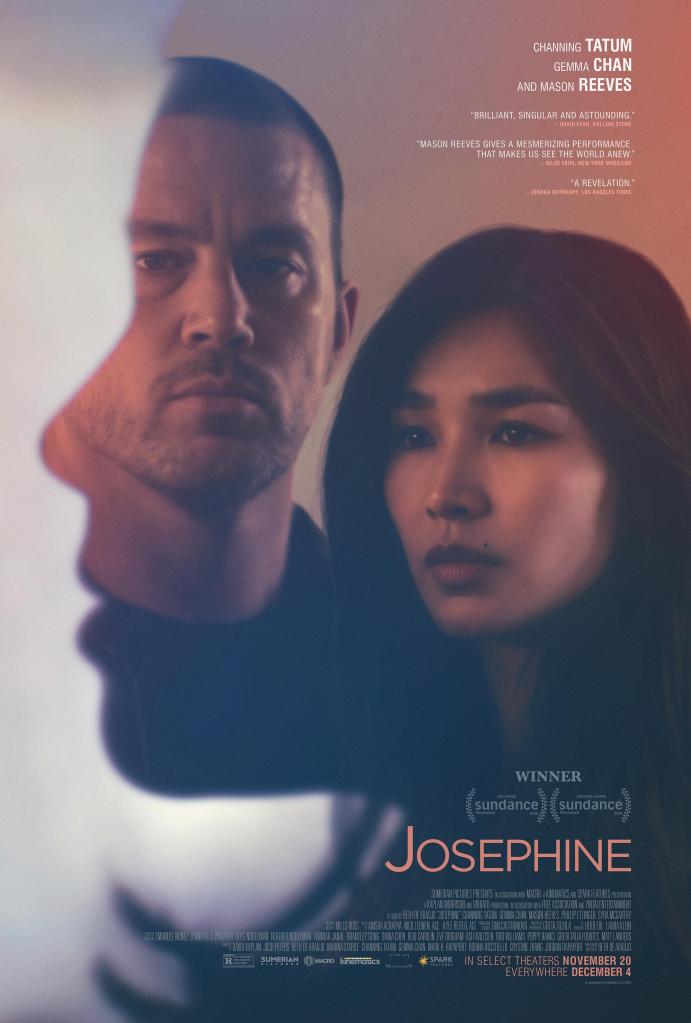
- Director: Beth de Araújo
- Writer: Beth de Araújo
- Starring: Channing Tatum, Gemma Chan, Mason Lily Reeves, Philip Ettinger, Syra McCarthy, Eleanore Pienta
Grade: B+
CONTENT WARNING: Josephine contains graphic depictions of sexual assault and violence, as well as potentially triggering material surrounding childhood trauma. Please prioritize your mental health when deciding whether to watch this film. No piece of cinema, regardless of its artistic merit, is worth compromising your psychological well-being. If you or someone you know has experienced sexual assault, RAINN’s National Sexual Assault Hotline offers free, confidential, 24/7 support at 1-800-656-HOPE (4673). You can also text HOPE to 64673 or visit rainn.org/hotline.
First and foremost, Josephine’s (Mason Lily Reevs) parents are horrendous. I cannot remember the last time I so desperately wanted to reach through a screen, remove a child from the circumstances unfolding around her, and provide her with some semblance of emotional security. And perhaps what makes their failures so infuriating is that these aren’t inherently malicious people. They love their daughter. They simply cannot seem to recognize when their own fears, convictions, and emotional limitations are interfering with their ability to parent her.
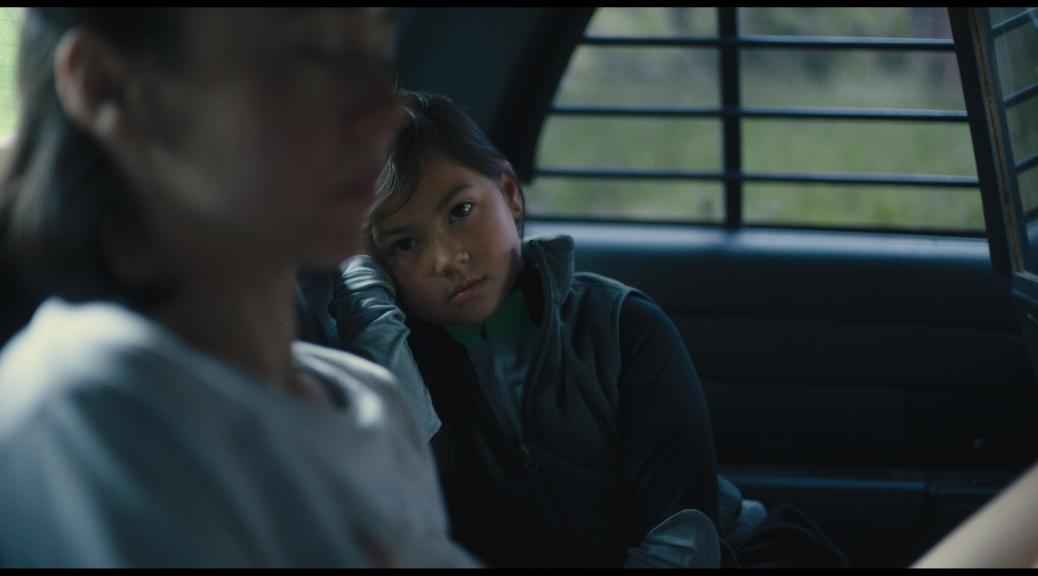
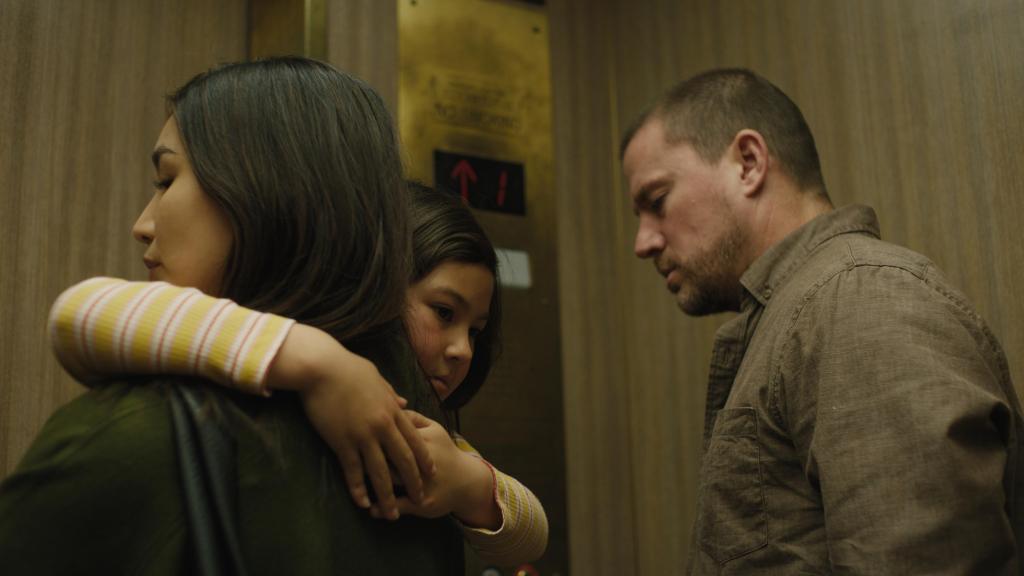
Written and directed by Beth de Araújo, and inspired by her own childhood experience, Josephine follows an eight year-old girl who witnesses the brutal rape of a woman while on a morning run with her father, Damien (Channing Tatum), through San Francisco’s Golden Gate Park. Although the perpetrator is apprehended, the psychological consequences of what Josephine has witnessed are only beginning to manifest. As her parents struggle to reconcile their fundamentally different approaches to helping their daughter, Josephine becomes a crucial witness in the prosecution of the man responsible. What unfolds is as much an examination of the fragility of childhood as it is an indictment of our collective inability to navigate the aftermath of sexual violence.
One of the most psychologically perceptive decisions de Araújo makes is to establish that danger does not require a continued physical presence to exist within the mind. The perpetrator begins appearing in Josephine’s surroundings, occupying the shadows of spaces that were once synonymous with safety. Her bedroom. Her home. The ordinary places in which a child should be afforded the luxury of existing without fear. Cinematographer Greta Zozula’s searching camera movements and Miles Ross’s unsettling score make us participants in Josephine’s hypervigilance. We begin searching the periphery of the frame ourselves, anticipating something we rationally know should not be there.
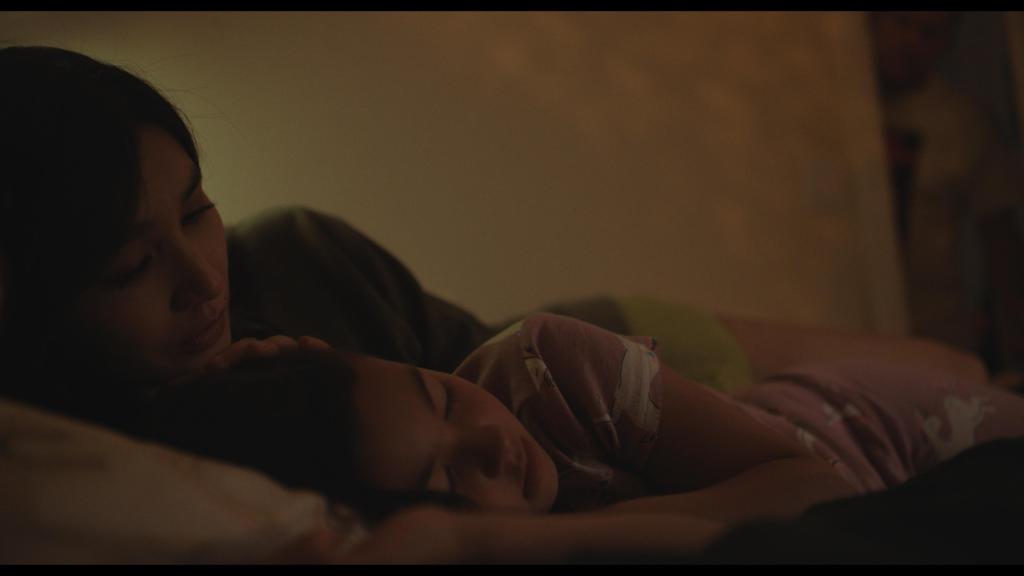
There is a profound distinction between knowing you are safe and feeling safe. Trauma has a remarkable capacity to dismantle the relationship between the two. You can lock every door, remove yourself from the threat, rationalize the improbability of another encounter, and still find yourself searching the shadows for the very thing you fear. The nervous system does not necessarily recognize the conclusion of a traumatic event simply because the rational mind does. And how extraordinarily difficult must that be for an eight year-old whose cognitive and emotional development has not yet afforded her the vocabulary to articulate what she is experiencing?
Mason Lily Reeves is extraordinary in her first screen performance. There is something devastating about watching her study the adults around her, quietly collecting fragments of information and attempting to construct an understanding of something so fundamentally incompatible with her existing worldview. Her silence is not an absence of thought. Her curiosity is not an absence of fear. And her increasingly aggressive behavior is not an indication that she is somehow becoming a bad child. It is a child attempting to reclaim some degree of control over a world that has suddenly revealed itself to be unpredictable.
As a mother, I found myself particularly enraged by Damien’s insistence on physical empowerment as a substitute for psychological intervention. There is nothing wrong with teaching a young girl self-defense, but what are we inadvertently communicating when our immediate response to her witnessing sexual violence is to teach her how to physically defend herself? Are we empowering her, or are we reinforcing the notion that her safety will ultimately be contingent upon her ability to overpower someone who intends to hurt her? There is something deeply unsettling about preparing little girls to survive the violence of men while failing, societally, to invest adequately in preventing that violence in the first place.
Claire (Gemma Chan), despite demonstrating a greater understanding of the need for psychological intervention, never seems to establish the consistency or follow-through Josephine so desperately needs. Both parents oscillate between minimizing, explaining, distracting, and attempting to normalize an experience that cannot simply be folded back into the routine of childhood. Taking Josephine to soccer practice, enrolling her in martial arts, and even contemplating a change of residence all address something external. Meanwhile, the thing destroying her sense of security has already taken up residence internally.
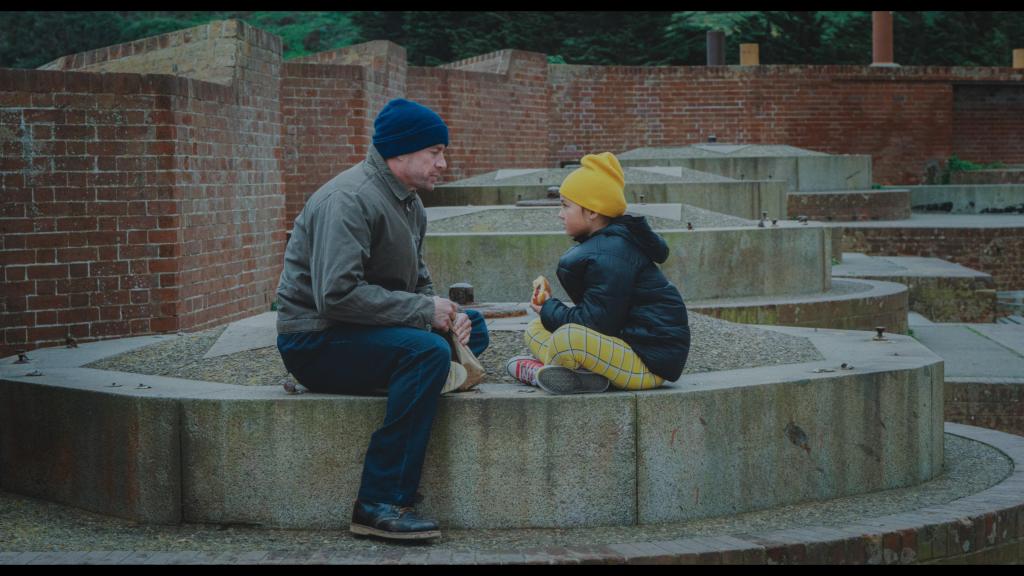
Children are remarkably perceptive, but perception should never be confused with comprehension. When adults refuse to provide age-appropriate explanations for frightening experiences, children are left to fill those informational voids themselves. Josephine searching for the meaning of rape is one of the film’s most devastating moments. The internet becomes the intermediary between a traumatized child and the truth her parents cannot adequately communicate.
What further frustrated me was the film’s handling of the legal proceedings. I would have appreciated a more substantive exploration of the legal protections available to minors serving as witnesses in violent criminal cases. California Penal Code § 1347, for example, permits alternative testimony procedures for children thirteen and younger under specific circumstances, including contemporaneous testimony via closed-circuit television in qualifying cases. These accommodations are not automatically granted, nor do they negate a defendant’s constitutional rights, but their existence warrants consideration in a narrative so heavily invested in the psychological consequences of testifying.
Where was the meaningful exploration of those alternatives? Where was the consistent involvement of a child trauma specialist or an advocate whose primary concern was Josephine’s psychological welfare? And why was a young girl being entrusted with a decision carrying moral, legal, and emotional implications that even the adults surrounding her could not adequately reconcile?
I believe in holding perpetrators accountable. I also believe that a child should never be made to feel personally responsible for whether justice is served. There is a considerable difference between giving a child agency and relinquishing adult responsibility under the guise of empowerment.
I struggled, too, with the relative absence of Sandra (Syra McCarthy), the woman who was assaulted, within Josephine. While I understand and appreciate the deliberate decision to construct this narrative from Josephine’s perspective, I wanted greater acknowledgment of Sandra as a person existing beyond the crime committed against her and the legal proceedings that followed. Her withdrawal should not be interpreted as a moral failure or a responsibility transferred to Josephine. Neither of them owes the world an additional sacrifice to demonstrate the legitimacy of their suffering.
From a filmmaking perspective, I remain conflicted about the graphic depiction of the assault. I understand de Araújo’s intention to make the audience bear witness alongside Josephine. It is an effective, albeit exceptionally distressing, narrative device. But I also question whether the same psychological and emotional gravity could have been achieved without requiring survivors in the audience to endure such explicit imagery. There is an interesting ethical tension in a film so concerned with the consequences of witnessing violence asking its audience to do precisely that.
The recurring manifestations of the perpetrator are initially among the film’s most effective artistic choices, although their repetition occasionally undermines their potency. Similarly, I wanted the screenplay to devote more time to Claire’s psychological complexity rather than positioning her predominantly in opposition to Damien. Gemma Chan and Channing Tatum deliver compelling performances, but at times the narrative seemed more committed to escalating parental conflict than meaningfully investigating its origins.
Nevertheless, Josephine accomplishes something that many films about trauma fail to understand: survival is not synonymous with recovery. An arrest is not a psychological resolution. A verdict does not restore innocence. And the absence of visible injury does not constitute the absence of harm.
We spend so much of our lives as parents trying to protect our children from the horrors of the world, knowing full well that we cannot protect them from everything. Perhaps our greatest responsibility, then, is not to promise them that nothing terrible will ever happen, but to ensure that when something terrible does happen, they are not left alone to make sense of it. Josephine deserved that much. Every child does.
Josephine is in select theaters now, and will expand in additional cities in subsequent weeks.
- None. Original Screenplay is its best bet, but that’s a crowded field full of bigger contenders from bigger studios.

