Tag Archives: featured

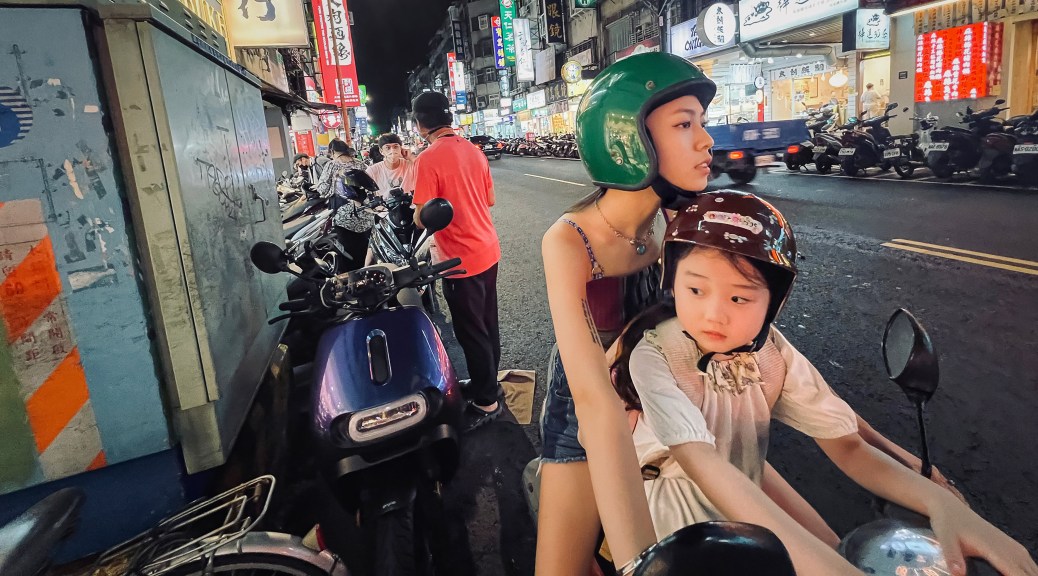
After the Hunt Review

After the Hunt

  • Director: Luca Guadanigno
  • Writer: Nora Garrett
  • Starring: Julia Roberts, Michael Stuhlbarg, Ayo Edibiri, Andrew Garfield, Chloë Sevigny

Grade: C

Luca Guadagnino has been a hard-working director for the past couple years. Having three films released within two years of each other, he is putting out films at a rate unlike most filmmakers working today. His latest, After the Hunt, sees what is possibly his biggest and most ambitious film yet, unabashedly delving into modern-day topics with honesty that many filmmakers have yet to do.

Continue reading After the Hunt Review

Heartland Film Festival 2025: Interview with Winter Fantasy director Lauren Z. Ray

Winter Fantasy

Below is my conversation with Lauren Z. Ray, the director of Winter Fantasy, a documentary about the small town of Logansport, Indiana, and the theater program that forms a kind of backbone throughout the community for its young artists. The film is making its World Premiere at the Heartland Film Festival. We discuss her thought process behind inserting herself in the film, the universality of small-town theater programs, and life in the arts post-high school. Our conversation has been edited and condensed for clarity.

Ben Sears: Logansport is such a unique place, and the film really captures that nicely.

Lauren Z. Ray: That was part of the goal. I always wanted to showcase Winter Fantasy, but I wanted to make this film very Logansport and very Hoosier as well. I kind of had this bucket list of items that I wanted to include, whether it’s a quick B-roll shot or a scene, just to give that texture and vibe to everything. In Indiana, I always think they have fantastic sunsets, so I wanted to include that, or a bonfire, which were very special to me when I was growing up.

BS: Did you have a goal in mind when you first conceived of the film, besides featuring the program? Did the story change at all throughout production?

LR: Totally, the initial idea was a micro-doc, under 20 minutes. I just wanted to showcase what Winter Fantasy is, and that’s it. But I hadn’t really been back to my high school, or talked to anybody in 10 years. But upon arriving, as I started setting up interviews and going through all my old things, I didn’t even really think of myself at first, but I started getting nostalgic.

My first interview is with the manager of McHale, and after that interview, I wanted to just explore everything with high school and Winter Fantasy, so I went through everything in my bedroom. That’s when I realized how much of my story needed to be included in this story in order for it to make sense. From there, I also wanted to include the stories of people who went on to become professionals after going through Winter Fantasy. Every documentary I’ve done is like detective work, it’s journalism. You learn more about the story through the interviews you do; it became a lot longer in the process of all the interviews and learning everyone’s stories. I initially wanted it to be just about Winter Fantasy, but it ended up being about my acting career, Winter Fantasy, and all the decades of people who have done the show.

BS: It’s interesting that you never even considered inserting yourself into the story because it helps to ground the story through your eyes.

LR: That’s how it felt at the time. It became more of a first-person documentary, which I had never done before. That really challenged me because I didn’t know how I could make it happen. Normally I’m the one behind the camera, so I knew I’d have to allow someone else behind the camera and help them to understand my vision. I hadn’t seen too many first-person documentaries, so I watched a lot, and I had to learn how this style is done. It was definitely a big process.

BS: You stay focused on Logansport and this specific program, but do you see this program as a microcosm of similar small town arts programs? Do you think there are similar stories like this across the country?

LR: I think so, I think it’s totally relatable. I remember when I did my first documentary, which was about a small town in Indiana, and I thought ‘this town’s really quirky and unique.’ And then everyone who saw it had a relationship to a small town across America somewhere, and it was relatable to a lot of people, even if they weren’t from this particular town. I think with this one, it was the same thing. People had either gone through their own musical theater program, or someone they knew went on to become someone from their theater program. Any time I’ve explained to someone what I was working on, people say they relate to it and they tell me stories about their programs, or their experiences with it. People totally understand that theater kids and staff tend to be very quirky by design, so I definitely think it’s a relatable topic, even though it’s just about Logansport, Indiana.

BS: You also have, later in the film, the experiences from you and your friend in Chicago, and the struggles with finding work in the arts after high school. Was that another avenue that was unplanned as well?

LR: Yes, actually, I was hoping I could get a hold of Dannie Smith. She didn’t know who I was, but I knew who she was because I went to all of her Winter Fantasy shows. I was absolutely obsessed! [laughs] I had never met her before, and the conversation we had on her couch was so crazy because of how similarly our stories had aligned. I had no idea, when I had called her initially, that she had retired from acting; I thought she was still acting. To learn that it was for similar reasons to me was really interesting.

BS: A development like that could be seen as a kind of mood killer, but in Winter Fantasy, it’s kind of hopeful, and a celebration of theater, and what people can do when they work together.

LR: I think a lot of people can relate to that as well. I know a lot of people that pursued theater after high school but couldn’t find any success, so I hope they can find something relatable in that. I think, accidentally, I always try to make my stories a feel-good story of some type. Those are the types of stories that I prefer to see, myself.

BS: Have you shown the film to the Logansport community at large yet?

LR: I haven’t. I’m very excited to do that, though. In January of this year, literally a week after I had finished, I had the cast come and see the film. Heartland is taking place during the school’s fall break, so that didn’t work out for them to screen it. But on November 8th, I’m going back to Logansport again, and I’ll do a public screening at McHale auditorium. I’m very excited, and this year’s Winter Fantasy is the following weekend, so I’m hoping it’ll hype up the town to show up and support that show this year.

Winter Fantasy will have in-person screenings at the Heartland Film Festival in Indianapolis, and will be available to stream online throughout the festival. Buy tickets here.

Good Fortune Review

Good Fortune

  • Director: Aziz Ansari
  • Writer: Aziz Ansari
  • Starring: Aziz Ansari, Keanu Reeves, Seth Rogen, Keke Palmer, Sandra Oh, Stephen McKinley Henderson

Grade: B-

Actors becoming directors has become a more common trend in recent years. With Scarlett Johansson’s debut film, Eleanor the Great, releasing only a couple weeks ago, and Bradley Cooper set to release his third feature, Is This Thing On?, in December, actors have been inspired by their on-set experience to direct their own movies. Aziz Ansari is the latest actor-turned-director with his film Good Fortune, an absurd comedy that nails the current state of America.

Continue reading Good Fortune Review

Heartland Film Festival 2025: Interview with The Travel Companion Filmmakers

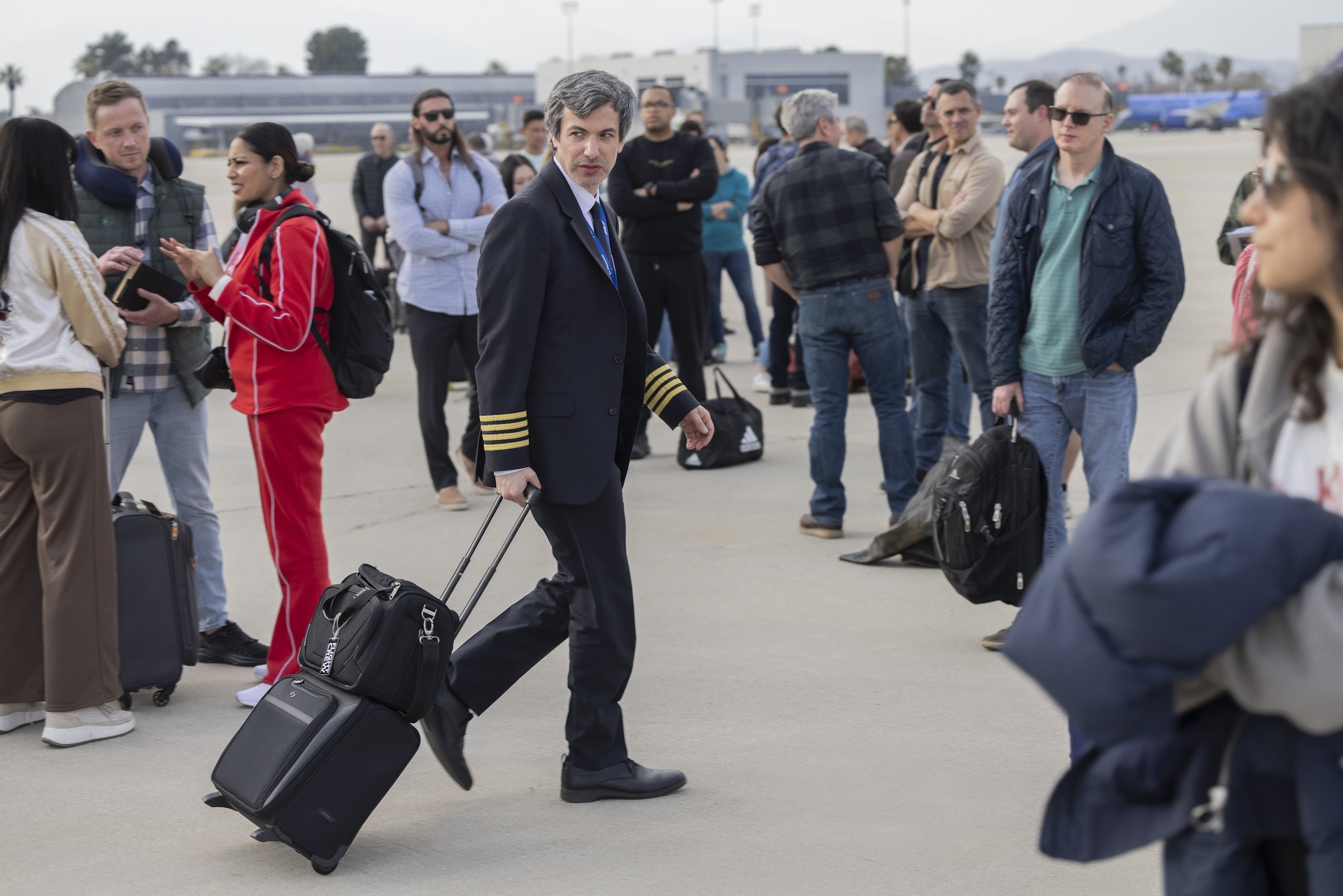
The Travel Companion

Below is my conversation with Travis Wood, Alex Mallis, and Weston Auburn. Travis and Alex serve as the directors of The Travel Companion, and the two wrote the screenplay along with Weston. The film is an indie comedy making its Midwest Premiere at the Heartland Film Festival about a pair of long-time friends and the chaos that comes when a romantic interest enters their lives. We discuss how the duo began working together, the real-life parallels that inspired the story, and the logistics of filming in airports. Our conversation has been edited and condensed for clarity.

Ben Sears: Alex and Travis, you both did a short film together, but this is both of your first times directing a feature. How did you come together on this, and what was the process like co-directing a film? Was it any different than making a short film?

Alex Mallis: We came together when we were part of a filmmaking collective called Meerkat Media, and we started making shorts together, and I think we just have a similar mentality and desire to be improvisational. Ultimately, one thing that I was attracted to about Travis is he was down to just do it. With any artistic process, there’s always hurdles, either existential or self-made creative hurdles, and Travis had this energy about him and I really appreciated that. We both came from skateboarding and this DIY practice, and we were just hanging out at a film festival and he was telling me that he was potentially going to lose his flight benefits because his buddy, who works at an airline, got a new girlfriend. So that was the launching point for this project, and more generally, we were both at a place where we thought ‘let’s do this’. It really synced up, and pretty quickly, Travis introduced me to Wes, and it all came together pretty quickly.

Travis Wood: I think it all came pretty natural. We didn’t sit down at a table and say “here’s what co-directing looks like.’ We were both very invested to make this, and we both just had that same energy to get it done. It’s like a natural dance and we’re usually pretty aligned to think of what works.

BS: Travis, it sounds like one of the characters was kind of a proxy for you; did you write that character from your perspective, or did it require some input from both of you?

TW: I think the general framework was certainly inspired by my life, but when we got to writing it, we were all three just telling each other different stories about life experiences and jobs that we’ve had. I feel like we just made an amalgamation of our experiences and put those into each character. Simon’s (Tristan Turner) day job was inspired by Alex’s job of filming taxis, and then there’s Wes’s day job and dealing with bosses and an advertising environment.

Weston Auburn: I would also say that Travis is way more chill than Simon is. He has a much smoother way of operating than what Simon does.

BS: You filmed a few scenes in airports and on planes. Was it difficult, logistically speaking, to get access to those airports, or were there a lot of regulations to go around?

AM: You’d be surprised, our airport footage was broken up into two sections. The more locked-down, dialogue heavy scenes were filmed at the West Chester airport in upstate New York, and that was a negotiation with them, getting permits, and it was all pretty straightforward. But the more montage-y footage was all filmed at JFK in New York City. That was basically just me and the actor. I had a fully refundable ticket in order to get through security, a small camera, and a gimbal, and we started shooting some sneaky shots. By the end of the four hours we spent at the airport, we were running full speed through the terminal getting shots. Turns out that, once you’re through security, it’s kind of a utopia where you can do whatever you want. Nobody blinked an eye, security didn’t look at us, nobody seemed to care what we were doing. In the age of influencers and travel bloggers, I think they assumed that’s what we were doing.

The only person who approached us was another filmmaker. He ended up PA’ing for, like, two hours. [laughs] I was sprawled out on the ground, trying to balance the gimbal, and he came up to me and said ‘hey, can I help you?’ Pretty quickly, he was carrying batteries and extra bags and running interference. He was the only person who noticed us.

BS: Tell me a little about how you landed on casting Tristan and Anthony [Overbeck].

TW: I think Anthony was an early person we had in mind. He’s very much in the independent film scene like this. We reached out, he sent an awesome tape, and I think he was the first person we had locked down. Tristan was a pretty big search; we worked with an awesome casting director, Alan Scott Neal. The film was non-union, so that limits your pool, and you have to find a new path. With Tristan, it was like, this dude totally could be an experimental documentary filmmaker, he just had that look.

BS: They believably play friends who have known each other for most of their lives. Did their chemistry together come naturally?

AM: They briefly met during the casting process, but their acting styles just came together and it was very natural. I think Tristan’s background is a bit more by-the-book, and I think it all felt really natural from the first take. It wasn’t something we even had to navigate, it was almost instantaneous.

TW: We had a really fantastic AD, and she read the script and understood it so she was able to create a schedule that allowed us to create a level of intimacy that they needed to express. They were able to build up their relationship during the shooting process, so by the time we got to more heavy, intimate scenes, they were able to do that even better.

WA: We also should mention Naomi Asa, who crushed her scenes, and we were super fortunate to have found her. She’s a bit of an undiscovered talent who acts during her free time.

AM: She was fantastic. All of our actors, we were super fortunate to find because of our tiny budget. We were squeezing every ounce of juice out of the lemon, so to have everyone ready every day so that we didn’t have to exert any energy making sure they understood what was going on. I really respect them for that.

BS: To talk about the meat of the film, what do you think that the flights that Simon gets ultimately represent to him? Is it a way for him to hold onto his friendship with Bruce? Is it simply a way for him to get out and travel the world and escape his dead-end life? Does he actually see it as a way to get his project made, or is it something else?

AM: I think we discussed that a lot throughout the writing process, and shooting and editing. I think it’s all of those things. On the one hand, it’s a very practical, very incredible resource that anybody would love. Free flights, and making a travelogue, those go together extremely naturally, and to potentially lose that benefit would be devastating. And then at the same time, it’s representative of this untapped potential, like when something is still a possibility in your head, it can feel calming. The imperfections haven’t shown up, the shortcomings haven’t shown up, so I think for him the flights give him a creative purpose.

The flights are also a connection to his best friend, and he and Bruce (Overbeck) met a long time ago, and though their lives have started to diverge, the flights are like this glue that binds them. Simon maybe doesn’t see that explicitly, but he starts to wonder, if they don’t have these flights, then what are they to each other? It’s this central piece of their friendship, and when that starts to come into question, he feels frantic, even if he doesn’t quite understand what’s happening, he does understand on an emotional level that the careful balance of his life is being threatened.

TW: I think, even in real life, I didn’t realize until I was about to lose them how much of an actual thing they were to me. When you have a successful film, for example, it’s something to talk about in a conversation. But, especially in Simon’s case, it’s a crutch to lean back onto. If you can’t talk about the film, you can at least talk about that time you went to Tokyo.

BS: Travis, since this is based, at least partially, on your experience, was it difficult to write that character and uncover some uncomfortable truths about yourself?

TW: I’ve had this friend who works at the airline for 10 years, and I know him well enough to have both sides of the conversation. In real life, it was not a thing at all, so it was actually really fun to explore those conversations and take it to this extreme. Even early on, when he started dating someone, I wondered ‘does she like to travel? Maybe I should keep it’, so it was nice to have an outlet to process and see those things through like an alternate universe. It was a good coping mechanism, if nothing else.

BS: The film skewers the independent film world, but it never feels like it’s mean-spirited. Was it difficult to strike the right balance of parody without making it seem too cartoonish?

AM: One of our guiding principals while writing this was that it has to feel real and grounded. I think with comedy, that’s a decision you can choose to accept or ignore. For us, we wanted it to feel lived-in and real, so that informed the type of comedy that we tried to incorporate.

TW: I think it was a little easier to write, too, because we are all these independent filmmakers, chatting with other filmmakers, and going to screenings. A lot of that stuff is really present for all three of us; I don’t think we had to dig too deep to find those moments that are both true and funny.

The Travel Companion will have in-person screenings at the Heartland Film Festival in Indianapolis, and will be available to stream online throughout the festival. Buy tickets here.

Rental Family Review

Rental Family

  • Director: Hikari
  • Writer: Hikari, Stephen Blahut
  • Starring: Brendan Fraser, Takehiro Hira, Mari Yamamoto, Shannon Mahina Gorman, Akira Emoto, Shino Shinozaki

Grade: B

There are over 300 companies today throughout Japan employing actors, not for film or television roles, but as ordinary people helping other ordinary people to get through the day. Rental Family explores the almost too bizarre to be true phenomenon and the emotional toll it takes from both sides. It’s a slam-dunk premise for a weepy dramedy, but director Hikari’s film is too unfocused to be as resonant as intended.

Continue reading Rental Family Review

Heartland Film Festival 2025: The Dating Game, Land With No Rider, Natchez

The Dating Game

If nothing else, The Dating Game is a welcome reminder that I’ll be eternally grateful for meeting my wife before the advent of dating apps. Violet Du Feng’s documentary may take place in China, but the issues present feel universally relevant. The film follows Hao, one of China’s leading “dating experts” as he tries to coach a group of young men into finding a match by any means necessary. Though, as the documentary quickly reveals, he’s far from knowledgeable in the ways of love, and much less in understanding women and what they want. His advice tends to boil down to buying new wardrobes, looking cool via profile photos to add to a dating profile, and boasting about life accomplishments and experiences, whether they’re true or not. This leads to some of the cringiest comedy of the year, especially once the clueless men are wrangled into meeting women in the real world with next to no preparation.

Besides the small group of men, Du Feng eventually expands to show the larger cultural attitude towards dating in modern China. One fascinating segment shows a large gathering of middle-aged parents in a park, so desperate to find matches for their children, that they essentially LARP as dating profiles on their behalf. Also crucial is the opening statement that, after China’s end of the One Child policy, the country was left with an imbalance of men and women. But one of The Dating Game‘s most surprising developments comes as Du Feng spends time during Hao’s personal life to show that not only is he married, but his wife is also a dating coach with a much different approach to her female clients. Though this avenue provides some fascinating dramatic developments, one almost wishes the entirety of the film was centered around their relationship. Regardless, The Dating Game is an engrossing reflection of modern dating culture, toxic masculinity, and the eternal quest for companionship.

Buy virtual and in-person tickets here.

Land With No Rider

Life on the open range has been romanticized throughout cinematic history in the Western genre, but Land With No Rider shows the harsh realities that modern ranchers face. Director Tamar Lando zeroes in on a group of cattle farmers in New Mexico as they eke out a simple existence trying to survive in spite of all the hardships faced amongst modern independent farmers. The biggest challenge lies in climate change, and the lack of viable vegetation for their cows to eat.

Much like the existence it depicts, Land With No Rider treads along at a leisurely pace, often to its own detriment. Of course, this shouldn’t discount the harrowing material seen, but the film could use some additional speed to get through its (admittedly brief) runtime. Farmers inarguably play a critical role in the stability of the country, yet they’re frequently overlooked or oversimplified. Lando’s film is gorgeously lensed, taking full advantage of the New Mexican expanse, and showing every crag in its aging subjects’ faces. It’s hard to find too many faults with the film overall, but one can’t help but wish it moved at a more urgent clip to match its subject matter.

Buy virtual and in-person tickets here.

Natchez

I first watched Natchez in June as part of the Tribeca Film Festival, but it’s stuck in my memory in the intervening months as a vital and visceral look at America’s past and present. The antebellum south has always felt like it comes from another plane of existence entirely with its outlandish traditions and personalities. Susannah Herbert’s documentary feels less like a history lesson and more like a tour through how those traditions and personalities reckon with the titular Mississippi town’s dark history.

Like most southern cities in the pre-Civil War era, Natchez relied heavily on the slave trade and slave labor, and many large plantations still stand today. This is the backbone of Herbert’s film, as she follows a select number of individuals who rely on telling the town’s history through their own perspectives. There’s one charismatic, Black tour guide who makes no attempt to sugar coat the painful experiences of so many Black men, women, and children who made their way through Natchez. Many of the film’s most difficult moments come as fellow residents confront him through thinly-veiled racial means to let him know they don’t approve of the stories he tells or how he depicts the town. On the other side, there’s the White tour guides, who mostly show off the plantations and simply gloss over – or, in at least one case, defend and ridicule – the presence of slaves. The result is an often shocking, yet sad reality of modern America and certain groups’ views on race, and one of the year’s best documentaries.

Buy virtual and in-person tickets here

A House of Dynamite Review

A House of Dynamite

  • Director: Kathryn Bigelow
  • Writer: Noah Oppenheim
  • Starring: Idris Elba, Rebecca Fergason, Gabriel Basso, Jared Harris, Tracy Letts, Anthony Ramos, Moses Ingram, Greta Lee, Jason Clarke, Kaitlyn Dever

Grade: B

Since beginning her career as an action director, Kathryn Bigelow has garnered considerable acclaim with recent films that delve into more dramatic territory. Since becoming the first woman ever to win the Best Director award at the Academy Awards for The Hurt Locker, she has become a filmmaker whose films are on the Oscars’ radar. Seven years after her last feature film, Detroit, her upcoming movie, A House of Dynamite, appears to be her next film aiming for Oscar nominations, and focuses on the dangers of nuclear weapons in a fast-paced and digestible manner.

Continue reading A House of Dynamite Review

Urchin Review

Urchin

  • Director: Harris Dickinson
  • Writer: Harris Dickinson
  • Starring: Frank Dillane, Megan Northam, Shonagh Marie, Harris Dickinson, Joel Lockhart, Diane Axford, Angela Bain

Grade: B+

It’s always a risky gamble when a prominent actor tries their hand behind the camera for the first time; for every Good Night, and Good Luck, there’s a hundred other Leatherheads. There’s no clear recipe for success, but first-time writer-director Harris Dickinson’s clearly defined vision is what makes Urchin an impressive statement. In fact, Dickinson avoids many of the fatal pratfalls which often lead to actor-directed projects.

Continue reading Urchin Review

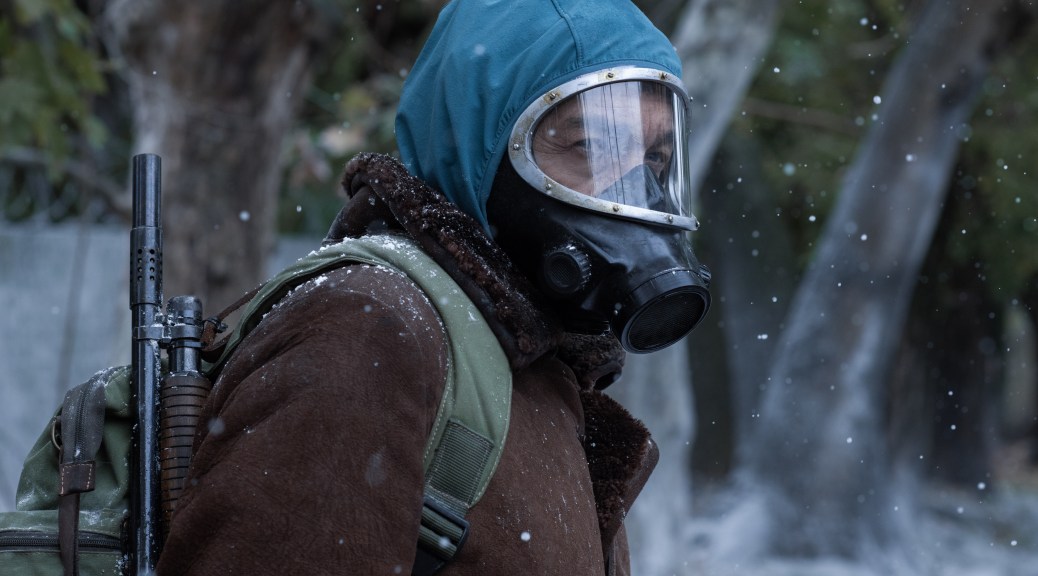
The Lost Bus Review

The Lost Bus

  • Director: Paul Greengrass
  • Writer: Brad Ingelsby, Paul Greengrass
  • Starring: Matthew McConaughey, America Ferrera, Yul Vazquez, Ashlie Atkinson

Grade: B

Paul Greengrass, Hollywood’s most efficient auteur of ripped-from-the-headlines dramatizations, returns with one of the most harrowing and stressful films of the year in The Lost Bus. Aside from his work on the Bourne franchise, Greengrass’s greatest successes have come from films about real people overcoming the odds to survive, like Captain Phillips and United 93. His latest covers a recent, well-publicized event, and though the life-or-death stakes are often enough to sustain the film for long stretches, it’s not enough to overcome its limitations.

Continue reading The Lost Bus Review

The Smashing Machine Review

The Smashing Machine

  • Director: Benny Safdie
  • Writer: Benny Safdie
  • Starring: Dwayne Johnson, Emily Blunt, Ryan Bader

Grade: B-

Boxing is an inherently cinematic format, a sport where one man or woman puts their mind and body on the line in a quest for glory. Mixed martial arts cranks the sport and its stakes up exponentially, and writer-director Benny Safdie’s The Smashing Machine spares nothing to show the inherent brutality and all its costs. Here is a sport where blood, sweat, tears, and a broken bone or two literally comes with the territory. But it takes more than raw physicality to make an enduring MMA film, and it requires a deeper story worth telling to break the mold of the typical sports drama.

Continue reading The Smashing Machine Review