

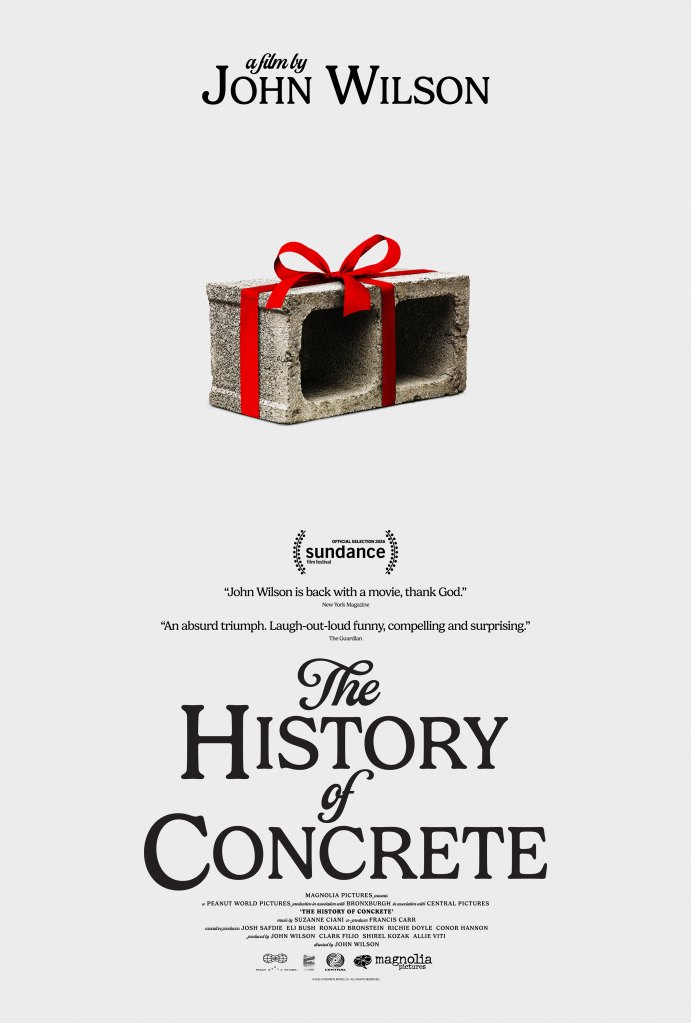
The History of Concrete
- Director: John Wilson
Grade: A-
Who cares about concrete? Who even notices the stuff, in spite of its ubiquity? Those that were smart enough to watch John Wilson’s stellar HBO show will know that these questions, and many more, will come up throughout the runtime of The History of Concrete, but they’re really just set-ups for his keen observations on humanity. But even if the film is your first ever exposure to Wilson or his style, it immediately announces itself as a funny, thoughtful exploration of multiple, easily accessible ideas – including, yes, concrete.
For the uninitiated, Wilson is the ultimate DIY documentarian, and The History of Concrete does not stray from his aesthetic. He films everything himself, shooting POV-style and splicing in random, seemingly unrelated footage to match his voiceover narration. Indeed, part of the fun of the film is in wondering exactly how much Wilson had mapped out from the start, versus making it up as he went along. It would be derivative to call the film a feature-length version of How To With John Wilson, but it’s structured similarly, beginning in one place and finding new narrative avenues along the way. Trying to map the ways that Wilson gets from one point to the next is a fool’s errand, but it’s never obtuse, often very funny, and frequently personal.

The film begins almost as if it’s taking place immediately after How To ended, with Wilson lamenting how he can possibly make ends meet, now that his Emmy-nominated show has ended. New York is an expensive city, and his building’s basement, which he sublets to a friend, is constantly flooding whenever it rains heavily. This leads Wilson to try and patch up the foundation himself (shoddily) and, essentially, it begins his musings on concrete. Naturally, he interviews everyday people – mostly New Yorkers – to gather their thoughts on concrete. How often do you think about it? How important is it to your daily life? How reliable is it?
The details of how Wilson arrives at the statement matter less, but The History of Concrete eventually comes to encompass the en-shittification of everything around us. That is, the deliberate process of things eroding more quickly because they’re made from shoddier material, just so that those in charge can save a few pennies. In a related storyline, Wilson also peppers in segments where he meets with producers and partners as they try to secure funding for the very film you’re watching (more on that in a moment). Some might say that these moments are extraneous, almost anti-climactic since we already know the end result. But I admire Wilson’s transparency in showing how even an Emmy nominee with a critically acclaimed show can have difficult getting his (admittedly weird and difficult to market) documentary made.
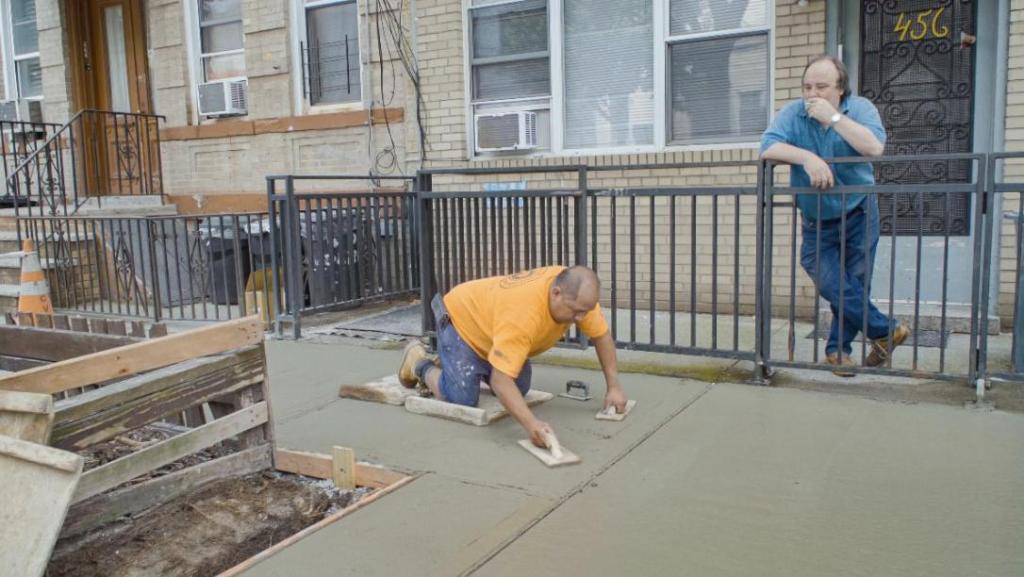
But enough about that; let’s get back to concrete. Wilson’s astute observations on the appearances and imperfections of concrete leads him to note the frequency of gum on the sidewalk. He even goes so far as to note the clusters of gum marks outside the entrances of bodegas, on the driver’s side in a drive-thru, and at crosswalks. If nothing else, it’s these moments that give The History of Concrete its power: it’s the experience of humanity boiled down to spots we walk over every day without noticing. To say nothing of the more overt, more recognizable tradition which people leave behind, of writing a personalized message behind on drying cement. And Wilson is betting that, the next time you go through McDonald’s or walk through downtown in your city, you’ll pay closer attention to where the gum is, or the differing colors of concrete on the roads and buildings. Of course, Wilson doesn’t linger on these thoughts for long. It’s actually just set-up for him to interview a local with a gum removal business.
It’s crucial that, throughout all of Wilson’s interactions with New Yorkers, it never feels condescending. Rather, it’s almost as if he’s simply collecting experiences like all his random footage to be used in a potential future show or film. The final act of The History of Concrete offers a more extended segment of this, as he “profiles” an alt-rocker who moonlights as a liquor store sampler – not because he has anything to do with concrete, but because his potential film financiers will back him if he’s able to make a documentary of a famous musician. This could easily come across as cruel or mocking, a kind of criticism that Wilson’s compatriot Nathan Fielder often (unfairly) receives. But, the more time that Wilson spends with the musician, and the more we learn about his inner life, including that of his spouse, the more sympathetic he becomes.

A documentary about concrete initially reads as a parody, a shot across the bow at self-serious non-fiction that seeks to make grand statements about humanity. Wilson’s ultimate magic trick is that he’s able to do both, while still sticking to his trademark style. There’s so much more to discover within the film, so many more weird, delightful avenues which I wouldn’t dare spoil but will shock and delight in equal measure. Casual film lovers don’t need to have seen Wilson’s TV show in order to get The History of Concrete (though you absolutely should, regardless). They just need the same level of empathy towards your fellow man – and building materials.
The History of Concrete is now in select theaters and will expand in additional cities soon.
OSCAR POTENTIAL:
- As if comedic documentaries didn’t have a hard enough time at the Oscars, The History of Concrete will have to compete against another, higher-profile comedic documentary from the aforementioned Nathan Fielder, You Can See Everything. An Oscar nomination is doubtful, but keep an eye on it for awards like the Indie Spirits or the Gothams.

