
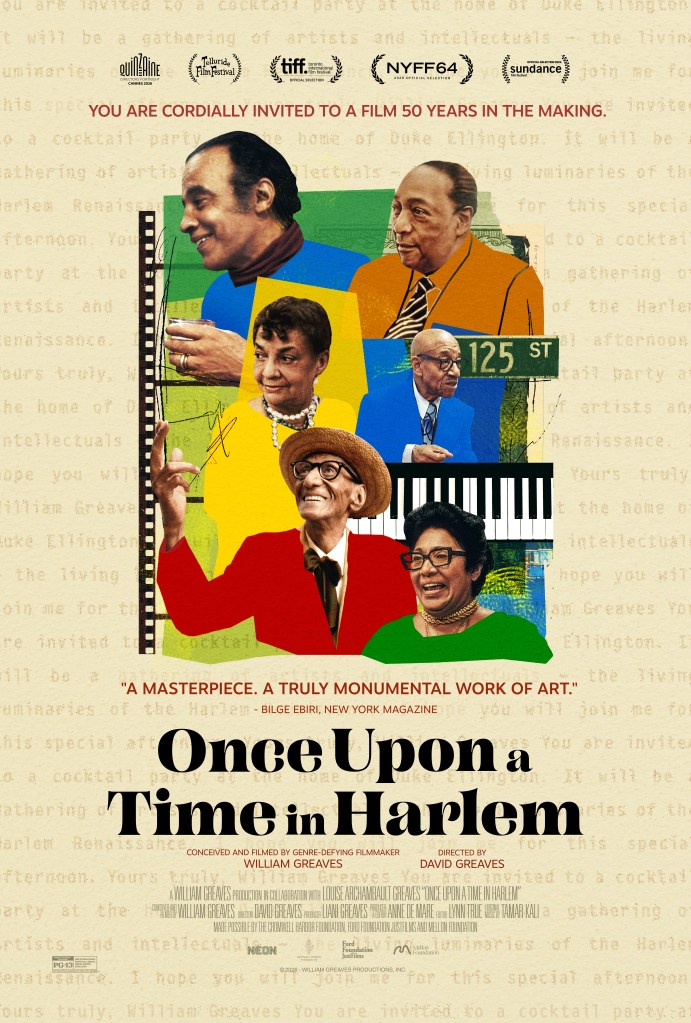
Once Upon a Time in Harlem
- Director: William Greaves, David Greaves
Grade: A-
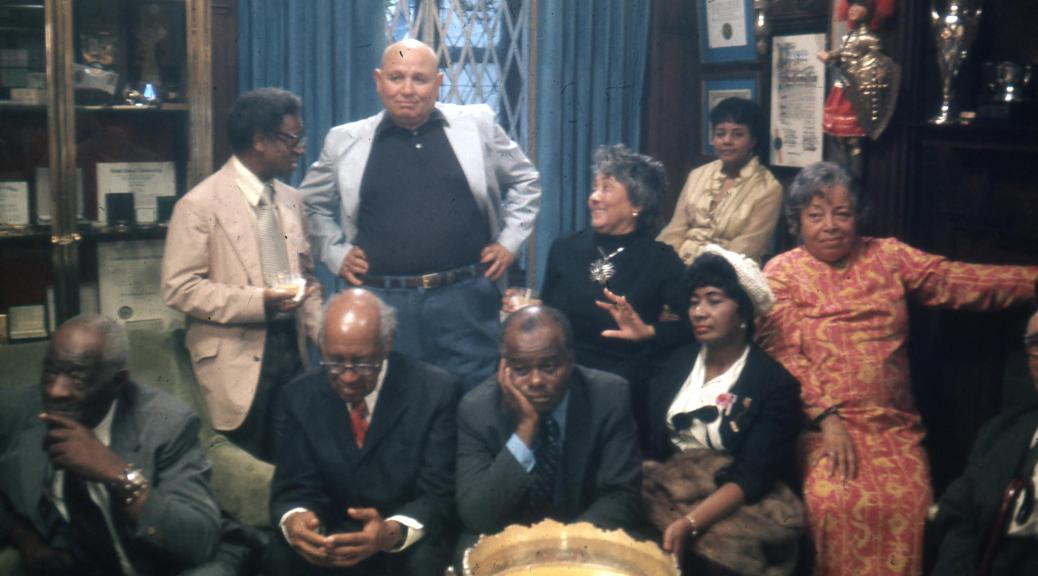
On an August afternoon in 1972, several interconnected figures were invited to the home of Duke Ellington. This party wasn’t created to generate headlines – outside of the attendees, it’s likely that nobody actually knew it was happening – but it still stands as a historic event. Among the partygoers was experimental documentary filmmaker William Greaves, and the result of his filming of the gathering is Once Upon a Time in Harlem, a revelatory, joyous celebration of a critical period in Black history.
For those not fresh out of an American history course, the Harlem Renaissance is likely little more than a brief footnote in the early 20th century. Indeed, almost all of those featured within the film were vaguely familiar by name only, at best, to me. Nevertheless, figures like photographer James Van Der Zee, poet Arna Bontemps, actor Leigh Whipper, writer and poet George Schuyler, and more come together to discuss each other’s works and their creative processes. But the bulk of Once Upon a Time in Harlem is spent as everyone sits around a single room to discuss the Harlem Renaissance from a micro and macro perspective, including the societal factors that led to it, their own personal inspirations and contributions, and the lasting legacy of how the Renaissance changed American society. It’s rare to get the firsthand memories of cultural figures who were so critical to a major historical movement captured on film, and it’s this magic that gives the film its power.
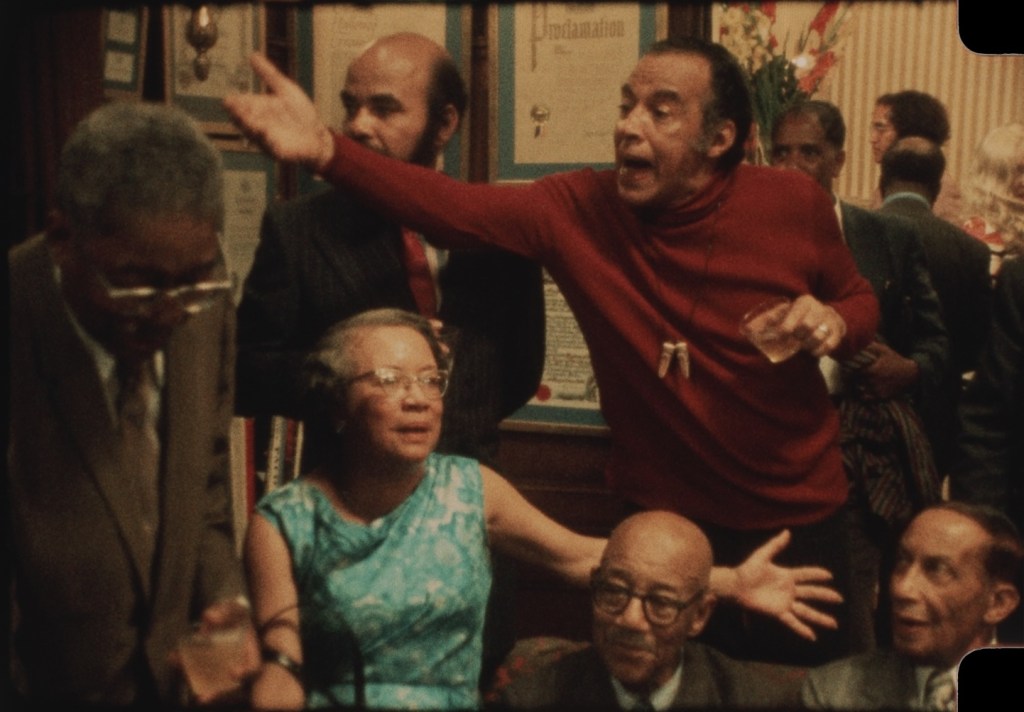
The film is credited as “conceived and filmed” by William Greaves, but his son, David Greaves, is responsible for assembling and restoring the footage into Once Upon a Time in Harlem. It’s this love and care that seeps through the cracks from the younger Greaves and makes the end result feel even more special. Though an argument could be made that a couple minutes could be trimmed from the film, the “story” flows nicely and each attendee is given room to shine. Some of the film’s most delightful moments are when one member speaks up to mention that one figure or another hasn’t been given their due mention, or has not had an opportunity to speak up on their perspectives.
Crucially, this isn’t just a 100-minute love-fest between creatives. Real, thoughtful criticisms are brought up, including working (or refusing to work) with white people, and whether the moniker of “Black artist” is helpful or not. Perhaps the most incredible stories comes from Leigh Whipper, an actor whose father was a former slave and elected congressman in South Carolina. Whipper, who was 96 at the time of filming, and only 3 years away from his death, is still sharp as a tack as he effortlessly recites monologues and recalls specific details of his early career and his collaborators.
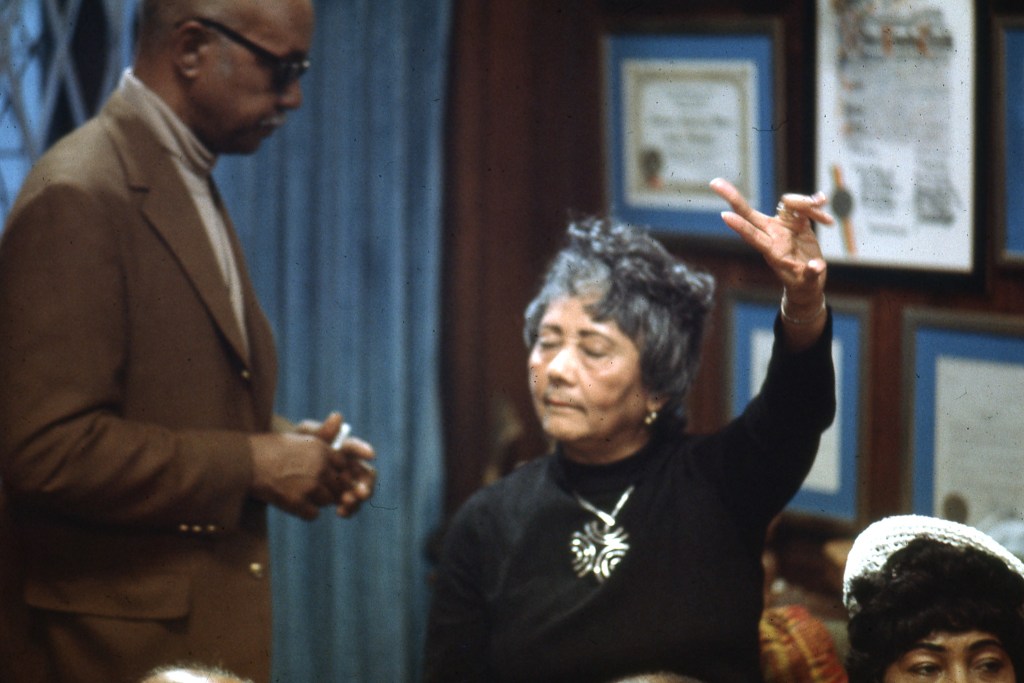
Great documentaries teach the viewer about a previously unknown or under-discussed subsection of humanity. Once Upon a Time in Harlem provides such an opportunity, straight from the mouths of those that made history. The ability to adequately speak about a moment in history in which you yourself were responsible for is incredibly rare, but to see it in this format, when the subjects feel so unfiltered and free to speak up is even more rare. The final third or so sees the subject turn to the long-lasting impact of the Harlem Renaissance, and how much their work has or has not been passed down to the current generation. One would only wish to hear their thoughts on the subject today, with even more distance from the Renaissance.
Once Upon a Time in Harlem was screened as a Special Presentation film at the Heartland International Film Festival. Neon will release the film in select theatres on October 16, and expand in select cities in subsequent weeks.
OSCAR POTENTIAL:
- Documentary Feature is a tough category this year, but the near-universal praise that the film has received since its Sundance premiere bodes well for its chances. Though the documentary branch is notoriously difficult to predict, Once Upon a Time in Harlem feels safe as a contender.

