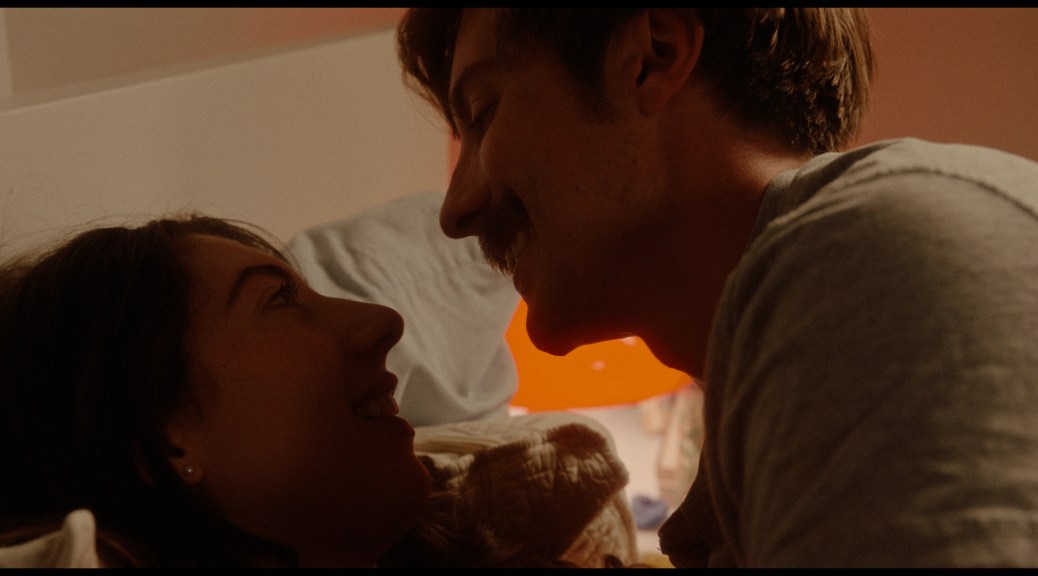
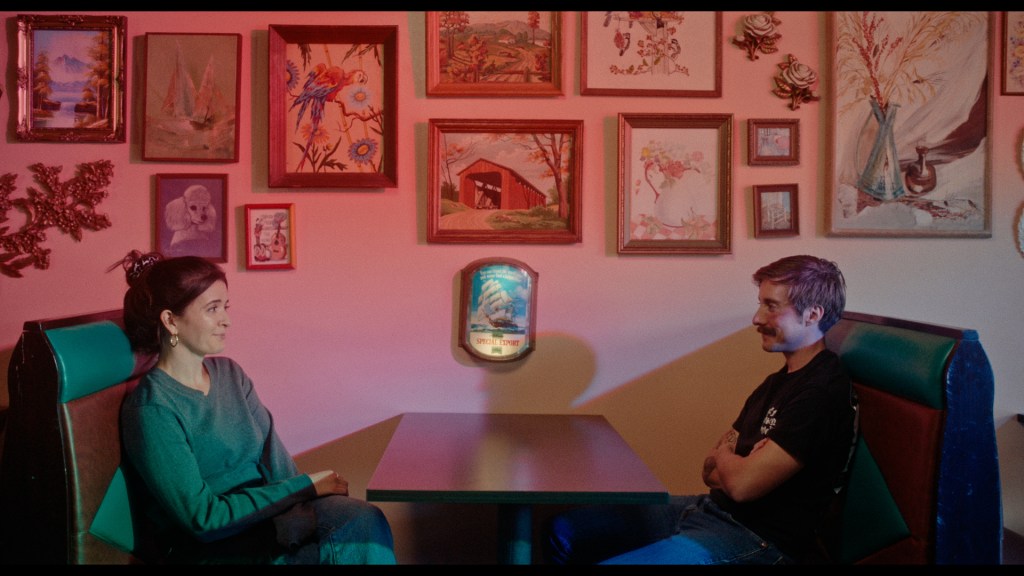
Below is my conversation with Zac Cooper, the writer, director, and star of God I Want You, ahead of its Midwest Premiere at the Heartland Film Festival. We discuss his own history with religion and how it evolved during the making of the film, his working relationship with actor Jesse Epstein, and his love of romantic comedies. Our conversation has been edited and condensed for clarity.
Ben Sears: Do you remember the impetus of where God I Want You started? Was it inspired by a certain event in your life, or someone you know?
Zac Cooper: It was definitely taken from aspects of my life in my 20s, and friends I worked with and went to college with. It’s kind of embarrassing when you’re the main actor because it makes it seem like it’s more autobiographical than it is, but it is. The annoying artist answer is that all of those things happened, and none of those things happened, but it was filled out by other people I know who grew up in that culture and experienced a “deconstruction of faith” throughout their 20s. It was a project that I’ve had in my head for a while but it took a while to try and distill it down into something simple and filmable.
BS: I’ve always been interested by filmmakers who put their faith, or lack thereof, on screen. How much was your character’s faith informed by your own faith?
ZC: It’s definitely my own expression of my journey with faith, and exploring my doubt. I wouldn’t call myself religious, but I have people who worked on the film with all different beliefs, and it was a great collaboration. The goal of the film was not to try and be preachy, but to bring audiences into this world, and I just wanted to explore the similarities within everyone’s lives. When I stopped going to church, it sounds silly to say, I found that we all have the same life problems. We all have our own little bubbles, but I had different rules I would follow when I was growing up, which would bring up different feelings of guilt or shame.
BS: Did the production of the film help you to view religion or faith any differently?
ZC: Not necessarily differently, but it would help me to reflect and examine my relationship with faith, and my past with it. I have moments where I can get on my high horse when I say that religion is dumb, but you go back and read history, and people have always believed that there’s something greater than us in the sky, so who am I to say whether this is right or wrong? I think the film has a perspective, but it’s not trying to “both sides” anything, or it’s not trying to be preachy.
BS: It’s more about how people tend to use religion as a shield for making certain decisions.
ZC: Definitely, this kind of language isn’t in the film, but I definitely grew up with people who would say things like “God told me that we should date”, or “God told me we’re supposed to break up”. That was more in high school or college, but that kind of mindset does warp and carry over into adulthood, especially in a culture where finding your spouse can be such a pillar of that religious cultural status.
BS: Coming to God I Want You from It Happened One Weekend, this film feels more adult, in that it deals with sex and relationships, whereas your previous film was about whether friends can begin dating. What’s been your thought process of making two films within the same genre, while tackling it in a more mature way?
ZC: I think part of it was simply experiencing more life than I had when I made my first feature. I think I just felt more confident and feeling less self-conscious about those ideas.
BS: You’re working again with Jesse Epstein, who plays Meg. Did your familiarity with her help when you were working on those more intimate scenes?
ZC: Jesse was a huge collaborator, even behind the camera. She’s credited as a producer, and has a “story by” credit, and she helped me to get the script to a better place. She’s a professional actor, so she brings that level of performance to it, but when you’re friends in real life, it can be a little awkward on the day, especially since I’m also directing, because I had to think of it so mechanically in terms of where to put the camera. But afterwards, we just went back to being friends.
BS: Did she help to shape those conversations about sex or religion, or generally help to make her character feel less like she was written by a man?
ZC: Yeah, I wrote so many drafts, so it’s hard to pinpoint what came from where, but her contributions are definitely woven throughout. I would bring stuff to her, and she would always help. I’m always open to collaborating, if something doesn’t feel real. As a writer, you’re always trying to put yourself in someone else’s shoes, but you’re still limited to your own experiences.
BS: I know that you’re a real film connoisseur – old and new films, foreign films, genre films, et cetera – but you’ve continued to work in the rom-com space. Does that come from a long-standing fondness for the genre, or do you see yourself branching out to horror films, for example?
ZC: A Horror movie would definitely be easier to get made, especially in this day and age. I love all kinds of movies, but what I gravitate towards as a filmmaker are small, intimate films about relationships. Those are like catnip to me. The more personal, the more intimate, the better. When you don’t have any money to make a film, those are easier to make because they’re just people in rooms, or in restaurants where you know the owner. I just like to make films that are light on their feet, and comedic.
God I Want You will have in-person screenings at the Heartland Film Festival in Indianapolis, and will be available to stream online throughout the festival. Buy tickets here.

